Scholar Spotlight - Risandi Kodagoda

Discover more Scholar Spotlights.
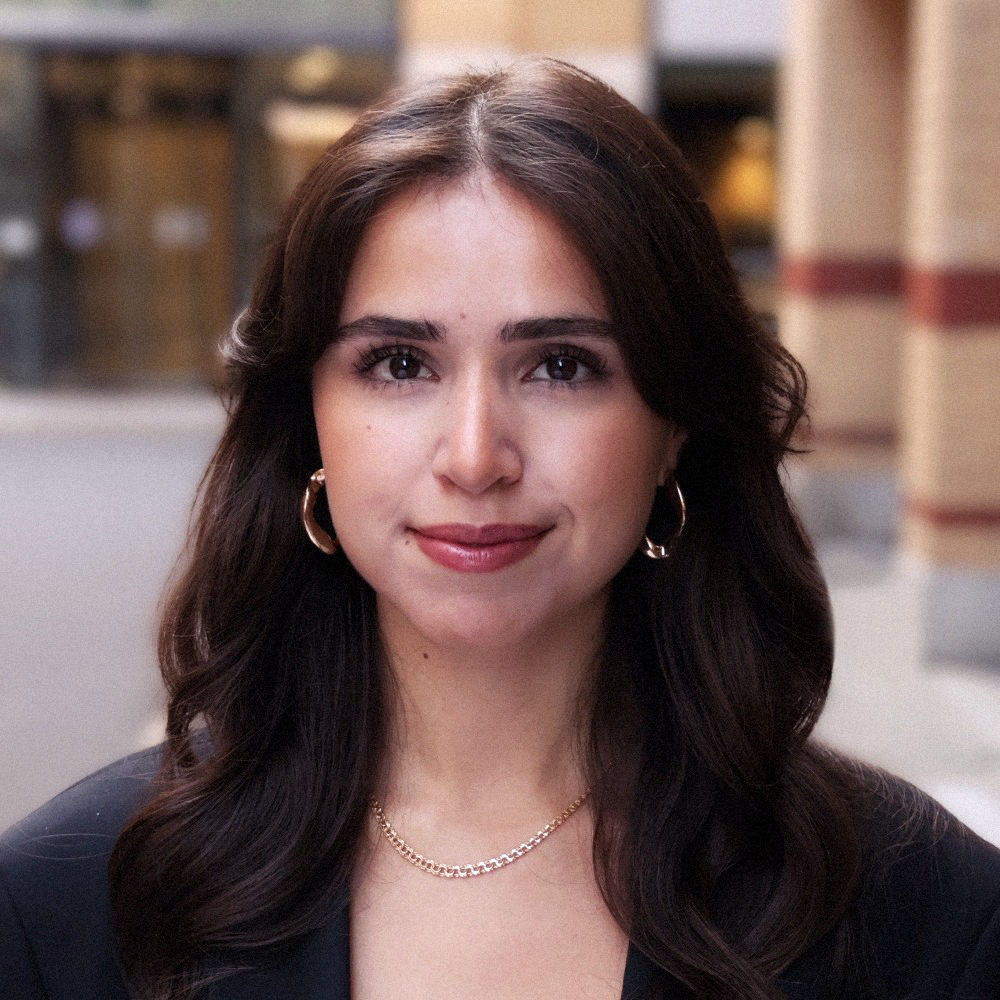
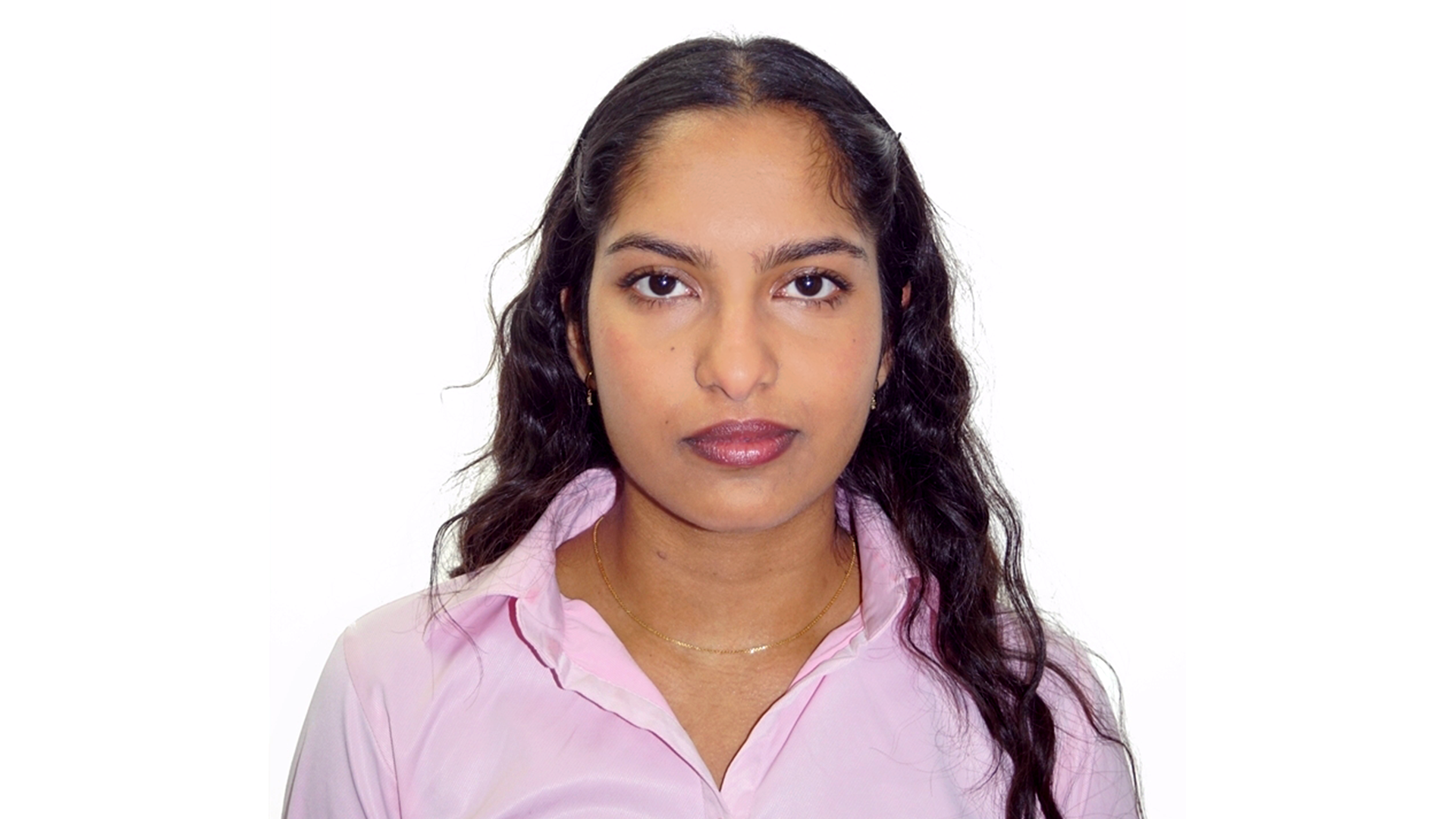
Risandi Kodagoda, a Laidlaw Scholar at the University of St Andrews, is investigating how colonialism continues to shape mathematics education and its impacts on students from the Global South.
Research title:
Humanising Maths: Investigating the Impacts of Colonialism on Mathematics Students from the Global South
Please briefly outline what your research is about, and its potential real world impact
My research is geared at investigating the link between the enduring impacts of colonialism on the teaching and learning of maths and interrogating the impacts this theory has on mathematics students with a link to the Global South. Namely, in this first year, I conducted a literature review to track the effects of colonialism and its power structures on the history of maths, how some trends today may be explained by this history, and evaluating the role of critical theory in ameliorating these impacts. I then proposed a method to investigate this for students at the university of St. Andrews- which is something I am currently in the process of carrying out.
I hope through my research that I can listen to underrepresented voices within the study of maths and allow their experiences to humanise mathematics to allow for a more equitable and contextualised view of the subject.
Where did your passion for this research originate? How does your personal story feed into it?
I am a maths student that is also very passionate about literature and, having studied both until my degree, I realised the distinct lack of critical introspection in maths that I had grown to appreciate in my studies in the humanities. My interest in colonial and post-colonial theory started in secondary school when I did a talk about the role of postcolonial literature through time and endured through college where I conducted my A-Level coursework on the theme of identity in colonial and post-colonial works.
While it could seem a stretch to apply this interest into maths, my interest was piqued last year when I heard that the QAA ( a sort of assurance board for universities) had suggested, loosely, about the idea of 'decolonising' maths- which was met with a variety of critical responses. I realised then that this was also an idea that existed in maths, but approached in a very different way, so I was keen to investigate this further in terms of the effect it has on maths students like myself- which was something I had felt was lacking.
What is the most memorable moment from your Laidlaw scholarship experience so far?
The Durham conference was a really standout experience because it was so unlike anything I have ever attended before. Meeting people from different universities and hearing about their projects and passions was a very inspiring process, especially as I felt we were all united by a shared experience that we had tackled in many different ways. I also found the talks to be extremely engaging and relevant, and I felt by the end of the weekend that I had learned a lot about lots of different areas of research.
What is the biggest challenge you came across in your research and leadership journeys so far, and what did you learn from it?
The most challenging aspect of my project from the summer was this process of constantly adapting and improving my work to make it more relevant to the real-life problems that it addressed. My project is looking at the theory behind colonialism in maths, with the research gap (of its effects on students with a link to the Global South) in mind. Therefore, doing my literature review with this facet was something I found quite tough, especially managing the expectations of what I thought I would find. Then actually putting this method into practice and adapting to deal with the unforeseen elements when your work hinges on the engagement of others, was by far the most challenging part of this project as it feels like not having control about the way your project adavances. This being said, I think it is also the most valuable part of the project, and the element that is makes important and applicable to others, as opposed to a passion project(although I do advocate for those also).
What does it mean for you to be a Laidlaw Scholar?
I think being a Laidlaw scholar is being someone who is open to change and growth. This is a pretty broad answer, and I am not yet sure what my finalised takeaways from this experience will be, but it has shaped me thus far to be a mutable person by the process of learning from, and listening to, my peers on the programme and the diverse, inspiring and important points of view this has allowed me to be immersed in. Whether that be staying receptive to new ideas; anticipating that my research will take me places that I may not yet anticipate; or putting my resilience to the test in unfamiliar settings: this constant state of adaptability and openness is what defines a Laidlaw scholar for me.
Which particular leaders inspire you the most and why?
I am of the belief that leadership can take many scales, and the leaders that I admire the most are perhaps the ones that seem most unassuming. In a digital age where peoples' stories and lives are skewed and politicised, I think the most important type of leader is a literary one. My personal favourite is Ocean Wuong, whose book 'On Earth We're briefly Gorgeous' remains deeply impactful to me. His ability to make readers feel both seen, while also imparting lessons about the fragility and complexity of being human, is something I find defines him as someone who leads with stories and ideas.
His work is both deeply introspective and rich in cultural and historical context, reflecting a rare emotional intelligence. What stands out most is his empathy and the way he creates space for pain, identity, migration, and love with honesty and care. Revisiting his work in the context of the world today only reinforces how powerful that empathy is. To me, this ability to influence thought, feeling, and understanding is a quiet but transformative form of leadership.
Briefly describe a scene from the future you are striving to create.
My ideas of the future are constantly changing, and I am not sure it is ever as linear and predictable as I would like it to be. This being said, I suppose I am striving for a future in which my work can be of value and of some interest to someone- in a similar way that Ocean Wuong's work has impacted my interests and what I appreciate. I would like math and humanities to be seen as symbiotic and forming complementing tools with which to view the world- as opposed to binary forces. And most of all, I want this future to be working towards ameliorating educational disparity and seeing the space of academia as an equitable and uplifting space for underrepresented voices through contextualized and empathetic treatment of others.
Quick Fire Questions
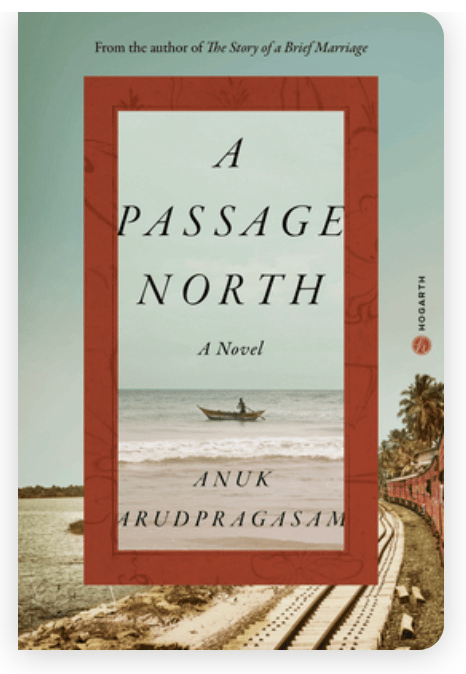
📚 My top book recommendation:
A Passage North - Anuk Arudpragasam
🎶 My anthem:
And the Healing has begun - Van Morrison
🌈 Something that made me feel joy recently:
Playing Monopoly Deal with my friends
A message from Risandi
I am currently undertaking the implementation aspect of my project as a research intern at the University of St Andrews, and hope to undertake my LIA at CERN tackling similar themes, so if you have any questions, thoughts or input about my work I would love to know! Please email me: ri41@st-andrews.ac.uk
If you want to learn more about Risandi's work, explore her research here and follow her on LinkedIn. Risandi is a Laidlaw Undergraduate Leadership and Research Scholar at @University of St Andrews. Become a Laidlaw Scholar to conduct a research project of your choice, develop your leadership skills, and join a global community of changemakers from world-leading universities.
Find out more about the Laidlaw Scholars Undergraduate Leadership and Research Programme.
.
🔦 Discover more Scholar Spotlights:
⚡️ Sebastian Glasper, a Laidlaw Scholar at the University of Leeds, explores social media’s role in mitigating loneliness among older adults.
⚡️ Eliana Amoh, a Laidlaw Scholar at Cornell University, explores the intersection of education, labour, and migration in and out of Ghana.
⚡️ Sophia Waseem Khan, a Laidlaw Scholar at Durham University, champions sustainable agriculture through innovative ion recovery.