You all have the courage to dare greatly. Life is too short not to take chances on yourself. Because the only failure in life is not trying.
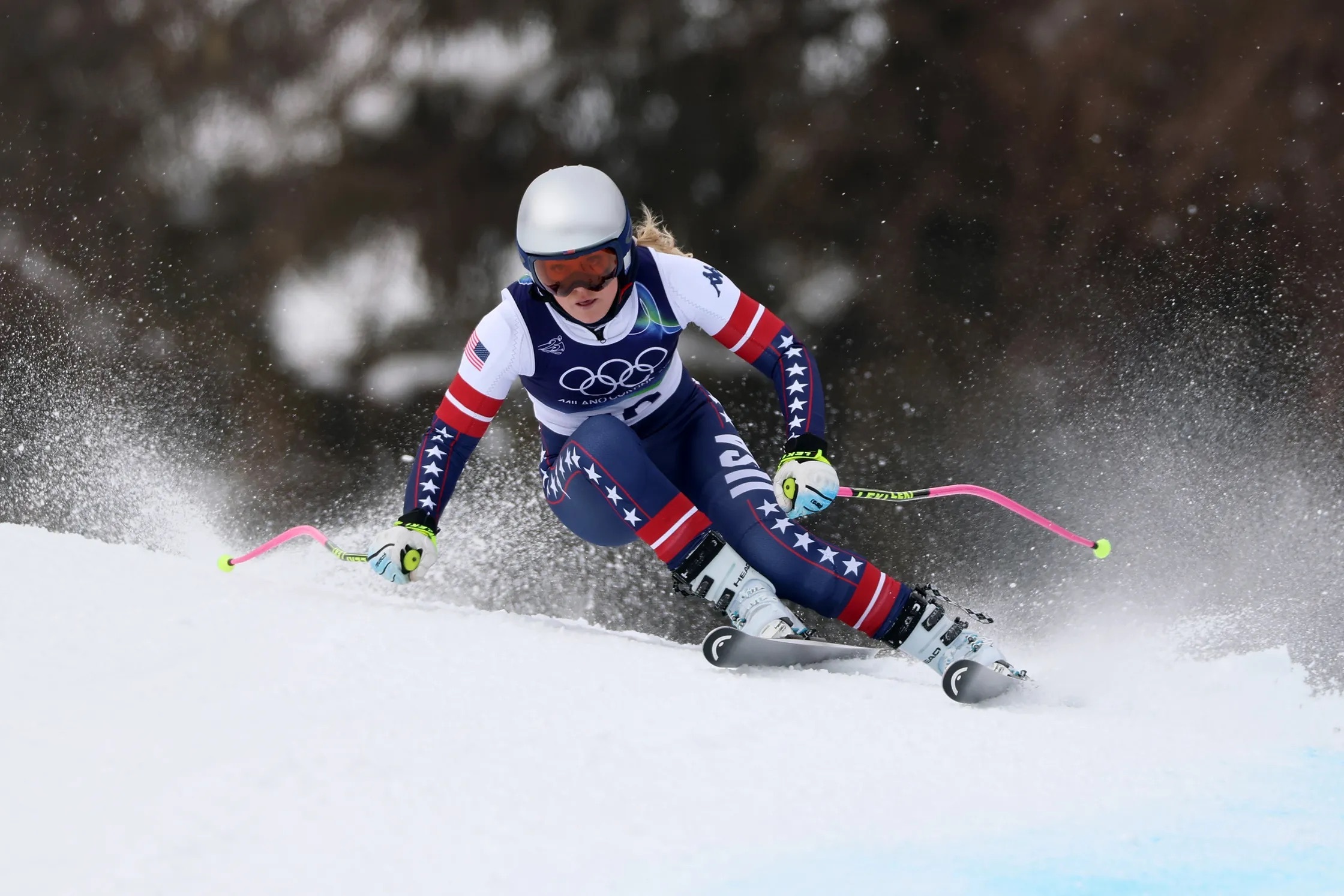
Lindsey Vonn: The Courage To Begin, And The Courage To Return
On 8 February 2026, Lindsey Vonn entered the Olympic downhill course at Milano Cortina having already lived a full career's worth of injury, recovery and return. She had retired in 2019, rebuilt herself across five years of surgery and rehabilitation, and qualified for these Games on the strength of will as much as speed. What followed was a crash that ended her medal bid and sent her back into surgery. In the days that followed, she wrote publicly not about loss but about the decision to show up at all. This week, we reflect on what her words ask of us.
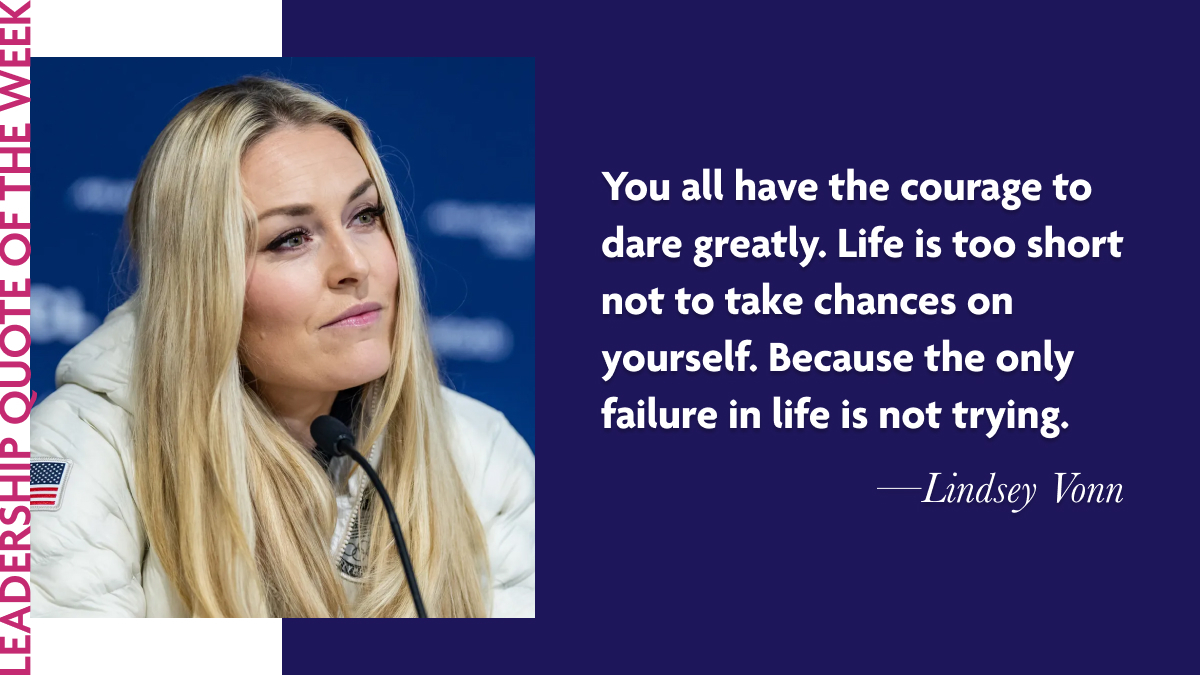
Lindsey Vonn: "You all have the courage to dare greatly. Life is too short not to take chances on yourself. Because the only failure in life is not trying."
What Courage Actually Costs
It would be easy to read Vonn's words as the kind of uplift that follows a difficult moment, a way of making meaning after the fact. But the context refuses that reading. She wrote these words knowing she had raced into the Olympics managing a significant knee injury, that the crash had caused serious harm, and that she now faced another long rehabilitation. Her endorsement of courage was not retrospective comfort. It was a statement made at the exact point where courage had proven expensive.
This matters for how we understand the leadership she is describing. Taking a chance on yourself, in Vonn's framing, does not promise a clean outcome. It does not resolve the tension between ambition and risk. What it does is insist that the attempt itself carries value independent of the result. The failure she names is not falling short of a goal. It is the prior decision not to try, the withdrawal that keeps a person permanently safe and permanently uninvested.
Daring Greatly As A Practice Of Leadership
Vonn's words resonate beyond sport, and her leadership beyond the slope reflects this. Through the Lindsey Vonn Foundation, she has worked for over a decade to extend opportunity and confidence to girls from underserved communities, through scholarships and the STRONGgirls programme. The foundation's work is built on the conviction that courage is not an innate trait distributed unevenly at birth but a capacity that grows when young people are given the conditions, the resources and the belief that their attempt matters. In this sense, her post-crash reflection and her philanthropic work point in the same direction: towards a world where more people feel entitled to try.
This week also marks International Women's Day, whose 2026 themes ask us to consider both reciprocity in opportunity and the structural conditions that allow women and girls to act on their ambitions at all. Vonn's life and her foundation's mission sit squarely within that conversation. The courage to dare greatly is not equally available to everyone. Creating the conditions in which more people can access it is its own form of leadership.
Vonn's challenge aligns with the Laidlaw value of being #Brave and the Oxford Character Project virtue of #Courage. Being brave means committing to an endeavour without the guarantee of a favourable result, and continuing to show up for it across setbacks. Courage means returning, not unchanged but undeterred, when circumstances knock a course of action sideways.
A Call To Reflect
We invite you to reflect on Lindsey Vonn's challenge. Where in your research, Leadership in Action project or studies have you held back from attempting something because the risk of not succeeding felt too great? What would it mean to measure your effort not by its outcome but by the quality and honesty of the attempt itself? How might you, through your own work or your engagement with the scholars around you, help to build the conditions in which others feel entitled to dare?
Quote image credit: Kevin Voigt
Poster image credit: Julian Finney
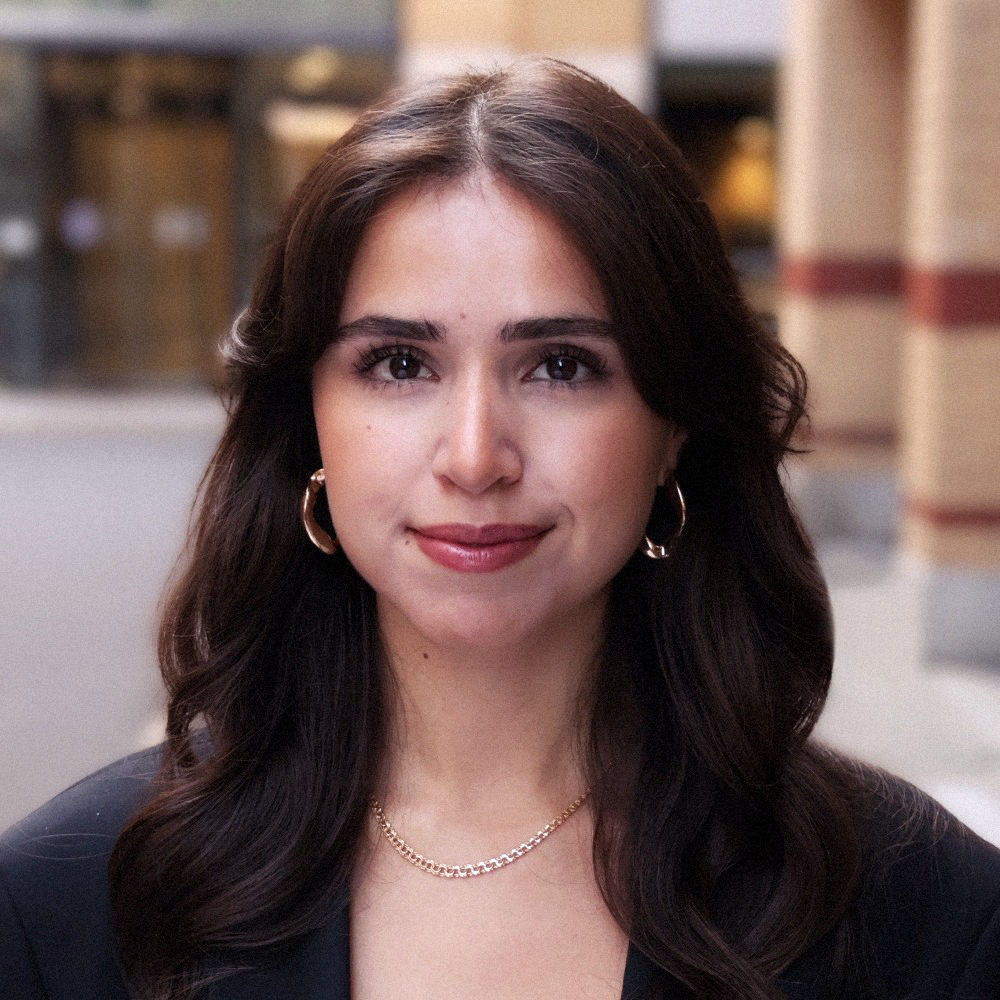
Hi! I'm Amanda, a third year Neuroscience student and Laidlaw alum from UCL. I'm Swedish-Persian and grew up in Sweden before moving to London for uni. These days, alongside my studies, I work for the Foundation as a Marketing Assistant.
For my first year research project, I worked on optimising alginate hydrogels for 3D astrocyte culture systems. In simpler terms, I was figuring out the best way to prepare a jelly-like scaffolds so that star-shaped brain cells called astrocytes could grow in three dimensions rather than flat on a dish. This matters because 3D environments mimic the brain more realistically, which could help researchers develop better treatments for neurological disorders!
For my Leadership-in-Action project, I co-created Beyond the Books, a resource designed to help students from underrepresented backgrounds navigate the unwritten rules of university life, from internships and networking to professional opportunities that aren't always obvious if you're the first in your family to go to uni.
Always happy to connect, whether you want to chat about neuroscience, widening access, the Laidlaw experience, or just say hello! One of my favourite things about this community is getting to meet people from different universities and backgrounds, so please do reach out! 🌟