Scholar Spotlight - Jolan Bonny
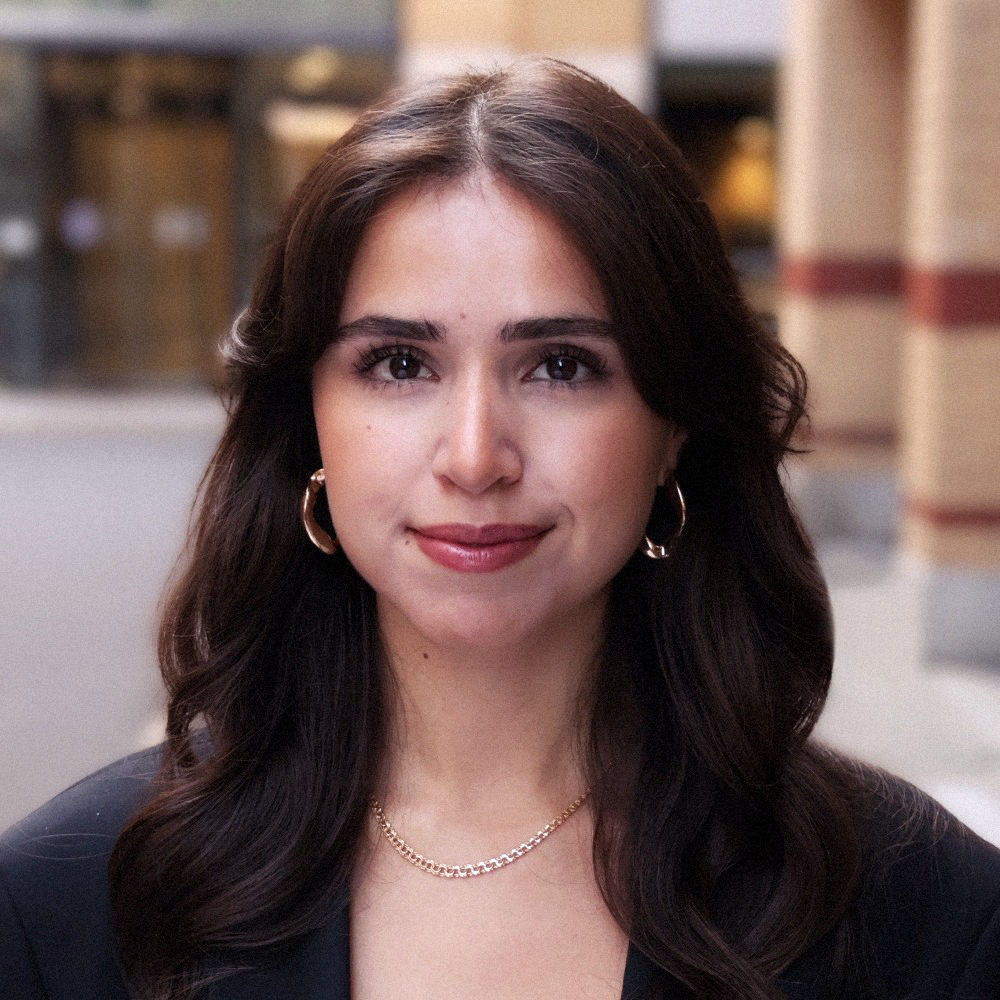

Jolan Bonny, a Laidlaw Scholar at EPFL, is working on methods to quantify how reliable extreme risk predictions are, making it faster to assess clustered disasters in climate science, hydrology, and finance.

Research Title:
Estimating the Extremal Index and Its Uncertainty
Please briefly outline what your research is about, and its potential real world impact
Extreme events such as floods, heatwaves, or financial crashes are rare, but they often occur in clusters rather than as isolated events. This clustering strongly affects how risks are modelled and predicted. My research focuses on a key parameter from extreme value theory, the extremal index, which captures how strongly extreme events tend to occur in groups and plays a central role in risk assessment.
Beyond estimating this parameter, an important challenge is measuring how uncertain these estimates are. In practice, uncertainty is often assessed using simulation-based methods that are computationally expensive. My work aimed to better understand these existing approaches and to develop a faster, analytical alternative for quantifying uncertainty.
The real-world impact of this research lies in improving the efficiency of extreme-risk modelling. By replacing repeated simulations with an analytical method, uncertainty can be estimated much more quickly, making large-scale or repeated analyses more feasible. In addition, the analytical approach makes it possible to identify which extreme events in the data drive the uncertainty of the estimate. This is particularly relevant for applications in climate science, hydrology, and finance, where both speed and reliability are critical.
Where did your passion for this research originate? How does your personal story feed into it?
My passion for this research comes from a long-standing interest in mathematics and in using mathematical tools to describe and understand the world. I have always been drawn to the idea that abstract concepts can be used to make sense of real phenomena. This naturally led me toward modelling, and more broadly toward statistics, where theoretical ideas are constantly tested against data and real-world behaviour.
What I particularly enjoy about this field is the balance between technical depth and critical thinking. Building methods, running simulations, and carrying out analyses are essential, but they are never sufficient on their own. Just as important is choosing appropriate approaches, questioning assumptions, and understanding where uncertainty or limitations come from. I find this combination of rigour and judgement especially motivating.
This way of thinking naturally led me to work on extreme value statistics. Studying rare but impactful events requires strong theoretical tools, but also a careful and critical approach to avoid misleading conclusions. My research reflects how I approach problems more generally: developing solid methods, while remaining attentive to how well they describe reality and how they can be improved.
How have you applied your leadership skills in real life? What are some insights & lessons from your experience?
I applied my leadership skills most concretely during my military service, where I served as a sergeant in an environment built around hierarchy and authority. Being placed in such a setting allowed me to observe leadership in its most direct form, including how authority can be misused when it is treated as an end in itself rather than a responsibility.
This experience led me to reflect deeply on what effective leadership actually requires. I learned that authority can impose compliance, but it does not create commitment. In demanding conditions, people respond less to rank than to fairness, clarity, and the sense that their leader understands what they are going through. I became increasingly aware of the importance of remaining grounded, sharing effort, and refusing the temptation to distance myself simply because my position allowed it.
Leadership often meant navigating tension: maintaining high standards while recognising human limits, making decisions under pressure without losing perspective, and accepting responsibility when outcomes were imperfect. I learned that credibility is built through consistency and presence, not through commands alone.
Overall, this experience shaped my understanding of leadership as a form of responsibility rather than control. To lead well is to create structure without rigidity, authority without detachment, and ambition without disregard for others. It taught me that leadership is not about standing above a group, but about standing firmly within it, especially when circumstances are difficult.
Please provide a short list of bullet points of your top leadership tips
- Lead from within the group, not above it
- High standards only work when paired with fairness
- Credibility comes from consistency over time, not from titles
- Use authority to create clarity, not distance
What does it mean for you to be a Laidlaw Scholar?
For me, being a Laidlaw Scholar means being part of a community of people who are ambitious, curious, and committed to improving themselves, not only academically but also personally. I was drawn to the programme because of the opportunity to meet others who share a similar mindset: a desire to aim high, take responsibility, and constantly push their own limits.
What I value most is the environment Laidlaw creates. Whether through research, leadership training, or shared experiences outside the classroom, it encourages challenge, reflection, and growth. I have seen how being surrounded by driven and thoughtful people naturally raises standards and expectations.
Being a Laidlaw Scholar is therefore less about a title and more about belonging to a group that values effort, integrity, and the pursuit of meaningful impact over the long term.
Which particular leaders inspire you the most and why?
One of the leaders who has inspired me most is my lieutenant during my military service. In an environment that often encourages a highly authoritative style of leadership, he chose not to rely on rank alone. Despite holding a senior position, he remained attentive to his subordinates and consciously resisted the easier path of leading through authority for its own sake. What stood out to me was his ability to maintain high standards while staying aligned with his values, even when the environment pushed in the opposite direction. His example strongly influenced how I later approached leadership as a, sergeant and shaped my understanding of authority as something to be used thoughtfully rather than automatically.
Briefly describe a scene from the future you are striving to create.
I live in a small house surrounded by nature, where I cultivate my own food and dedicate time to learning and sharing knowledge. My days are guided by curiosity and meaningful connections, and I feel grounded, energized, and free to explore new ideas.
Quick Fire Questions
📺 Currently Binging:


📚 My top book recommendation:

🎶 My anthem:
Black by Pearl Jam
🌈 Something that made me feel joy recently:
Getting coffee with a friend I hadn’t seen in a long time.
If you want to learn more about Jolan's work, explore his research here and follow her on LinkedIn. Jolan is a Laidlaw Undergraduate Leadership and Research Scholar at @EPFL . Become a Laidlaw Scholar to conduct a research project of your choice, develop your leadership skills, and join a global community of changemakers from world-leading universities.
Find out more about the Laidlaw Scholars Undergraduate Leadership and Research Programme.
.
🔦 Discover more Scholar Spotlights:
⚡️ Sebastian Glasper, a Laidlaw Scholar at the University of Leeds, explores social media’s role in mitigating loneliness among older adults.
⚡️ Eliana Amoh, a Laidlaw Scholar at Cornell University, explores the intersection of education, labour, and migration in and out of Ghana.
⚡️ Sophia Waseem Khan, a Laidlaw Scholar at Durham University, champions sustainable agriculture through innovative ion recover