
About Rinaz Jamal
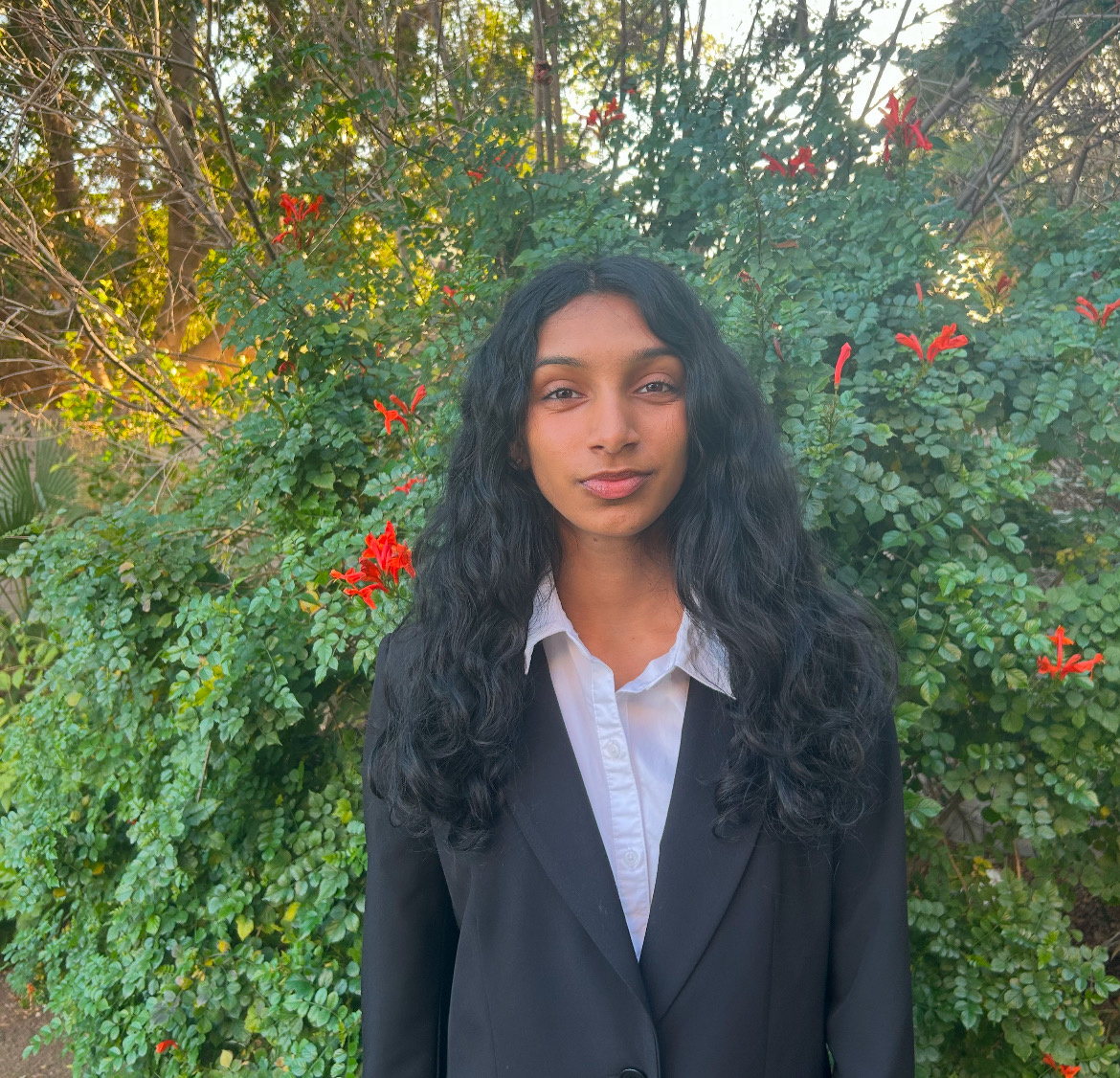
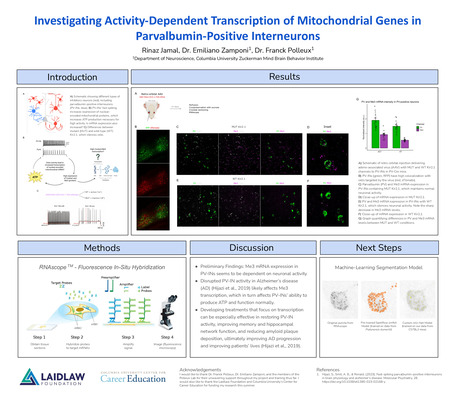
Hey everyone! My name is Rinaz Jamal, and I'm a rising sophomore at Columbia University majoring in Neuroscience & Behavior. I am passionate about helping individuals with mental health and neurodegenerative disorders feel seen, heard, and supported. This summer, I will be doing research at the Zuckerman Mind Brain Behavior Institute under the supervision of Dr. Franck Polleux. My project aims to understand the activity-dependent regulation of mitochondrial protein expression in parvalbumin-positive interneurons, which are among the first neurons to fail in Alzheimer's disease (AD). I am excited to add to the scholarly conversation around Alzheimer's research by identifying the molecular pathways that would be most valuable to target for drug development in the future. Because PV-INs are among the first neurons to fail in AD, understanding these metabolic pathways and restoring levels of mitochondrial proteins has the potential to improve clinical outcomes much earlier in AD progression than current methods.
At Columbia, I am involved as a Scientific Review Editor for Grey Matters, our undergraduate neuroscience journal; Blog Editor for the Journal of Global Health; Conference Committee member and Peer Buddy for Columbia Synapse, which advocates for patients with acquired brain injury; and volunteer with Brain Exercise Initiative, where I visit patients with Alzheimer's disease and dementia at a local assisted living home. I also play flute and piccolo in the Columbia University Orchestra. In my free time, I love to read and explore New York City. Please feel free to reach out; I would love to get to know you all!









Recent Comments
Hey Karthik! I think your approach to the manuscript is solid. Six weeks is not enough time to write a publication-ready manuscript, but it is a great amount of time to get some initial results and, even more importantly, get the ball rolling for more in-depth research in the future. I also really appreciate your insights on the flexibility of leadership. The workshops helped me realize that leadership is very dynamic and centers around doing whatever the moment calls for while supporting others along the way. I'm excited to read both your Laidlaw manuscript and the one you write down the line! Hope we can stay in touch after this summer!
Hey Matthew! Great post as always. I'm sorry about your uncle. Neurodegenerative diseases take an unimaginable toll on patients and their loved ones, which is why projects like yours are so important. Computational approaches and machine learning are revolutionary new tools for medical research, especially for time-intensive processes like identifying appropriate sequences for RNA therapy. This is exciting work, and I'm looking forward to seeing what you do over the next few months/years!
Hey Tomás! I really enjoyed reading your post. As someone who was tied between Amiable and Analytical, I definitely relate to the need to improve on assertiveness. We can do it, though! Amiability is such an important communication style, especially to help people feel appreciated and motivated. Tempered with more assertiveness toward ourselves and others, we can become invincible :)
Hey Lydia! I find your consideration of the issues at hand, especially those related to ethics, very thoughtful and balanced, which is essential for a complex topic like this one. How do you locate all of a company's communications about its human rights commitments when they are expressed across a variety of sources? Have you developed a systematic approach to search for these communications or is it more of a case-by-case basis. Also, based on your research so far, I'm also curious to know how many companies in the arms industry have you found to fulfill their human rights obligations. Excited to see where this project goes!
Loved this post, Sindhu! Your reflections are very thoughtful and nuanced. I completely relate to your perspective on the ethics of mouse research; it’s disturbing to watch a mouse die but surprisingly easy to forget that the tissue we analyze comes from once-living animals. I agree that, while the focus should be on the human application and the unique benefits mouse research can provide, we must bear in mind that many animals' lives have been lost. In the meantime, it is important for us to minimize the harm done to these mice by experimenting on as few animals as possible and caring for them properly while they are alive.
So cool, Claire! I had never really thought about applying eye-tracking software to learning chemistry, but when you mentioned that this technology could be integrated with AI tutoring systems, I also became excited by the prospect of guiding students to learn more effectively by focusing on more relevant aspects of the material. I find this interdisciplinary research so cool and am excited to see what you do next!