1. What are you most excited about as you start your Laidlaw research summer?
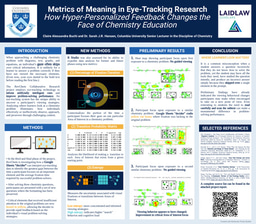
This week I have begun reading textbooks, articles, and technology manuals devoted specifically to the techniques and tools for eye-tracking in chemistry education research, many of which were written by my PI and research group (RevChem) leaders. With each new piece of literature, I am growing more and more excited to apply these findings to the lab procedures to be conducted in the weeks to come. Video-based eye-tracking emerged in the 1970s, but this technology's application to chemistry education research is relatively new. I am very excited to be a part of RevChem's innovative work, helping craft a procedure for this new phase of the research project, and to continue learning about the intricacies of eye-tracking data and the unanticipated educational applications with which it is associated.
In addition, I have loved meeting everyone in the program and working with many of them for the asynchronous parts of our projects. I look forward to getting to know each researcher even better and for the leadership events in the weeks to come.
2. This week, the discussions we held about research cut across the disciplines. How does the interdisciplinary nature of this program, the fact that students are focusing on such a diverse range of projects, help you think about your project and/or your academic interests more broadly?
Eye-tracking research is innately integrative and requires insight from the fields of chemistry, biology, psychology, philosophy, education, and computer science, among others. Being surrounded with researchers in all of these disciplines and beyond is very inspiring and encourages me to consider the directions this research can be taken in the future to have even greater specificity and niche applications. Learning from bioethics researchers about their work has been fascinating and is already influencing my academic interests regarding medical humanities and human rights.
3. As you begin your individual research projects this week, do you anticipate any challenges in getting started? If so, what are they?
The current task of the RevChem research team is finalizing the logistics of this next phase of the eye-tracking experiment and certifying that all methods to be employed in the study directly align with those specified in the initial IRB proposal. One main challenge remains ensuring that the procedural design includes specificity yet allows room for new conclusions to be drawn from the data that could not have been anticipated. Allowing for variability in future methods of data analysis is key to determining which independent variable best explains an observed stratification in the results.