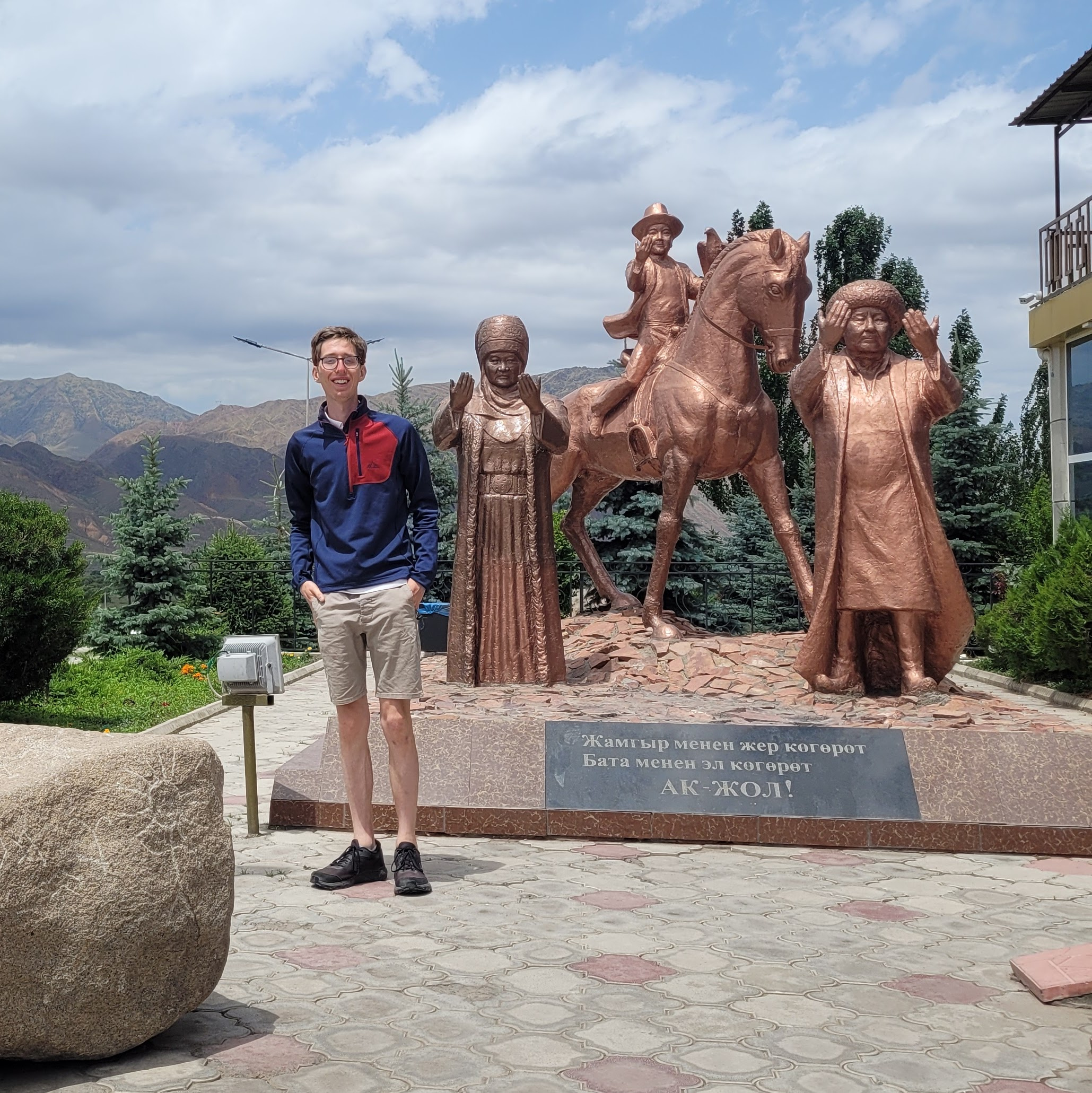
Charlie Norman, a University of St Andrews Laidlaw Scholar, on looking beyond institutions, making progress and inspiring change.
Research title: Investigating Regional Identity in Nation Branding and Nation Building in Kyrgyzstan
My research project aimed at trying to better understand the role of ‘regional identity’ in two key aspects of how a state develops. In other words, trying to appreciate how understandings of “where” a state is in relation to the wider world shapes how the state is thought of, both internationally (by “branding” the nation) and domestically (“building” the nation). I chose to focus on Kyrgyzstan. Over its long national history but short political independence, Kyrgyzstan has always been deeply intertwined with overlapping (sometimes contradictory) regions; post-Soviet, Central Asian, Islamic, Turkic, and Eurasian, all with their own values and geography. Belonging to these is a question of culture and politics and has affected how Kyrgyzstan is understood and represented; by the state, its citizens, and international actors.
Regions, states, nations, and identities are all fluid and contestable, and they change over time. They determine who “belongs” and to what, and they exist in parallel. My research involved tracing one route of “constitution”. I started by looking at Kyrgyzstan’s membership in regional organisations (such as the CIS or Central Asian groups) and how they project different, overlapping regional identities. Through fieldwork, I then looked at how we could account for this by understanding how “elites” (academics and politicians) viewed the state, the nation, and the roles of regions within it. By taking a more “bottom-up” approach to states and their behaviour, this research was designed to bring to light the complex ways that history, culture, geography, and politics can influence state behaviour and individual sentiment. If we can better understand this complexity, policies and both the regional institutional and domestic levels could be better designed to encourage cooperation and more inclusive and effective feelings about who “we” are.
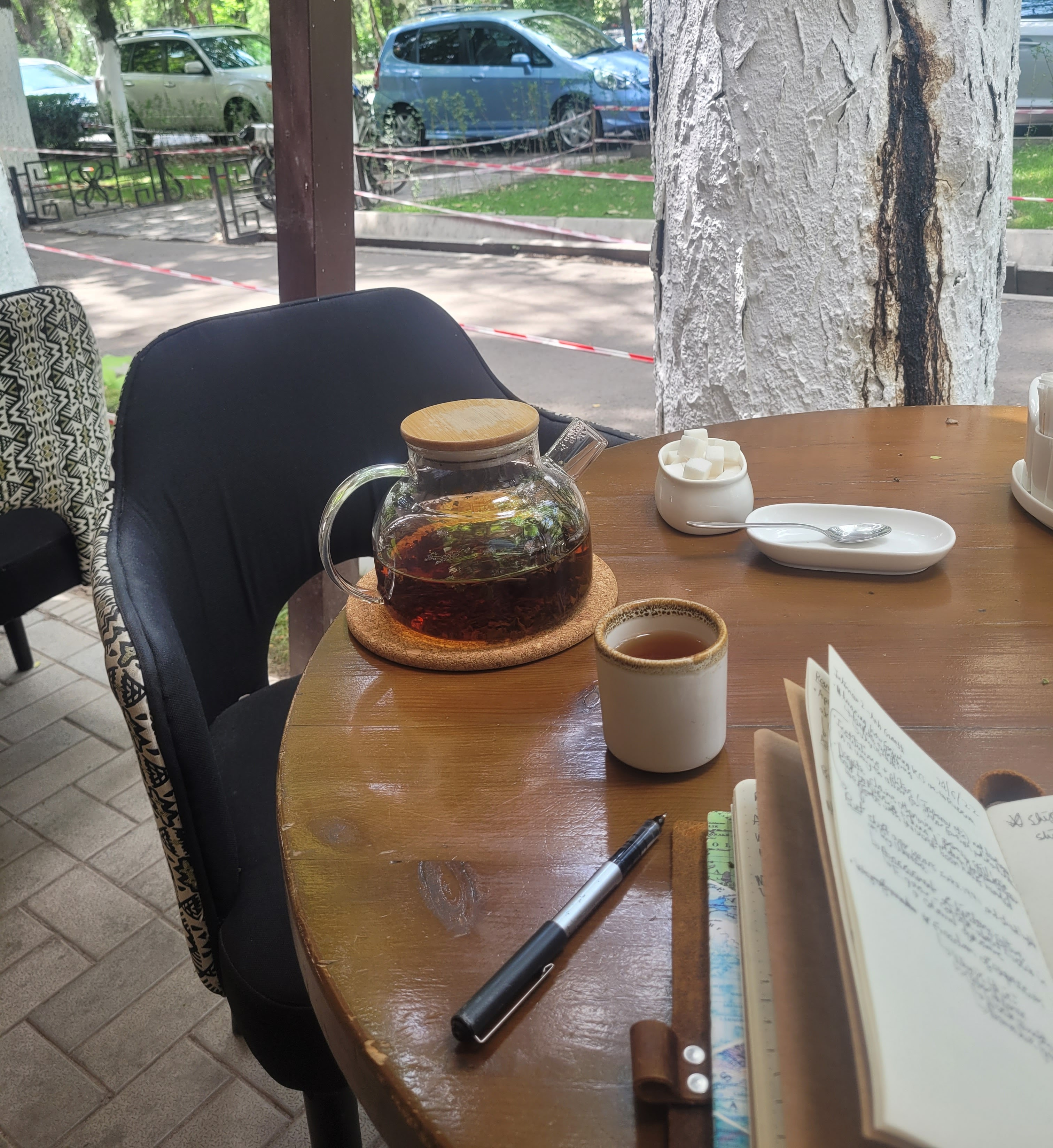
Writing up my fieldwork notes post-interview, fuelled by black tea.
Where did your passion for this research originate?
This project has allowed me to combine so many of my academic (and personal!) interests. I’ve always been fascinated by Central Eurasia, both in international relations but also by its history and culture. It was a postgraduate specialism I stumbled across while trying to keep myself busy during the lockdown, a region that barely ever gets coverage, especially at an undergraduate level (despite its obvious importance- it’s “Central” for a reason!).
The focus on regional cooperation came about from a conviction that coordination above the state level is both necessary and currently broken! In Central Asia, most of the pressing issues, things that I’m passionate about helping to solve, are “cross border”, yet it’s a region that has had little cooperative conversation, let alone action. We’ve all seen recently that regional identity is something that can be both used for cooperation and for conflict, and it can bring together and divide.
More broadly, my approach has been shaped by how I try to approach international relations. I think it’s important to go “below” the state; to look at individual stories, societies, and dynamics. IR can be so abstract and theoretical, and I’ve been very disillusioned with it at times. It was important to me to talk to real people and to hear about how their lives shape and are shaped by global politics. When we forget that global affairs are, at their core, about people and their everyday lives, we lose the “humanity” with dire consequences for policy, practices, and people.
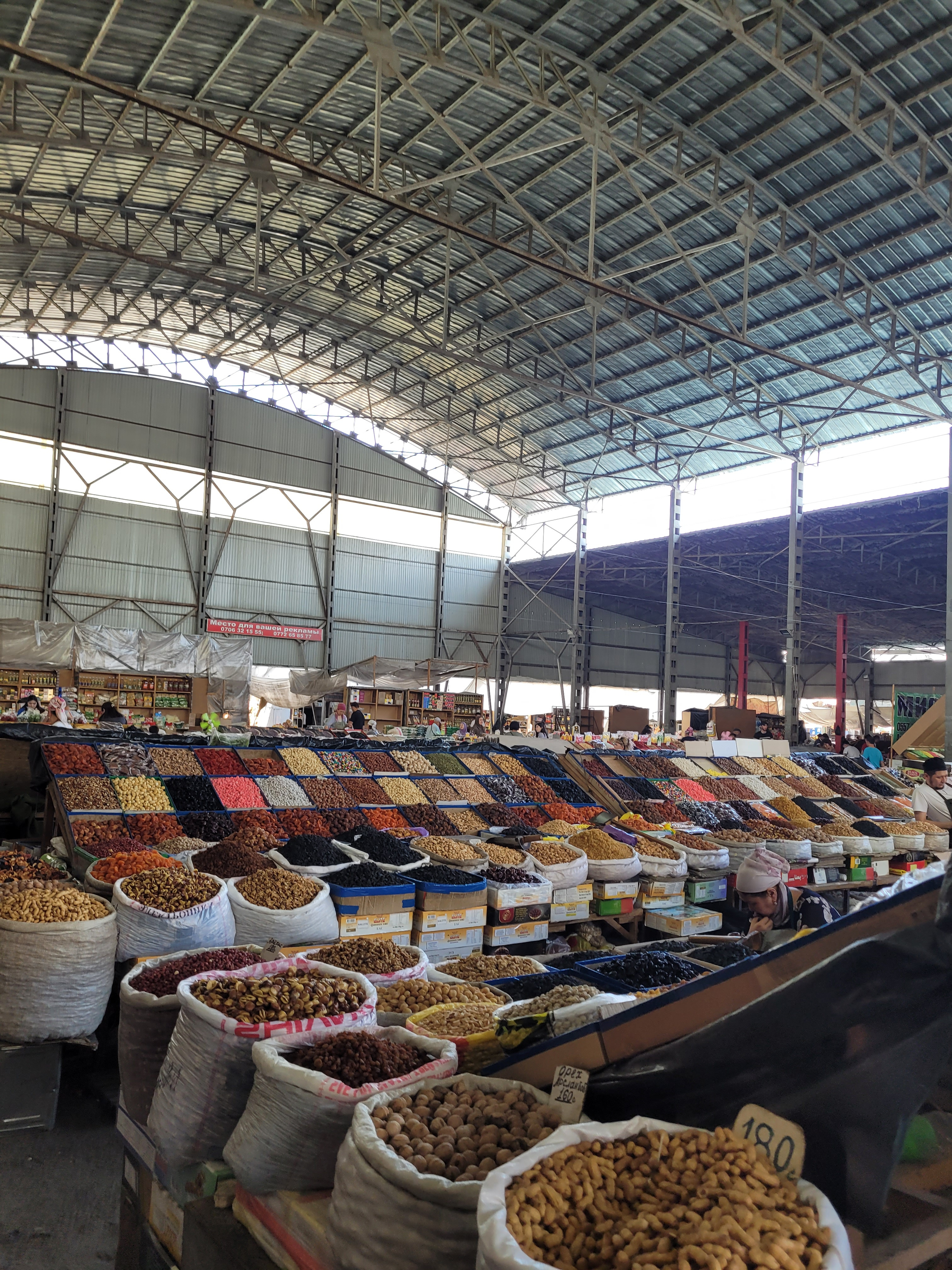
Inside Osh Bazaar
What is the most memorable moment from your Laidlaw experience?
I’d love to cheat and say that between the bazaars and the Presidential offices, being outside Europe for the first time and having never done a fieldwork interview, the entire two weeks in Bishkek were pretty memorable! However, there’s one moment that springs to mind, spent in a traditional Chaikana (teahouse). If you’ve followed my fieldwork trip on my other blogs or on Twitter, you’ll know how much of a fan of Kyrgyz food I’ve become! I was tucking into a plate of Pilaf on a veranda shaded from the 40℃ heat, mulling over a full day of interviews. My WhatsApp rang (even the most official arrangements were done there), and I secured an interview with a civil society activist I’d been keen to meet. As we were chatting, she said a line that has stuck with me; “I’m glad you’re going beyond the institutions”, she said, “it’s about the people’s lives, and it’s an important time for us.” It probably sounds nostalgic but at that moment, everything “fit” together; the people, the place and the politics. I’ve never seen myself as an academic, and it finally felt like IR had become more than a textbook subject.
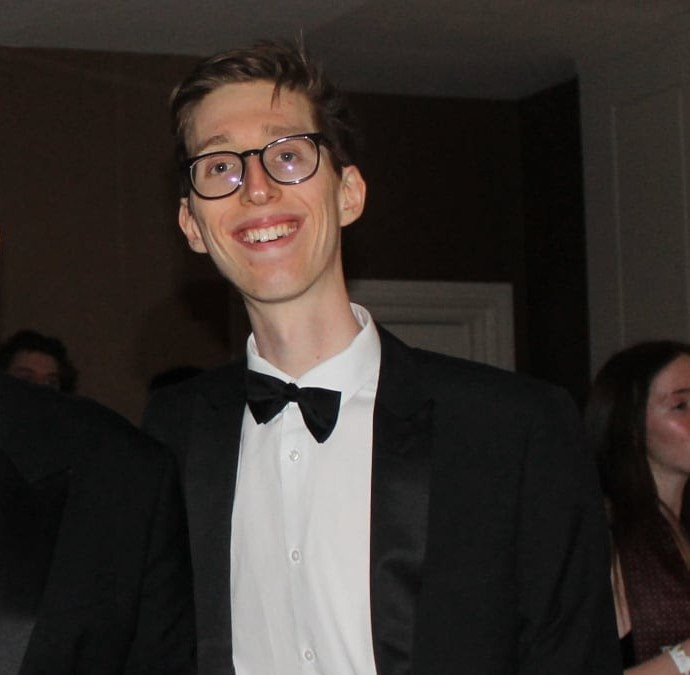
At a service station (!), travelling between Choplan Ata and Bishkek.
What is the biggest challenge you came across, and what did you learn from it?
At a couple of points in my project, I found myself stalled, which was really difficult. After coming across a new concept or thinking of a new idea or angle, I’d get caught up trying to work out how it could fit into my current model. After a few hours (or days) going around in circles, scribbling and crossing out, I found I needed to take a step back. Oftentimes, I avoided running with something and seeing what would happen before I was confident that it would work. I was afraid of the uncertainty of these projects. By the time I got to my fieldwork (four weeks in), I'd like to think my outlook had changed for the better. My “multidimensionality” concept developed over my time abroad. About halfway through, I brought it up (half-developed) with probably the most “academically” experienced interviewee. I stuttered and stumbled and probably made a bit of a fool of myself, but by the end of it, my idea had moved on hugely. I felt, for a few minutes, like I was moving backwards, but I’ve learnt that that was an important part of moving forwards.
What does it mean for you to be a Laidlaw Scholar?
It’s the format of the Laidlaw Scholarship, combining leadership, research, and social action, which I think is its defining feature (and originally inspired me to apply for it). Research is about being curious, thorough, and having integrity, but being a Laidlaw scholar is about taking that one step further. Being pragmatic, open to being challenged, and trying to “use” our understandings and experience, bringing them into the “real world”. I think that’s something that’s going to be increasingly important in the future, where the binaries between people who “think” and people who “do” won’t (and can’t) last much longer. Change needs to be created, but it also needs to be inspired.
Which leaders inspire you and why?
The leaders that inspire me the most are often ones that we don’t generally hear about. I’m not really inspired by huge crowds and big stages, and so although the people who have reached them can often do great things, they don’t necessarily inspire me to action. I’ve been fortunate, however, to work with a lot of leaders whose work, as much as their words, has been inspiring. I even found this in my research, whether the head of an NGO in Bishkek, who had transformed a well-known philanthropist’s dollars into electricity for Kyrgyz villages and books for Kyrgyz children, or the ambassador, Charles Garrett, whose pragmatic and focused approach to aid and investment led to him being celebrated as “a two-way ambassador”.
I do think that integrity is so important to leadership. Whilst there are prominent leaders who, in recent months and crises, have demonstrated this (Rory Stewart’s considered approach to emotive issues has stood out to me), I admire the way that lesser-known leaders “own their responsibility” in leadership (the position, the task and the team) through their actions.
Briefly describe a scene from the future you are striving to create.
What motivates me is the connections between people. To me, what’s important are relationships built on understanding, a sense of shared purpose, and on the diversity that different people can bring to the table. That’s my broader hope for the world, and building it is something that I want to be a part of- connecting people. I know that’s quite abstract, so what would a scene from that look like? To me, whether it’s in international or domestic politics, business or society, this would involve people sitting around a table, making a real effort to engage with the issues, and the people who may have been obstructive also conceal tremendous opportunities. Crucially, acting on these dialogues too. In one of those spheres, where one of those conversations is taking place, I like to imagine myself sitting around one of those tables!
Something personal to add
I’ve been invited to provide a guest contribution to the International Intrigue newsletter (highly recommended as a daily bitesize roundup of geopolitics).
🌈 Something that made me feel joy recently: Having been so fortunate to travel and explore over the summer, I’ve spent the last few weeks of Summer at home. Being with family, lots of time on my bike, lots of reading and plenty of tea, and grateful for all of it (thanks Mum and Dad!).
You can find Charlie on LinkedIn. If you are interested in learning more about Charlie's research, check out his research posterand his research paper.
Charlie is a Laidlaw Undergraduate Leadership and Research Scholar at the University of St Andrews. Become a Laidlaw Scholar to conduct a research project of your choice, develop your leadership skills, and join a global community of changemakers from world-leading universities.
⚡️ Adebusola Adegbuyi, a Laidlaw Scholar at Saïd Business School, on facing challenges with optimism and empowering young women to begin careers in technology.
⚡️ Aya Hammad, a University of York Laidlaw Scholar, on understanding the origins of cancer, promoting equality in healthcare, and learning to be adaptable.
⚡️ Xuerui Yin, a Laidlaw Scholar at London Business School, on overcoming societal norms, creating opportunities for underrepresented groups, and working with compassion.
⚡️ Areesha Imaan Siddiqui,a University of Toronto Laidlaw Scholar and Co-President of the Laidlaw Alumni Society, on combatting homelessness and leading with open, honest communication.
⚡️ Polina Foteva, a University of St Andrews Laidlaw Scholar and STEM Subject Co-Lead, on working with a recently-discovered enzyme and making scientific knowledge more accessible.