Not all readers are leaders, but all leaders are readers.
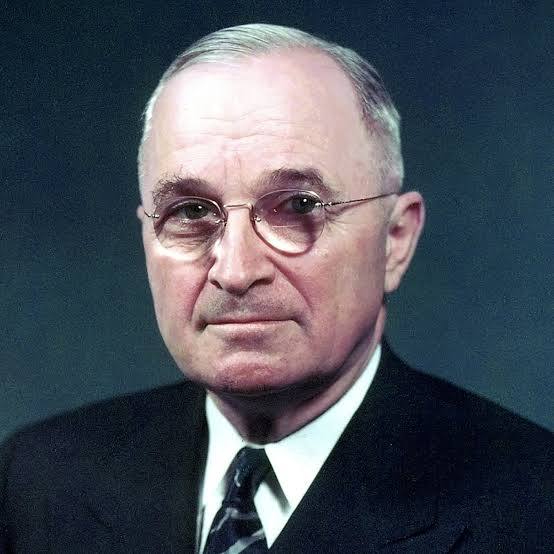
Literacy as Leadership: Harry S. Truman
On Monday, 8 September, we mark International Literacy Day, UNESCO's global recognition that affirms literacy as a foundation for dignity and opportunity. Yet for leaders, this foundation extends far beyond decoding words on a page. Today we explore Truman's insight into why true leadership demands a deeper form of literacy altogether:
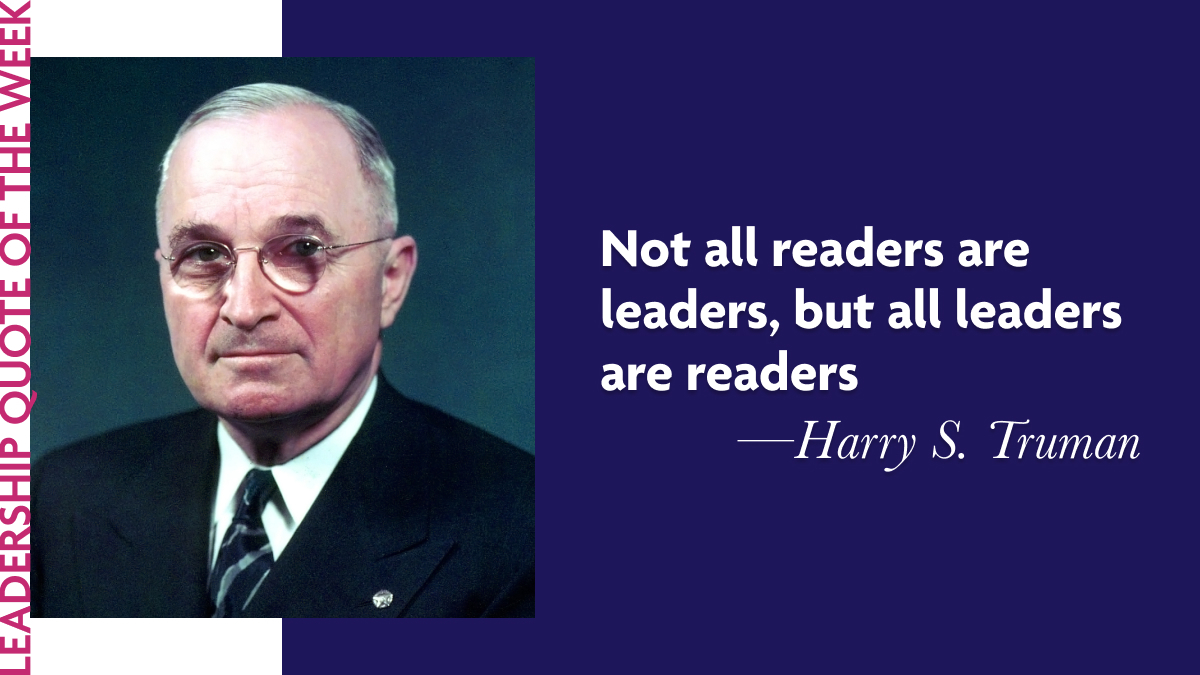
Harry S. Truman: "Not all readers are leaders, but all leaders are readers."
The Weight of Words and Decisions
Harry S. Truman ascended to the U.S. presidency at one of history's most pivotal moments, inheriting decisions of exceptional gravity and consequence. His tenure saw the conclusion of World War II, the establishment of NATO, and the Marshall Plan's reconstruction of Europe. Yet Truman's legacy remains deeply layered and marked by choices that continue to provoke profound moral and strategic debate across generations. This very complexity reminds us that leadership is not the imposition of will but the constant effort to understand the world one seeks to influence while remaining humble before its depth and difficulty.
Leadership Rooted in Continuous Learning
Truman's insight reveals that authentic leadership requires an insatiable hunger for understanding, reading not only books, but the subtle texts of human behaviour, the historical narratives that shape present realities, and the ethical dimensions of power itself. Effective leaders must master many literacies, including the ability to sense unspoken tensions, to recognise wisdom in dissent, and to weigh the precedents that echo through contemporary decisions. Truman's controversial legacy serves as a profound reminder that even well-read leaders can make decisions that history judges harshly. Yet this reality reinforces rather than diminishes his central point: leadership without deep, continuous learning becomes dangerous. The complexity of Truman's choices underscores why leaders must read voraciously, not to guarantee perfect decisions, but to approach impossible choices with the fullest possible understanding of their weight and consequence.
Truman's approach aligns with the Laidlaw value of being #Curious and the Oxford Character Project Leadership Virtue of #Judgment. Being curious means maintaining lifelong dedication to learning and understanding complexity. Judgment means weighing knowledge, precedent, and consequence carefully before arriving at a decision.
A Call to Reflect
We invite you to reflect on Truman's powerful insight about literacy and leadership. As we observe International Literacy Day, consider: How has your commitment to reading, in its broadest sense, shaped your approach to leadership? What complex "texts" do you need to study more deeply to become the leader you aspire to be?
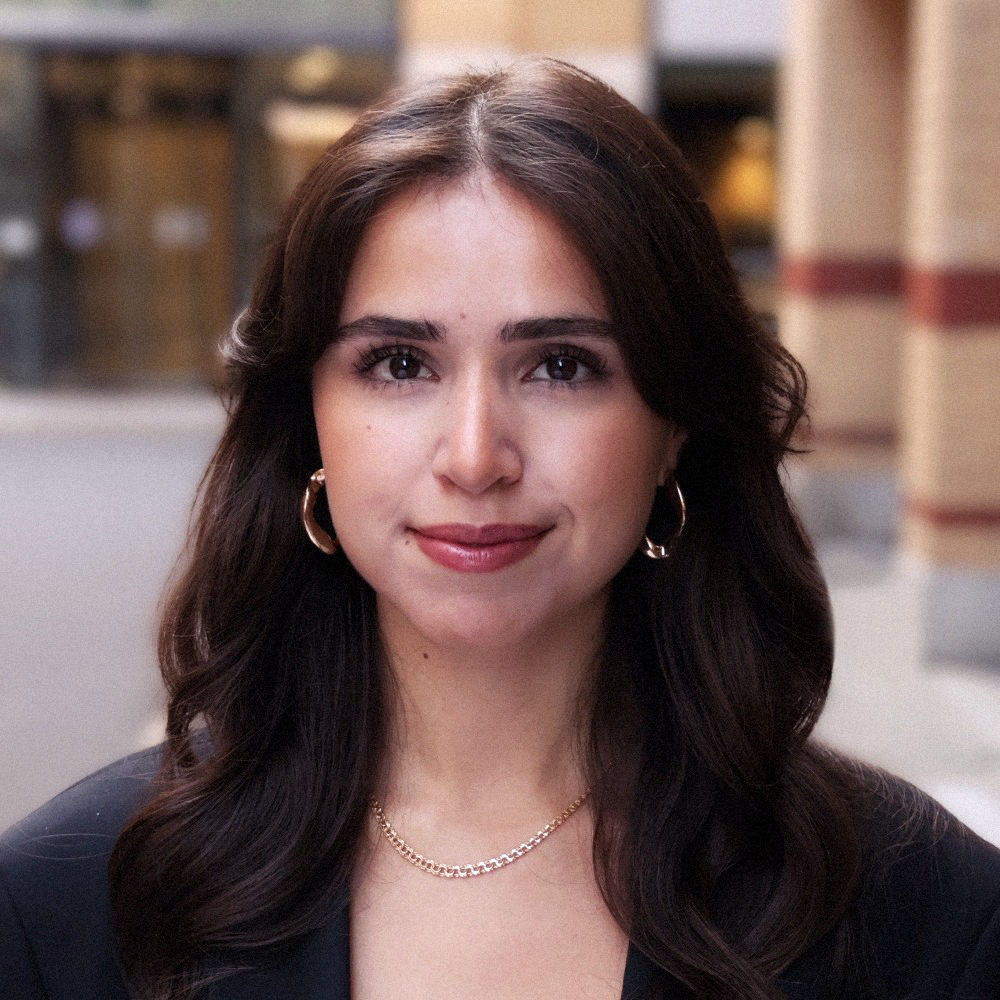
Hi! I'm Amanda, a third year Neuroscience student and Laidlaw alum from UCL. I'm Swedish-Persian and grew up in Sweden before moving to London for uni. These days, alongside my studies, I work for the Foundation as a Marketing Assistant.
For my first year research project, I worked on optimising alginate hydrogels for 3D astrocyte culture systems. In simpler terms, I was figuring out the best way to prepare a jelly-like scaffolds so that star-shaped brain cells called astrocytes could grow in three dimensions rather than flat on a dish. This matters because 3D environments mimic the brain more realistically, which could help researchers develop better treatments for neurological disorders!
For my Leadership-in-Action project, I co-created Beyond the Books, a resource designed to help students from underrepresented backgrounds navigate the unwritten rules of university life, from internships and networking to professional opportunities that aren't always obvious if you're the first in your family to go to uni.
Always happy to connect, whether you want to chat about neuroscience, widening access, the Laidlaw experience, or just say hello! One of my favourite things about this community is getting to meet people from different universities and backgrounds, so please do reach out! 🌟