Leadership Lab - Irene Tracey
Listen as a Podcast
About This Episode
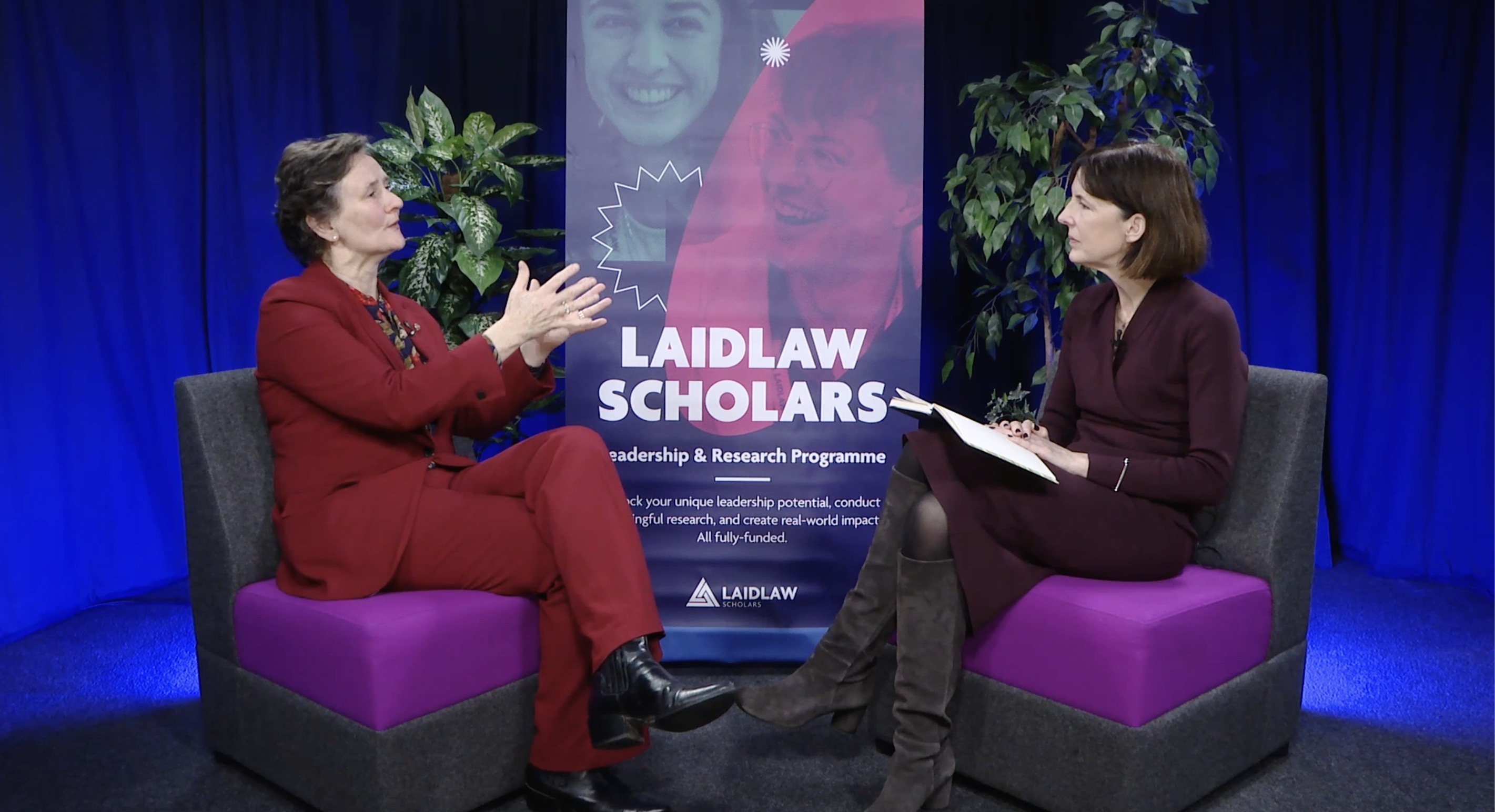
In this episode of the Leadership Lab series, Susanna Kempe, CEO of the Laidlaw Foundation, speaks with Professor Irene Tracey, Vice Chancellor of the University of Oxford and a world-class neuroscientist, about what it means to lead with optimism, honesty, and deep care for the environments in which people learn and thrive. Tracey reflects on a lifetime of being told she was a “born leader” and yet describing herself as a reluctant one, someone who never chased titles, but repeatedly stepped forward when she believed she could help others flourish. From captaining sports teams to running research centres, departments, and colleges, she explores how leadership is less about a single template and more about finding an authentic style grounded in energy, directness, and trust.
As an Oxford insider, Tracey offers a rare view of what it takes to lead a complex, devolved institution without losing touch with its people. She reflects on why staying close to students and staff matters, and how deliberately building real contact into her role helps her lead with perspective. That same clarity shapes her approach to access and inclusion. Tracey pushes back against outdated myths about who belongs at Oxford, arguing that the work is not about asking students to change who they are, but about the institution listening better, removing barriers, and creating a culture where excellence and inclusion reinforce each other.
The conversation also tackles the pressures facing higher education, from the precarious finances of the UK sector to the challenge of protecting free speech while ensuring a safe, respectful community. Tracey argues that universities must model what “good” debate looks like, while helping students build resilience and a sense of responsibility for the impact of their words, especially in a world shaped by social media and constant scrutiny. Drawing on her scientific career studying the gap between injury and perception, she brings a striking lens to leadership itself: how anxiety can amplify pain, how trust and environment can reduce it, and why the conditions we create determine what people are capable of becoming.
For Laidlaw Scholars, Tracey’s message is both practical and inspiring: lead in a way that energises others, stay anchored in the lived experience of the communities you serve, and remember that kindness is not softness but a form of strength. This episode invites emerging leaders to think seriously about the spaces they build, the tone they set, and the kind of future they want their leadership to make possible.
Timecodes
00:21 - Where did your leadership journey begin?
02:52 - What qualities did others see in you that led them to believe you would be a good leader?
04:36 - You’ve said you didn’t actively seek the role of Vice-Chancellor. Do you think the committee saw you as a continuation of your predecessor, or, on the contrary, were they looking for something different?
6:53 - As someone born and raised in Oxford, what are the pros and cons of leading an institution you so deeply know, compared with coming in from the outside?
09:58 - When you arrived at Oxford as a comprehensively educated student, you were in the minority. How has that experience shaped your thinking about widening access, inclusion, and helping every talented student thrive?
15:08 - You've spoken previously about financial precarity in the higher education sector. Having spent so many years at Oxford, did the scale of those challenges surprise you, and what now needs to be done?
20:09 - Can you tell us about your research into understanding pain, and whether any insights might translate into leadership and decision-making?
28:20 - How can institutions protect free speech while ensuring people feel safe and included?
35:25 - What should we be doing to encourage more constructive conversation in an increasingly divisive age?
37:38 - What question would you like to ask our next guest?
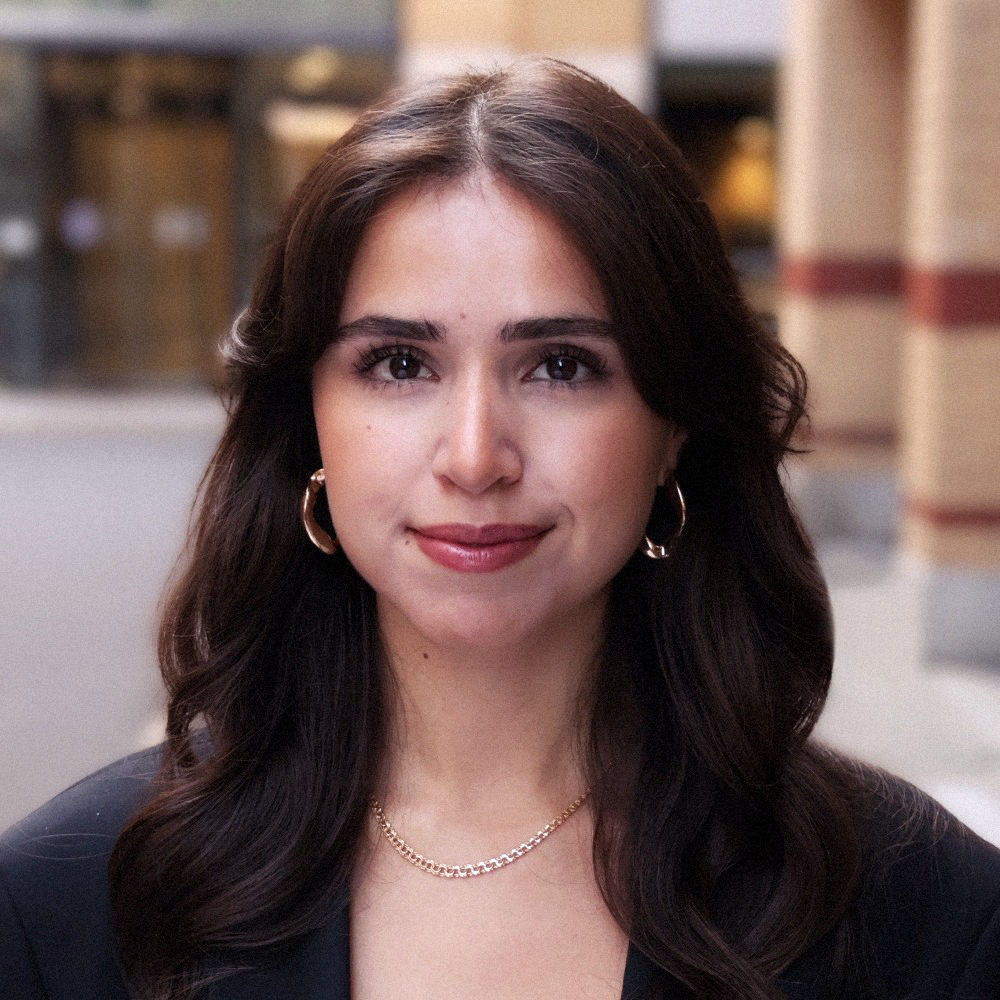
Hi! I'm Amanda, a third year Neuroscience student and Laidlaw alum from UCL. I'm Swedish-Persian and grew up in Sweden before moving to London for uni. These days, alongside my studies, I work for the Foundation as a Marketing Assistant.
For my first year research project, I worked on optimising alginate hydrogels for 3D astrocyte culture systems. In simpler terms, I was figuring out the best way to prepare a jelly-like scaffolds so that star-shaped brain cells called astrocytes could grow in three dimensions rather than flat on a dish. This matters because 3D environments mimic the brain more realistically, which could help researchers develop better treatments for neurological disorders!
For my Leadership-in-Action project, I co-created Beyond the Books, a resource designed to help students from underrepresented backgrounds navigate the unwritten rules of university life, from internships and networking to professional opportunities that aren't always obvious if you're the first in your family to go to uni.
Always happy to connect, whether you want to chat about neuroscience, widening access, the Laidlaw experience, or just say hello! One of my favourite things about this community is getting to meet people from different universities and backgrounds, so please do reach out! 🌟