Week 2: Oxford Research Summer
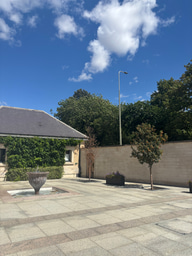
This week started with a visit to a local primary school, where the data for our project was collected. It was lovely to speak to the headteacher of Orchard Meadows Primary School, and gain some insight into the socioeconomic context surrounding the school. I particularly enjoyed touring the school and meeting some of the students.
A main goal for our team this week has been reading through the recent white paper 'Every Child Achieving and Thriving'. Since its a lengthy document, we decided to assign each team member a different section to summarise and share insights.
It has been interesting to reflect on the white paper after witnessing the real-life, everyday operations of a primary school in a particularly underprivileged area. While the white paper calls for many vital reformations across the education system, at times it appears unrealistic in its goals – particularly for schools with high proportions of students on Free School Meals (FSM), and students with Special Educational Needs (SEN). When conducting our data analysis and writing our report, it'll be important to consider how our research can be meaningfully applied within already strained contexts.
Another key task has been Stakeholder Mapping. A meeting with our supervisor, Kristen, helped us to clarify how to categorise each stakeholder in terms of how central they are to our research question.
In preparation for a busy Friday spent at Iffley Road Sports Centre for Powerhouse Games, and in Blackbird Leys, this weekly reflection comes at a slightly earlier time than usual. I'm looking forward to more opportunities to bond with my fellow Laidlaw Scholars and start with the data analysis portion of the project.

Please sign in
If you are a registered user on Laidlaw Scholars Network, please sign in
Hi Mollie,
Thank you for another well-considered reflection. I enjoyed reading it, particularly because you are beginning to connect your experiences in schools with the wider policy landscape. That movement between practice and policy is an important part of educational research.
Your strongest insight, for me, was your reflection on Every Child Achieving and Thriving. Rather than accepting the white paper at face value, you began to ask whether its aspirations are equally achievable across different school contexts. That is exactly the sort of critical thinking researchers should develop. Educational policy often sets out ambitious goals, but one of the researcher's roles is to ask what conditions are needed for those goals to become a reality.
I also liked your point about ensuring your recommendations are meaningful within already stretched school environments. Effective research doesn't simply identify what should happen; it considers what is realistic and sustainable for practitioners. Keeping that perspective in mind will strengthen your final report.
One suggestion for future reflections would be to tell us a little more about your own thinking. For example, what was it about visiting Orchard Meadow that changed or challenged your understanding? Was there a particular conversation or observation that stayed with you? Those personal reflections often make for the most engaging reading because they show how your thinking is evolving over the course of the project.
Finally, your reflection made me think about leadership. School leaders are often expected to implement ambitious reforms whilst operating within significant financial, staffing and social constraints. That raises an interesting question: what qualities of character enable leaders to navigate those competing pressures? Judgement, resilience, honesty and compassion all seem important, particularly when difficult decisions have to be made. It would be interesting to see whether your experiences over the coming weeks influence how you answer that question.
I'm looking forward to reading your next reflection, especially as your team begins analysing the data and translating your findings into practical recommendations.
Best wishes,