Scholars Spotlight - Aaryn McDonald-Brown




Discover more Scholar Spotlights.
Research title
Regulation of epithelial stem cells in health and disease
Please briefly outline what your research is about, and its potential real world impact
My research project investigated whether pseudouridine synthases (PUSs) regulate intestinal stem cells and homeostasis. PUSs affect several types of RNA, including tRNA, snRNA, and rRNA, by converting uridine into pseudouridine. This affects a wide variety of cells, meaning PUS genes can often lead to disease, including higher incidence of cancer established in mice and humans.
I focused on PUS7, which has been linked to colorectal cancer, as well as other diseases of the gastrointestinal system, such as Crohn's disease, ulcerativecolitis, and IBD. This demonstrated the need to focus on its effects in the gut. Drosophila were chosen as the model organism for this work due to homologous genes to those involved in human evolution, development, and cell regulation, including pseudouridine synthases; dynamic cell turnover and compartmentalisation in the gut; and the low cost and rapid regeneration time associated with fruit flies. Using cell-type specific inducible RNAi (RNA interference) knockdown of PUS7, the expression of PUS in specific gut cells was manipulated to assess the effects on stem cells and tissue homeostasis in the Drosophila gut, which was subsequently quantified via dissection, imaging, and analysis.
The results of this project suggest a significant increase in the proportion of stem cells in the PUS7 knockdown cells, which could mean that the PUS genes are directly involved in the regulation of epithelial stem cells, and subsequently involved in the development of disease within the digestive system. These findings highlight the need for further research into PUS genes in the gut. Future work could solidify the importance of this work by determining the accuracy of this model of PUS function to function in humans. This would have significant implications for colorectal cancer and cancers linked to other PUS genes, along with other diseases that arise from PUS dysfunction.
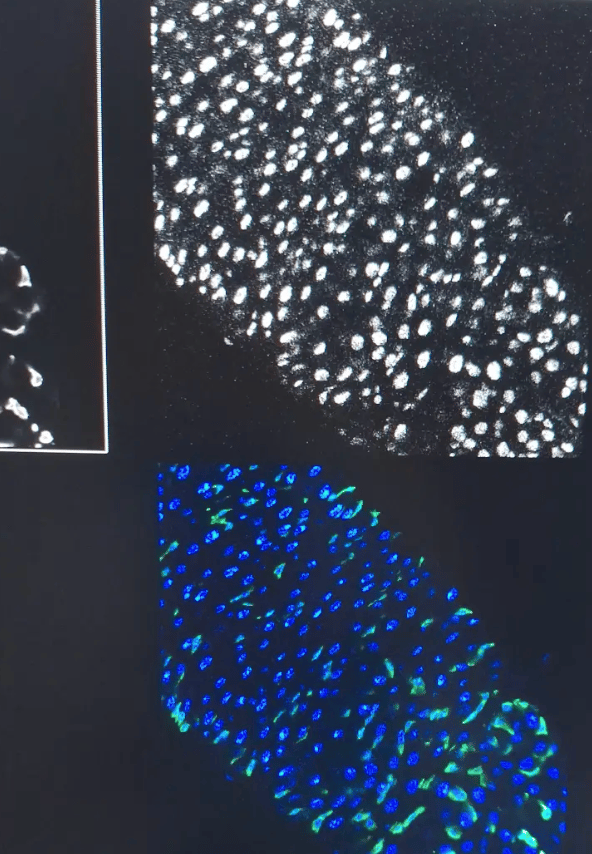
Drosophila intestinal stem cells successfully imaged using a confocal microscope
Where did your passion for this research originate? How does your personal story feed into it?
Treatment of disease has been an interest of mine for a very long time, inspired by volunteering as an ambulance cadet and as a Guide, wanting to help others, and make a positive difference where I can. I want to learn and understand more about parts of human life we often understand so little about, which frequently leads to massive misconceptions and false information around life-saving advancements. This interest was refined through A-Level study of Biology and Chemistry and modules at university, particularly Advanced Biochemistry, Biochemistry and B iotechnology, and Biology of Disease now in my final year of studying Biological Sciences. Cancer is such a prevalent focus: current statistics suggest one in two people will get cancer in their lifetime, with colorectal cancer on the rise in the UK. Genetics play a huge role in canc er risk, so determining genes that can be risk factors can have an equally large effect on our understanding of the cancer, who might be likely to develop the cancer, and how we can fight it – as seen with testing for faulty BRCA genes, which increase the likelihood that someone will develop breast cancer greater than four times over. There is so much more that can be done in this field which so many people suffer with so having the ability to contribute in any way with my project was very important to me.
What is the most memorable moment from your Laidlaw scholarship experience so far?
I attended and presented at the 2025 European Drosophila Research Conference alongside my PI, PhD students from my group and another Drosophila group from Durham University. Previously, I would have felt like such an impostor there, but after my Leadership in Action project in Boston with the Timothy Smith Network earlier this summer, I gained a lot of confidence in myself and my knowledge. My poster presentation went extremely successfully, with many academics very interested in my research and impressed that I, as an undergraduate, was not only attending an international conference but presenting at it. Learning more about the field through others' posters and the incredible works hops covering everything from wing imaginal disc development to ovarian stem cell ageing gave me so much insight into what can be done with this often overlooked model organism and how much potential there is for future research in the field. I had also never been to Spain before and had an amazing time exploring the city, trying new dishes such as at the Gala dinner, and practising my Spanish, as well as German and French, with academics who were incredibly kind in humouring my attempts to improve my language skills!
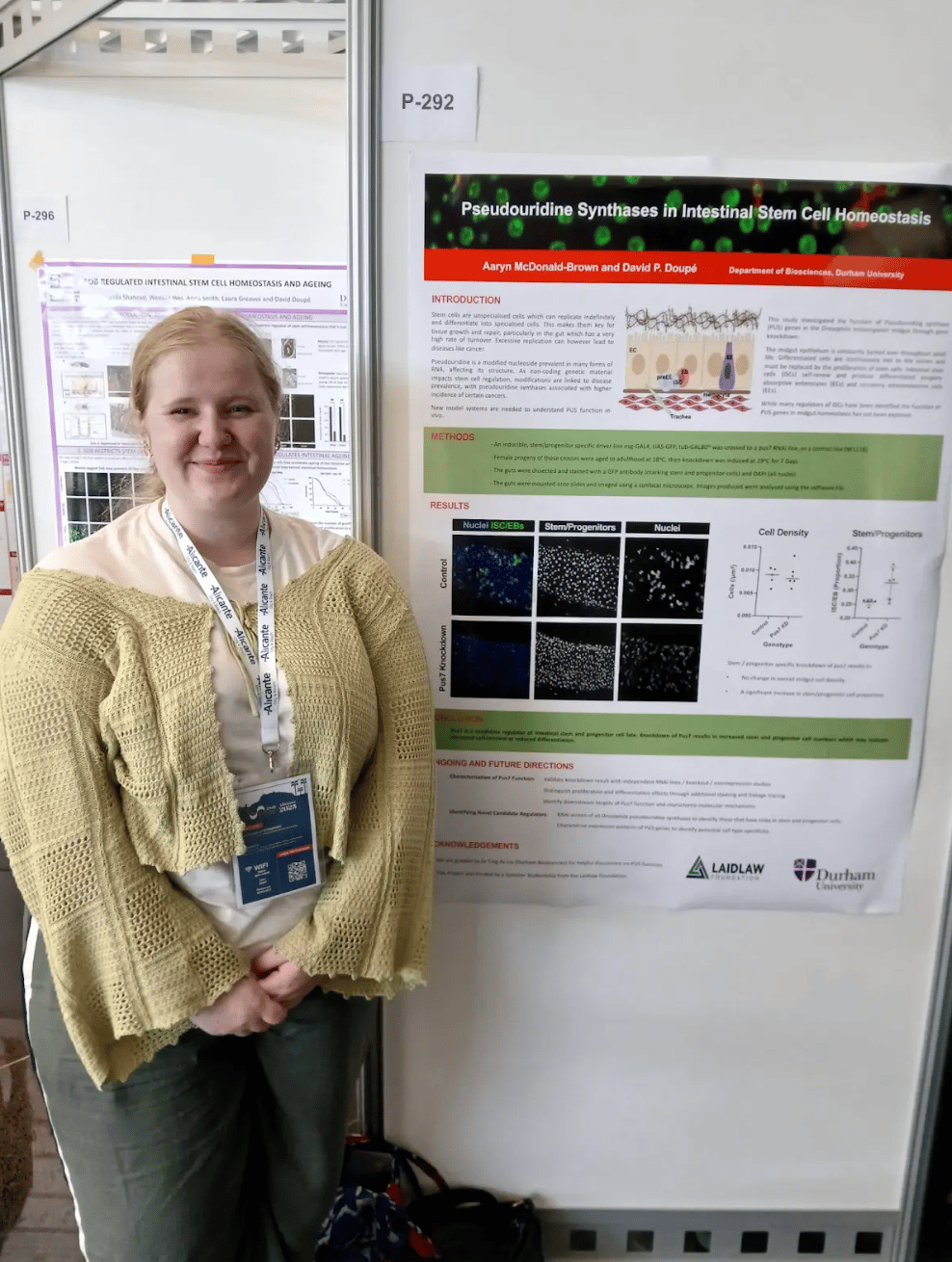
Presenting my research at the 2025 European Drosophila Research Conference
What is the biggest challenge you came across in your research and leadership journeys so far, and what did you learn from it ?
My Leadership in Action with the Timothy Smith Network in Boston challenged me in so many ways. I was initially scared even to travel, having never flown alone before, but once I had done it and met another Laidlaw Scholar at the airport, I felt I could do anything. There are always challenges where working with a non-profit, as everyone has a lot to do to make it work, but they all do so because they love what they do. This led to very busy days sometimes – planning trips, adjusting the plans when things fell through last minute, making sure the whole team knows what is happening and all the students know what is happening – but working in a team who care so much for the work and each other made it a lot easier. The kids we worked with were so incredible, but there were frequent challenges with understanding tasks and impending deadlines. Figuring out how to work with them instead of them working alone was very rewarding, and I would absolutely do it again if I could and recommend TSN to everyone looking at LiAs currently!
What does it mean for you to be a Laidlaw Scholar?
Being a Laidlaw Scholar means being part of a community that cares. It feels impossible to go through the programme without developing friendships with fellow scholars, whether that be at your institution through welcome events, training, and celebrations, or others through conferences and LiAs; connecting with teams around the world, such as the wonderful people at Tufts I had the fortune of meeting while in Boston; and creating a network of people who know you and support you and your goals and aspirations as a leader, researcher, and person. It means be passionate about learning and growing, to have a desire to grow and improve on skills like communication, teamwork, understanding, as well as key techniques in your chosen field. It means making the most of every opportunity and being passionate about your interests, as well as supporting others to do the same thing.
Which particular leaders inspire you the most and why?
I am still figuring out the kind of leader I would like to be, but I am consistently inspired by those who lead community efforts and action for change, particularly women whose contributions have often gone unrecognised by history. These leaders did not seek recognition or authority; instead, they acted out of responsibility, compassion, and a belief in doing what was right. Across political, social, and scientific progress, meaningful change has always been driven by individuals willing to step forward for others.
I am especially inspired by women who historically practised medicine and midwifery, preserving life and knowledge within their communities despite limited resources and persecution. I also admire those who fought and continue to fight for equal rights across gender, race, and sexuality, often at great personal risk, as well as those today who pioneer new research or challenge misinformation in science and politics, whether through protest, education, or online advocacy. Their leadership reminds me that no action is too small to create impact, and that inaction often causes the greatest harm. Although many of these leaders’ names have been forgotten, their courage and influence endure. They inspire me to value service over status and to lead through empathy, integrity, and action.
Briefly describe a scene from the future you are striving to create.
In the ideal future I am striving to create, medical care is accessible to everyone, regardless of socioeconomic status, geography, or existing health conditions. Preventable suffering has been largely eliminated, and local communities are equipped with the knowledge and resources to care for one another, even during crises or epidemics. Classrooms, clinics, and community spaces are places of shared understanding, where education is prioritised and people are empowered to engage confidently with new technologies. This widespread literacy reduces misinformation and fear, preventing illness before it begins and allowing people to know how to seek the right treatment without anxiety or shame. Young people from all backgrounds have access to higher education and the freedom to pursue their chosen fields, enriching science with diverse perspectives. As a result, innovation moves faster and more ethically, driven by collaboration rather than exclusion, and shaped by a collective commitment to human wellbeing.
Quick Fire Questions
📺 Currently Binging:
Derry Girls for the fifth time

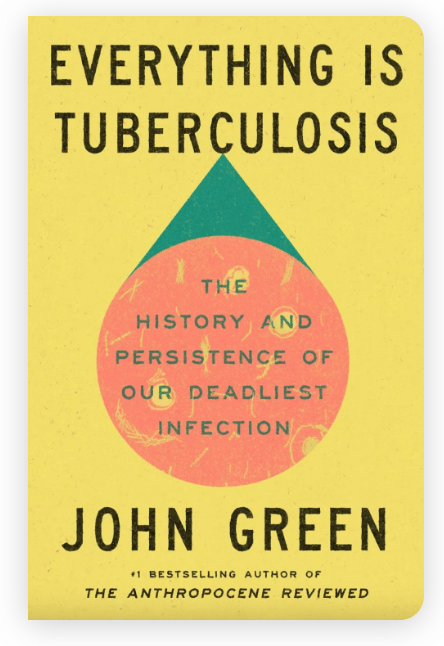
📚 My top book recommendation:
Everything is Tuberculosis by John Green
🎶 My anthem:
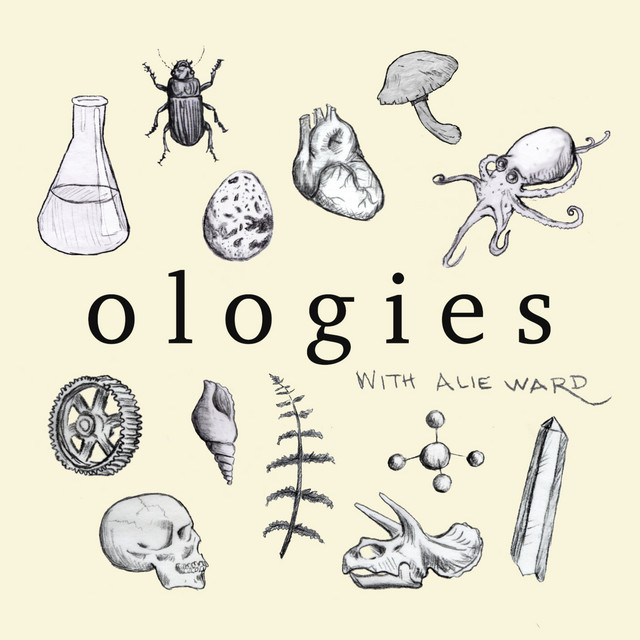
🎶 Current Podcast Obsession:
Ologies with Alie Ward
🌈 Something that made me feel joy recently:
Being cast as the lead role in a production of Carrie in Durham!
A message from Aaryn:
All of my thanks to the Timothy Smith Network for an amazing Leadership in Action project and the ability to support them in the incredible work they do to provide STEM opportunities for high schoolers who would not have the opportunity otherwise! I would also like to thank the Bioscience First Gen Scholars Network at Durham University for all of their help and I love being involved in such an incredible scheme!
If you want to learn more about Aaryn's work, explore her research here and follow her on LinkedIn. Aaryn is a Laidlaw Undergraduate Leadership and Research Scholar at @Durham University . Become a Laidlaw Scholar to conduct a research project of your choice, develop your leadership skills, and join a global community of changemakers from world-leading universities.
Find out more about the Laidlaw Scholars Undergraduate Leadership and Research Programme.
🔦 Discover more Scholar Spotlights:
⚡️ Eliana Amoh, a Laidlaw Scholar at Cornell University, explores the intersection of education, labour, and migration in and out of Ghana.
⚡️ Cothney Lasaracina, a Laidlaw Scholar at the University of Leeds, explores Colonial Subjects From the French Resistance
⚡️ Jing Ma, a Laidlaw Scholar at UCL, explores the influences between the evolution of legal frameworks and civil society in Singapore.




Please sign in
If you are a registered user on Laidlaw Scholars Network, please sign in