Scholars Spotlight - Aminata Touré



Discover more Scholar Spotlights.
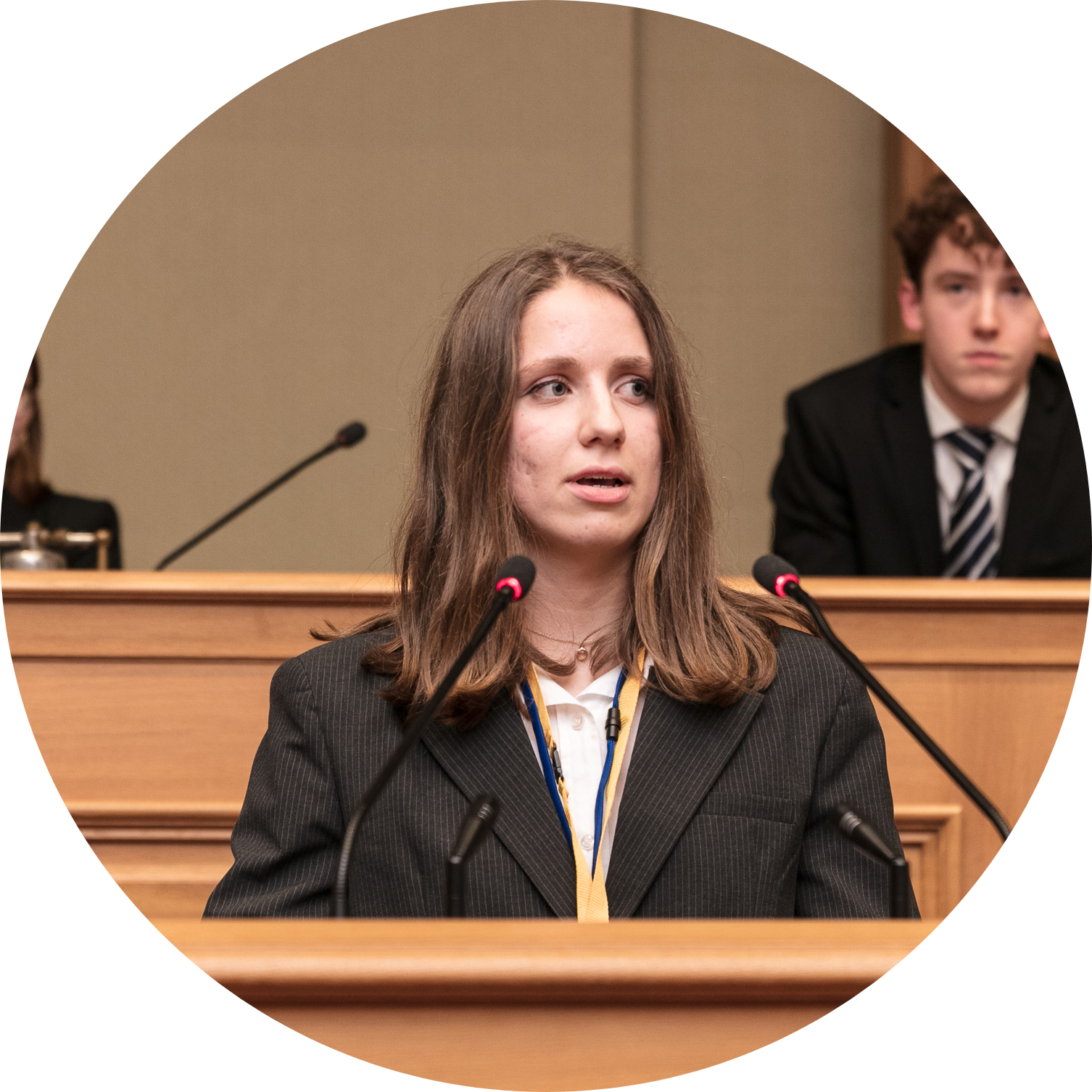
Aminata Touré, a Laidlaw Scholar at EPFL researching how integral membrane proteins can be redesigned into soluble forms to enable drug discovery.

Research title:
Solubilizing integral membrane proteins to facilitate binder screens
This summer I had the pleasure of delving into the world of protein design. My focus was primarily on integral membrane proteins, which are challenging targets for structural and functional studies due to their partially hydrophobic nature. They have the tendency to be hard to express and to aggregate in polar environments such as water, which makes them hard to produce in a quantity sufficient for binding assays. The experiment my supervisor and I conducted aimed at redesigning Somatostatin Receptor 2, a particular integral membrane protein that is important to regulate hormone secretion, into water-soluble mimetics and validating them experimentally.
We carried out the protein redesign using a computational pipeline combining RFdiffusion, a software that generates a backbone whilst keeping fixed the extracellular domain of the original Somatostatin Receptor 2 and solProteinMPNN, another software that associates the generated 3D backbone structure to an amino acid sequence that has hydrophilic properties. We then used Alpha Fold 2 to score, verify and select the most promising designs. Those proteins were expressed in bacterial cells, purified, and analysis of their binding affinity to the original binding partner, Somatostatin was performed. Out of eight candidates, three were successfully expressed, purified, and demonstrated significant binding to Somatostatin and derivatives, showing that the pipeline can produce functional mimetics and providing a framework for future design of soluble variants of other membrane proteins.
Development of solubilisation strategies is of major interest to the pharmaceutical industry. The technology can make a wide range of integral membrane proteins accessible to binder design campaigns which were previously not accessible, due to their inherent characteristics that make them challenging to work with experimentally. The ultimate objective is to enable the screening of nanobody libraries to identify ligands that specifically bind the transmembrane protein of interest, to be able to control and regulate specific cellular pathways.
Where did your passion for this research originate? How does your personal story feed into it?
When applying to universities, I had the opportunity to visit EPFL and tour its bioengineering laboratories. At the time, I knew nothing about research and had never considered bioengineering as a potential field of interest. Coincidentally, the first laboratory I visited was the Laboratory of Protein Design and Immunoengineering, which is the one that hosted me for my research summer.
What immediately struck me was the team’s commitment to making their science and experimental work accessible to everyone. Despite being a high school student with limited biological background, I was able to see that they study and reimagine proteins to design vaccines, treat diseases, and better understand the inner workings of living systems. Beyond the science itself, their ability to communicate their passion, excitement, and drive left a lasting impression on me. This experience was what initially drew me to bioengineering, and more specifically to this area of research.
After a full year of theoretical biology studies at EPFL, they welcomed me into their laboratory, giving me the opportunity to put my knowledge into practice. This experience further strengthened my conviction that protein design is a dynamic field, whose potential is just now starting to be exploited, which is something I would like to contribute to.
What is the most memorable moment from your Laidlaw scholarship experience so far?
The Laidlaw experience has been defined by unforgettable moments and has been a highlight of my university career. If I had to single out one particularly meaningful experience, it would be the Brave Laidlaw Scholars Conference in Durham last October. Meeting ambitious, driven, and purpose-driven students from leading universities across Europe and Asia was really inspiring. Everyone was accomplished in diverse fields and genuinely eager to share their research and initiatives, as well as the ways in which they apply their leadership skills.
Beyond the academic exchange, I had the opportunity to connect with truly kind, funny, and interesting scholars. Most importantly, the conference allowed me to see firsthand the depth of the Laidlaw community’s commitment to creating positive change in the world. Being part of such a motivated and values-driven network is an honor, and one I deeply appreciate.
What is the biggest challenge you came across in your research and leadership journeys so far, and what did you learn from it?
Before undertaking my research summer, as most Laidlaw Scholars, I was used to the safety of being in the classroom, with predefined assignments to address, in an environment where I could prepare an study in advance, and where even when I made mistakes, they had no consequences. Actually being in the laboratory, carrying out an experiment whose results could be used to improve drug design, and could not be predicted in advance was a completely different experience. I had to learn how to accept uncertainty, how to seek guidance to define next steps in case of failure and that is is okay to not know about something, as long as I remain committed to continue learning. I am still accepting and internalizing those concepts, but the research experience has been a fantastic exposure experience, that really pushed me to grow outside of my comfort zone.
What does it mean for you to be a Laidlaw Scholar?
For me, being a Laidlaw Scholar means more than an academic distinction, it means belonging to a community committed to becoming ethical, curious, and impactful leaders. Through this program I have seen myself and my peers not only develop our research capabilities through a research project but also develop leadership skills grounded in integrity, resilience, and real-world experience. Laidlaw pushes me beyond the classroom to accept uncertainty, engage with diverse perspectives, and apply critical thinking in real life settings. It has connected me with peers from around the world who are equally passionate about creating positive change and taught me how to lead with purpose, empathy, and accountability. Ultimately, to me, being a Laidlaw Scholar means embracing growth, contributing meaningfully to society, and building the confidence to face global challenges with a strong ethical foundation and a caring mindset.
Which particular leaders inspire you the most and why?
One leader who inspires me is Theresa Kachindamoto, a traditional leader in Malawi who used her authority to challenge deeply rooted cultural practices such as child marriage. What inspires me most about her leadership is her courage to act decisively while remaining grounded in empathy and respect for her community. Rather than opposing tradition from the outside, she worked within existing structures to create meaningful and lasting change, cancelling hundreds of child marriages and prioritizing girls’ access to education. Her leadership demonstrates that impact does not need formal political power, but rather moral clarity, persistence, and a willingness to take responsibility. She shows that effective leadership often involves difficult conversations, resistance, and long-term commitment, especially when addressing injustice that is rooted in cultural beliefs. Theresa Kachindamoto’s example has shaped my understanding of leadership as service: using one’s position not for personal gain, but to protect others and expand opportunities for those who are most vulnerable. Her work reminds me that leadership is most powerful when it is principled, community-centered, and focused on creating sustainable change.
Briefly describe a scene from the future you are striving to create.
I am striving to attain the day when I will obtain my masters degree from EPFL, with my parents and family in attendance. Through their hard work and unwavering support, they have given me the opportunity and the courage to be the first in my family to go to university. I would like to be able to show my gratitude to them, and I know a first step in that would be receiving in front of them a diploma that they sacrificed so much for.
Quick Fire Questions
📺 Currently Binging:

📚 My top book recommendation:
She who became the sun by Shelley Parker-Chan

🎶 My anthem:
Wiseman - Franck Ocean
🎶 Current Podcast Obsession:
I am more a documentary girl ;), Arte has my heart

🌈 Something that made me feel joy recently:
Booking a vacation to London and Amsterdam to celebrate the end of exam season
If you want to learn more about Aminata's work, explore her research here and follow her on LinkedIn. Aminata is a Laidlaw Undergraduate Leadership and Research Scholar at @EPFL . Become a Laidlaw Scholar to conduct a research project of your choice, develop your leadership skills, and join a global community of changemakers from world-leading universities.
Find out more about the Laidlaw Scholars Undergraduate Leadership and Research Programme.
🔦 Discover more Scholar Spotlights:
⚡️ Isabel Iino, a Laidlaw Scholar at Barnard College, on Magico-Religious Healing & The Campaign Against Medical Quackery In Harlem Between 1922-1936
⚡️ Freddie Fallon, a Laidlaw Scholar at Trinity College Dublin, explores Soil Compaction and Plant Biodiversity in Green Spaces
⚡️ Yuki Agarwala, a Laidlaw Scholar at Imperial College London, looks into developing a microneedle patch to deliver a therapeutic cancer vaccine for human papillomavirus-induced cancers




Please sign in
If you are a registered user on Laidlaw Scholars Network, please sign in