Taking part in the Laidlaw Programme has been a formative experience that allowed me to explore how research, leadership, and service can come together in meaningful ways. Throughout the different phases of the programme, I’ve come to see global citizenship and ethical leadership not as abstract ideals, but as principles that can guide everyday decisions, whether in the lab, in a workshop, or in the community.
My research project focused on spatial transcriptomics, a developing technology that helps us understand how genes are expressed in different parts of a tissue. While the work itself was not directly tied to patient care, it gave me insight into how new technologies might shape the future of precision medicine. I was especially grateful for the chance to connect with student researchers from a wide range of disciplines. These conversations offered fresh perspectives and reminded me that many of today’s most pressing challenges require collaboration across fields.
The leadership training component of the programme helped me reflect more deeply on how I want to grow, both personally and as a leader. Through a series of virtual workshops on themes like transcendence, growth, love, and integrity, along with daily and weekly reflections on different virtues and vices, I was encouraged to think carefully about my intentions and actions while taking up a leadership role. This process helped me move from understanding these values in theory to applying them more consciously in my daily life. I’ve noticed real changes in how I approach group work, take initiative, and support my peers at university.
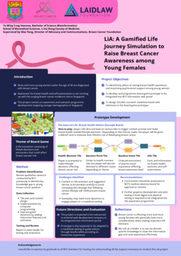
Currently, I am applying these lessons through my Leadership-in-Action project with the Breast Cancer Foundation in Singapore. I’ve been working on awareness campaigns focused on young women with breast cancer, an area that is often overlooked. By reviewing focus group interviews, supporting monthly support group meetings and designing a breast health-themed board game for an upcoming roadshow, I’ve had the chance to engage with both the strategic and human sides of community outreach. One of the most important takeaways has been learning how to balance education with empathy, especially when creating materials for the general public who might not have piror knowledge in breast cancer. Leadership, I’ve found, often involves stepping back, listening carefully, and adapting with compassion.
This programme has shown me that global citizenship means recognising the broader impact of our work and remaining committed to the needs of those around us. Ethical leadership, in turn, is about aligning actions with values and leading in a way that is thoughtful, inclusive, and responsible.
I am incredibly thankful to the Laidlaw Programme for the opportunity to explore these ideas across research, leadership, and service. It has shaped not only how I think, but also how I hope to contribute in the future.