Notes from a Newcomer - Week 1 Reflection
Notes from a Newcomer - Week 1 Reflection
Supervised by: Kareem Khubchandani
Department of Theatre, Dance, and Performance Studies and Studies in Race, Colonialism, and Diaspora, Tufts University
Studies of Women, Gender, and Sexuality, Harvard University
“I have never performed in drag myself, but I regularly attended drag shows in Boston for approximately two years and was well acquainted with many drag performers, queer nightlife workers, and regular drag audience members before I began ethnographic fieldwork”. - Blaine Smith, Drag and the New Political Economy of Queer Nightlife
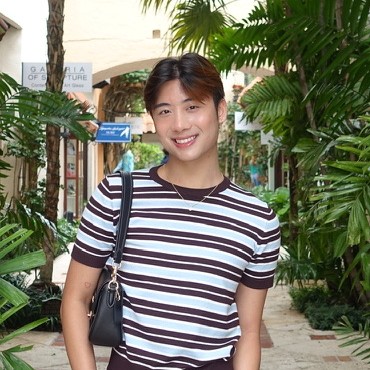
Similar to Blaine, I have never performed in drag myself. Yet where I differ from him is that I have not spent years immersed in Boston's drag scene. I have not attended countless drag shows, nor am I deeply acquainted with many drag performers, nightlife workers, or longtime audience members. And perhaps most different from Blaine, I am 19 years old, Vietnamese American, and experiencing many of my firsts this summer.
This first week of embarking on my Laidlaw research journey has been filled with pride, opportunity, and celebration. In fact, it’s the beginning of Pride Month, and my sister flew in from Arkansas to visit me, so we began the week by visiting the dazzling city that never sleeps: New York City. During the four-hour Greyhound bus ride—which don’t even get me started on the journey it took to even step onto it—I began my literature review by reading Blaine Smith’s Drag and the New Political Economy of Queer Nightlife and Enrique Zhang’s Memoirs of a GAY! Sha: Race and gender performance on RuPaul’s Drag Race.
As I read their work, I found myself reflecting on my position within this area of research. Unlike many scholars who enter a field of study with years of familiarity, I am entering Boston’s drag scene and queer community as both an insider and an outsider at the same time. As a gay man and inspiring drag artist, I feel a personal connection and inspiration from these communities and spaces I hope to study. Yet as someone new to Boston, underage for most nightlife venues (Boston has a very strict 21+ restriction at most nightlife and queer events), and only beginning to build relationships within the local drag scene, I carry the inexperience, unfamiliarity, and curiosity of a newcomer. However, rather than viewing this as a limitation, I am learning to see it as an opportunity. An opportunity to listen with care, work with humility, and learn with compassion.
Especially from reading about Blaine’s personal experience and involvement with Boston’s drag performers, organizers, and community members who cultivate the radiant and dynamic drag culture, it led me to reflect on how my own story could play within this research. His writing prompted me to inquire how I might thoughtfully incorporate first-person narration and emulate a high level of intellectual creativity. I want to not only document and learn about the experiences of others but also preserve my own authentic journey of entering these spaces, building relationships, and learning from the community. As an ethnographer, I recognize that I am not just a mere neutral observer examining the world outside of the one I hope to study. My identities, experiences, questions, and emotions will shape how I engage with people and interpret what I encounter.
In New York City, the gay scene was undeniably invigorating, inspiring, and filled with passion. For my first time in the city, I was thrown into the hustle and bustle, the diversity, the drive, and the empowered feeling that chasing the stars was possible. While at a quaint pink floral tea room with my sister, I found myself unintentionally—or perhaps intentionally—eavesdropping on a conversation between two strangers. Whether this was ethical or not, I'll let Papa Laidlaw, AKA Andrew Singleton, decide. As I tuned in and out of their conversation, I heard them mention some of my favorite buzz words: “Drag Queen!” “Club!” “Gay!”. Naturally, I put on my investigative journalist hat and apologized for “accidentally” overhearing them, then I asked them what drag bars and clubs they recommended and why.
Their immediate response was, "Yes, you did mean to eavesdrop, but..." before generously sharing a list of recommendations including Vers, Flaming Saddles Saloon, Golden Child, and The Ritz Bar & Lounge. Unfortunately, I was unable to visit many of these venues. It was a weekday, most performances were not scheduled, and, perhaps most importantly, I was once again reminded that I am still 19 years old.
Even so, the conversation revealed something I had not previously considered. Compared to Boston, New York appeared to offer more drag performances, community events, and queer spaces that welcomed younger and more inclusive audiences. Beyond drag specifically, the city's nightlife appeared to function as a central part of social life. Whether it was Taco Tuesday or a Saturday night, people gathered, celebrated, and occupied these spaces well into the early morning hours. In contrast, Boston's nightlife often feels more concentrated on weekends and generally ends by 2 a.m.
This observation made me think more critically about accessibility and community formation within queer spaces. Who gets to participate in queer nightlife? How do age restrictions, transportation, city regulations, and venue availability shape who can enter and exist within these communities? Does the race, age, and socioeconomic status of performers themselves play a role in their ability to book gigs and perform? As a 19 year old researcher, I am beginning to realize that I will constantly navigate this tension between wanting to study queer nightlife and being excluded from many of the very spaces I hope to understand. Yet perhaps that tension is an essential point of inquiry worth examining.
Rather than viewing my age as a barrier, this week, I challenged myself to lean into these curiosities. To inquire about how different aspects of identity and being can either challenge or encourage accessibility, participation, and visibility within the drag scene.
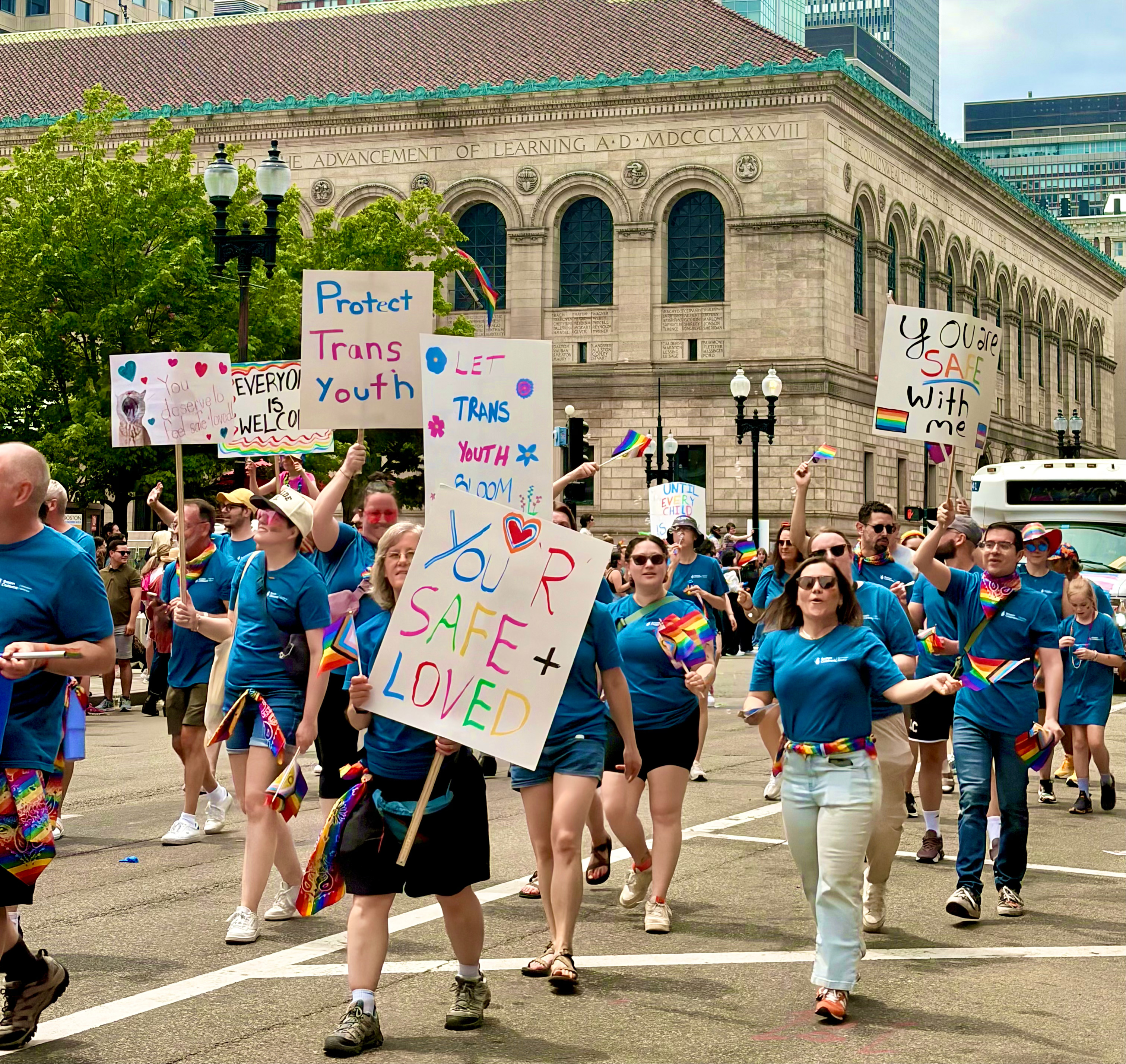
These questions followed me back to Boston during Pride weekend. As I attended the Boston Pride for the People parade and celebrations, I found myself celebrating as a community member as well as a researcher. I paid close attention to who occupied the space, whose stories were being elevated, and what forms of queer visibility were most prominent.
One of my first and most striking observations was the strong corporate presence throughout the festival. Large companies, universities, hospitals, and organizations marched in the parade. I wondered if corporate sponsorship shapes public expressions of queerness, which voices benefit most from that visibility, and whether corporate support is a genuine sign of true allyship. Or is it a form of performative support?
Moreover, I was also surprised by what I did not see. Despite attending Pride, I encountered relatively few drag performances and performers. This may have simply been a matter of timing or where I happened to be situated, but it prompted me to think about the relationship between the drag scene and Boston. Drag, historically, has always been a form of queer activism and culture, yet it has not always been the most visible aspect of pride events.
My research primarily focuses on drag performance, so I also found myself paying attention to race and representation. While I observed many Black, Latino, and white performers and community members throughout Pride weekend, I noticed fewer Asian performers and organizations than I expected. At the same time, I was encouraged to encounter the few Asian LGBTQ+ organizations and community groups whose presence reminded me that queer Asian communities continue to create space and visibility for themselves within Boston's broader LGBTQ+ landscape.
While I left the weekend with more questions than answers, more left to read than already read, and more conversations waiting to happen than conversations already had, I am beginning to realize that this is precisely what good ethnographic research should do. Every parade, conversation, performance, and observation reveals another layer of complexity.
Rather than arriving at neat conclusions, I am learning to embrace uncertainty, curiosity, and nervousness. The more I learn about Boston’s drag and queer communities, the more I realize how much there is to discover. So perhaps this is not simply a story or report about drag. Nor is it solely a story about Boston, Pride, or queernightlife. This is my story about becoming. Becoming a researcher. Becoming a drag artist. Becoming someone willing to listen and to put in the work. So, similar to Blaine, I have never performed in drag myself. Yet unlike the person who first opened his article on a Greyhound bus to New York, I am beginning to realize that I am not simply studying drag, I am becoming part of the story, too.




Please sign in
If you are a registered user on Laidlaw Scholars Network, please sign in