From Learning Medicine to Learning How Medicine Learns
I started this Laidlaw project with the confidence of someone who has successfully revised for exams and therefore assumes that academics is, broadly, a series of well-labelled sections.
I thought research had a certain cleanliness to it.
Not literal cleanliness, but a kind of intellectual tidiness - there would be a question. I would locate papers. I would read them in a dignified manner. Then, somewhere near the end, I would produce something that looked like knowledge had been carefully assembled rather than emotionally wrestled into existence. Like building IKEA furniture with all the screws pre-sorted and the manual quietly assuming you are at least mildly competent.
Very civilised. Very linear. Slightly delusional.
What I did not fully account for is that research is less “clean academic process”, and more “trying to assemble flat-pack furniture while the instructions are written in four languages and one of them is vibes.”
The first week exposed this quite quickly.
In the first week, I found myself staring at something oddly disorientating - not difficulty in the usual sense, but openness. Too much of it. No obvious starting point that felt correct. No neon sign pointing to “BEGIN HERE, DO NOT OVERTHINK.” Just a quiet expectation that I would somehow construct the path while walking on it.
What I thought would be a simple case of reading papers quickly mutated into something more architectural. I was not extracting answers; I was trying to understand how answers are even allowed to exist. Databases. Search strings. Boolean logic that behaves like language has been put through a minor administrative crisis. Inclusion and exclusion criteria that quietly decide what counts as reality and what gets politely shown the exit. Every decision laid another brick in the foundation, yet one misplaced brick had the potential to weaken everything built upon it and a growing suspicion that every paper I had ever read was sitting on top of an invisible iceberg of effort I had previously ignored.
Research, at least this version of it, does not offer comfort. It offers possibility. Which sounds poetic until you realise possibility also means “you could be wrong in approximately seventeen different ways and not realise for weeks.”
At one point, I found myself staring at PubMed like it had personally offended me. Not because it is impossible to use, but because it is extremely confident in a language I am still learning. I had approached it with the confidence of someone who has successfully searched Google for years. PubMed politely reminded me that finding information and finding evidence are distant cousins who occasionally refuse to speak to each other.
Before this project, I had mostly experienced research as a finished product. A paper would appear in front of me: introduction, methodology, results, conclusion. It felt almost like a completed object, carefully packaged and delivered. My previous research experiences had also followed a similar structure. There was always a neat outline, a methodology you could follow like a recipe. Introduction, methodology, results, conclusion, someone to guide you directly and a textbook at hand to check if your answers were correct.
You started at the beginning.
You moved through the sections.
You ticked things off.
The academic equivalent of stepping stones across a river. You might get wet, but at least you knew where to place your foot next - a predictable, well-trodden path. This time, however, I stepped into something very different. It felt less like following stepping stones and more like being gently pushed into fog and told, “Good luck, see you on the other side.”
The strange thing was that I already knew, in theory, that research was not simple. Of course I did. Anyone who has read scientific papers knows there must be complexity behind the final polished product.
But knowing something intellectually and experiencing it firsthand are completely different things. It requires relearning, moulding your thinking and skills but to fit a different shape.
What surprised me most was not that research was difficult. It was that I had never properly appreciated the machinery behind the answer. Research, I realised, was not only about collecting information, it is about constructing the conditions under which information becomes meaningful. Before anything is even found, you are already shaping what can be found through your decisions.
Which keywords do you choose?
Which databases do you trust?
Which studies are allowed in?
Which ones get politely excluded like they turned up to the wrong event?
Every decision quietly shapes the conclusions you can eventually draw, and one poorly considered step at the beginning can ripple through the entire project.
It was frustrating.
The finished paper hides all of this. It presents the final structure, but not the countless decisions, adjustments, and uncertainties that created it.
It felt less like entering a library and more like being handed the architectural plans of the library, then being asked to rebuild it while blindfolded and occasionally checked on by someone who says, “you’re doing great” in a way that does not clarify anything.
And just to keep things interesting, life had already rearranged parts of the summer in ways I did not anticipate. Nothing cinematic or dramatic, just a quieter disruption - no dramatic rain -soaked montage, no heroic soundtrack - enough to shift rhythm, concentration, the sense of momentum I had assumed would carry me forward replaced with the unsettling experience of sitting down to “start” something and realising your brain has temporarily filed it under later, maybe, possibly never… When I eventually returned to the idea of starting properly, I was not just slightly behind; I was also reacquainting myself with the basic concept of beginning at all.
So I ended up in a very specific state: not exactly behind, not exactly ahead, but spiritually unaligned with time.
That combination: academic uncertainty on one side, personal disruption on the other - created a very specific kind of mental static. I had expected research to challenge my intellect; I did not expect it to quietly interrogate my assumptions about readiness.
And then came the meeting with my supervisor - which I had imagined would feel like presenting early progress, a progress report of sorts; where I could confidently reveal that I had unearthed something vaguely groundbreaking, or at the very least something worthy of an enthusiastic nod rather than a sympathetic smile.. Instead, it felt more like arriving at a train station without checking if I was even on the right railway line, carrying a suitcase full of notes and hoping nobody asked where I was going.
Fortunately, reality was far kinder than the version I had created in my head. Rather than questioning why I was not further ahead, my supervisor reminded me that feeling behind at the beginning of a project is completely normal. A research project, especially one that begins from scratch, does not simply appear fully formed. Before the searching, analysis, and writing can even begin, there is a long process of understanding the question, shaping the methodology, and figuring out what direction the project should take.
This was especially true for a self-proposed project exploring a highly niche area. The topic itself was specialised, and even my supervisor was not familiar with the subject or the specific methodology of systematic reviews. Rather than making the process more dauntingly difficult, this actually highlighted something important: research is often about exploring areas where nobody has a complete map. The researcher and supervisor are not always standing at the finish line pointing the way; sometimes they are both helping to draw the map as they go.
The truth, though, is that nothing catastrophic happened. In fact, the most honest part of the experience is how undramatic it was. There is no moment where research taps you on the shoulder and says, “You are now officially confused.” Instead, you gradually realise that uncertainty is not evidence that you are failing; it is simply part of the process of creating something new.
I kept waiting for a moment where I would feel prepared.
It never arrived. Not even a polite reminder email.
Instead, something mildly inconvenient but important became clear: readiness is not something you wait for. It is something that appears after you start, usually without conscious awareness, or permission.
Like confidence, but less well behaved.
There is no dramatic ceremonial “start” to research. No clean cut between not doing it and doing it. Just slow calibration. You try things, adjust them, realise half of what you did was unnecessary, and then quietly continue anyway after some adjustments. It is less “beginning” and more “gradual realisation that you have already begun.” Research, it turns out, is not a straight line from question to answer.
Around the same time, I noticed something mildly irritating but also oddly useful: I already knew, in a vague background way, that research might be like this.
Not the details, but the structure. What surprised me most is how much of research is not about discovery, but architecture - it is about constructing the conditions under which answers are allowed to exist. Which sounds unnecessarily philosophical for something that mostly involves Boolean operators and Excel sheets, but here we are.
Before anything is even found, you are already shaping what can be found through your decisions. Which keywords you choose, which databases you trust, which studies are allowed in, which ones get politely excluded like they turned up to the wrong event. It is slightly unsettling, in the way it makes you realise how much invisible design sits underneath what eventually looks like evidence.
The idea that knowledge is connected, layered, and constantly branching was not new. I had seen it hiding inside medical school too. Medical school does this to you.
It takes your old study habits, politely removes them, and replaces them with something more intense, more structured, and occasionally slightly unhinged. But even then, you always know what is expected. Lectures come with learning outcomes. Notes fit into examinable boxes. There is always a quiet reassurance lurking in the background: a syllabus, a checklist, a textbook, a known shape of success.
Even when the volume of information feels impossible, there is usually a path. A direction. A framework. A well-trodden route that thousands of students have walked before.
Research, however, felt different. It was not that the path did not exist. It was that I had arrived before the path had been fully drawn. Interestingly, medical school had already taught me another important lesson: nothing is ever truly separate.
At first, each lecture feels like its own isolated world - cardio here, neuro there, endocrinology behaving as if it lives on another planet.
But eventually, patterns begin to appear. You think you are learning individual topics, but eventually you realise everything is just the same story wearing different costumes - a different character impacting the same narrative. One mechanism from a previous lecture suddenly becomes the explanation for something new. A concept that seemed finished turns out to have simply been waiting for its next appearance - a reappearance with a slightly different title, direction and even more diagrams.
So I started building my own system - a running checklist of how everything connects, overlaps, reappears in disguise and nothing ever fully resolves. A slightly obsessive attempt to convince myself that nothing is actually separate, even when it looks like it is. However, at first this felt organised. Now I suspect it may just be me trying to convince chaos to behave itself.
Research has taken that instinct and escalated it.
I ended up building a much longer checklist than I expected - part task list, part survival strategy. A map of “this is secretly linked to that”, even when nobody explicitly says it out loud. It is less linear progression and more an expanding web that pretends to be linear until you look closely. It is less a to-do list and more like a living document that doesn’t behave itself, like a creature, that keeps reminding me that “done” is a temporary state.
It includes:
- things I definitely need to do
- things I think I need to do
- things I will suddenly realise I needed to do at 2am
- things I will probably discover I should have done three steps earlier
- and things I am currently avoiding by pretending they are “later stage tasks”
It is less a plan and more a negotiation with reality. Yet, strangely, this has become one of the most useful parts of the process. The checklist is not just evidence of how much there is still to do. It is evidence that I am beginning to understand what needs to be done. And underneath the mild chaos, something slightly more honest is happening: I am learning that research requires a different type of learning. Not memorising. Not recalling. Not simply recognising the correct answer. Instead, it requires learning how to create the conditions where a reliable answer can eventually emerge.
Alongside that, I have been learning new skills almost by accident. Database searching, constructing search strategies, learning how literature is filtered rather than simply collected, and slowly realising that “systematic” in “systematic review” is doing far more heavy lifting than I originally appreciated.
Perhaps that is the strangest part of this experience. After a year of medical school where I had slowly learned how to navigate complexity, research placed me back at the beginning - not as someone who had forgotten how to learn, but as someone learning a completely different language of learning.
And so I find myself, unexpectedly, learning to be a beginner again.
Not the neat, optimistic kind of beginner where everything feels like progress. The slightly more chaotic version - where you are aware that you are learning, aware that you are not very good at it yet, and also aware that this is probably the point.
It is disorientating. Occasionally funny in retrospect. Frequently less funny in the moment.
But also strangely honest.
There is no performance of mastery available here. Just the slow, slightly awkward process of figuring things out while simultaneously questioning why none of it feels intuitive yet. Which, oddly enough, is also when things start to make sense. Not neatly. Not quickly. More like noticing patterns in the background noise and pretending you saw them earlier than you did.
If I strip everything back, this experience has not been about finding answers. It has been about learning how to begin without certainty, how to act without full understanding, and how to accept that clarity is not something you start with, it is something you build, usually after a fair amount of confusion and at least one moment of mild existential staring at a search bar.
I used to think research was a straight line from question to answer.
Now it feels more like trying to assemble meaning from scattered pieces while the picture on the box keeps changing, the instructions are questionable, and I am somehow still missing one important piece that I am fairly certain was never included. But somewhere between confusion, curiosity, and an ever-growing checklist, I am learning that perhaps research was never about having all the answers - and more like adding another item to an already intimidating checklist. Somewhere between confusion, curiosity, and a concerning number of browser tabs, I am learning more than I expected..
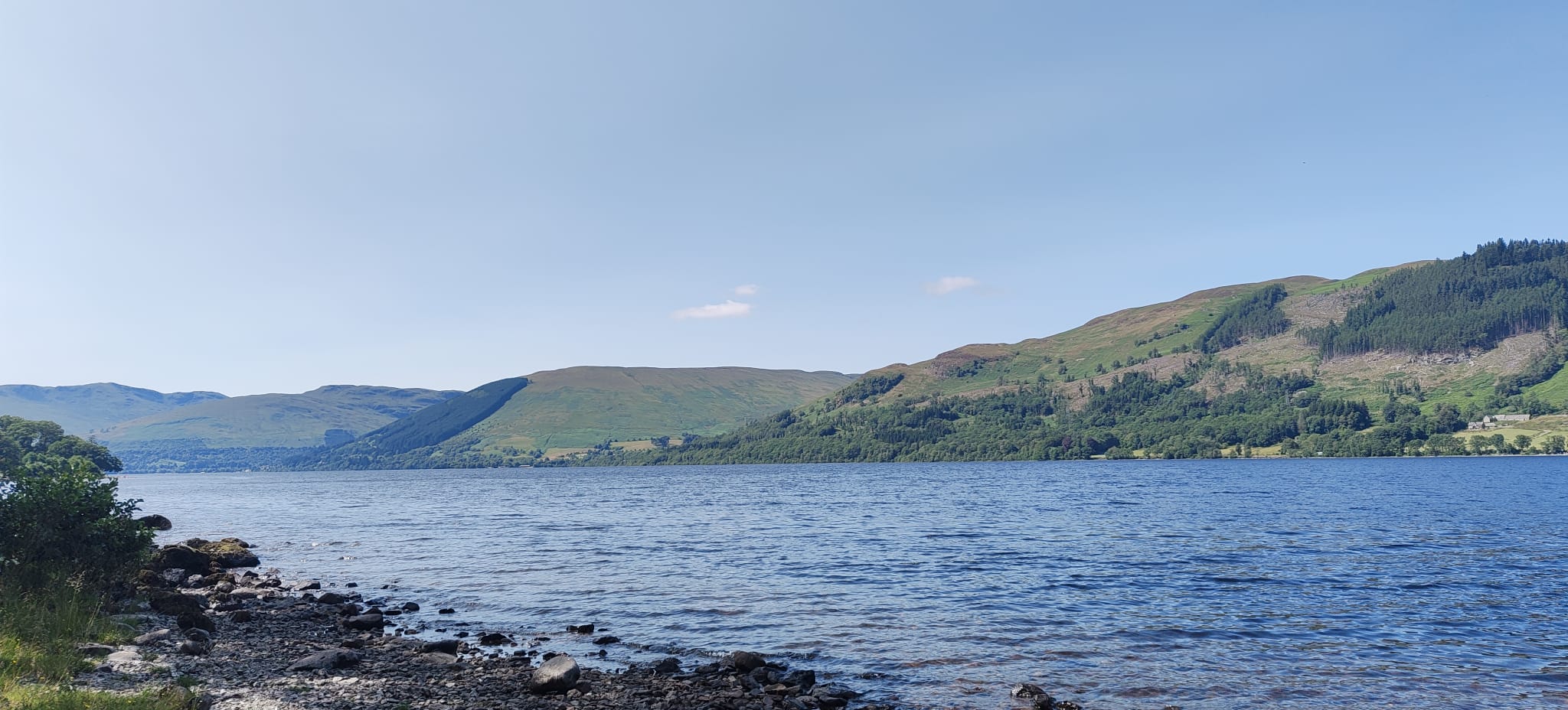
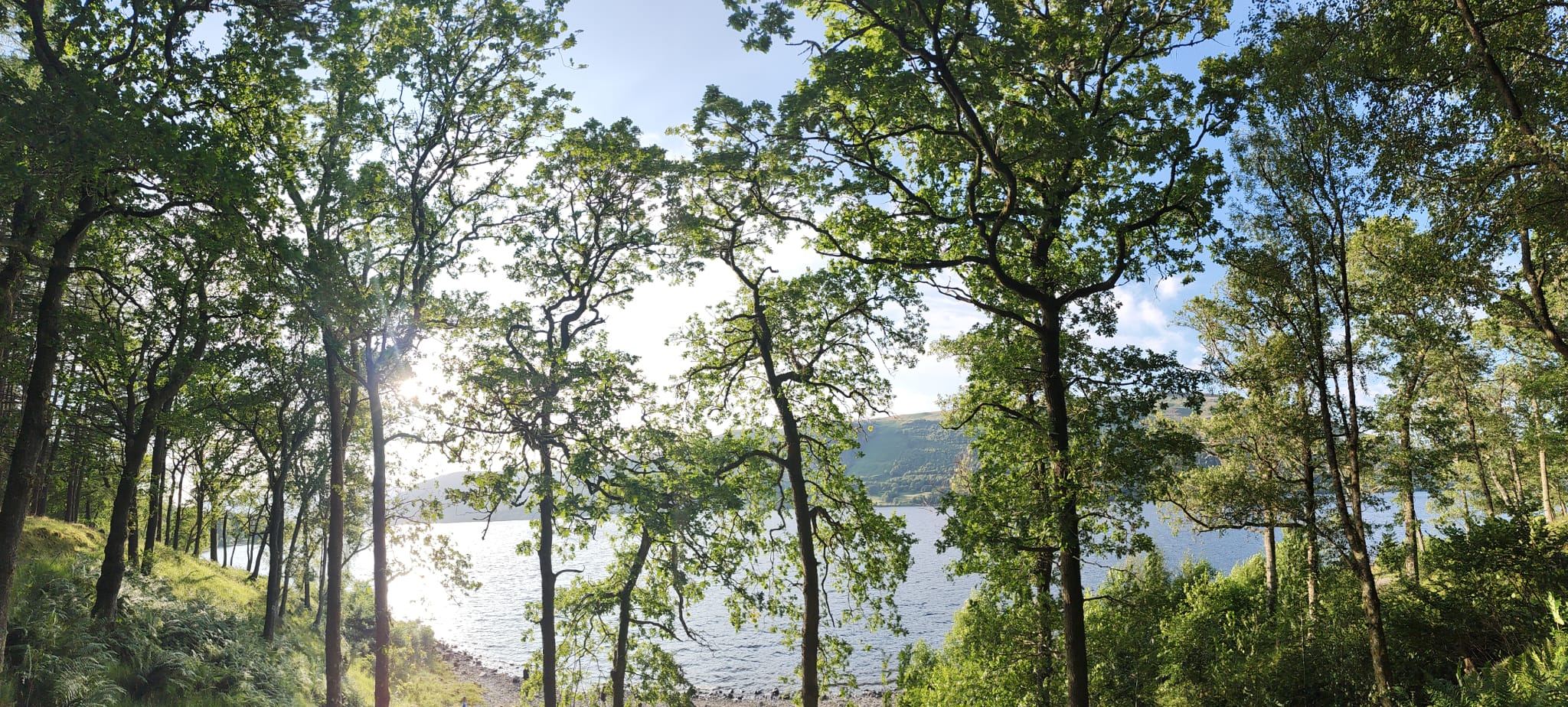
Cover Picture Courtesy of my sister (21/07/2026) - Loch Earn Canopy