Fences, Fields and the Work of Looking
Outside my apartment building for the summer in St Andrews was a pond. It was sizeable, shielded by a wealth of tall plants, and netted around by a wire fence. One day, near the beginning of the research period, I was returning home and I glanced at the fence just as I was about to walk by. I took in its lines of twisted wire, pressing against the flowers, and I was struck.
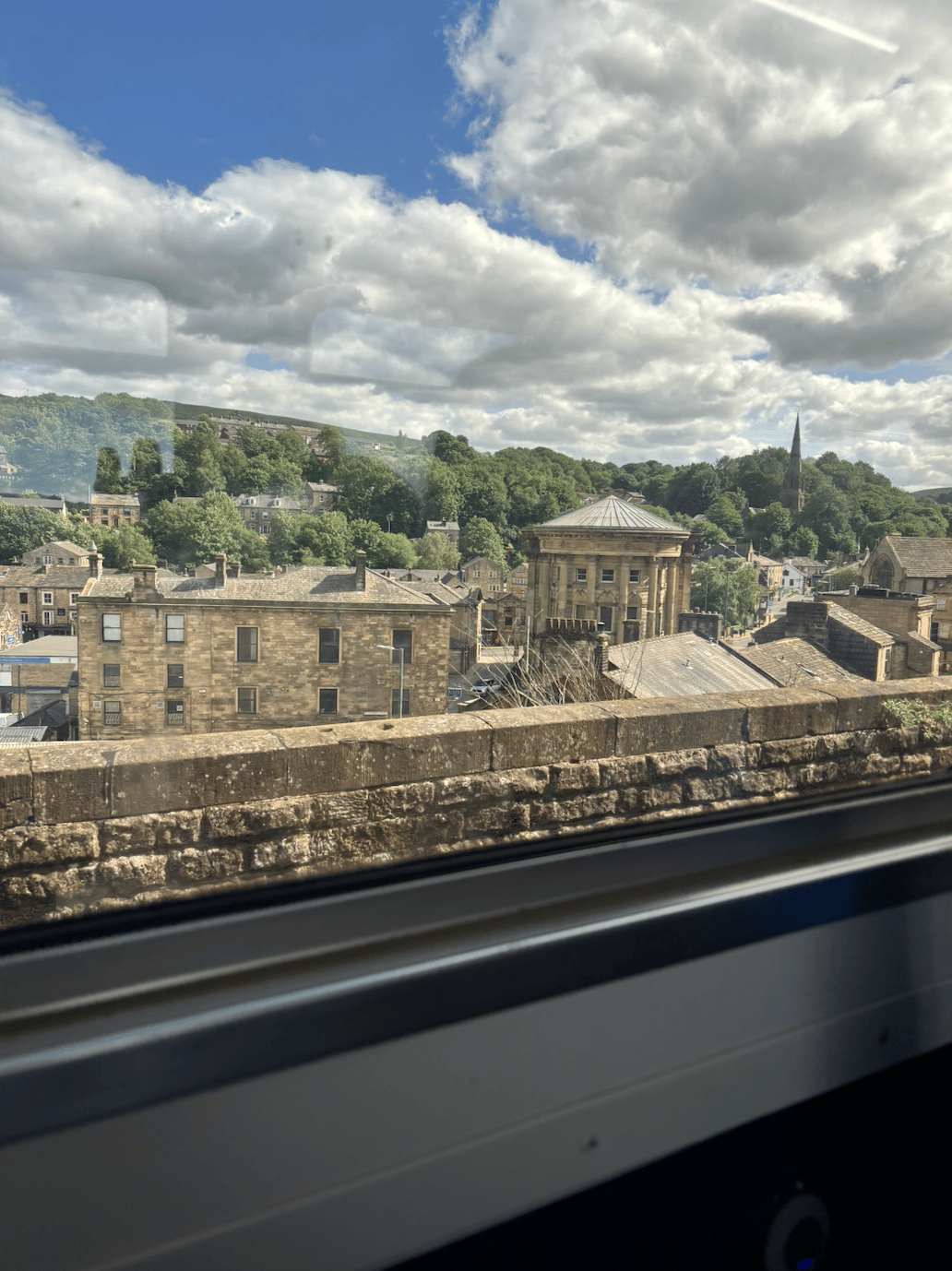
A few weeks later I found myself in Yorkshire, in the little town of Todmorden, to visit a private archive for my research. As a break from leafing through documents, photographs and artworks, I took a stroll around the town and passed a construction site. The sky was slightly brooding, but I saw it as a wonderful reprieve from the heatwave that had afflicted my travels so far. The sheet-like fence enclosing this site was easy to look past. My gaze came to rest on the mounds of dirt and rubble, the pipes and the scattered wooden pallets, the blocks of fresh cream-coloured bricks wrapped in plastic. A solid-looking building stood behind these half-arranged materials, complemented by a slope of dark verdant trees in the background. I was struck.
A few weeks on from there I was back at home, in a town called Elgin. The official research period had ended and the task of writing up my project was at hand. I was taking a walk with a friend, and we quickly drifted out to the farmland, distracted with conversation and taking new paths at a whim. Soon we found ourselves at the edge of a wheat field, surrounded by a barbed wire fence, and we stopped to admire it. We reached through the field gate and the wheat brushed against our hands. We stood contemplating for a moment. Again, for the third time, I was struck.
What exactly was I struck by, during these walks at the project’s beginning, middle and end? To explain why these moments mattered, I first need to explain the work I was doing.
My project centres around a set of watercolours by Josef Heu (1876–1952), an Austro‑Hungarian war artist and sculptor. Painted in Romania in late 1917, these works depict the destruction of oil infrastructure during the First World War. Across the set, Heu consistently folds industrial sites into their surrounding landscapes, creating scenes where damage, technology, and terrain are closely connected.
A large part of my project has been trying to understand what it was like to be a war artist assigned to Romania at this time. What was Heu communicating to viewers through his landscape paintings?
In week four of research, these questions took me to Yorkshire, where with the wonderful help of Katharina Heu (granddaughter of Josef Heu) and access to her privately held biographical materials, I was able to expand my knowledge of Josef Heu’s artistic character.
As we spent sweltering afternoons rifling through boxes of papers in her studio, I found myself taking an overwhelming number of pictures, asking for the context of countless photographs and documents in German (which I did not speak). All the while I was trying to coherently sort and preserve the flood of information I was receiving. It was a disorienting experience, but incredibly valuable – I came away with an appreciation for a family history impacted heavily by both world wars. My sense of responsibility towards understanding Heu's work was renewed.
Most of all, I had a strengthened feeling that I needed to treat the project as an exercise in empathy – a way of honouring the human presence behind the paintings. That perspective shaped not only the three moments I described earlier, but the way I’ve come to think about them now.
It’s a common experience to see one thing in another, or be reminded of something else when looking at an object or a scene. When I looked at the fence around the pond, the streetside construction, and the wheat, I also saw features of Heu’s paintings.
This alone perhaps doesn’t mean much – there are certainly many fences, construction sites, and fields in the world that could claim the same resemblance. So what was so important about this likeness? Or put another way, what can you do with seeing one thing in another?
Well, each time I realized that I was standing in a landscape similar to one in Heu’s Romanian paintings, it made me wonder.
How did he feel, seeing those features and then proceeding to paint them? How would he look at those features differently to me?
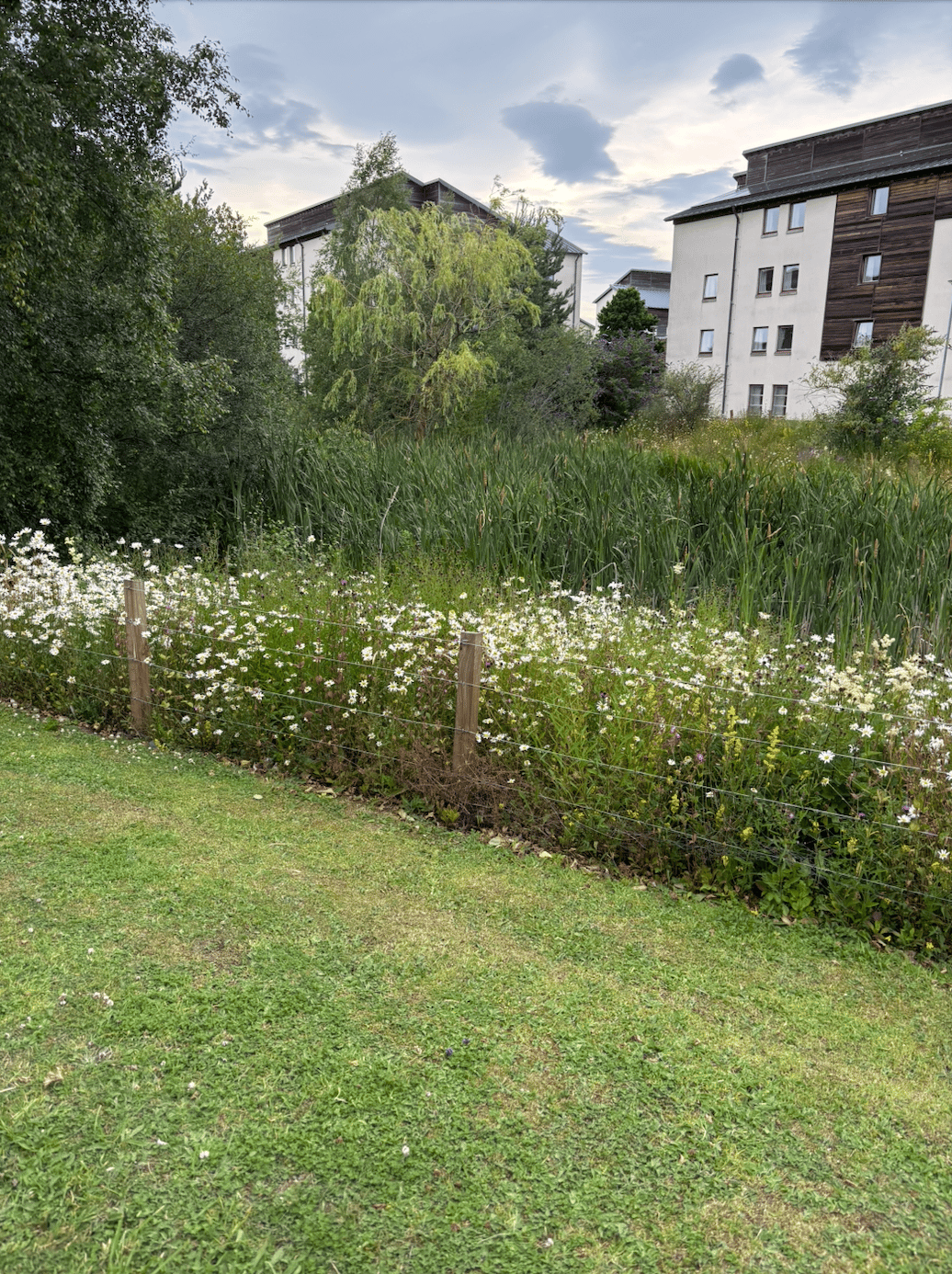
Here was the short fence protecting the pond. It reminded me of Heu’s painting of an electrified wire barrier, stretching around the bend of the Siret River. In his work, the obstacle is a weapon – charged to stop enemies and deserters – and looking at the quiet pond fence in front of me, I found myself wondering what it would mean to stand before something that could kill with a single touch.
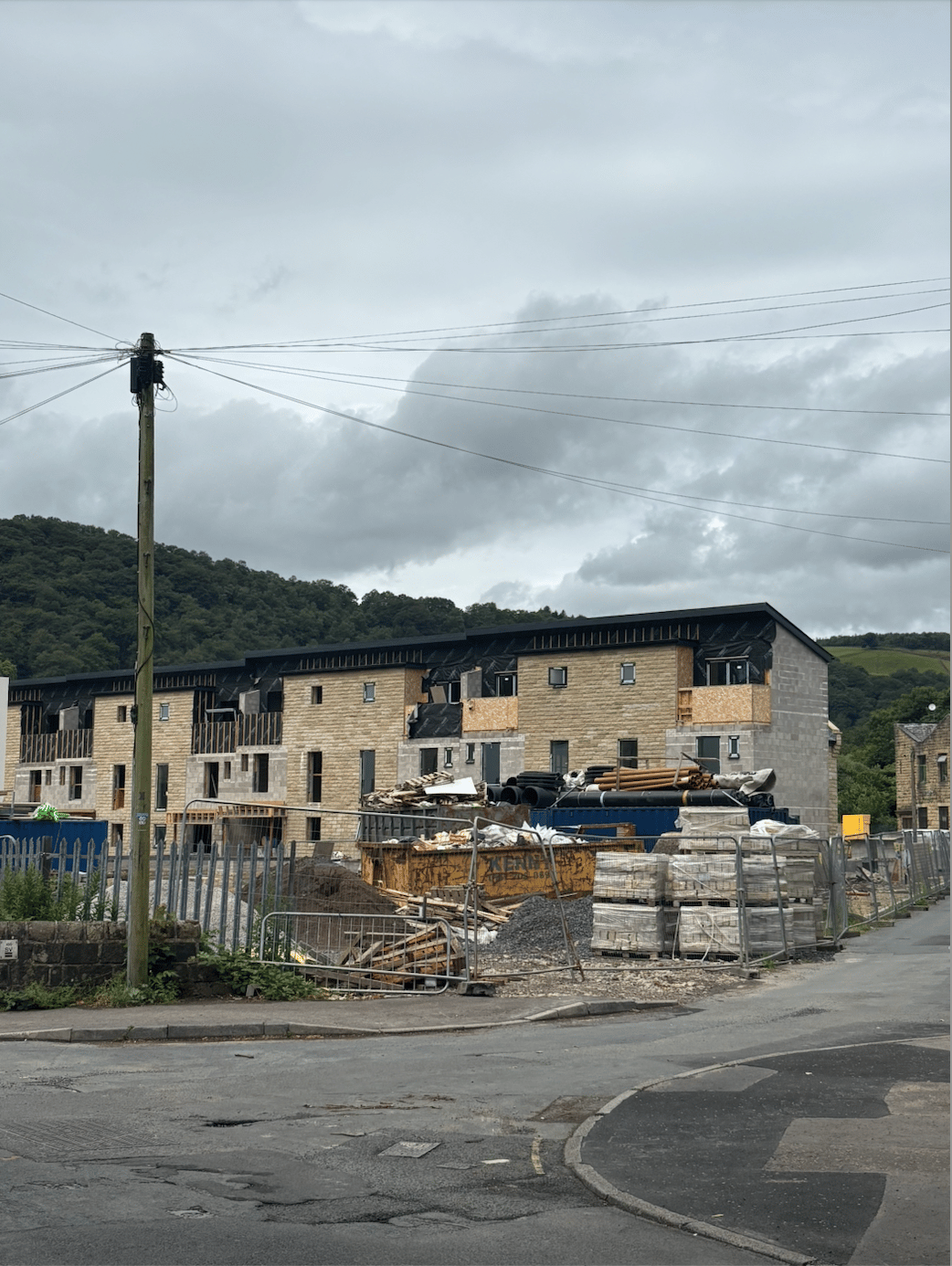
The pile of construction materials I saw in Yorkshire brought to mind Heu's depiction of a crude oil region in Bǎicoi, Romania – a light scatter of debris among oil derricks, and a similarly-placed utility pole. I mused on what it would be like to sit down with my paper, pencils and paints to take down all the details of a scene. Where would my eyes go first? What would I miss? What would I include in the frame of my landscape?
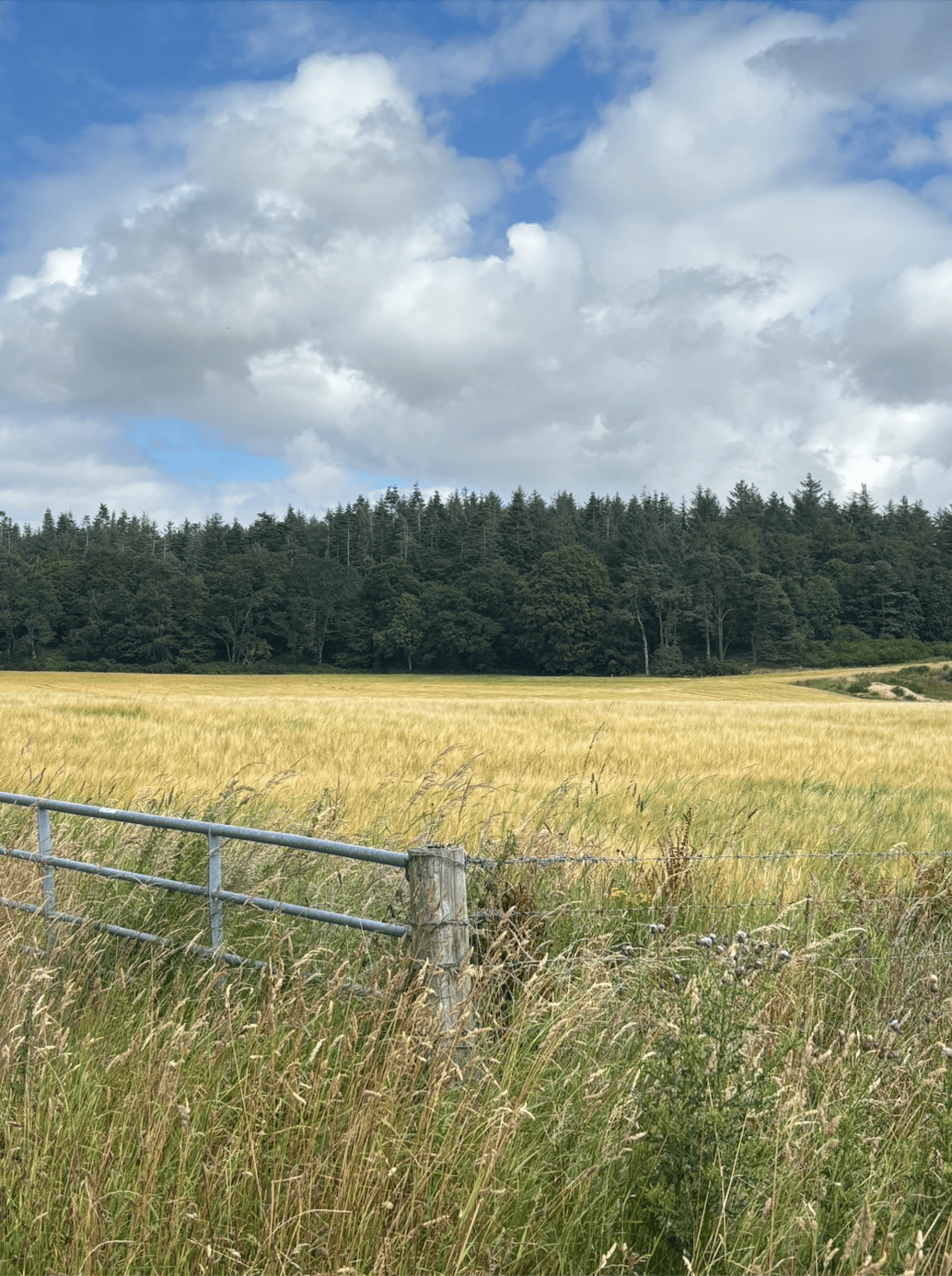
And finally, seeing the yellow field made me think of Heu's view of the burnt oil boilers in Floresti, Romania, where the damaged buildings sit against a bright sweep of colour. I’d been admiring the beauty of the wheat field in front of me before realising Heu had painted a similar one. For a moment, I felt I understood why he chose his field: mine was charming enough to paint. That small appreciation stayed with me the next time I looked at his work.
These moments carried forward the empathy I’d been trying to build through my research. At the same time, they made me aware of an important difference.
All of my reading, and archive work, and close visual analysis of the paintings, exploration of historical background and Heu’s biography – these were all activities that involved empathy, but of a kind that was prepared, organized, directed. (Even if the research experience itself was often confusing.) It was a conscious and sustained effort to understand someone else’s way of seeing and expressing.
Here? It was a spontaneous kind of empathy instead. I was given these small opportunities to reflect in the midst of a landscape and I took them. They were simple, unplanned moments, bound in a short span of time – and coincidentally, each framed by a fence.
These moments offered me little insights, glimpses into a way of seeing the world. But they couldn’t tell me what Heu was actually trying to communicate about landscape through his paintings. Of course, any process of meaning-making happens over time; Heu's works couldn't be understood with any single moment of my own, or any imagined moment of his.
Nonetheless, these brief reflections did have a broader significance. They happened regularly enough throughout my research period that together, they made me more intentional in my art historical thinking. Indeed, with a few tastes of freeform wonder, I became more deliberate about this larger, structured empathy I was trying to build behind my research – my attempt to understand Josef Heu and his work.
I think these kinds of reflective opportunities are abundant in everyday life, and the capacity to reflect is abundant in us too. This is whether we’re reflecting on lives far away in time and space, very close to us, or perhaps most importantly, our own.
Ultimately, the opportunities are there to be taken or made. By seeing echoes of Heu’s landscapes in my own, I learned that empathy is built through the attention you choose to give.