Leading with Character: Lessons from the Oxford Character Project
Learning to lead with character at university and beyond
I recently came across this thought-provoking piece in the Financial Times, and it perfectly captures something I've been reflecting on as we navigate this pivotal moment in our community and our individual journeys.
The article, written by Edward Brooks who directs Oxford's Programme for Global Leadership, presents a striking reality: while 39% of core job skills will transform by 2030, the deeper challenge lies not in technical adaptation but in cultivating the character that gives skills their purpose. As Brooks argues, "Skills are empty without character: the deep dispositions that guide thought, feeling and action."
The Oxford Character Project and Our Journey
For those entering the programme this year, the Oxford Character Project training you'll receive isn't merely another workshop to tick off. It's a framework for understanding leadership as fundamentally rooted in character development. The research Brooks references, spanning over 1,100 participants across 36 businesses, revealed that 52% of what people identify as good leadership stems from virtues of character, not just competence.
For scholars who've already engaged with OCP principles, this moment offers valuable reflection. The article's emphasis on "habituation of virtues through practice" and "consistent, careful reflection on experience" speaks directly to how we've been encouraged to approach our Leadership in Action projects. The systematic building of intellectual virtues (patience, adaptability, open-mindedness) that we've practiced in our cohorts isn't academic exercise; it's preparation for leading in complexity.
Personal Reflection: Living the Framework
As I complete my LiA project and transition into dissertation research, the intersection of character and competence has become remarkably tangible. The resilience cultivated through our programme's emphasis on reflection and mutual accountability has proven essential when navigating research challenges and ethical dilemmas in my work. The "friendships of mutual accountability" that Brooks identifies as crucial for character development are exactly the relationships we've built within our cohorts.
What strikes me most profoundly is how the programme's focus on character based leadership has shifted my perspective on career preparation. While technical skills remain important, the ability to build trust, make wise decisions under pressure, and maintain ethical clarity in complex environments feels increasingly like the differentiating factor as we enter our careers.
The article's mention of our own Laidlaw Schools Trust embedding character throughout curricula reminds us that we're part of something larger: a movement recognising that true leadership emerges from the alignment of competence with character. As we continue developing as scholars and future leaders, we carry forward not just knowledge and skills, but the deeper dispositions that will enable us to build the trust our that world desperately needs.
If you would like to read the piece, you can find it here: https://www.ft.com/content/e8023ccc-e64b-4b0f-a0ad-7bf87827525e?shareType=nongift
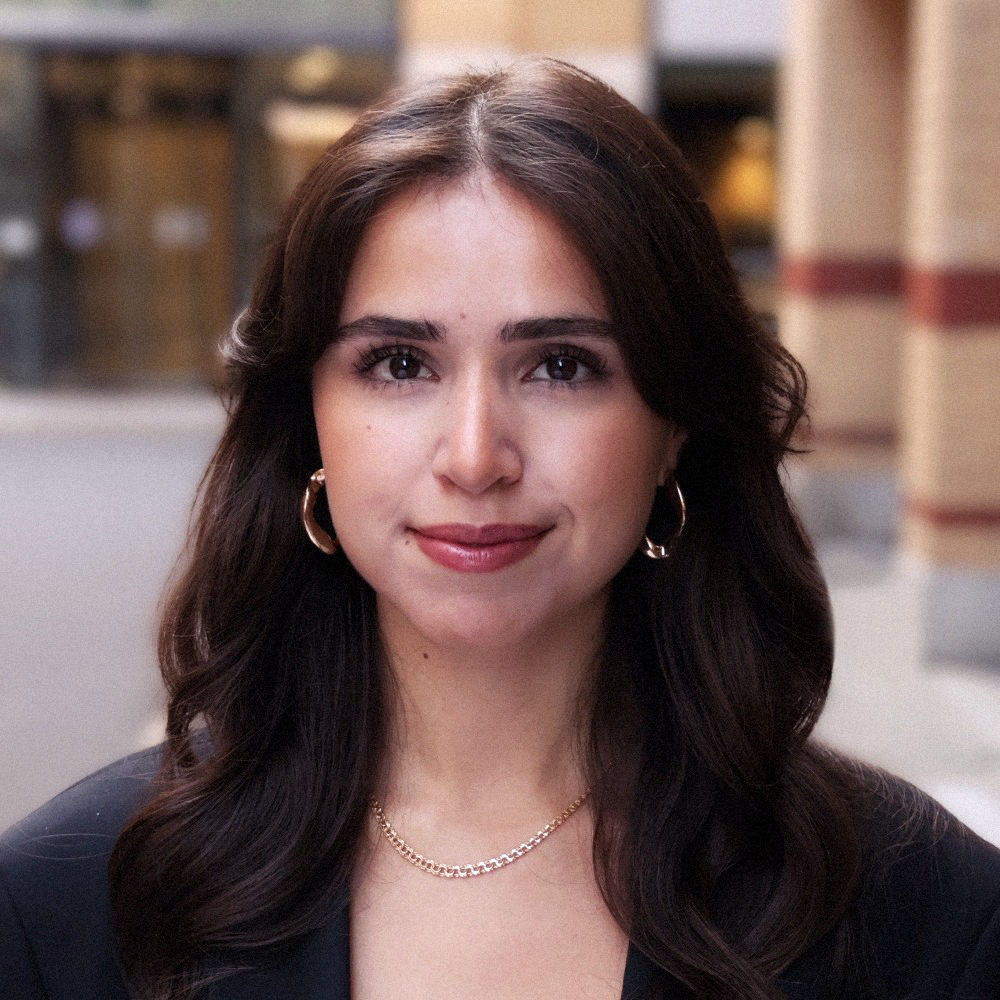
Hi! I'm Amanda, a third year Neuroscience student and Laidlaw alum from UCL. I'm Swedish-Persian and grew up in Sweden before moving to London for uni. These days, alongside my studies, I work for the Foundation as a Marketing Assistant.
For my first year research project, I worked on optimising alginate hydrogels for 3D astrocyte culture systems. In simpler terms, I was figuring out the best way to prepare a jelly-like scaffolds so that star-shaped brain cells called astrocytes could grow in three dimensions rather than flat on a dish. This matters because 3D environments mimic the brain more realistically, which could help researchers develop better treatments for neurological disorders!
For my Leadership-in-Action project, I co-created Beyond the Books, a resource designed to help students from underrepresented backgrounds navigate the unwritten rules of university life, from internships and networking to professional opportunities that aren't always obvious if you're the first in your family to go to uni.
Always happy to connect, whether you want to chat about neuroscience, widening access, the Laidlaw experience, or just say hello! One of my favourite things about this community is getting to meet people from different universities and backgrounds, so please do reach out! 🌟