This week settled into something resembling a routine, which in an office is usually the point at which the interesting work begins.
I spent most of the week reading through capacity market designs from the United States and Europe, PJM, ERCOT, and the UK's Capacity Market among them, and trying to work out which parts of them could survive being transplanted into Indian conditions. A capacity market, pays generators for being reliably available, separately from whatever they are paid for the electricity they actually produce. It can be a sensible fix to certain economic problems. India's generation mix, demand patterns, and regulatory capacity are all different enough from PJM's that a straight copy-paste would not work, and figuring out exactly the differences has occupied a satisfying amount of my week. CEEW is in close contact with the Ministry of Power on this, and there is live discussion right now about developing a more flexible electricity market with some capacity mechanism attached to it, which makes the whole exercise feel considerably less academic and more motivating. By Friday I had produced a memo and several spreadsheets, and felt like I understood the problem considerably better than I had on Monday.
Midweek, the team arranged a visit to a solar panel manufacturing facility on the outskirts of the city. Rows of panels moved along the line in various stages of assembly, from bare silicon wafers to finished modules being tested.The engineer giving the tour talked through the domestic manufacturing push currently underway in India, and how policy incentives are shaping decisions about where components get sourced and assembled. It was a good reminder that the numbers in a tender document eventually turn into physical plants.
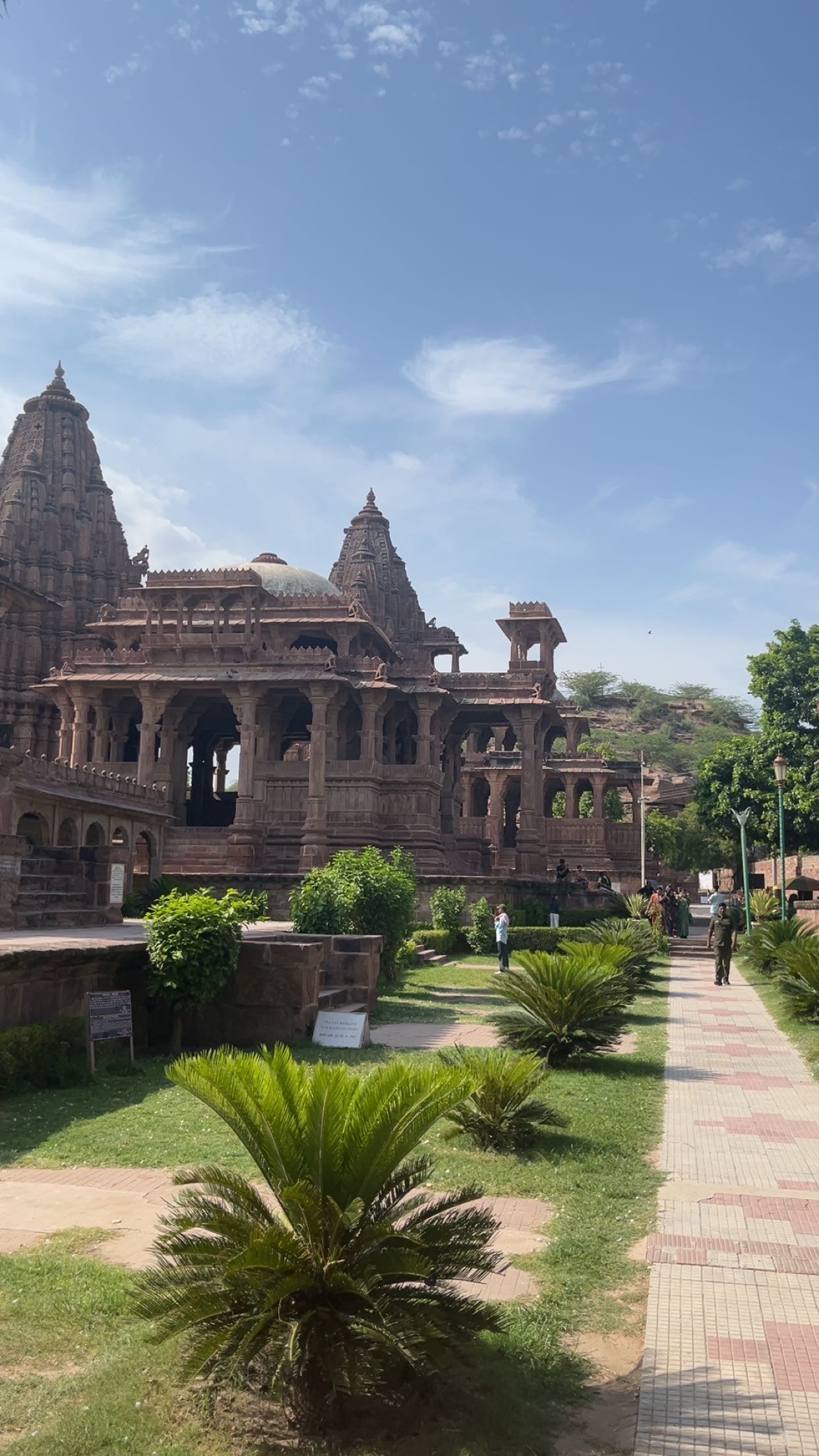
The weekend took us to Rajasthan: Jaipur first, then Jodhpur. Jaipur is called the Pink City because much of the old town was painted a terracotta pink in 1876 for a visit by the Prince of Wales, and has stayed that colour since, a lasting trace of the colonial period. We walked around the City Palace, the Hawa Mahal, and a market selling mostly textiles, before taking the train to our next destination. Jodhpur, the Blue City.
In both cities the hostels were very talkative places. In Jodhpur, the owners invited us to watch a Bollywood film with them, Namaste India, about an Indian family living abroad, and about forced marriage. It turned into a good conversation afterwards about India's diaspora and how the country's global reach tends to be underrated in how Europe talks about it.
Food-wise, Rajasthan gave us dal baati churma, baked wheat balls with lentils and a sweet crumbled topping, and ker sangri, a bean and berry dish suited to the dry climate. Both were some of the most spicy dishes I’ve seens, and both were great.
On Monday evening we took the sleeper train back home. The trains here provide far superior service to British trains, with free full meals and good timings.
Two weeks in, the shape of the internship is becoming clear: serious work during the week on a subject people here are actively arguing about, and somewhere new most weekends.