Week 4: Systems thinking
First, a primer to explain something that comes up constantly at CEEW, and that has shaped how I think about the my work: systems thinking. The idea is about solving problems sustainably, or for the future. In short, no energy policy works for long if it only solves the problem in front of you. A subsidy that works while the funding lasts but collapses the moment it is withdrawn has nt realy solved anything. Systems thinking involves mapping out who else is affected by a decision, and what they will do in response to it, before deciding whether it will hold up. A generator responds to the incentives it is given. A regulator responds to political and fiscal pressure. A consumer responds to price signals, when those signals reach them at all. A good design accounts for that adjustment in advance rather than discovering it later. This is, in essence, applied economics: incentives, information, and the fact that markets are made up of people and institutions reacting to each other rather than obediently following a plan.
Now on the work side:
Together with two colleagues on the Power Markets team, I started building an Excel-based tool to assign ELCC credits to different generation technologies: essentially, working out what share of a solar plant's, a battery's, or a coal plant's installed capacity should count toward system reliability, given how often each one is available in demand peaks. Turning that into a set of credit values that regulators could actually use meant going back and forth between the dispatch data and some conversations about which assumptions were defensible.
In addition to the ELCC tool, I spent part of the week reading into flexible ramping products, a mechanism used in markets like CAISO and ERCOT to procure the ability to rapidly increase or decrease generation output as demand and renewable output shift within the day. As solar and wind make up a larger share of the mix, the grid needs resources that can respond quickly to a cloud passing over a solar farm or a sudden spike in demand, and flexible ramping products are one way of pricing that responsiveness directly. Transposing the instrument onto India is not straightforward. These products were designed for markets with mature real-time dispatch systems, granular price signals, and generators used to being paid and penalised on very short timeframes. India's power sector still operates with a more centralised, less price-driven dispatch process in many states. It is a good example of a broader pattern in this work: an instrument that solves a specific problem elegantly in one market can create new problems if it is dropped into a market that lacks some underlying conditions. Getting the sequencing right, building the infrastructure before or along with the mechanism, is turning out to be as important as designing the mechanism itself.
Now on the fun side:
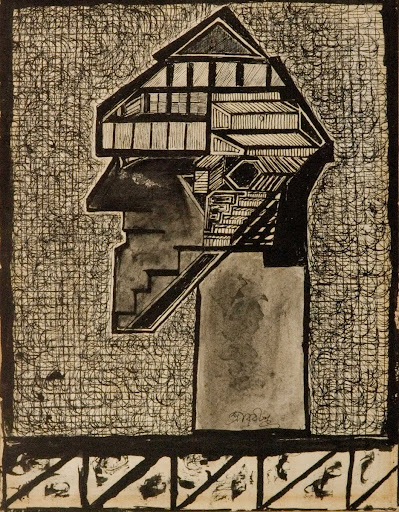
The weekend was quieter than the last few. We visited the National Gallery of Modern Art, in a colonial-era building that once housed the Jaipur House. A few of the rooms trace the exchange between Indian and European artists in the nineteenth and twentieth centuries: Indian painters who trained in London and Paris and brought Impressionist technique back with them, as well as European painters who spent time in India and interpreted local subject matters through their own techniques and colonial prisms. Also interesting to see how Indian artists attempted to voice their independence by emancipating themselves from European techniques in the early 20th century, and particularly by taking inspiration from Japanese techniques, resulting in very cool syncretism.
Four weeks in, I still feel my work has solid impact and I’m still learning skills and methods of thought for the future.