The first thing that hits you when you comeout of the Delhi air-conditionned airport is a wall of hot, damp air. It’s rainy season here, and the weather is basically a warmed-up version of the neverending British drizzle. The second thing that hits you is a background noise of honking. The city is incredibly active. Parts of it are in full transofrmation. Its scale is impressive for a European city-dweller like me.
CEEW, the Council on Energy, Environment and Water, is India's premier energy and environment think tank, in close and constant contact with the Ministry of Power. I have been placed on the Power Markets team, in an office that takes its work seriously and its chai breaks just as seriously.
My first assignment was a set of reports on data sharing infrastructure for the Ministry of Power: working out how utilities, regulators, and grid operators can share data with each other without commercially sensitive figures ending up somewhere they shouldn't.
My second concerns technology-neutral tenders, the idea of making renewables and thermal power compete on the actual value each delivers to the grid, at the times the grid needs it. Most of the week went into understanding just how complicated it is to operationalize and measure this concept. Electricity demand moves by the hour and by the season, and supply is becoming more variable as renewables get integrated into the system.
It is very satisfying work. The questions are concrete and the reports I am drafting may well be read by people in a position to act on them, which is not something I can say for anything elseI have written at Oxford.
Everyone here is driven by purpose in a way that I have never seen in a workplace before. This alignment of idnividual and team goals makes the organization quite productive as well as a really pleasant work environment. I’m mostly with engineers, people who solve problems, which is refreshing.
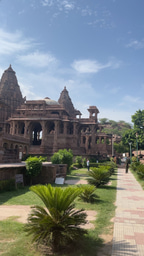
Outside the office, Delhi is bustling. The pace of development is easy to notice just by walking down a street for ten minutes. There is a lot of energy in the city, and it is motivating to be here while so much is being built.
One thing that struck me quickly is how willing people are to share their culture. Colleagues, and neighbours, have explained festivals, and given food and visit recommendations without being asked twice. They have taken me to the local market to get a collection of linen shirts.
India is far more religiously diverse than anywhere I have lived in Europe, and this is not an abstract fact here but something you notice on a short rickshaw trip: a mosque, then a temple, then a small shrine wedged between a phone repair shop and a Blinkit dark store. Blinkit and Zomato have become part of daily life for me too: any kind of groceries, clothes or toiletries delivered in ten minutes ,and food in thirty minutes. It says a lot about the resourcefulness of businesses here, as well as the cheapness of labor.
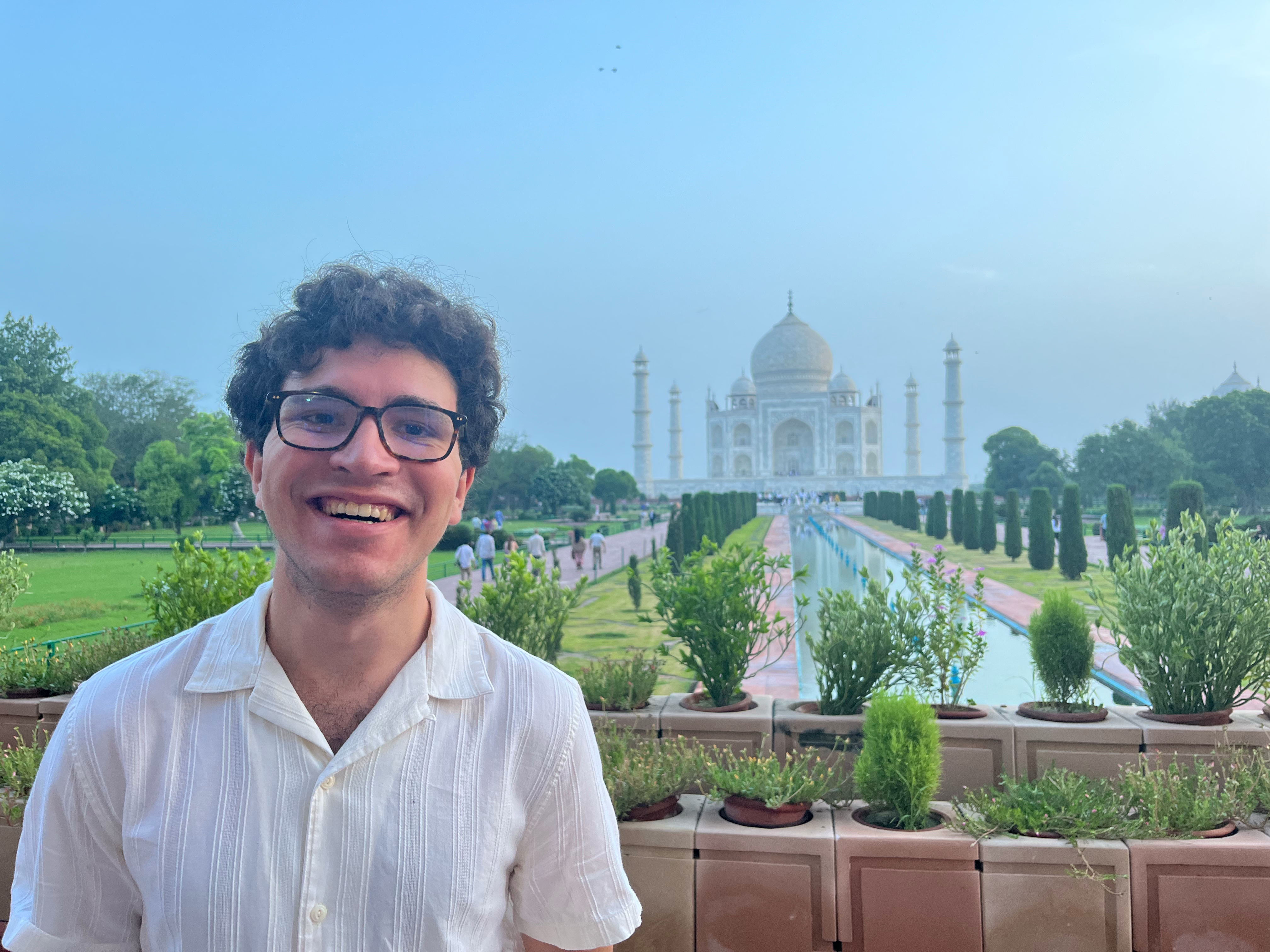
On Saturday we took the early bus to Agra to see the Taj Mahal, built by Shah Jahan’s subjects in the seventeenth century as a mausoleum for his wife. We saw the sunrise there, and had a thali nearby afterwards, six small bowls of things I could not always name, all of them good.
Delhi at the end of week one feels enormous, fast, and under construction in every direction I look. It seems a good place to be trying to understand how a country builds an energy system.