This week, the research became much more practical. I gave a presentation to the Power Markets team on how ELCC, Effective Load Carrying Capability, could be applied in India, and how it connects to the capacity market the Central Electricity Regulatory Commission is considering. ELCC measures how much a generation resource contributes to keeping the lights on, based on whether it tends to be available when demand peaks, rather than just how many megawatts of capacity it has on paper. This matters a great deal for renewables and battery storage, whose usefulness depends heavily on timing. The presentation led to really productive discussions, and the team has decided to turn it into a data-based decision tool over the coming week, which will be the main focus of the time I have left here.
Once again, this feels unusually close to real consequences because, this weekend, we experienced a dozen of short power cuts, particularly in remote areas in the north, and this is just what my work is meant to help with. Doing this from Delhi rather than from a desk in Oxford inevitably changes how you think about it. You end up talking to the people who will actually implement whatever gets decided, you understand their practical challenges, and you get a much clearer sense of who is affected by the numbers on the page, and how.
The weekend was spent in Ladakh. We flew to Leh for a three-day hike with no wifi, which after two weeks of Delhi work was a welcome change of pace. We spent a day acclimatising at 3,500 metres before setting out, then walked through the villages of Yurutse and Shingo, staying each night in homestays. People there expecdt travellers to come knocking on a door and asking if anyone has room for us. Both times they did, and both times they fed us, mostly garlic soup, noodles, delicious Momos, along with butter tea.
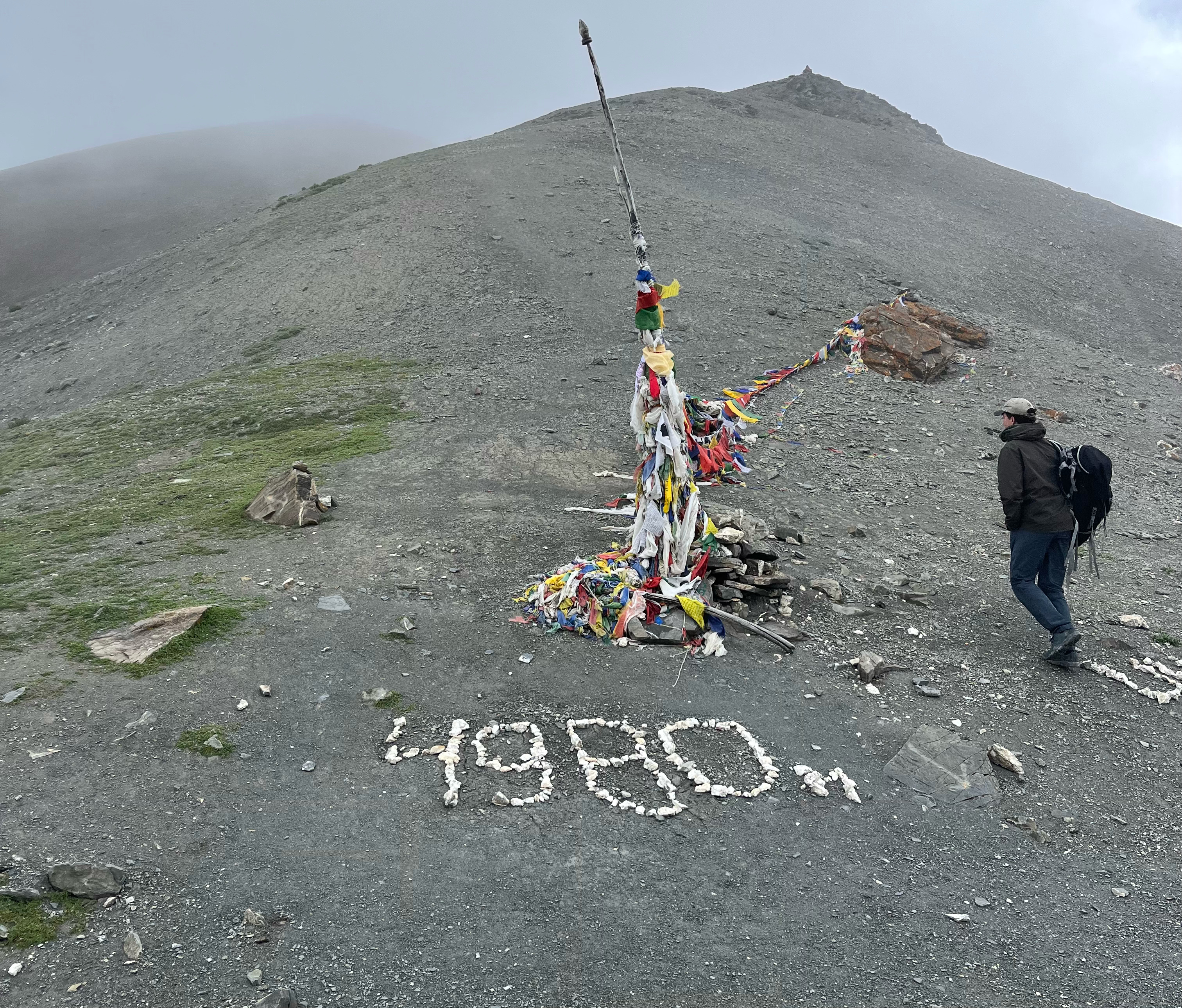
Ladakh mixes Buddhist and Muslim communities closely together, with monasteries visible on hillsides, and it is also heavily militarised, being close to Kashmir, with military convoys a regular sight on otherwise quiet roads. It was a clear reminder of how much regional geopolitics presses on a place that felt, on the ground, remarkably calm. The high point of the trek was Ganda La Pass, at 4,980 metres, where the air is thin enough that even a short uphill stretch left me short of breath. The food at that altitude was plainer and far less spiced than anything we had eaten so far in India.
Four weeks remain, and most of them will go into building the decision tool and getting more technical. This is by far the most fulfilling summer I’ve had since high school :)