Scholar Spotlight - Viktoria Springer
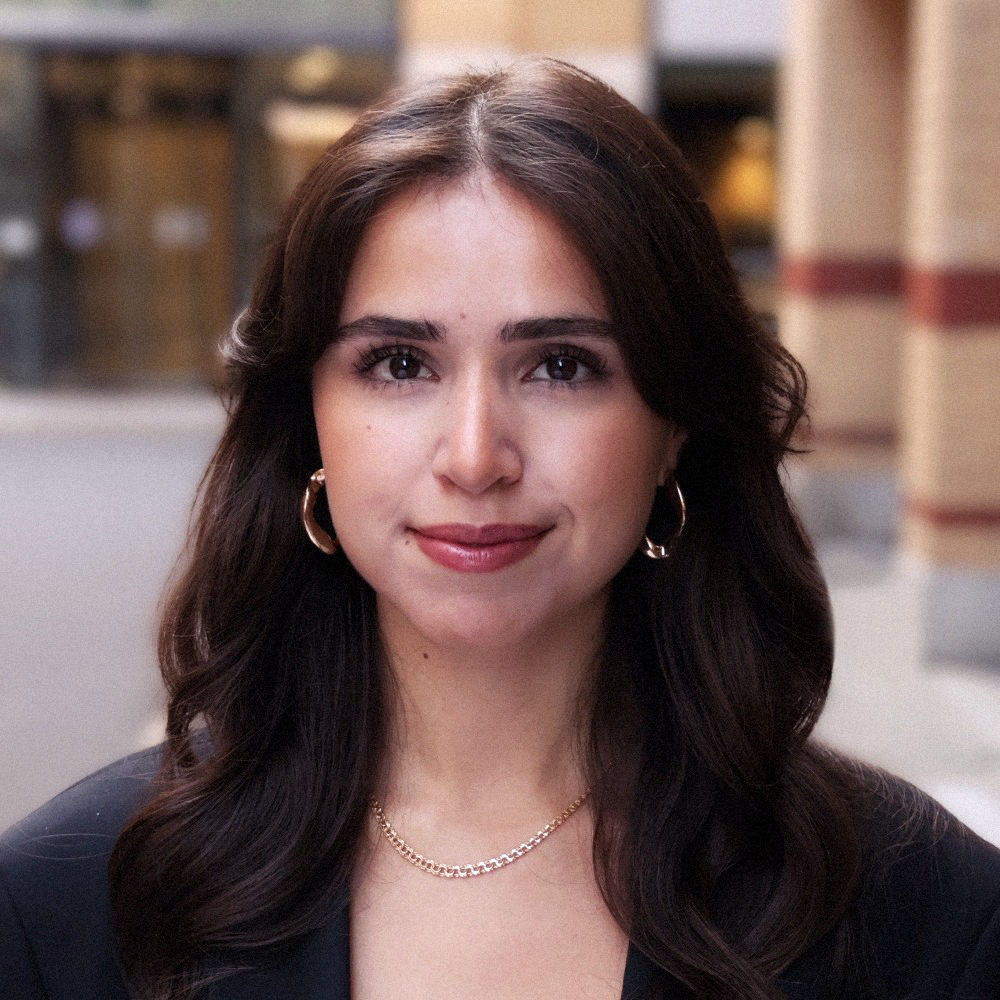
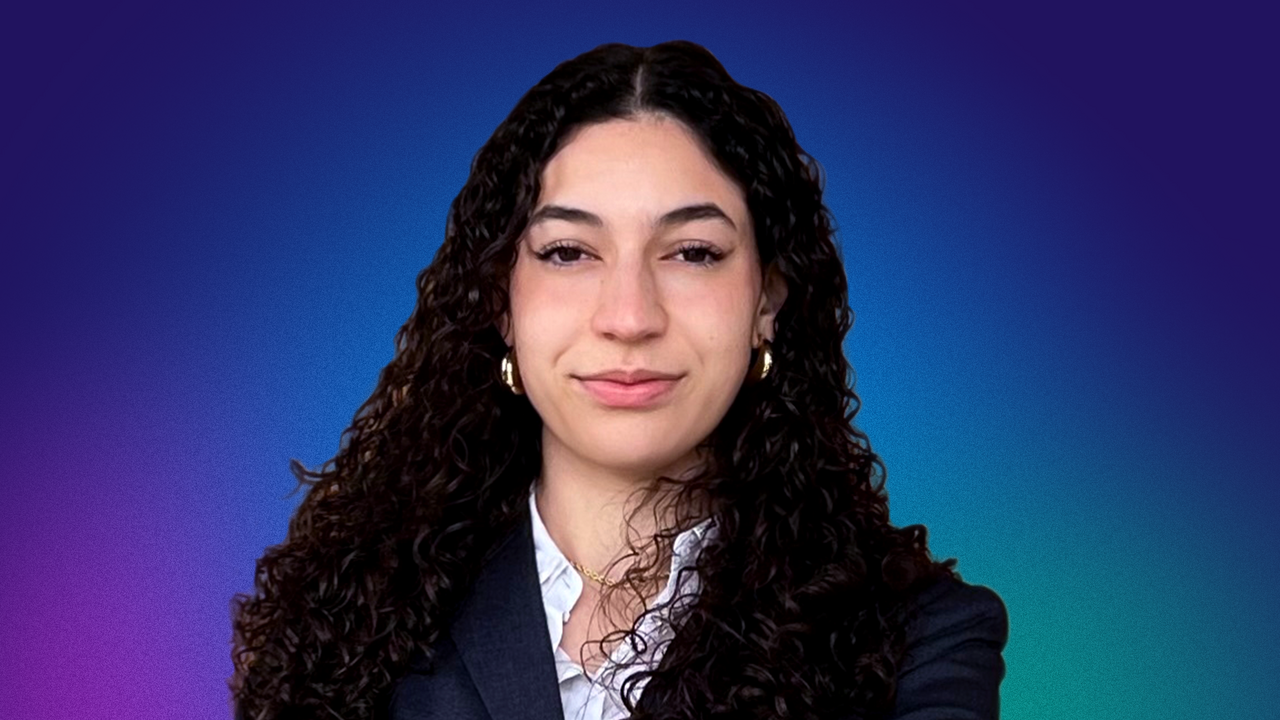
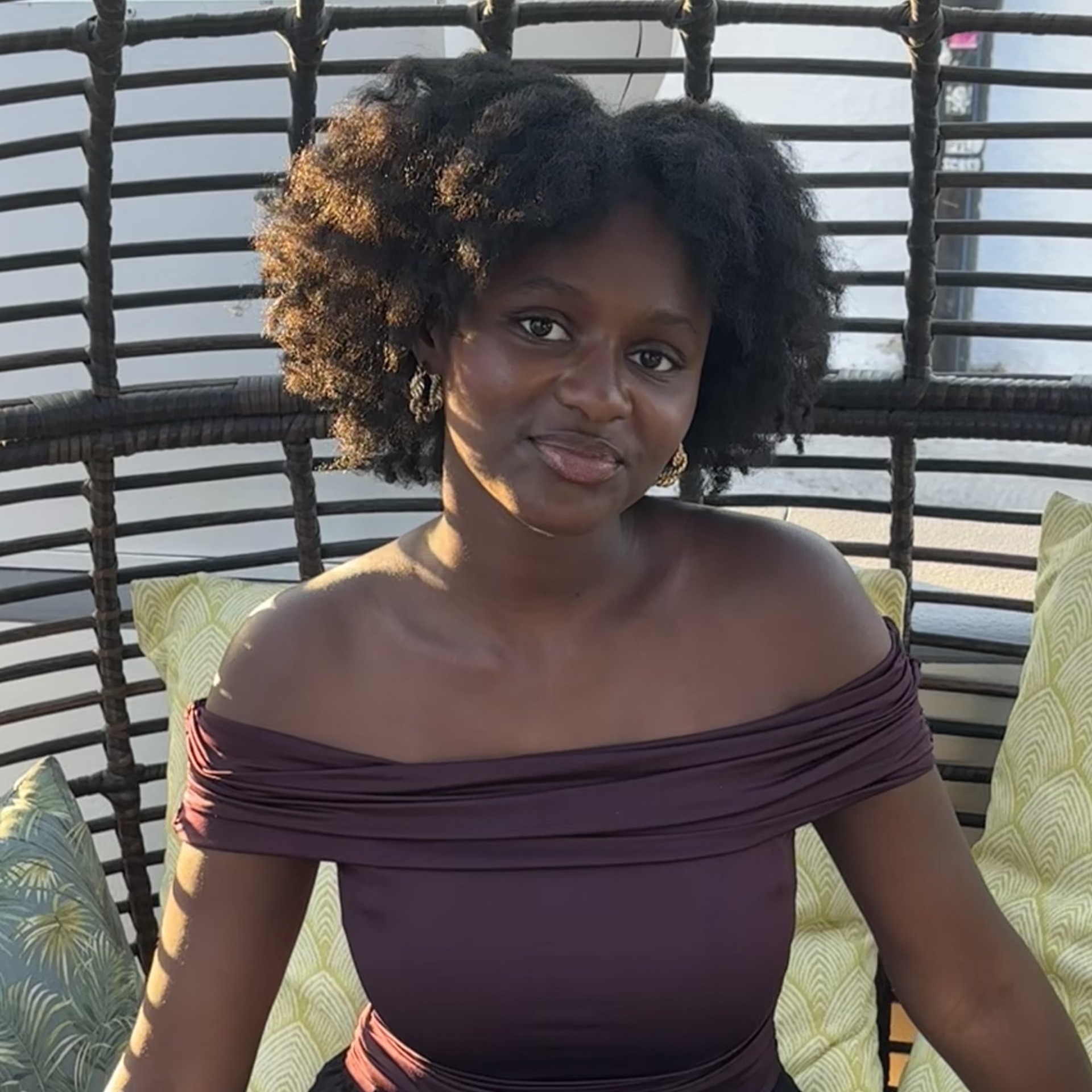
Viktoria Springer, a Laidlaw Scholar at the University of Toronto, researching peripheral immune dysregulation in Parkinson’s disease using cross-species transcriptomic and tissue-based approaches.
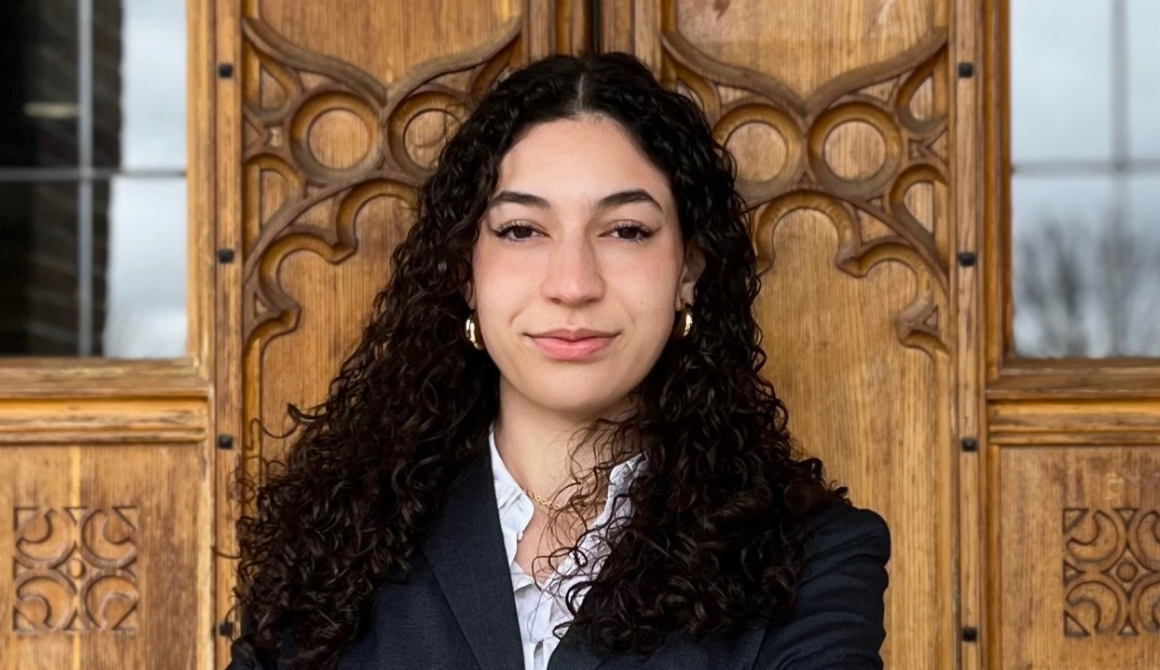
Research title:
Cross-Species Transcriptomic and Tissue Evidence of Peripheral Immune Dysregulation in Parkinson’s Disease.
Please briefly outline what your research is about, and its potential real world impact
This past summer, I investigated how dysfunction in the peripheral immune system might contribute to the development of Parkinson’s Disease (PD). Although PD is traditionally viewed as a brain-centered disorder driven by the loss of dopaminergic neurons, growing evidence suggests that early changes outside the brain, particularly along the gut-brain axis, may play a pivotal role in disease onset and progression.
Using an integrative, cross-species framework, I combined single-cell human transcriptomic datasets with experimental validation in a preclinical PD mouse model. By analyzing circulating peripheral blood mononuclear cells (PBMCs) across disease cohorts, I identified consistent signatures of immune dysregulation that distinguish PD patients from healthy controls, as well as distinct differences between early-stage and advanced PD cohorts. I then validated these immune shifts at the tissue level using immunofluorescence staining of gut and spleen sections, enabling me to localize specific immune cell changes within peripheral organs.
Together, these data provide converging evidence that peripheral immune dysfunction is a key component of PD pathology and may interact with gut-derived inflammation long before neurodegeneration becomes clinically apparent. This research contributes to a growing shift toward recognizing PD as a multi-system disease, broadening the possibilities for earlier detection and more effective intervention.
Identifying immune-related biomarkers in blood or gut tissues could enable diagnosis at a stage when therapeutic impact is greatest. PD affects my own family, as it does many others worldwide, and this connection fuels my commitment to advancing research that addresses underlying disease mechanisms, not just symptom management once dopamine loss has already occurred and it's too late. By uncovering how peripheral immune pathways become disrupted, this work highlights promising new targets for immune-modulating therapies and supports a more holistic, body-wide approach to PD diagnosis, prevention, and treatment.
Where did your passion for this research originate? How does your personal story feed into it?
My interest in Parkinson’s Disease (PD) research began when both of my grandfathers, my Nonno and my Papa, were diagnosed. Their disease presentations differed drastically; my Nonno experienced the classic tremors associated with PD, while my Papa struggled more with profound movement initiation and mobility. Watching the progression of their symptoms and the passing of my Papa created a deep urgency in me to understand a disease that remains severely under-researched compared to other neurodegenerative conditions, such as Alzheimer’s. In parallel, growing up with anaphylaxis sparked an early fascination with the immune system, and I became increasingly intrigued by the idea that immune dysregulation can influence conditions far beyond traditional “immunological” disorders.
During my undergraduate studies, I learned that peripheral immunity may play a role in neurodegeneration. This intersection of neuroscience and immunology felt both intellectually compelling and personally meaningful. The possibility that early immune shifts could serve as biomarkers, or even therapeutic targets, resonated with my desire to contribute research that has concrete, patient-centred impact.
Joining the Rojas Lab at the Krembil Brain Institute solidified this path. It felt like the perfect alignment: a lab whose expertise matched my research interests, and a team looking for someone to lead PD-focused work. Their mentorship, paired with my drive to learn and make a difference, created an environment where I could grow rapidly. This project has allowed me to integrate both computational and experimental approaches, shaping my long-term goal of exploring how peripheral immune dysfunction influences neurological disease. My personal story, combined with the scientific challenges of PD, continues to drive my commitment to this work.
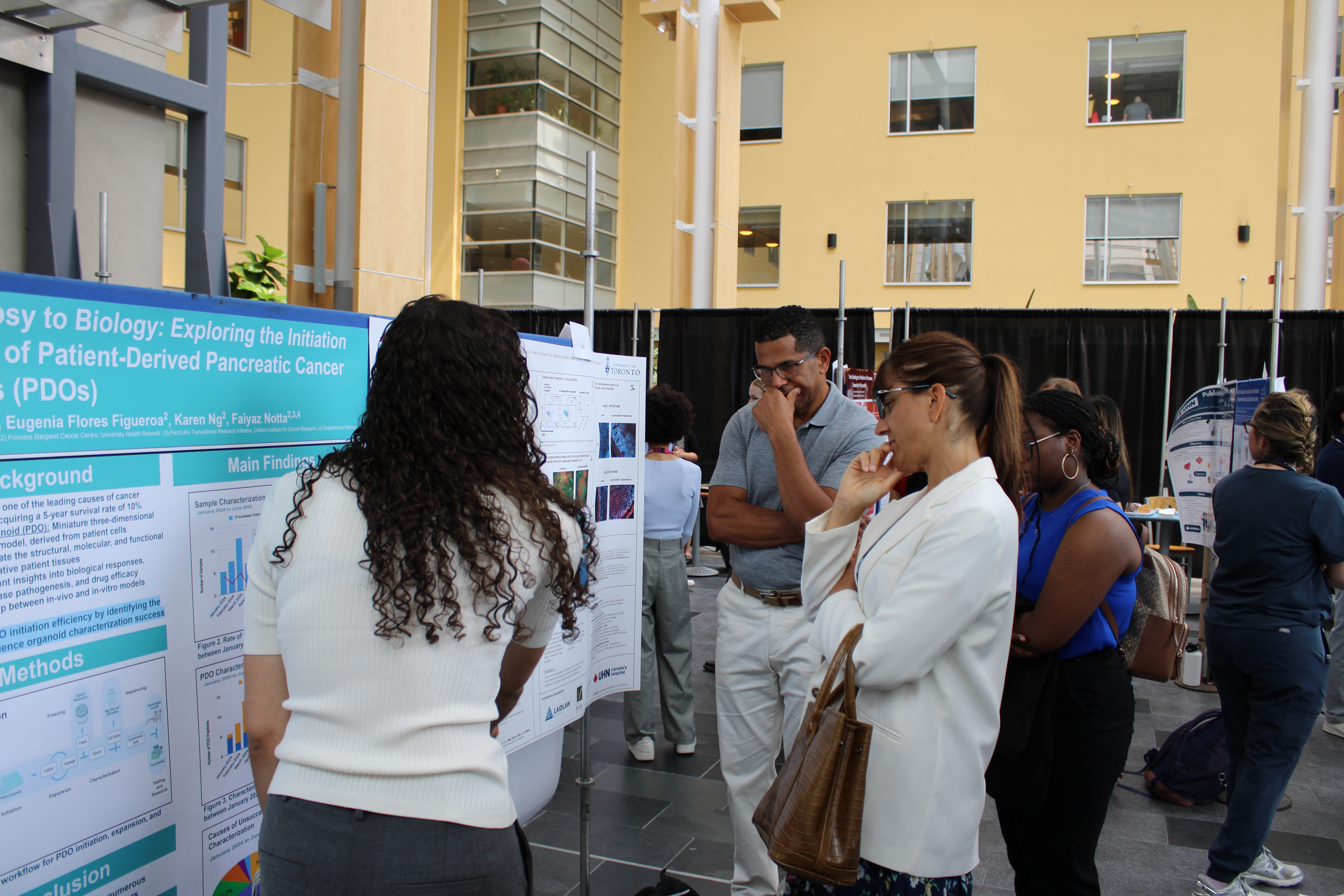
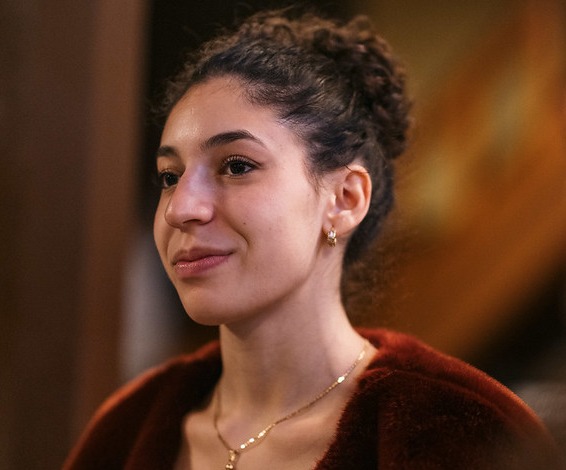
Presenting my research at UHN's Summer Student Conference.
What is the most memorable moment from your Laidlaw scholarship experience so far?
The most memorable moment of my Laidlaw experience was presenting my research at the Laidlaw Scholar Conference. It was the first time I was able to share my project with an international audience, and the response was overwhelmingly encouraging. I had meaningful conversations with scholars from around the world who were genuinely interested in my research and vice versa. Hearing their perspectives definitely helped me see my work in a broader global research context. Another highlight was receiving news that my project had been shortlisted for submission to F1000Research. It was a moment that validated not only the scientific effort I put into the project, but also my personal meaning behind the research. This experience has shown me the power of mentorship, collaboration, and supportive leadership. It reminded me that research is not just about the data, but about the people its impacting and the values behind it.
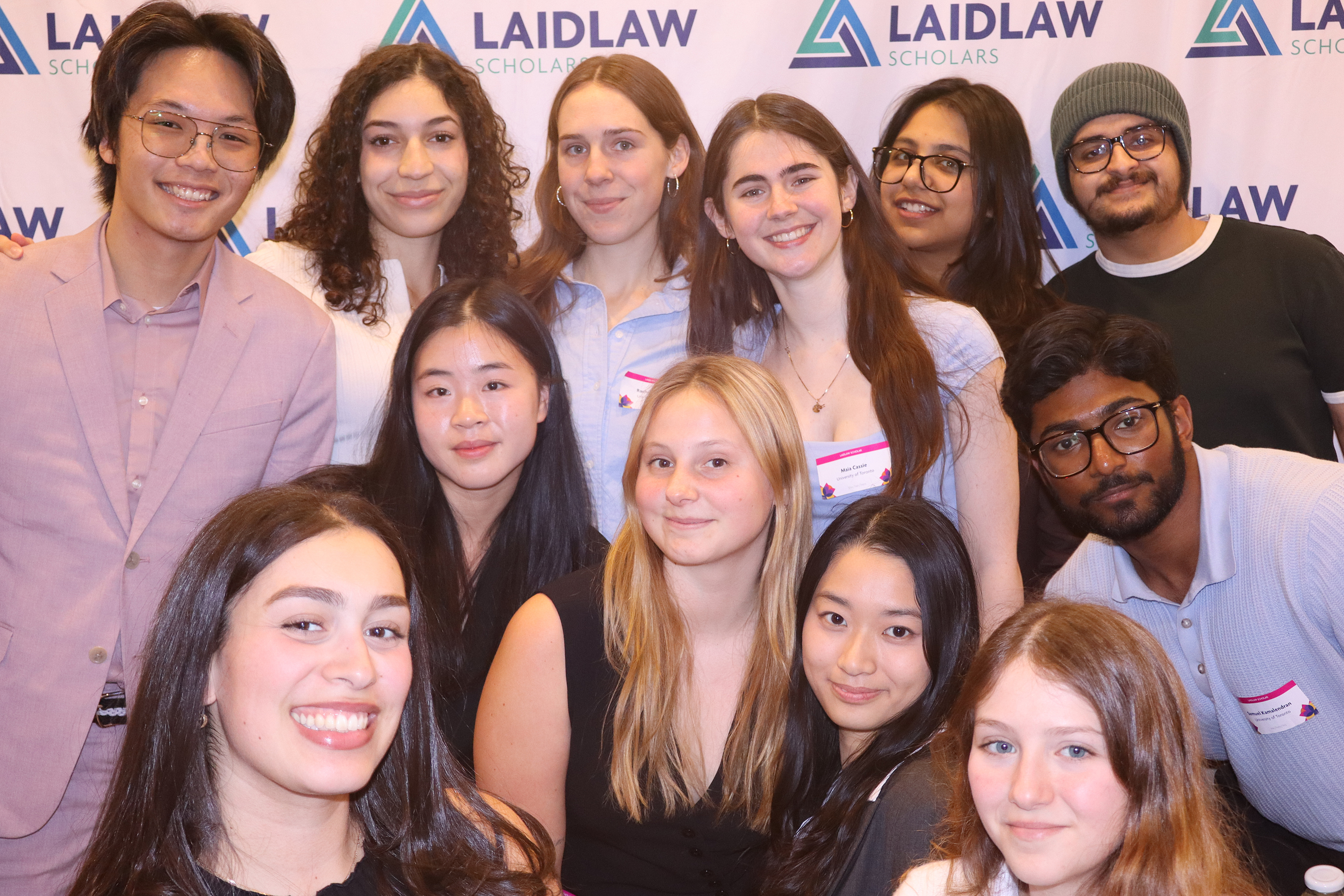
UofT Scholars at the Laidlaw Scholars Conference.
What is the biggest challenge you came across in your research and leadership journeys so far, and what did you learn from it?
The biggest challenge I encountered in my research and leadership journey so far has been managing imposter syndrome while navigating health struggles. Throughout my research period, frequent hospital visits often prevented me from being in the lab consistently. This created long and exhausting days on the occasions when I could be there, and I constantly worried about falling behind or not meeting the expectations I had set for myself.
I am incredibly grateful to my Laidlaw Coordinator, Shraddha Prasad, for her guidance during this time. She helped me navigate my deliverables with compassion and practicality, and reminded me that effective leaders know when to rest, set boundaries, and care for their physical and mental wellbeing. The experience itself helped me recognize that producing research we’re truly proud of often requires immense effort and sacrifice, but that it should never come at the cost of self-care.
Despite the challenges, the personal growth I experienced was invaluable. That intensive six-week research period taught me disciplined time management, resilience, and the importance of asking for support when needed. These lessons have stayed with me and continue to shape how I approach research, leadership, and life.
What does it mean for you to be a Laidlaw Scholar?
Being a Laidlaw Scholar means belonging to a community that values curiosity, integrity, and action. To me, it represents the intersection of academic rigor and responsible leadership; a place where research is not just an intellectual pursuit but a tool for creating tangible, positive change.
The programme has challenged me to grow not only as a researcher in my discipline, but also as a leader who can communicate across disciplines, collaborate effectively, and think critically about the societal impact of my work. It has also given me the confidence to take on ambitious projects and the support system to pursue them fully.
Most of all, being a Laidlaw Scholar means contributing to a global network of young people who genuinely want to make the world better, in our own endeavours. I feel honoured to be part of that network and inspired by the collective ambition of this community.
Which particular leaders inspire you the most and why?
One of the leaders who has inspired me most is Dr. Jane Goodall, whose legacy has shaped the way I think about science, compassion, and purpose. I’ve always admired how she carved her own path during a time when women in science were rarely given space, respect, or recognition. The courage it took for her to step into the unknown alone, persistent, and deeply curious is something I return to whenever I feel discouraged in my own journey.
What inspires me on a more personal level is the way she approached scientific discovery with empathy rather than ego. She proved that rigorous research and emotional intelligence are not opposites, but powerful partners. Her ability to see animals, ecosystems, and people through a lens of connection resonates with the way I hope to approach both neuroscience and immunology: grounded in humanity and not just data.
Even now, her work feels like a guiding force. I often think of her not just as a scientist, but as a symbol of what it means to challenge expectations with quiet determination. Her legacy reminds me that leadership doesn’t need to be loud to be transformative, and that meaningful change often begins with someone who simply chooses to care deeply, and to act on that care.
Briefly describe a scene from the future you are striving to create.
I am striving toward a future where neurodegenerative diseases like Parkinson’s can be detected earlier, managed more effectively, and ultimately prevented. I hope to contribute to a world where families affected by PD have access to more options, more hope, and more time together. Beyond healthcare, I envision a society where speech is free, education is ubiquitous, and governments operate without tyranny. Inspired by the Laidlaw Programme’s emphasis on ethical leadership, I aim to embody these values in my own leadership, fostering change that reflects integrity, compassion, and responsibility. My goal is to help shape a future where science, justice, and equity work hand in hand to improve lives on both individual and societal levels.
Quick Fire Questions
📺 Currently Binging:
Severance – I finally decided to watch it and I love a good psychological thriller.

📚 My top book recommendation:
The Midnight Library – Matt Haig

🎶 My anthem:
Ride Like The Wind – Christopher Cross
🎶 Current Podcast Obsession:
Philosophize This! by Stephen West

🌈 Something that made me feel joy recently:
Visiting home and my family to pick our annual Christmas tree from the tree farm.
A message from Viktoria:
I’d love to connect with others who are passionate about brain health advocacy and exploring opportunities for collaboration or networking. You can find me on LinkedIn, attached here! https://www.linkedin.com/in/viktoriaspringer/
If you want to learn more about Viktoria's work, explore her research here and follow her on LinkedIn.Viktoria is a Laidlaw Undergraduate Leadership and Research Scholar at the @University of Toronto . Become a Laidlaw Scholar to conduct a research project of your choice, develop your leadership skills, and join a global community of changemakers from world-leading universities.
Find out more about the Laidlaw Scholars Undergraduate Leadership and Research Programme.
🔦 Discover more Scholar Spotlights:
⚡️Youness Robert-Tahiri, a Laidlaw Scholar at the University of Toronto, explores childhood adversity, aggression, and self-regulation.
⚡️ Cothney Lasaracina, a Laidlaw Scholar at the University of Leeds, explores Colonial Subjects From the French Resistance
⚡️ Jing Ma, a Laidlaw Scholar at UCL, explores the influences between the evolution of legal frameworks and civil society in Singapore.





Please sign in
If you are a registered user on Laidlaw Scholars Network, please sign in