Scholar Spotlight - Ben Fall



Discover more Scholar Spotlights.

Research title
A comprehensive analysis of Geneva's tram line 18 and bus line 80: Identifying Bottlenecks in Geneva: A Data-Driven Diagnostic of Commercial Speeds
Please briefly outline what your research is about, and its potential real world impact
My research analyses how fast and reliably key public transport lines in Geneva operate in real time, using a year of high‑resolution vehicle trajectory data from tram line 18 and bus line 80. It focuses on how commercial speed fluctuates along these routes and over time, and where recurring slowdowns, delays, or disruptions systematically occur.
Methodologically, the project involved cleaning and preprocessing operational data, then using statistical and data‑driven techniques in python to detect spatial and temporal bottlenecks on the chosen lines, integrating ideas from other cities, researchers and myself. These bottlenecks were then linked to plausible causes such as problematic intersections, congestion hotspots, or peak‑load crowding, with the goal of distinguishing persistent structural issues from isolated incidents.
The real‑world impact lies in translating these diagnostics into concrete, location‑specific recommendations for the operator (TPG) and the HOMES Lab to improve schedule reliability and increase commercial speed where it matters most. By making these two heavily used lines more efficient and dependable, the project supports mode shift from private cars to public transport, reduces congestion and emissions, and strengthens Geneva’s broader climate and urban‑resilience objectives.
Where did your passion for this research originate? How does your personal story feed into it?
Choosing to walk or cycle when I can, taking trains instead of short‑haul flights, and eating vegetarian have been part of my life for years. These habits were never about preaching the “right” behaviour to others; they grew out of a simple idea: if sustainable options are practical and attractive, people will choose them without needing to be persuaded.
Over time, that personal mindset broadened into a fascination with smart, sustainable innovation at the city scale. Public transport sits at the heart of this, because it is one of the most powerful tools for cutting emissions while keeping mobility equitable and accessible.
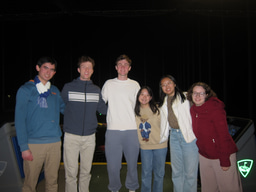
Yet even in places that are seen as having state of the art public transportation networks, like Geneva and Switzerland more broadly, bottlenecks and delays still make cars or planes feel easier. A small example was travelling with an EPFL cohort to the Durham conference by train instead of flying: the decision fit our values, but the trip also highlighted how much infrastructure and coordination still need to improve before rail is a truly effortless default.
Working on the Geneva project was the first time this long‑term passion met the tools from my studies. Using real operational data to diagnose where lines slow down and why showed how analysis can directly inform concrete improvements, making everyday public transport both more reliable, sustainable, and viable.
What is the most memorable moment from your Laidlaw scholarship experience so far?
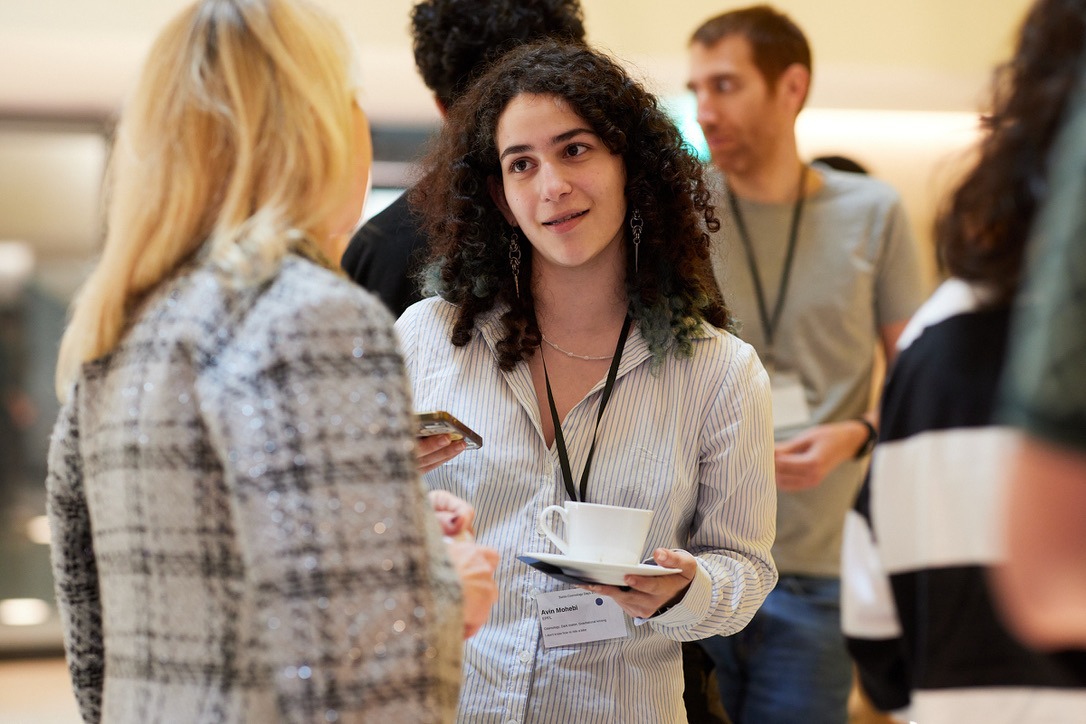
The most memorable moment of my Laidlaw scholarship so far was the Durham Conference. Being there in person with so many driven, curious people made the programme feel even more real and tangible. Instead of names on emails or Zoom tiles, there were conversations over coffee, walks between colleges, and late‑evening discussions about projects and plans.
What struck me most was the mix of ambition and honesty in the room: people cared deeply about their topics, but were also open about doubts, setbacks, and how much they still had to learn. Hearing others talk about their research, leadership projects, and personal paths pushed me to think more boldly about what I want my own work to contribute to.
I left feeling hopeful and surprisingly calm. At a time when global challenges can feel overwhelming, spending a few days with such a diverse group of thoughtful, committed people was a powerful reminder that leadership can be quiet, collaborative, and grounded in real work. That sense of shared purpose and possibility has stayed with me ever since.
What is the biggest challenge you came across in your research and leadership journeys so far, and what did you learn from it?
One of the biggest challenges I encountered in my research and leadership journeys was coming to terms with the gap between the idealised image of impactful work and its day‑to‑day reality. While much of my work was intellectually exciting and meaningful, a significant portion involved laborious, repetitive tasks such as processing and cleaning data, often far removed from the “glamorous” vision of research and leadership I had initially imagined.
At the same time, the strongly individual nature of an academic project was new to me. I realised that spending long stretches working alone is not where I do my best thinking. I thrive in environments where ideas are exchanged, questioned and improved together, and some of the most productive moments were the meetings where I could sit with my supervisor and co‑create a better approach.
Together, these experiences taught me an important lesson: meaningful outcomes rest on unglamorous foundations and on collaboration. Progress depends on patience, discipline and a willingness to engage fully with every stage of the process, but also on deliberately building feedback loops and spaces for shared thinking. Rather than being discouraged, I became more grounded and resilient, and I now see my role as not only doing the work but helping to create the kind of collaborative environment where that work can really flourish.
What does it mean for you to be a Laidlaw Scholar?
Being a Laidlaw Scholar, for me, means being part of something bigger than myself or my university. I often regretted the fact that being part of a solely engineering‑focused degree can narrow your perspective and make it harder to connect technical work with broader social and ethical questions. Laidlaw opens that up again.
It has also been a personal journey that pushed me outside my comfort zone. The programme has taken me beyond usual coursework, shown me how I handle responsibility and uncertainty, and helped me see which environments bring out my best thinking. Meeting scholars from other disciplines and backgrounds, especially at the Durham conference, has been a huge source of energy.
Looking ahead, I am particularly excited about the Leadership‑in‑Action project this summer. For me, being a Laidlaw Scholar is about that mix of growth, impact and adventure.
Which particular leaders inspire you the most and why?
Every leader who inspires me is, first and foremost, human. They have traits that are admirable and others that are less so, and part of my journey is learning to tell the difference. Rather than searching for a flawless role model to emulate, I try to take from each person the courage, clarity or empathy that resonates, while being honest about the aspects I would not want to copy.
I admire, for example, the moral courage and sense of responsibility of figures like Robert F. Kennedy, as well as creative spirits such as Oscar Wilde or Nietzsche, who refused to accept received wisdom and pushed people to see the world differently. I am equally drawn to “quiet” leaders, from mentors and teachers to local organisers, who rarely make headlines but change how others think through patience, integrity and consistent action. Together, these examples remind me that leadership is less about power and accolades, than about how you show up, learn and keep going
Briefly describe a scene from the future you are striving to create.
The most frightening thing to me right now is that I find myself unable to envisage the future alone, so to strive to create a specific scene seems overtly ambitious. However, if I entertain the exercise, I immediately hear the opening bars of “Imagine”, not because a flawless utopia feels realistic, but because it insists that we try to think beyond what currently seems inevitable.
In this imagined future, technology and AI act as quiet collaborators. They expand access to knowledge, ease the burden of survival, and give people back time and mental space to think, create and connect, instead of replacing human judgment or concentrating power. Work is no longer the primary marker of worth; curiosity, empathy and responsibility matter just as much. The planet is treated as a living system we belong to, not collateral damage to ambition, and progress is measured not only by speed or profit but by care.
Quick Fire Questions
📺 Currently Binging:
I have a strong appreciation and preference for classic cinema and have seen the complete works of directors such as Hitchcock, Welles, Antonioni, and Truffaut.
📚 My top book recommendation:
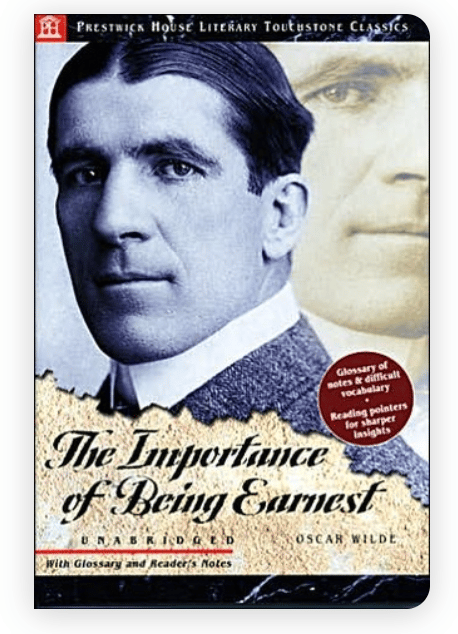
A recent short read which I enjoyed very much is "The Importance of being Earnest" from Oscar Wilde
🎶 My anthem:
"If I Only Had the Words" by Billy Joel
🌈 Something that made me feel joy recently:
A recent trip to Bucharest with a group of friends - discovering new places and cultures with delightful people is always a great source of energy and joy!
If you want to learn more about Ben's work, explore his research here and follow him on LinkedIn. Ben is a Laidlaw Undergraduate Leadership and Research Scholar at @EPFL . Become a Laidlaw Scholar to conduct a research project of your choice, develop your leadership skills, and join a global community of changemakers from world-leading universities.
Find out more about the Laidlaw Scholars Undergraduate Leadership and Research Programme.
🔦 Discover more Scholar Spotlights:
⚡️Youness Robert-Tahiri, a Laidlaw Scholar at the University of Toronto, explores childhood adversity, aggression, and self-regulation.
⚡️ Patrícia Gonçalves, a Laidlaw Scholar at Oxford University's Saïd Business School, on navigating the crossroads of public and private sectors and championing a sustainable, equitable future.
⚡️ Eliana Amoh, a Laidlaw Scholar at Cornell University, explores the intersection of education, labour, and migration in and out of Ghana.