Project Outline: Investigating Menopausal Hormone Effects on Fat Metabolism

Supervisor: Dr. Amanda MacCannell, Faculty of Medicine and Health, University of Leeds
Introduction:
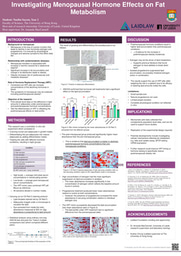
Menstruating women normally have high levels of oestrogen and progesterone in their bodies, whereas during (or after) menopause these hormones are seen to decline significantly. It is also widely known by observing common physiological changes that women gain abdominal fat as a result of menopause (which is known as central adiposity). The increased adiposity indicates that menopausal hormone changes affect adipocyte metabolic function. To reverse the decline of the sex hormones, Hormone Replacement Therapy (HRT) can be considered, so the effectiveness of using HRT and the significance of the timing of hormone replacement must be investigated. Since such menopausal effects on women's health are notably understudied, and the increased lipid accumulation in adipose tissue can increase the risk of cardiometabolic diseases, it is extremely important to clearly understand and define the molecular mechanisms resulting in metabolic dysfunction for future intervention.
Objectives:
- Measure how primary human adipocytes respond in different hormone environments - premenopausal oestrogen levels, postmenopausal (low) oestrogen levels, HRT-equivalent oestrogen-progesterone combinations
- Identify molecular mechanisms by looking at genes involved in fat metabolism, and whether the gene activities are changed by menopausal hormone changes
- Besides investigating the effect of HRT through placing the adipocytes in a HRT-equivalent hormone environment, the research will find whether the timing of HRT exposure changes the metabolic response of the adipocytes.
Methodology:
- I will first culture primary human adipocytes in the laboratory.
- Secondly, the cultured adipocytes will be treated with different hormone concentrations.
- I will use Oil Red O staining method to measure lipid accumulation, and also measure fatty acid uptake.
- After extracting RNA from treated cells, I will carry out qPCR to find out the level of expression of each gene of interest involved in fat metabolism (e.g. PPARα, mTOR, APOA2).
Anticipated outcomes and impact:
It is expected that lower oestrogen levels will result in higher lipid accumulation and greater fatty acid uptake; we will be able to generate foundational data directly linking menopausal hormone changes to adipocyte lipid metabolism. I also expect HRT to be found as an effective way to reverse the effects; however, the research will most importantly produce some breakthrough insight regarding the effects of HRT timing, which is an essential novel research question. The research findings will greatly contribute to the under-represented field of women's menopausal health research.
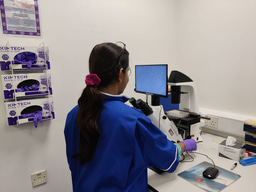
As a scholar, I will acquire essential laboratory training through carrying out sterile technique, cell culture handling, and participating in downstream molecular analyses. I will also practice data analysis and scientific communication. All parts of this experience will be meaningful to me as someone building a future in molecular biology.

Hi! My name is Naziba and I am from Bangladesh, but currently in Hong Kong for my undergraduate studies at The University of Hong Kong where I study Molecular Biology and Biotechnology.
Besides my academics, I am a very passionate teacher who enjoys making high school science feel more interesting and less taxing. I also love watching movies with my cats and taking nature walks with my friends.
I am excited to start my Laidlaw research journey this year under the Faculty of Health and Medicine at University of Leeds . I am really looking forward to making friends in the Laidlaw community so feel free to reach out in my DMs if you wish to connect!