My International Summer: An EUphoric Journey of Learning & Growing
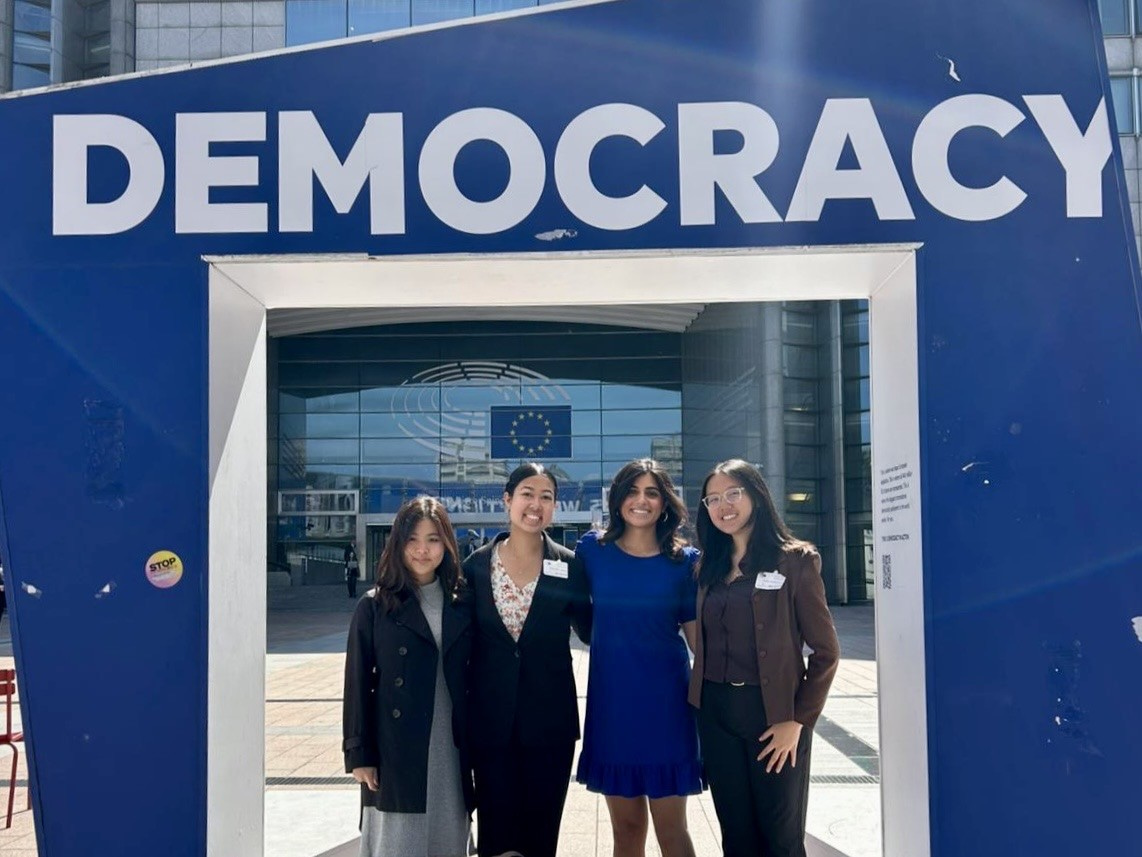
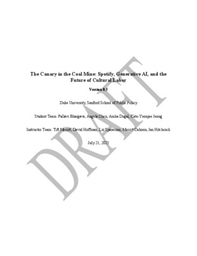
This summer, I researched AI and music streaming in the EU and UK, traversing three countries across six weeks to examine the future for our creative economies in the age of AI. I’m grateful to have met with numerous leading policy, industry, and academic stakeholders in Brussels, Paris, and Oxford, and to have presented our 40-page research paper at the University of Oxford’s Rothermere American Institute.
My Research Summer sure was EUphoric (punny, I hope 🇪🇺)! I was SO invigorated and inspired. To conduct deep research in such a short timeframe, I learned to balance efficiency and quality. This was the fastest I had ever learned and worked academically and professionally. I also grew socially and culturally, and became increasingly aware and introspective about my positionality in the various cultural and geographical settings we entered. My professional aspirations also blossomed: As an aspiring policy practitioner and journalist, I was thrilled to embed myself in alternative cultural norms surrounding public (and private) sector work. Our exposure to various pathways to enact social change—whether through diplomacy (our NATO visit was particularly memorable), national government, activism, or other channels—truly transformed my worldview.
My first key lesson? The whole is greater than the sum of its parts, which takes intentional communication to ‘enact.’ My teammates weathered intense turnarounds, late nights, and conflicts together. We sought each other and our professor and staff mentors for feedback, which only elevated our research outputs. We’re super proud of our in-depth research and the clear policy recommendations we produced. However, we did run into a hurdle during our third week when our first big deliverable (the first version of our paper) was due. Until then, we had been working in research ‘silos’ without a unifying structure, rendering the first version of our paper almost unusable. We grounded ourselves by reflecting on what went wrong and creating a concrete action plan for how to begin again from “square zero,” and established group norms regarding work hours and expected work outputs. We ultimately produced a well-woven and nuanced paper that our collaborators—especially the policy, industry, and academic stakeholders who attended our Oxford presentation—appreciated and applauded!
I’m deeply grateful to Anika Dugal, Kate-Yeonjae Jeong, and Pallavi Bhargava, my fellow Laidlaw Scholars; Duke Professor David Hoffman and singer-songwriter Tift Merritt (and her daughter, Jean); and Liz Sparacino, Merritt Cahoon, and Ian Hitchcock, staff members at Duke’s Tech Policy Lab. This summer would not have been possible without any of them.
My second key lesson? The power of collective, communal existence, which can be constructed physically. Brussels, in particular, left a deep impression. The home of EU institutions (and, of course, waffles, frites, and chocolate), it also struck me as a city designed for community. Brussels was defined by ample “third spaces.” Collective public existence lay at the core of the city’s architecture, in its sprawling parks and plentiful cafes. We found “home” in a local cafe chain called Léopold Café (where we consumed many a hot chocolate). We resided near the famous Arc de Triomphe, framed by the sprawling green expanse of Parc du Cinquantenaire, and spent afternoons hopping from one park and cafe to the next to work and (when time allowed) to simply linger.
Numerous cafes had “no laptop” policies (after certain hours). In place of laptops, people were reading thick novels. Chatting. Laughing. They were digitally disconnecting, but connecting more with the present moment, with place, and with people (each other). This slower, mellow rhythm was vastly different from the ‘hustle culture’ I’d become all too familiar with in the US and Hong Kong (where I grew up).
Overall, I’m deeply grateful for a truly transformative summer. I’m thrilled to have been able to exert my efforts into becoming a more intentional and well-informed “policy artist,” and I’m incredibly excited to carry my lessons learned forward. I’m continuing to advocate for the vitality of human creative expression (and the need to preserve our human creative economies), and to continue to conduct research with deep community engagement and care.
You can find our 40-page research paper here! Thank you for reading :)
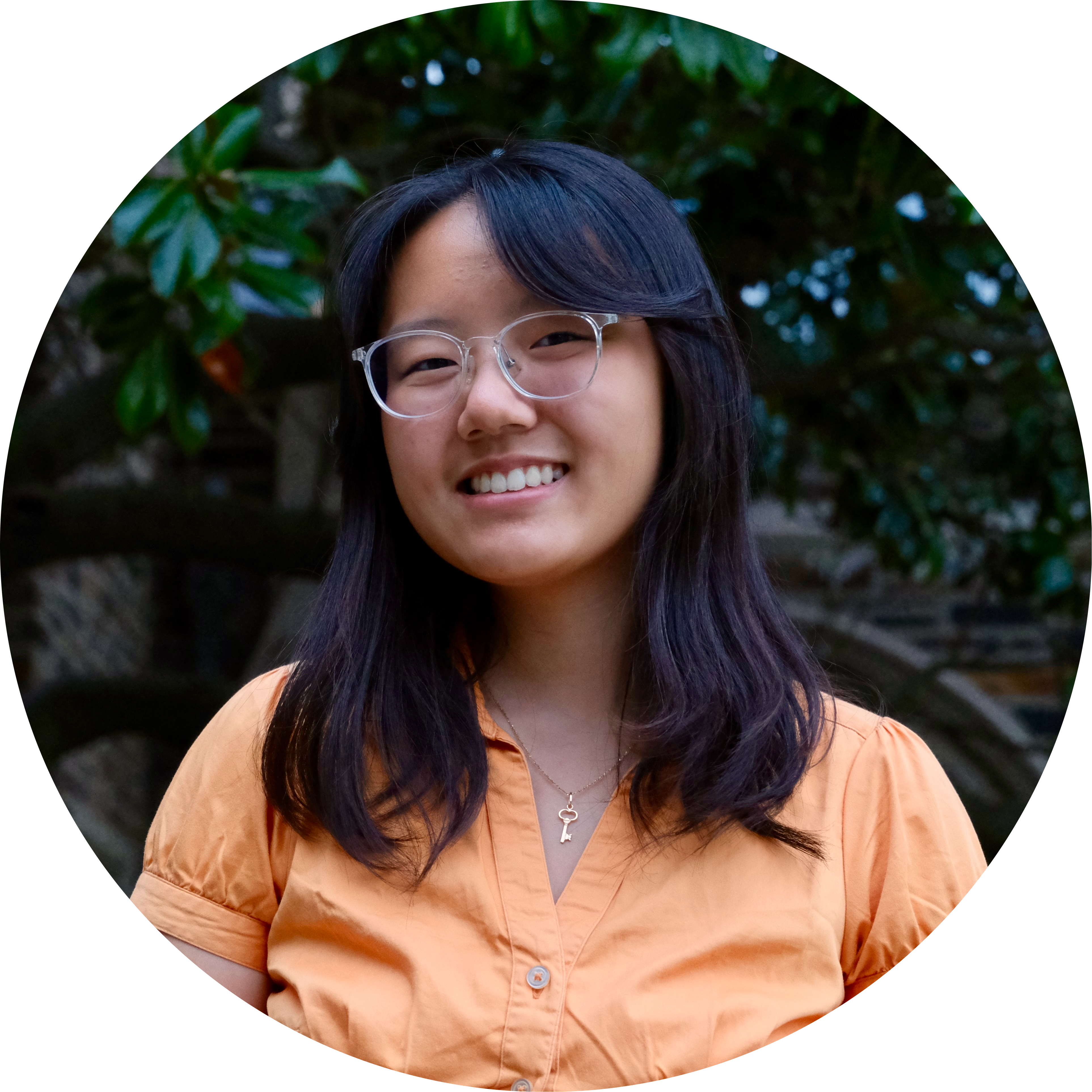
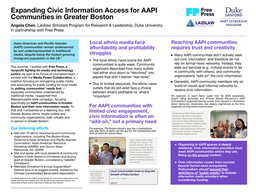
Hey friends! I’m Angela Chen, a fourth-year Public Policy, Psychology, & Digital Intelligence student at Duke University. I'm passionate about leveraging digital policy and journalism to democratize access to information. During my Research Summer in 2025, as a Laidlaw Scholar for Research & Leadership and with Duke's Sanford School of Public Policy, I researched AI Policy, Music Streaming, & Cultural Labor in the EU & UK, culminating in presentations at the Oxford Rothermere American Institute, the Laidlaw Scholars Global Conference, and publication in Taylor & Francis and De Gruyter Brill. Previously, at the Information Technology & Innovation Foundation, I investigated the use of AI in election information dissemination for minority language voters in the US. Having grown up in both Hong Kong and Canada, I also strongly believe in the importance of collaboration across geographical borders & cultures, and would love to chat—both about global information access and general cultural experiences!
I serve as Student Government President at Duke, where I shape campus culture to maximize equity and inclusivity. I believe that educational environments are key to fostering civic and civil discourse.
Reach out here, on LinkedIn, or via email! I'm deeply grateful to be part of our inspiring Laidlaw Scholars community, and I can't wait to bond with as many of y'all as I can :)