LiA Journal Entry 3
Prior to the beginning of my Leadership-in-Action project, I had never taught any sort of class in my life. I had also never designed a curriculum (or even a singular lesson), or really worked in any educational capacity at all (except of course as a student). As a result, I knew right off the bat that this would be a real challenge. Anything this unfamiliar is virtually guaranteed to be so. But the added dimension present here- the immense cultural difference between Chennai's and my own- has really magnified the inherent difficulty of this process. Teaching English is something I (perhaps naively) believed to be a relatively intuitive process. I speak it fluently, after all. Surely it wouldn't be so difficult to relate a few grammatical concepts I've been using effortlessly for countless years. Well, if my only goal was to regurgitate information from a grammar textbook, it would be exactly that easy. But my real goal here is to foster true understanding, which requires the values of collaboration and humanity- it requires me to ensure, as much as I can, that my students come away from each lesson ready to use what they've learned to better realize their own future dreams. The primary beneficiary of this project should not be myself, nor the Laidlaw Foundation. It shouldn't even be the Arunodhaya Centre. Primarily, it should be these couple dozen students I find myself speaking in front of every week. What this necessitates is that I don't just talk at my students. I have to talk with them. And I have to find whatever creative methods are necessary to circumvent the inherent language barrier between us- which garbles any message I try to send from one side to the other.
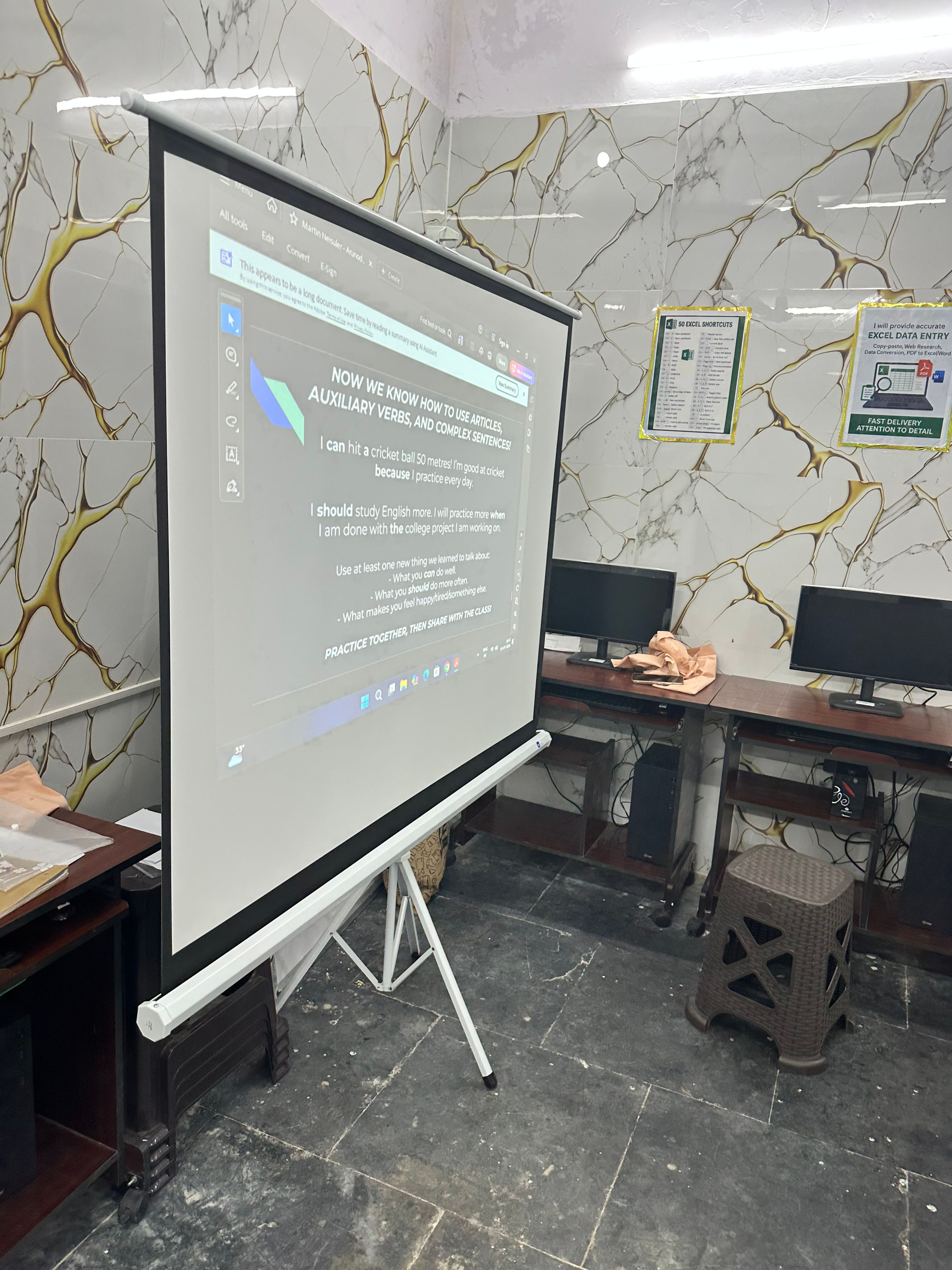
That's an easy enough barrier to get past when the material is simple. Concepts like nouns, verbs, and adjectives were fundamental enough that no student truly struggled; similarly basic ideas like the subject-predicate structure of a sentence was no different. But the past week brought my first true reckoning with concepts that seemed inherently impossible to accurately communicate. The first version of this struggle came with my lesson on prepositions. My parents- both diplomats, and thus eternal language-learners by their trade -have always told me that prepositions are the hardest part of any language to learn. And it dawned on me during the design of this lesson just how nonsensical English can often be. How do I explain why we say "at my house," "in my room," and "on the beach"? Or, for that matter, "at 3 o'clock," "in July," and "on Monday"? And even that was mere prologue compared to the concept of articles: a, an, and the. These words flat-out do not exist in Tamil. So the task with which I am presented feels like a logical paradox: using language A, explain a category of word which exists in language A but not in language B, to people who only speak language B. Even just writing that sentence made me feel confused. With both of these lessons, I had to draw resourcefully from the limited arsenal of tools at my disposal. Visuals- on the screen or acted out by myself -were one such tool, which I made ample use of. Now, I do feel a little silly while moonwalking around the room trying to relate the concepts of "to" and "from." But who cares about looking silly? If I want to reach my audience on a personal level, that sort of humility is a valuable tool. And on the topic of humility, I am continuously helped (as I've mentioned before) by the assistance of my amazing colleagues. Both in Tiruvottiyur and Korukkupet, I've relied time and time again on fellow instructors capable of translating the finer nuances of my lessons on a level of detail I'd never be able to reach. They ask me for feedback and criticism regarding their own spoken English; I rely on them to help explain grammatical and scientific concepts which even my most carefully-arranged clipart can't explain alone. As I said before, education of this kind requires ample collaboration and humility. Everything we do, we do as a team- and over this particularly difficult last week, that became more apparent than ever.
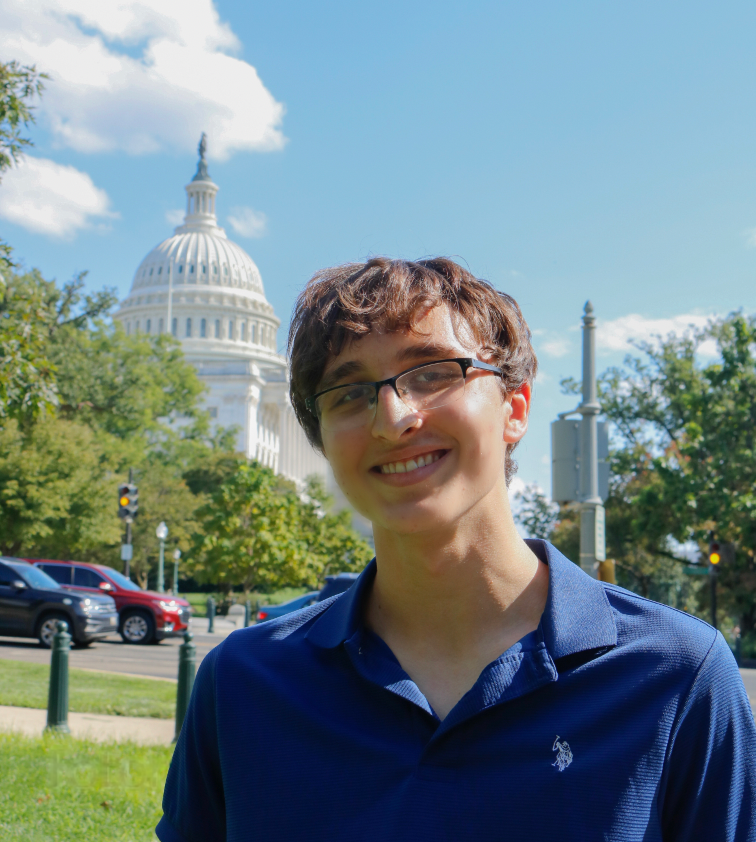
Hi, everyone! I'm Martin. I'm a third-year student at Georgetown majoring in Biology (with a concentration in Molecular Bio), and I'm planning to minor in Japanese. My focus has always been on cancer biology; so many people I've known have been affected by it, and my life's goal is to contribute to a cure. I'm half-American, half-Bulgarian, the child of two diplomats; I speak English fluently, and intermediate Bulgarian, Japanese, and Spanish. I have a lot of different interests outside of science: basketball and baseball, chess, politics, music, literature, and a whole list of other things that's way too long for this blurb. Here's a random fact about me which I think is kinda cool: I once saw the tallest manmade thing on Earth (the Burj Khalifa) and the tallest thing on Earth, period (Mt. Everest) from the window of the same flight!