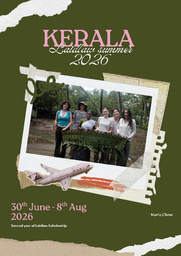
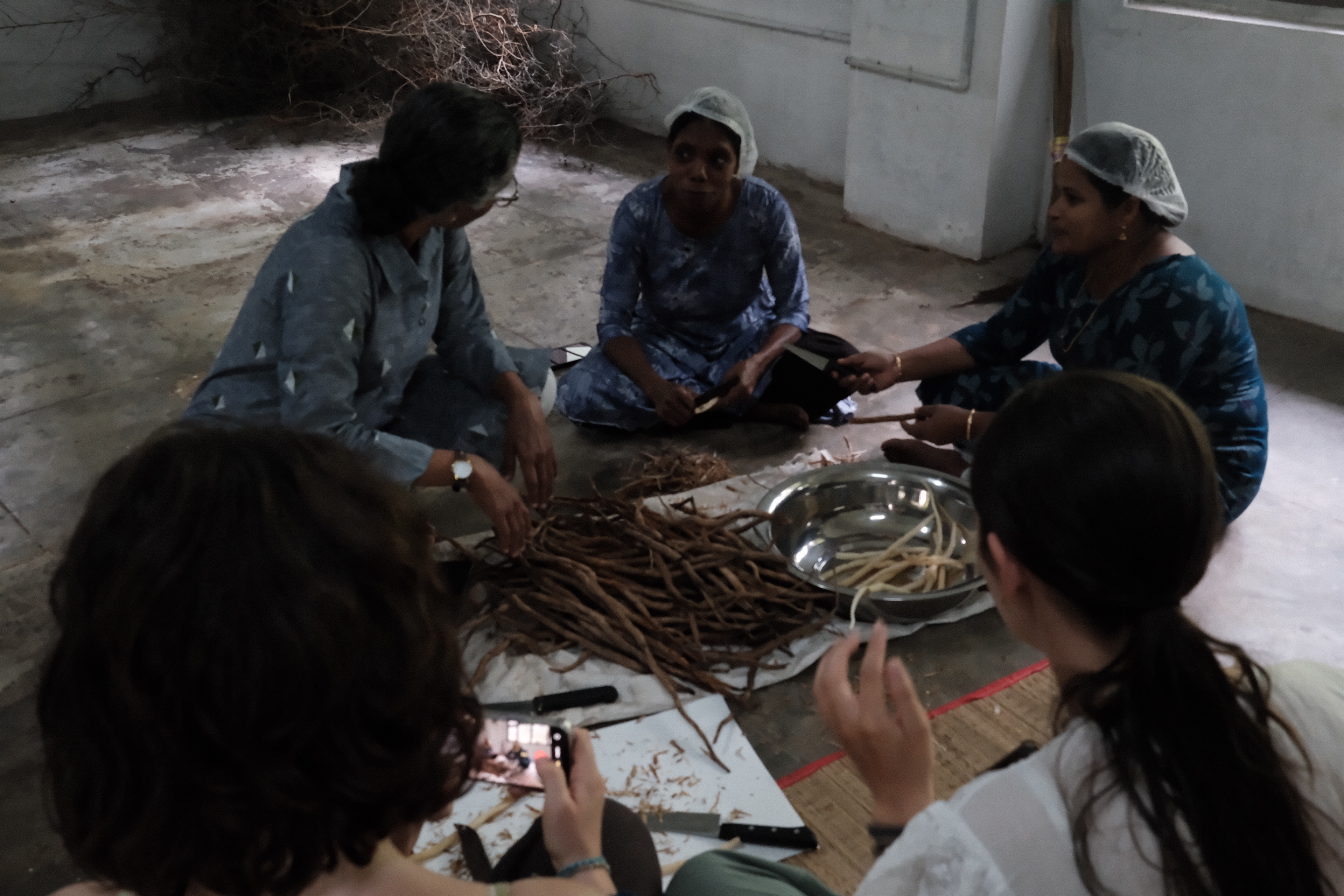
This week we had started our first consulting project with Forest Post, a social enterprise aimed at aiding Indigenous communities to upskill and add value to their wild harvests. There were extensive stories that left all of us scholars in shock, awe and admiration.
However, this week's reflection will be an internal one rather than a regurgitation of the stories that left me in amazement. This is because it was only through these stories that I realised the fallacies in my own ways of thinking, which I think is significant to highlight.

Learning outcome 1: Greater self-awareness
The Laidlaw Foundation gives us weekly reflection prompts, and the first on the list asked, “What tangible outcomes were achieved?”. Immediately, what jumped to mind was the physical output of completing my first consulting project. Yet dwelling on it more, and perhaps this couldn’t even be defined as tangible, but the greatest achievement I felt was the acknowledgement of my narrow worldview. However, re-thinking and re-building my own worldview isn’t new to me. In fact, I think I’ve become blasé about the sensation that comes with it. Rather, it was the fact that I believed I had a worldview that was less resistant to the temptations of generalisations.
I came across many instances that emphasised the familial love between the indigenous peoples, nourished by constant stories that fed into this narrative. Before I knew it, I generalised a worldview that all of the indigenous people had this utmost devotion to their husbands and wives. I didn't think there was anything wrong with it because it was based on consistent narratives from the women themselves that shaped my view. Yet it was only one instance, on meeting a group of women who were all divorced, and listening to their passionate opinions about female independence, that brought into light my 2 dimensional view that restricted the women to being self-sacrificial. Whilst they definitely hold this strong quality, meeting this other group of women showed me they also value independence. I saw the same empowered-strengthened stubbornness of the typical 'Western Feminism' shine through these women.
Learning outcome 2: conflict between curiosity and ambition
Two Laidlaw change maker values I felt tension arise between were curiosity and tension. One of the deliverables we were asked to do was to write a blog piece reflecting on our experiences associated with our time at Forest Post.
I always struggled with the supposed divide of writing my raw and unfiltered thoughts versus what the brief asks me to. Writing for myself versus a corporation. Social enterprise or the largest financial corporations, I never found myself quite agreeing with every part of the organisation's philosophy.
The Oxford bubble doesn’t help with this. Behind the walls, ideas and opinions are freely shared without a second thought. Like iron sharpening iron, the most critical of ideas have been worn down by the opposing weapons. I am able to speak without consequences. This is how the world is meant to be, right? The right to free speech is preached in a manner such that anything, at any time, should be said.
Yet I realise, the free speech that is being exchanged within the safety of the bubble, isn't the free speech that should be released to the wider world. With tensions arising both between nations and within, it can be argued that words have equally as much power as the threat of destructive technologies. More than ever, with algorithms that push people into echo chambers and polarise groups more than ever, we must be careful in which thoughts we put out to the world. Or rather, how we put these thoughts out.
I initially thought that writing for an organisation or business meant that I had to sacrifice my personal authenticity and truth. But through writing my blog post, I understand I don’t have to give up authenticity. Or be crafty in curating arguments for persuasion. Ultimately, I must acquire the wisdom to understand where and when to proclaim my often infantile thoughts, and when to let them mature.
Learning outcome 3: Limiting the scope of my conversations
I was exposed to the indigenous people’s “low attachment" philosophy. It was this fascinating way of thinking that was triggered by learning about the easy acceptance of death in the Indigenous communities. Whilst too complex to get into here, you can read it on my blog piece on Forest Post's website titled "Witnessing Stewardship in Practice". Now this philosophy catalysed all sorts of links to various stories that I had soaked up on this trip, but also through past lived experiences. If you know me, you may pick up that I tend to spiral and ramble. I often see my mouth boldly (and also falsely) proclaiming numerous connections per second, yet my brain cannot keep up with the speed at which it does. This leads to messy and disorganised thoughts.
The many nodes and connections lazily thrown into the depths of my head are clearly unpruned. Whilst there may be beautiful flowers, their magnificence is veiled by the mass of untended weeds. For them to shine in the stage of the sun, I must be ready to cut the unnecessary thorns and overgrown weeds. Painful, but necessary.
This will be the one thing that I will work on for next week as I embark onto my next consulting project: to be intentional with each word, focusing on one idea only.