Year 2 - CraftHER Week 3
Week 3 of CraftHER had the scholars and I residing in SEWA’s Rural Centre in Thrivandrum. SEWA is India’s largest trade union for informal workers, and would be quite confident to also say the largest home for insects too. Bugs were everywhere. In our bathrooms, our bedrooms. In OUR space. Naturally, we were all extremely uncomfortable. However, it was only when Erin unpacked why she felt so uncomfortable that it illuminated a fundamental realisation about our human nature. She concluded that her OCD had her frustrated because she wasn’t able to control her surroundings. Thinking about this further made me realise, in all our strivings, from the homes we build to the technology we create, we have an innate desire to relentlessly control things in a search for happiness and fulfillment.
I see this desire throughout my life constantly. One of the strongest urges I felt to control a situation, or rather my entire future, was through my academics. I thought that by getting good grades, I was able to go to a good university, and by doing so, secure a good future.
This made me wonder why us humans feel the need to control so much. We see this in the technology we build. We create A/C to control the exact temperature of our rooms, artificial lights so we can work whenever we want, and cars to get us to the exact place and the exact time for our exact needs.
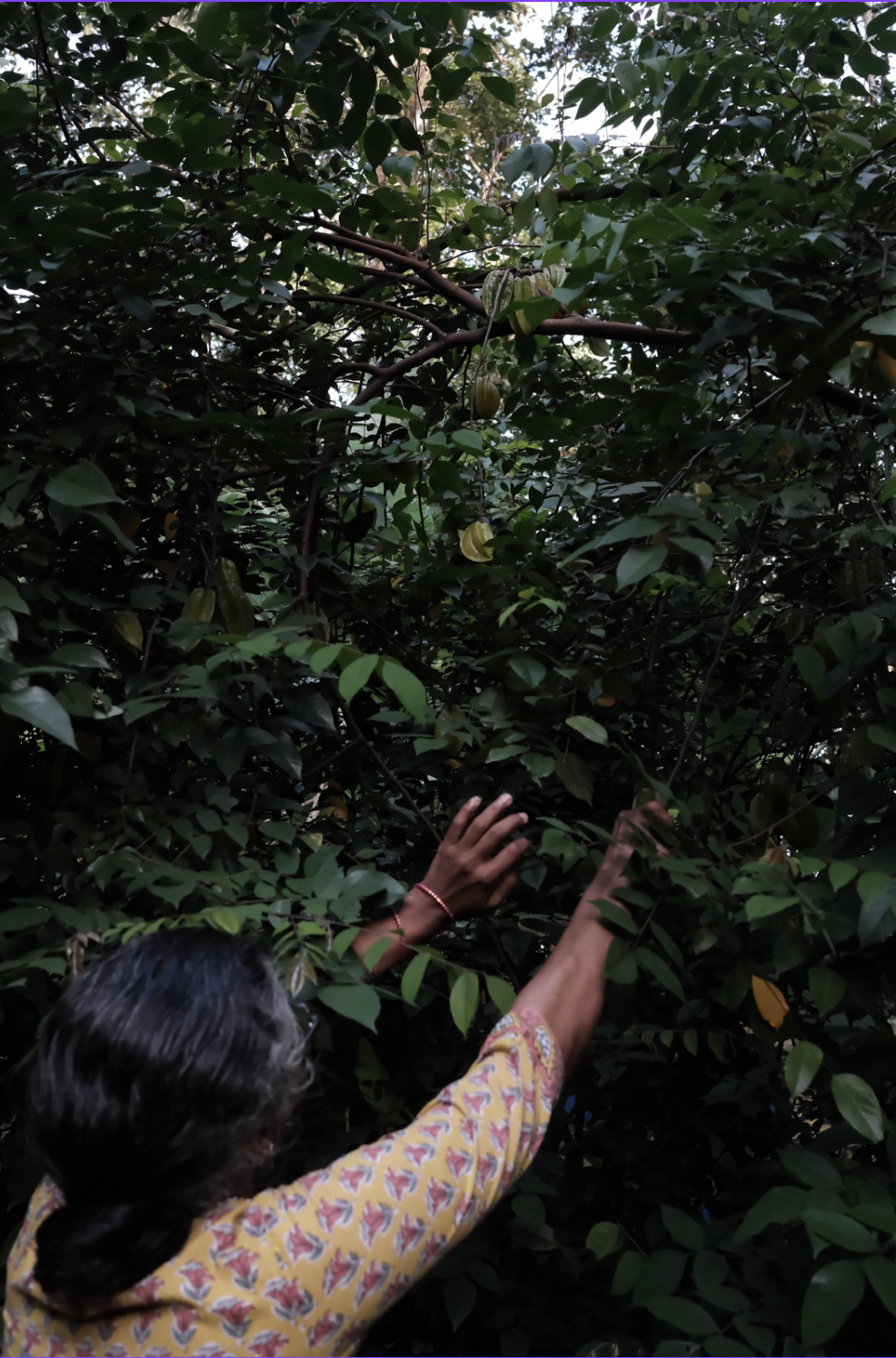
We live in this illusion that because we have these investments, we can somehow control the forces of nature. That time is a resource we can save and spend. But spending time with the Indigenous Women of Forest Post allowed me to realise that we are actually subject to the forces of nature. Times cycle, instead of our own. The Indigenous women’s easy acceptance of death, sacrificial love and stewardship philosophy quite clearly show that they don’t create for a life of permanence, but recognise that life, and all that comes with it, is a gift.
And so I think the emotion that lay beneath my endless striving was a desire for security. However, whilst the steps I took were perfectly reasonable, pursuing this path, and even succeeding, never provided me with the sense of security I craved. Ironically, it made me feel even more insecure.
Yet when I dwelt on the times where I felt the most at peace, they were actually the times I didn’t control or plan anything. Think about the most precious of memories or relationships. That night out with your uni friends. That time you fell in love. Usually, they were unplanned, spontaneous, and off schedule. Unexpected.
Interestingly, this reminded me of December last year, where I read a book on ‘knowing that you will die, shapes the way that you live’. I focused then on doing things for what it is, rather than viewing it as a means to an end. My time at Forest Post has opened my eyes to the similarities in the two philosophies: that viewing life as a gift, something to take pleasure, than to control and conquer, leads to more fufillment than achievements could ever do. Appreciating things at this moment, instead of joining the endless rat race. When someone gives you a gift, you don’t start planning on how they would look excellent on your CV, but appreaciate its beauty in the fact that its identity is a gift. Though it may not be useful in the practical sense, you cannot deny that it doesn’t have a value or purpose.
So my takeaway is that we should take all of life in with two hands, but instead of clenching on tight when it’s time to give, feeling the freedom in opening them back up, and offering it back. Learn to flow with life, rather than to control and conquer it.