Year 2 - CraftHER Week 4
I want to be clear: this is a reflection that many people may not want to read. The good people. Especially the determined ones. This reflection is brutal; it is blunt, but most importantly, it is honest.
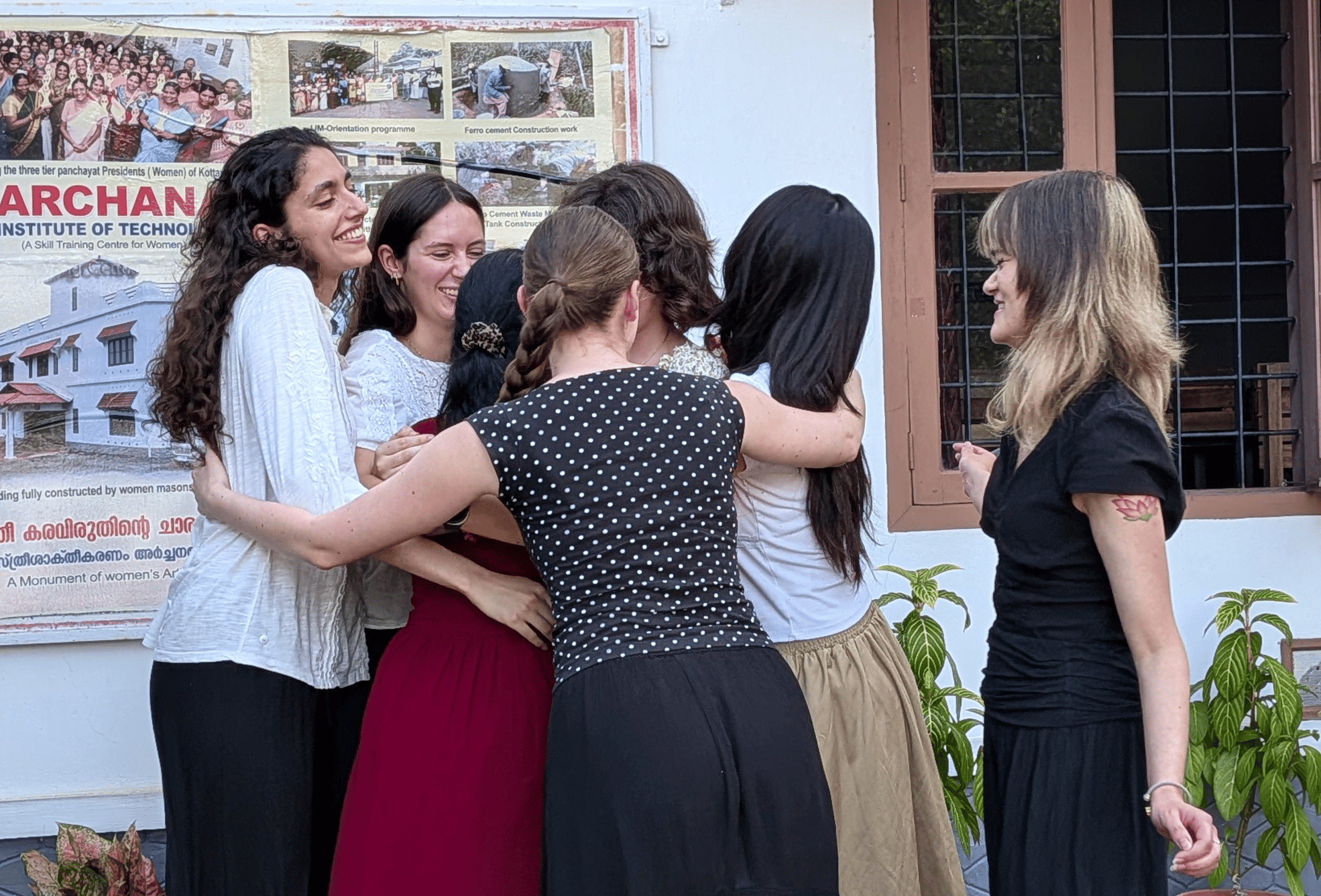
Archana Women’s Centre (AWC), an NGO founded upon the philosophy that women can do male-dominated jobs, has its origin story set on their success in training women in carpentry and masonry. It boasts of teaching 600 women carpentry skills and showcases the luxurious villas built by women alone. One cannot deny that this is monumental in advocating against the patriarchal Indian society, and AWC should hold its head up high in taking the step forward to boldly, but non violently, rebel against the long-reigning system.
Yet it was only when I went to the field that I realised that NGOs may not always have the best interests of the people it is trying to serve.
Going to visit the carpentry unit that upskilled 600 women in this difficult craft, aside from the owner of the unit, it shocked me to see that there were only men on the site. This didn’t align with the narrative that we were told the day before.
After asking several confused questions, we discovered that women didn’t actually enjoy carpentry, and that they preferred more relaxed work. I began to see a consistent story shine through. Just the day before, we saw a deserted brick-making unit at AWC’s main office site, and its abandonment was also attributed to the lack of interest.
All the AWC posters that promoted women powerfully getting their hands messy were inconsistent with their true interests.Whilst I believe that showing society the equal, and in some cases even superior, traditionally male-dominated skills that women can do, it is also equally important to have open ears and flexible hands. The founding story is unarguably influential in shifting de facto attitudes, yet I believe clinging to the story, when there is a mismatch in interest, isn’t always helpful in pushing its wider mission of providing secure incomes for women.
Many charities and NGOs, and even this Learning in Action Programme, are vulnerable to these mistakes. CraftHER, the leadership programme I am currently on, is focused on women's empowerment, as can be not-so-subtly deciphered by the name. For each organisation, we have to write a reflective blog, as well as regularly give TEDx-style speeches that share our introspective learning outcomes. I find that, perhaps because of the nature of the programme, we all gravitate to the same narrative of what feminism means to us. And then go on to push this narrative upon the women we are helping. Common themes of glorifying women for doing these laborious, male-dominated jobs permeate through everyone’s blogs and speeches. Yet the harsh reality is that the women actually don’t want to do these jobs. They would prefer a less strenuous job that allows them to spend time with their children. We are uncomfortable with this truth because it doesn’t fit neatly into our own definitions of feminism. Women should be strong like men. Women shouldn’t be housewives who take care of the children. But have we actually stopped to listen to what the receiving party wants?
This is not a criticism of AWC. I’ve seen so many women who enjoy cooking, and AWC has provided the seed funding for them to start their own food stalls from their homes. But why are they happier with this decision? Conversations have shown that they truly value the flexibility to rest when they want and take care of household tasks when they want.
We should rethink what feminism actually means. It isn’t imposing our own patronising narratives of muscular women that spend all day contributing to the double-income household. It is seeing women as individual and autonomous humans that may have desires that don’t fit neatly into our own view of what powerful females look like. It is allowing women to have freedom to choose, even if it clashes with our definition of feminism.
All of us are prone to this. Whilst it is commendable to have passionate advocacy for noble ideologies, we must build an image that expects inconsistencies, and that will bear more fruit in making meaningful change.
In the end, it is the mission that unites us all, not the way we get there.