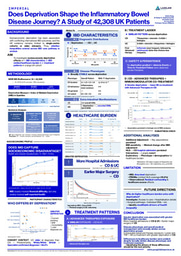
Research Proposal: The Impact of Socioeconomic Deprivation on Phenotype and Clinical Outcomes in Inflammatory Bowel Disease: A UK IBD BioResource Study
Project Summary:
Using data from the UK IBD BioResource, a national database of more than 45,000 patients recruited across the UK since 2016, this project will investigate how socioeconomic deprivation influences clinical outcomes in inflammatory bowel disease (IBD). Patients’ residential areas will be linked to the Index of Multiple Deprivation, a national measure of socioeconomic status. The study will examine differences in IBD subtype using established classifications, clinical outcomes such as treatment patterns, hospitalisation rates, and surgery, as well as patient-reported outcomes including quality of life. To better understand these associations, relevant lifestyle factors such as smoking will also be taken into account. This research aims to identify where inequalities arise in IBD care and outcomes. The findings could help move healthcare beyond a one-size-fits-all approach by supporting equitable, data-informed planning of resources and interventions. This is particularly important given the substantial financial burden that IBD places on the NHS; reducing long-term costs will be essential to achieving sustainable healthcare.
Research methods:
I will undertake formal training in R and apply these skills to analyse data from the UK IBD BioResource to investigate the association between socioeconomic deprivation and clinical outcomes in inflammatory bowel disease. Statistical analyses will include linear regression for continuous outcomes such as quality-of-life scores, as well as Kaplan–Meier methods and Cox proportional hazards regression for time-to-event outcomes, including time to first hospitalisation, surgery, or treatment escalation. All analyses will adjust for potential confounding variables, including ethnicity, smoking status, and other relevant demographic and clinical characteristics. Sensitivity analyses will be conducted to assess the robustness of the findings.
Alongside the data analysis, I will prepare manuscripts for submission to peer-reviewed journals and contribute to conference presentations, with the aim of presenting the findings international conferences, for example the European Crohn’s and Colitis Organisation Congress in 2027. Throughout the project, I will work closely with supervisors and collaborators, meeting regularly to review progress, refine analyses, and produce high-quality research outputs.
Expected research outcomes:
The impact of this research will be measured through successful submission and acceptance of findings for publication in peer-reviewed journals, presentation at international conferences, and engagement with clinical and research communities in IBD. Additional indicators of impact will include academic citations, dissemination through clinical networks, and the extent to which the findings contribute to future research and policy discussions on health inequalities in IBD care. Feedback from supervisors and other Laidlaw Scholars will also provide an important measure of the quality, relevance, and broader influence of the project.