Research Proposal: Decoding Wearable Muscle Signals for Assistive Control After Spinal Cord Injury

Project Background
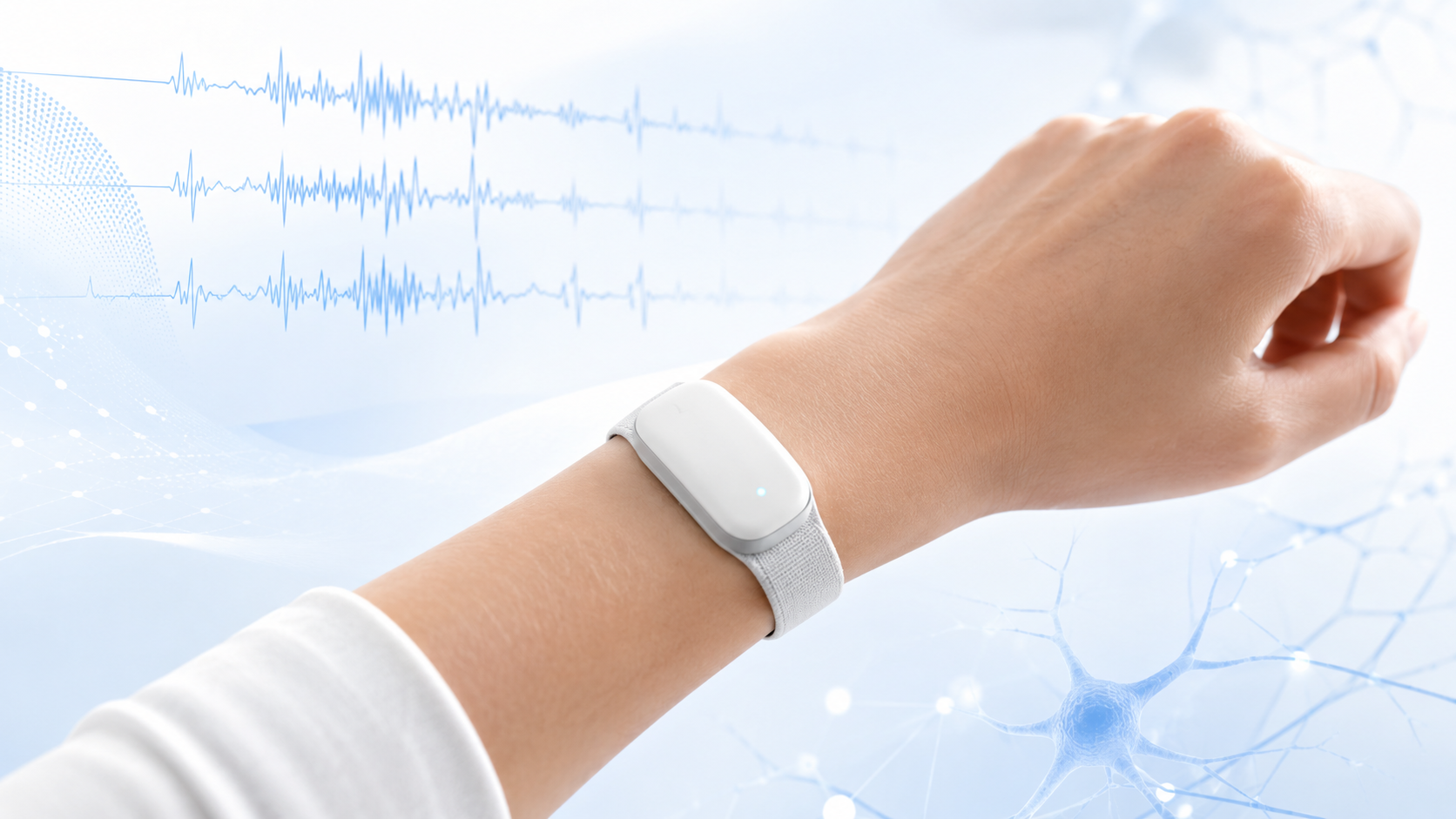
Spinal cord injury can make everyday interaction with digital tools, assistive devices, and the surrounding environment much more difficult, especially when voluntary motor control is limited. Wearable muscle-signal interfaces offer one possible route to support independence: by recording surface electromyography, or EMG, from the skin, these systems may be able to convert residual muscle activity into control signals for practical use.
However, strong decoding performance often comes with real-world costs. Methods that perform well in controlled settings may depend on many sensing channels, high sampling requirements, or computationally demanding models. These can increase power consumption and reduce portability, making the system less suitable for continuous wearable use.
For daily assistive technologies, the key question is therefore not only which method is most accurate, but which method offers the best balance between reliability, energy efficiency, and usability.
Research Focus
My project focuses on this accuracy–energy trade-off in wrist-worn, multi-channel muscle-signal sensing systems.
I will evaluate decoding strategies for intent detection, with particular attention to a neural-network-based approachrecently developed in the host lab for interpreting weak neuromuscular signals. To assess its practical value, I will compare it with established baseline approaches, including clustering-based methods such as k-means, using a shared intent-detection task so that the methods can be evaluated under consistent conditions.
Methodology
Alongside decoding accuracy, I will examine practical constraints that matter for wearable implementation, including:
- number of signal channels
- sampling requirements
- model complexity
- inference workload
These measures will help indicate whether a method is not only technically effective, but also feasible for a battery-powered assistive device intended for everyday use.
Expected Output
The main output will be an accuracy–energy trade-off map and a concise decision framework.
The aim is to clarify when more complex models are justified, and when simpler, lower-energy approaches may provide a better balance between performance and practicality. In the longer term, this work contributes to the development of assistive technologies that are more accessible, portable, and realistic for people living with impaired motor function.
I would be very happy to connect with scholars working on neural engineering, rehabilitation, healthcare innovation, or sustainable technology design. I would also love to hear from people in completely different fields and learn more about the projects across the cohort.
Hi everyone! I’m Donna, and I have just completed my second year studying Molecular Bioengineering at Imperial College London.
I’m interested in how research can move from scientific ideas into real-world healthcare impact. I enjoy learning about the biology behind disease and technology, but I’m also curious about what happens after a discovery is made: how it can be translated responsibly into something useful, accessible, and meaningful.
This summer, my Laidlaw research project will focus on wearable muscle-signal interfaces for assistive control after spinal cord injury. More broadly, I’m excited by healthcare technologies that are not only technically impressive, but also practical enough to make a difference in people’s daily lives.
Through Laidlaw, I hope to better understand the role leadership plays in helping research move beyond the lab, from shaping ideas thoughtfully to connecting them with people and communities who may benefit from them.
I’m looking forward to learning from people across the Laidlaw community, especially those working in bioengineering, healthcare innovation, neural engineering, or protein de novo design. Please feel free to reach out. I’d be very happy to connect.
