Reflecting on Leadership: Key Takeaways from the Laidlaw Development Days
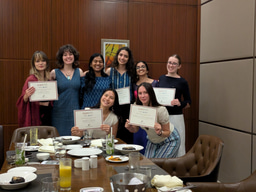
Last month, I was honoured to attend two leadership development days with the Laidlaw team at Durham. The sessions were primarily led by Graeme Taylor of Centred Coaching and also featured contributions from Dr Nikki Rutter and Dr Bruce Malamud. Below, I outline some highlights, reflections, and key takeaways ahead of my upcoming Leadership in Action project.
Day 1
The first day focused on personal reflection and tactical planning ahead of our LiAs. Many scholars, myself included, still had various documents and administrative work to complete before our projects could be authorised by the university. Graeme gave us the necessary space to share our struggles and anxieties with other scholars, which I found particularly helpful in reducing apprehension surrounding our upcoming LiAs. I quickly realised that many of my peers were facing similar difficulties.
Moreover, the opportunity to reconnect with fellow Laidlaw scholars was a particular highlight of the development days. It gave us the chance to share reflections on our research projects from the previous summer and learn more about the different Leadership in Action projects scholars were undertaking, whether centrally organised or self-defined. Scholars were due to undertake projects in a range of locations, including India, Mexico, South Africa, Sweden, and beyond, each with its own unique ambitions and objectives. This served as a reminder that I am part of a group of ambitious, globally minded individuals within Laidlaw.
In terms of leadership training, the sessions on day one primarily focused on self-management and reflection strategies. One exercise involved completing a worksheet in which we reflected on our most important values and how these influence the leader we aspire to be. Personally, some of my most important values included independence, authenticity, freedom, and travel. Through this exercise, I was able to connect more deeply with the values that underpin my actions and further consider how I can shape my life and leadership around them.
Day 2
Day 2 opened with a session led by Dr Nikki Rutter on “Voluntourism vs Volunteering”. The session explored the concept of voluntourism: what it is, how it operates, and several real-world case studies. Its purpose was to encourage us to consider the ethical implications of working in a foreign country and how we can ensure that our projects create a genuinely positive impact for local communities.
Compared to volunteering, voluntourism is often misaligned with the needs of the communities it claims to serve. For example, a voluntourism project might involve volunteers assisting with construction work, but an adverse consequence is that jobs may be taken away from the local community and outsourced to paying volunteers. The core takeaway for me was that meaningful volunteering serves communities through respectful, cross-cultural communication: assumptions are not made about the cultures of those communities, nor are Western values and ethics imposed upon them. Instead, a mutual relationship is built in which volunteers gain cultural experience and practical skills while the communities they serve have a genuine need fulfilled.
Volunteering, therefore, has the potential to create a hugely positive social impact, but it can also become a neocolonial and largely unethical practice if undertaken carelessly. The lines between the two can be blurry, but this session helped me reflect more critically on that distinction. Ahead of my LiA, I hope I can make a meaningful and lasting impact on the communities I will be working with in Kerala, however big or small.
Later, Dr Bruce Malamud led the session “Communicating Resilience to Hazards”. The focus of this session was on developing the skills needed to create effective public communications regarding hazards. While this was insightful in itself, I was particularly interested in the broader discussion surrounding artificial intelligence that the session prompted.
Dr Malamud recommended the use of AI in report writing, including in governmental communications. We considered what role AI might play in these contexts and concluded that it could assist with generating quick graphical representations of risks and plans, as well as sorting and synthesising data efficiently. Reflecting on this, I am not personally convinced that AI should be used in such circumstances without caution. Certainly, AI has the capacity to produce outputs more quickly than humans, which may prove useful when urgent communication is required. However, I remain deeply cautious of its potential to hallucinate and make mistakes. This concern is compounded by wider ethical issues surrounding ownership, data protection, and accountability. Nonetheless, the session opened up an engaging broader discussion and a valuable point of reflection.
Final Thoughts
I have not had the chance to include everything from these development days, so these reflections represent only my personal highlights and key takeaways. The programme also included a team-building exercise, wheel of life planning, and other strategies for personal and professional development.
Overall, I am grateful to all those involved for their instruction and enthusiasm. I will certainly continue to reflect both introspectively and on the impact I hope to make as a Laidlaw Scholar.

Hello! I’m a Philosophy student at Durham University, with academic interests in applied ethics, decision-making and sustainability. My broader aim is to use interdisciplinary research to drive measurable, socially meaningful change.
My summer research explored barriers to public transport adoption, with a view toward long-term policy implementation. This project combined behavioural science, psychology, urban planning, and design to contribute to more sustainable and inclusive transport policies.
For my LiA, I will be travelling to Kerala for the central CraftHER project, where I will undertake four consulting projects with local female-led businesses and a research project.