Inside the Laidlaw Application Journey: The Network Test


Tip #1: The Network Test
Before applications, essays, or interviews, there is one thing that matters more than most people realize.
First things first
When applying to a school or a scholarship, we all face the same questions.
Why this school?
Why this program?
Why this scholarship?
We usually answer these in an application or an interview. But long before that, we need to answer them for ourselves. Because when you know your answer, you show conviction, in how you craft your story, what you choose to emphasize, the judgment calls you make, how your narrative holds together, and ultimately, how you show up.
For something like the Laidlaw Scholarship, where you are asking for a six-figure investment in your potential, that clarity matters even more.
Everyone says they have a great network
Schools and scholarships talk a lot about community, leadership, and lifelong networks. Almost all of them promise access and connection. So how do you personally figure out which of these will actually matter to you. For me, the answer was simple >>> You test the network yourself.
What testing the network looked like for me
While preparing my MBA application, I reached out to alumni to understand the school beyond rankings and outcomes. I wanted to understand the people. What stood out was not just responsiveness, but intent. People made time. They asked thoughtful questions. They pointed me to others who could help. They treated my curiosity seriously.
My Laidlaw journey followed a similar pattern. I applied to the Laidlaw Scholarship twice. The first time was in 2020, for what would become the first-ever Laidlaw cohort at Oxford in 2021. At that point, Laidlaw did not yet exist at Saïd. To understand what the scholarship stood for, I reached out to Laidlaw Scholars at Columbia* and LBS. Those conversations gave me an early sense of how global this community really was.
The second time, in 2022, I went much deeper. I had already failed once, I knew where my gaps were, I shared my thinking more openly. Scholars did not just encourage me, they challenged me. They gave direct, critical feedback and invested time. Slowly, a playbook came together, and with it, a sense of conviction.
If a community says it values generosity, leadership, and service, those values should show up in how its people behave. And in both Oxford and Laidlaw’s case, they did, consistently, for me.
That’s when I knew where I wanted to be.
A moment that clarified Laidlaw’s values
At one point, I had received admits from both LBS and Oxford, and I was in the running for the Laidlaw Scholarship at both schools. The timelines were tight. Decisions were delayed. Funding outcomes mattered.
I was trying to optimize for the best scholarship outcome I could reasonably achieve.
I reached out to Susanna Kempe, the CEO of the Laidlaw Foundation, and asked for a conversation. At that point, I was not yet a scholar. I wanted to understand the Foundation better and explain my situation clearly.
We spoke about what Laidlaw was trying to build, the kind of scholar community it cared about, and how the Foundation thought about long-term impact. Toward the end of the call, I explained that I was navigating two parallel processes and wanted clarity on how Laidlaw decisions were shaping up across schools.
She said something along the lines of:
“Since you’re likely to be part of our scholar family, and now that you’ve asked, I’ll do my best.”
What mattered to me was not leverage or outcome. It was her recognition.
She understood what I was trying to do. She saw potential in me. And she was willing to engage with it, even before I formally belonged to the community.
That was the moment I understood what Laidlaw means when it says it invests in potential.
Life inside the community
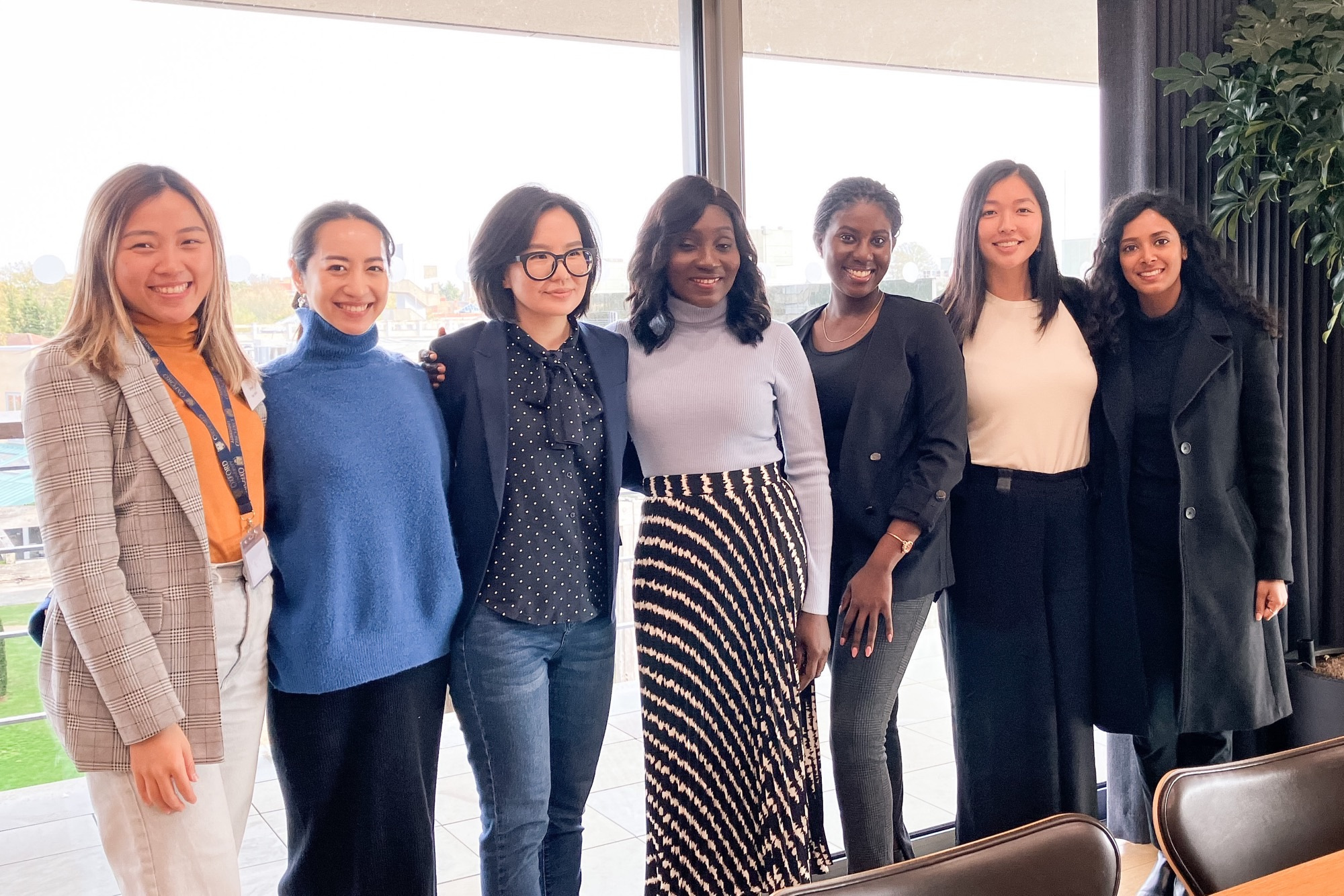
When I became a Laidlaw Scholar at Oxford Saïd in 2022, we were only the second cohort.
Unlike two-year MBAs, there is limited opportunity in one-year programs to naturally build relationships with senior and junior batches. Laidlaw ensured that access for us scholars.
Through the Laidlaw community, I became closely connected not just to my own cohort, but to senior and junior batches as well. That continuity mattered. It gave me deeper context, stronger relationships, and a richer sense of belonging than I would have otherwise had.
So finally, here's Tip #1
When you are choosing a school, a program, or a scholarship, there will be many similarities and many differences. Almost all of them will promise you a great network.
If you are going to invest your time, energy, and money into an MBA program that becomes a milestone in your life, the smartest thing you can do is test it beforehand.
Reach out. Have the conversations. Pay attention to who responds, and how.
Because once you join a community, the network becomes your inheritance. It’s worth making sure it’s one you truly believe in, and one that will hold value long after the application cycle is over.
*Editor’s note: Columbia Business School is no longer a partner institution of Laidlaw Women in Business.
New here? This is Part 1 of a six-part series on the Laidlaw application journey. You can read Part 2: Authenticity Beats Extremity here and Part 3: Merit Is Not Enough: How Laidlaw Makes Decisions here.
About me
Hi! I’m Shruti Jain. I graduated from Oxford Saïd in 2023 as a Laidlaw and Skoll Scholar. As an MBA applicant between 2019-2021, I faced rejections, deferred my Oxford admit twice, and eventually rebuilt my application approach from scratch.
That playbook is what I now use in my work as a coach, and what led me to build MBA Copilot, a product designed to help applicants craft winning MBA and scholarship applications using AI. If you’re a Laidlaw applicant looking for thoughtful support, reach out. If you’ve been shortlisted for interview and want to prepare, download my Laidlaw interview prep guide.

Shruti Jain is an Oxford Saïd MBA and a Laidlaw and Skoll Scholar. She’s an entrepreneur (Kaze Living, exited) and now works as an MBA admissions and scholarship consultant, specializing in competitive scholarships. She’s also building MBA Copilot, an AI-led product for MBA and scholarship applications.