I am only one, but still I am one. I cannot do everything, but still I can do something. And because I cannot do everything, I will not refuse to do the something that I can do.


The Responsibility To Do The Something We Can
Across the Laidlaw community, scholars often confront challenges that feel vast and complex. From climate justice to public health to educational inequality, it can be tempting to step back when the scale of the problem exceeds what any one person can deliver. This week, we turn to Helen Keller, whose words invite us to hold together limitation and responsibility in our leadership.

Helen Keller: “I am only one, but still I am one. I cannot do everything, but still I can do something. And because I cannot do everything, I will not refuse to do the something that I can do.”
From Limitation To Responsibility
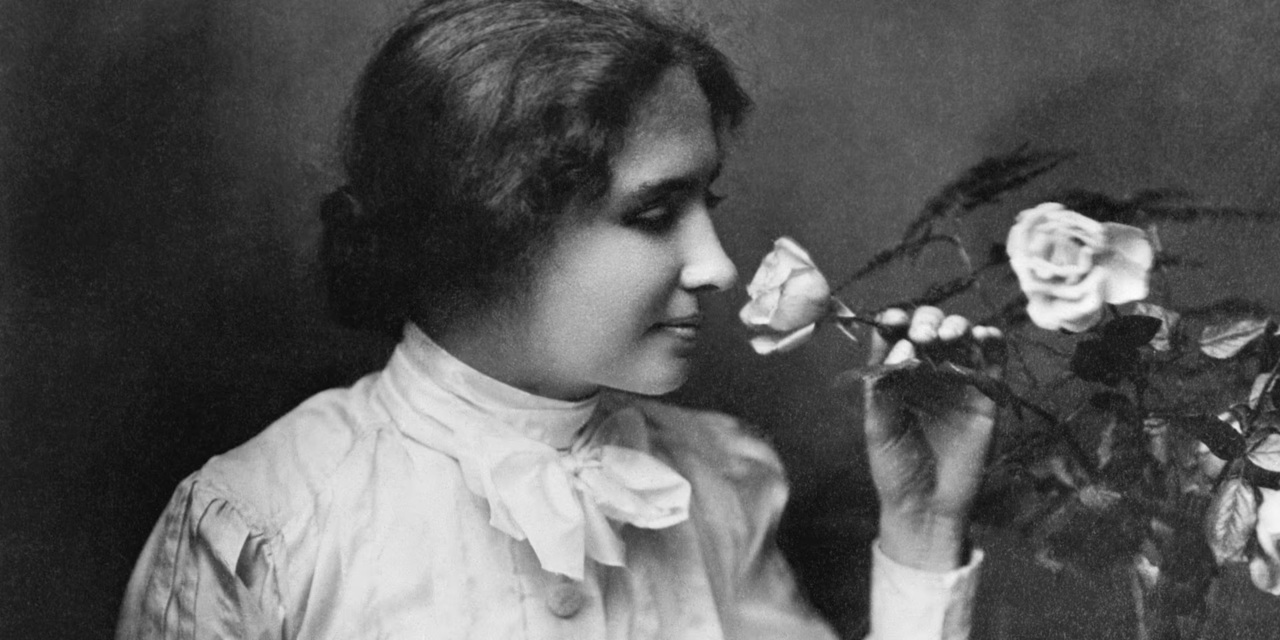
Helen Keller was an American author, lecturer and disability rights advocate who lost her sight and hearing in early childhood. Through a lifelong commitment to learning and public service, she became an influential voice on education, disability justice and peace. Keller did not deny the real constraints of circumstance or the limits of individual power. Instead, she insisted that acknowledging those limits should sharpen our sense of what remains possible, not our reasons to withdraw.
Her words challenge a common pattern in both leadership and research. Faced with complex systems and structural injustice, we can become overwhelmed by everything that lies beyond our control. We see gaps in our data, imperfections in our methods, or political forces that complicate implementation, and we feel that if we cannot fix the whole, there is little point in contributing a part. Keller reverses this logic. The fact that we cannot do everything becomes the reason we must protect and pursue the part that is ours to offer.
Leadership As The Courage To Contribute
Within the Laidlaw community, leadership often begins with a single chosen commitment. It might be designing one careful study that centres overlooked voices, piloting one programme in a local community, or mentoring one younger scholar. None of these acts will solve an issue in its entirety. Yet each represents a refusal to be paralysed by scale.
Keller’s insight aligns with the Laidlaw value of being #Brave and the Oxford Character Project leadership virtue of #Service. Being brave means acting even when our contribution feels small relative to the challenge. Service means directing our skills and opportunities toward the good of others, trusting that cumulative action can shift systems over time. Together, they call us to move from abstract concern to concrete responsibility, from observing the need to doing the something we can.
A Call To Reflect
We invite you to reflect on Helen Keller’s challenge. What is one issue in your research, Leadership in Action project or community that has felt too large to change? What is the something you can do this week that is within your reach, even if it does not resolve the whole?

Hi! I'm Amanda, a third year Neuroscience student and Laidlaw alum from UCL. I'm Swedish-Persian and grew up in Sweden before moving to London for uni. These days, alongside my studies, I work for the Foundation as a Marketing Assistant.
For my first year research project, I worked on optimising alginate hydrogels for 3D astrocyte culture systems. In simpler terms, I was figuring out the best way to prepare a jelly-like scaffolds so that star-shaped brain cells called astrocytes could grow in three dimensions rather than flat on a dish. This matters because 3D environments mimic the brain more realistically, which could help researchers develop better treatments for neurological disorders!
For my Leadership-in-Action project, I co-created Beyond the Books, a resource designed to help students from underrepresented backgrounds navigate the unwritten rules of university life, from internships and networking to professional opportunities that aren't always obvious if you're the first in your family to go to uni.
Always happy to connect, whether you want to chat about neuroscience, widening access, the Laidlaw experience, or just say hello! One of my favourite things about this community is getting to meet people from different universities and backgrounds, so please do reach out! 🌟




Please sign in
If you are a registered user on Laidlaw Scholars Network, please sign in