Global Citizenship and Ethical Leadership

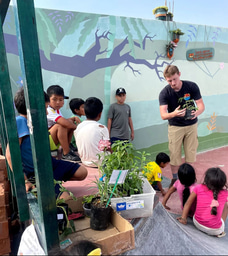
During my LiA I travelled to Huanchaco, Peru where I took on a teaching role in the informal settlement of Cerrito de la Virgen. This required me to design and lead classes based around heritage in a language that I was inexperienced in speaking. Therefore, I had to rely on my leadership skills to keep control of the class while I explained concepts involving advanced vocabulary. I found that ethical leadership did not necessitate a strict control over the class and instead admitting my weaknesses was key to having successful, engaged lessons. By asking for help from the class when I was unsure of the correct word to use kept their attention and allowed for them to view the curriculum as a respect-based, reciprocal arrangement where they taught me using their knowledge, while I taught them with my own. This was a microcosmic reflection of the principals of community-based action that the NGO attempts to support. I hope to be able to apply this knowledge of respect, humility, and reciprocation to my future endeavours in international cultural work.
By respecting the community and leading through understanding I was able to make friendships that resulted in my being privy to intimate cultural knowledge of local heritage sites. This meant experiencing what it is to gain an emic understanding of what is meaningful to the community. I learnt first-hand how ethically working with cultural heritage requires not only collaboration from the local community but an active engagement in it, in order to provide the best service for the archaeology and the community as a whole.
Cultivating a contemporary, adaptable understanding also requires an immersion in introspection, to both lead by example and lead in a responsible direction. The Laidlaw Scholarship has provided me with opportunities to lead and as a result necessitated decisions with ramifications that I had to fully explore through understanding my own philosophy, such as what I felt were the most important factors in education. My ability to design and teach a curriculum that I exercised and expanded via the LiA was established by participating in the Laidlaw Schools Trust as a mentor. I was tasked with creating a dialogue with students only a few years younger than me to explore career options and take a leading role in discussing their professional development. To be able to confidently dictate this dialogue required an understanding of my own personal aims and the strategies I could implement to achieve them. This then allowed me to talk through the processes for defining a path into professional life that I was investigating myself. An intricate appreciation and understanding of the processes that go into building and designing a foundation to forge the happiest path possible on was necessary to ensure that it remains flexible and adaptable to the inevitable changes in desires I will undergo. An ethical leader is one that is not leading falsely while undergoing a cognitive dissonance with their own pursuit of happiness.
Ultimately, the Laidlaw Scholarship has led me to believe that immersion is the key factor for leading ethically especially in a global context. To act respectfully in an international environment, I need to fully immerse myself in that environment, and to be respected as a leader it is necessary to understand the derivations and designs of my decisions by immersing myself in personal introspection, however hard that may be.

Excavation enthusiast.