Two years ago, I believed strong leadership is about guiding people by a strong sense of principles through various issues, problems and concerns. While these core ideas remain central to my thinking, my experiences since then have deepened my understanding of leadership as a dynamic, relational process.
Through the research project, I learnt that leadership is about empowering team members to contribute meaningfully by allowing everyone to work to their strengths. Leadership often involves active listening, adjusting approaches in response to group needs, and fostering an environment where diverse viewpoints could be openly shared. I learned that effective leadership is frequently expressed through coordination, mediation, and ensuring that everyone’s expertise is recognised and utilised. This experience showed me that leadership is not a fixed position of authority, but a practice that requires empathy, flexibility, and an awareness of the collective goals of the group. As a result, I now see leadership as an ongoing, shared responsibility that prioritises collaboration and inclusion alongside values and vision.
My understanding of leadership has expanded from a largely individual and principle-driven concept to a more relational and collaborative one. What surprised me most was how leadership could shift depending on the task or phase of the project. Rather than one person consistently leading, leadership emerged organically based on expertise and context. This taught me that good leadership is flexible and situational, and that stepping back can be just as important as stepping forward.
My Laidlaw journey has shown me that I am far more resilient than I had previously realised. Throughout the research project, we encountered challenges such as cancelled interviews, missing data, and shifting deadlines. These disruptions required continual adaptation of our plans and research design, and through this process I learned to remain solution-focused and to help guide the team through uncertainty.
I also gained a deeper understanding of the relational nature of leadership. I observed how the energy and attitude of one individual can significantly influence group dynamics. When a team member became stressed, disengaged, or uncooperative, it often created a ripple effect that impacted the entire group. Conversely, when someone took an active leadership role by remaining calm, supportive, and proactive, it helped restore momentum and encouraged others to re-engage. This experience made me realise that leadership extends beyond task management to include setting the emotional tone of a team.
I learned that maintaining composure under pressure, listening attentively, and offering reassurance can be just as influential as providing direction. Moving forward, I will apply this understanding by being more intentional in how I contribute to group environments. In moments of uncertainty or stress, I aim to lead by example, remaining calm, supportive, and solution-oriented, to create a space where others feel confident to participate. By recognising and responding thoughtfully to the emotional dynamics within a team, I hope to foster collaboration, resilience, and shared responsibility, ultimately strengthening both team cohesion and performance.
The Laidlaw Programme has been the highlight of my university experience. From gaining professional exposure to developing leadership and presentation skills, and forming lifelong connections, I am deeply grateful for the opportunities it has provided. I am committed to remaining engaged with the Laidlaw community in the future and contributing to it meaningfully.
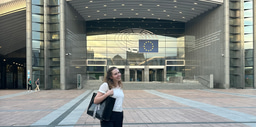
Working at the European Commission in DG INTPA for my Leadership-in-Action project was a long-held aspiration. Being immersed in such an influential global institution and witnessing policy-making and implementation firsthand was deeply eye-opening. Contributing, even in a small capacity, was immensely rewarding. Visiting the European Council was equally inspiring, particularly for someone with a background in Model United Nations. The mentorship and guidance I received were invaluable, allowing me to learn from professionals both from my own cultural background and beyond.
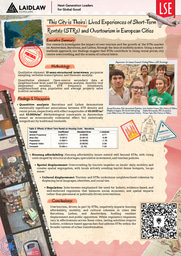
The research project significantly expanded my quantitative and qualitative analytical skills in an interdisciplinary context. Coming from a predominantly quantitative academic background, I was initially hesitant to adopt qualitative methods. However, this experience taught me the importance of intellectual openness and methodological flexibility. Collaborating with scholars from different disciplines challenged me to articulate my ideas more clearly and confront my own disciplinary assumptions. I developed practical qualitative research skills, including interview design, response analysis, and synthesis, all of which will be invaluable in my future academic and professional work.
Finally, Laidlaw activities at LSE and multi-university conferences enabled me to connect with like-minded global citizens. Engaging across cultures and seeing more of Europe enriched my perspective and reinforced the value of international collaboration.

I am a current international student at the London School of Economics, in my first year studying a BSc in Economics. The modules I am learning about include mathematics, statistics, introduction to economics, economic history and Artificial Intelligence. I am currently exploring the field of economics at university, and open to all opportunities to better understand the industry.