Two years ago, I wrote about leadership primarily as understanding conflict: recognising difference, holding multiple perspectives, and creating inclusive spaces where disagreement could become productive. I still believe this. However, through my Laidlaw journey, I have come to understand leadership less as something exercised in moments of tension and more as a sustained practice of responsibility, humility, and intentional action. Leadership today means recognising that I will rarely have the full picture — and acting anyway, with curiosity and care. During my Leadership-in-Action placement with VSO Cambodia and my interdisciplinary AI governance research, I learned that ethical leadership is not about having the most polished answers, but about asking better questions, creating structures for others to contribute, and being willing to revise my assumptions. I have become more comfortable saying “I don’t know yet,” and more committed to building the conditions under which knowledge can emerge collectively. Leadership also means balancing conviction with openness. I now see bravery not as certainty, but as the willingness to change course when evidence or experience demands it. This has required confronting my own tendency to over-intellectualise and to equate competence with control. Instead, I am learning to trust others, share ownership, and value process as much as outcome. Ultimately, leadership to me is an ethical commitment to use whatever influence I have — small or large — to enable others to thrive, while remaining accountable for the consequences of my choices. It is less about being at the front, and more about helping a group move forward together, with integrity.
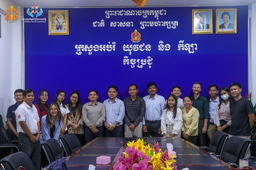
Over the past two years, I have developed from a leader who focused primarily on interpersonal understanding into one who can also design and steward complex processes. My Leadership-in-Action experience with VSO Cambodia accelerated this shift. As a nineteen-year-old field research officer tasked with evaluating a national youth volunteering programme, I had to manage timelines, stakeholders, and large volumes of qualitative data, while navigating language barriers and unfamiliar political contexts. This forced me to develop confidence in my judgement, but also discipline in my methodology — particularly around thematic analysis, bias awareness, and evidence-based recommendations. I learned that good intentions are not enough; impact requires rigour. I have also become more flexible. During my interdisciplinary AI governance research, project directions and travel plans frequently changed. Initially, I found this frustrating. Over time, I learned to absorb uncertainty without disengaging, and to treat change as part of collaborative knowledge-building rather than failure. This has strengthened my resilience and my ability to lead in non-linear environments. Perhaps most surprisingly, I have become more comfortable with relational leadership. Although I am not naturally extroverted, I learned in Cambodia to lean into discomfort, build relationships across age and cultural differences, and seek feedback actively. I now understand leadership as something exercised through everyday interactions, not just formal roles. Together, these experiences have developed my capacities across people, process, and performance — grounding my ambition in practical competence and ethical awareness.
Completing the Laidlaw Scholars Programme has fundamentally reshaped how I see my future: not as a linear career ladder, but as a long-term responsibility to contribute meaningfully to complex global challenges. I am more attentive to power, context, and unintended consequences, and more comfortable sitting with uncertainty. Professionally and academically, Laidlaw has helped me articulate a clearer vision of myself as a future leader in AI governance and technology law. My research experiences — particularly in interdisciplinary and cross-cultural settings — have shown me that effective regulation cannot be built from law or policy alone, but requires dialogue between technical, social, and political perspectives. I now feel equipped to operate at these intersections. Equally important, Laidlaw has given me a framework for how to lead: grounding ambition in ethics, pairing confidence with humility, and prioritising impact over prestige. Whether I am working in legal practice, policy, or research, I will carry forward the expectation that leadership is not a title to earn, but a practice to uphold. In this sense, Laidlaw has not simply prepared me for a career. It has given me a set of values, habits, and capacities that will shape the kind of person — and the kind of leader — I aspire to become.