While all Laidlaw Scholars will be presenting their research at the Columbia Undergraduate Research Symposium in the fall, what are the more immediate expectations that you have for your research? Are you writing a paper? Will your research be part of a larger scientific study? Do you hope to produce an annotated bibliography that you reflect on down the line? Is your research now the first phase of a project you’ll continue to work on throughout the year, and/or next summer? Now that we are nearing the one month mark of the program, please write about your expectations for your research.
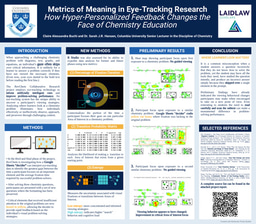
Currently, I am working on a research paper that will utilize a non-traditional format compared to a typical scientific report to encompass the work and contributions I have made to the RevChem project. Utilizing an essay format over the strict introduction/methods/results/discussion approach allows me the freedom to create an even more accessible deliverable and apply some of the findings regarding viewer attention directly into a hopefully engaging format. While the project is composed of three phases and we are amidst the third and final phase, I hope my research on when, where, and how to use different data analysis methods, the procedural design for the final part of the study, and my R code will be helpful for the team as the study progresses toward completion. I am also looking forward to contributing to RevChem's presentation at the Biennial Chemistry Education Conference in July.
Why does your research matter? Explain the significance of the question you are investigating, and why you are interested in it.
At first, one of the most interesting questions I hoped to pursue involved understanding the difference between the data we collect and the data that will inform an ML tutor who will continue the researchers' work post-study to support chemistry learners around the world. How can we ensure this data we collect with a state-of-the-art eye-tracker will be useful for ML systems that utilize the built-in web camera atop any laptop?
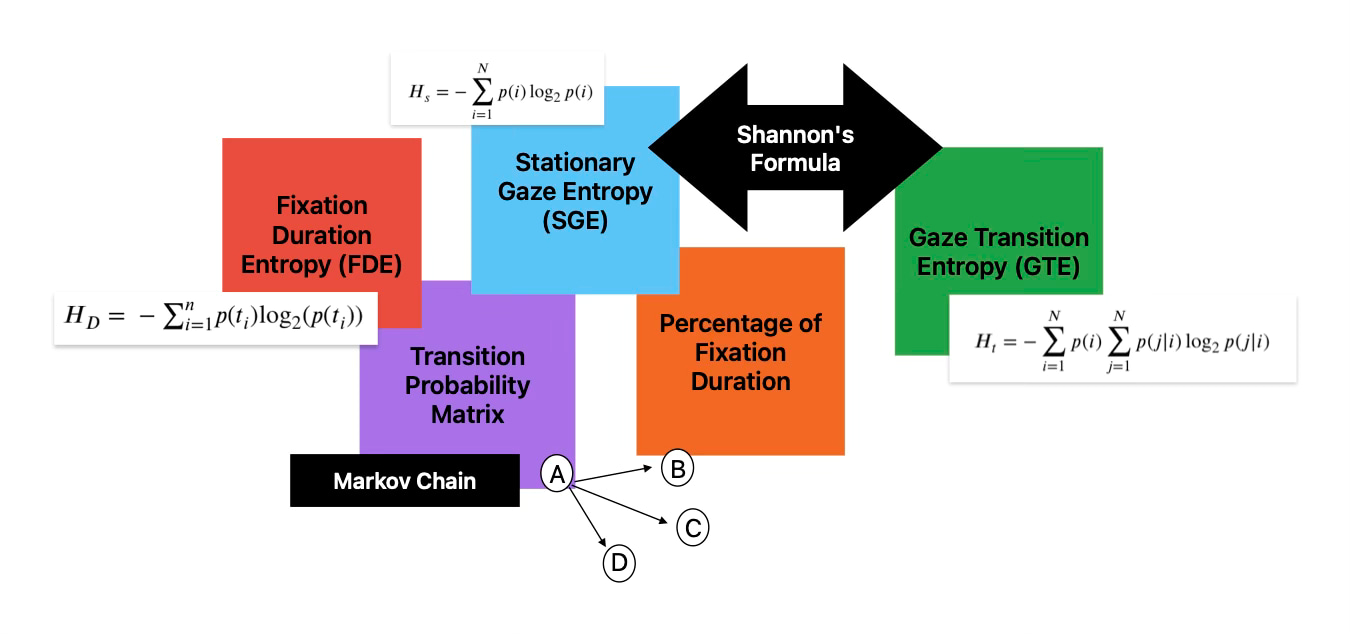
While a vital question, what has emerged as even more fascinating to me over these past few weeks is exactly how this data is analyzed to inform the ML tutor in the first place. Breaking down exactly what participants look at and structuring this data via 5+ different procedures for ML tutors to follow allows for the greatest variety of participants to benefit from the technology. Straying from the tendencies of successful participants by those who answer incorrectly occurs in a variety of ways (e.g. avoiding a vital Area of Interest of a chemistry stimulus, transitioning between two elements of a page without drawing the connection to a third, etc.). Therefore, instead of investigating the difference in trackers that collect the data, the first crucial step to broaden the study's applicability is ensuring that significant conclusions can be made from the collected data from at least one of a multitude of angles of analysis. I did not expect to delve into R script-writing to develop these analysis procedures to this "zoomed-in" extent, yet these findings matter most for the "zoomed-out" applicability of the technology in the broader community.
In the grand scheme of education research, having a solid understanding of student vision patterns and the influence of cuing on adapting visual problem-solving strategies is key. If a student glazes over a crucial piece of information in a problem, there is no hope of successfully answering the question despite the knowledge and understanding they possess. It is like trying to solve a puzzle with a piece missing. Exposing these lapses in vision to participants and students equips them with the pieces vital for success and can ingrain active visual strategies for solving future problems.