Field Journal: Week 1
What are you most excited about as you start your Laidlaw research summer?
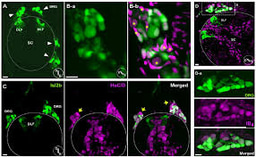
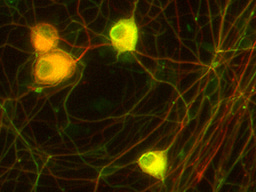
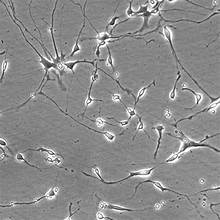
As I start my Laidlaw research summer, I am looking forward to diving deeper into how stress modulates pain and to approaching it from a multimodal framework incorporating behavioral, molecular, and immunohistochemical assays. I first joined the lab in September 2025, and since then, in pilot behavioral assays, I've observed promising evidence of activity-dependent transcriptional activity in dorsal root ganglia (DRGs). DRGs are pain-sensing neurons, and I'm excited to piece these findings together to see how this systems-level approach can provide insights into the project. Trained in rodent wetlab, I'll first habituate C57 wild-type adult mice to stress, expose them to stress conditions, and monitor their behavior; then dissect those same mice using standard sterile technique, extract RNA, construct cDNA libraries, run qPCR, and stain the tissue with immunohistochemistry. This first week, I've been setting up my experiments, perusing pertinent literature, practicing dissecting mice to isolate their DRG neurons, among other protocols I'll be using for my project. DRGs are pseudounipolar sensory neurons found deep within the spinal cord pockets of mice. I'm very excited to piece together these behavioral, molecular, and biochemical results into a systems-level approach to elucidating just how stress can modulate nociception.
This week, the discussions we held about research cut across the disciplines. How does the interdisciplinary nature of this program, the fact that students are focusing on such a diverse range of projects, help you think about your project and/or your academic interests more broadly?
Neuroscience is inherently an interdisciplinary field, and from the programs I've volunteered for at the Zuckerman Institute to the organizations I'm involved in on campus, the Laidlaw program's interdisciplinary nature helps me think more broadly about my academic interests. It's not only the science but also the stories behind it, and the people affected. As a STEM poet, I'm very interested in science and storytelling, and invested in the bioethics of the research shaping the field of neurobiology.
As you begin your individual research projects this week, do you anticipate any challenges in getting started? If so, what are they?
I'm currently considering whether to add KCL stimulation to my experimental group of mice to measure baseline and activity levels. Also, I have recently decided to use a mechanical sensitivity test with Von Frey filaments compared to the PAWS platform. Next week, I will subject C57 wild-type adult mice to stress conditions, including restraint stress, forced swim test, and tail suspension stress, which are new stress techniques I haven't tried before, though I have been trained in rodent wetlab and handling this past year. In my previous molecular assays, I used corticosterone (a stress hormone) as the chronic stress group. Overall, I'm excited to see where my project takes me!
Hi, I'm in the Columbia College Class of 2029, interested in exploring the intersections of neurobiology and storytelling, particularly the stories behind the science. My Laidlaw research project delves into the molecular and behavioral signatures of pain and stress in dorsal root ganglion (DRG) neurons in mice.