A year of research: Reflections & Outcomes
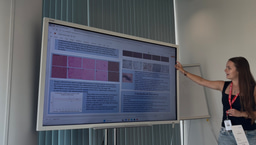
I shared earlier this year that I received the exciting opportunity to continue my research alongside my second year university studies. Having just finished my time in the laboratory I wanted to take some time to share what I worked on & especially what I learned during this process.
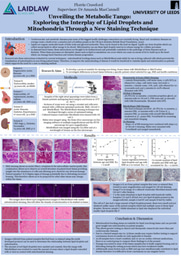
Previously, I had been set on using the technique I had established over the summer to apply to all patient samples. However, early on into my extended research I discovered this would not be reliable and sufficient enough to depend upon. Whilst no issues lie within the technique, the availability of microscopes with the right techniques to image them are not available to me. So to preserve the quality of my data I had to take 2 steps back and return to the optimisation process. The key issue was that the microscopes I had access to, couldn’t visualise both techniques simultaneously. So we had to either make both the lipids & mitochondria visible in normal light or florescent light. I started researching and pursued upon visualising in florescent light and began investigating which stains & techniques would allow me to visualise lipids in florescence.
After trying & trying with different stains and methods I found that using Nile Red stain was the only viable technique to continue which I optimised using brown adipose tissue & mouse muscle to confirm the presence of lipids as opposed to over-staining. Once optimised, I confirmed the same with the previously used Oil red O stain to compare and determined it successful. However, there was one major issue. Nile Red and MitoBrilliant overlap in imaging so it wouldn’t be possible to distinguish between lipid and mitochondria and despite what I tried - no other mitochondrial stains would work with Nile red as I had hoped. One thing I had learned from my original 6-week research project was that I would be met with issues and roadblocks continuously - my supervisor helped massively with this and we continued to brainstorm new ideas before giving up. We eventually established the idea of comparing the use of Nile red and Oil red O as tools to study lipid droplets both to see if we could determine if one is better than the other but also to establish a link between lipid droplet concentration & diabetes. This was where we finalised the direction and set about using these techniques to study this hypothesis.
Whilst optimising the staining technique, I also kept myself busy cutting up new patient samples to use and test for this hypothesis. I eventually ended up with 17 patients so an additional 12 data points than originally to compare and make judgements upon. This also meant I had expanded the group to include both female and male patients. We categorised patients into 4 groups dependent on BMI over or under 30 and whether they had diabetes or not. For the research question I proceeded with patients who all had a BMI over 30 and either did or did not have diabetes to give the largest patient sample size. I stained samples from each patient with both Nile red and Oil red and imaged. Unfortunately, time got the best of me again and I was left without time to analyse the images I had taken. So for now I am again done with my research project, but I hope that once I start my placement I can take another look and be able to share my findings with a proper conclusion this time. I am lucky that multiple students will be joining my supervisor this summer both from Laidlaw & other programmes.
I have realised the importance of asking for help from others & also being able to give that back. I have been able to support a Masters student in their work - showing them how my process works & the ways I used my staining that I previously developed. I have also shown another new student how to stain & relied upon her help in my final week to handle 34 samples on different schedules. Now, I’m hoping that my work continues even though I’ve left the lab so that the results can be used to shape science.
I want to thank everyone who has supported me whilst I continued my research it has been such an incredible opportunity and has taught me a lot. It hasn’t been without challenges as I faced handling my university studies, a job, placement applications and still managing to have a bit of fun! I’m now moving onto starting a year long placement next month but I’ve been extremely grateful for everything this has taught me.
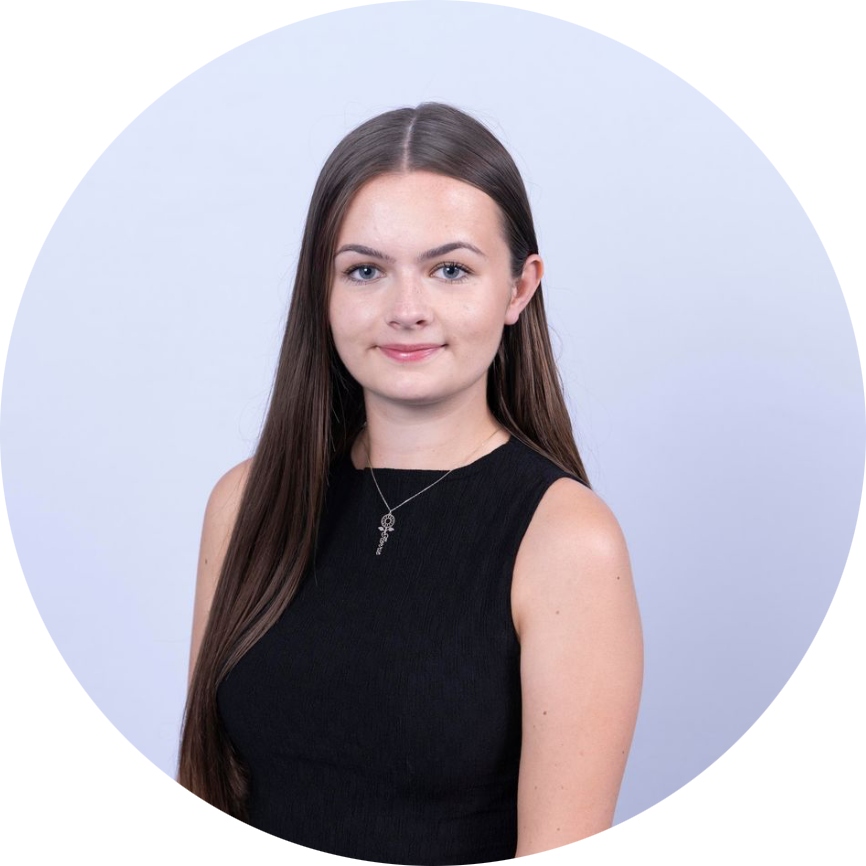
Hi, I’m Florrie, an undergraduate Neuroscience student at the University of Leeds and a part of the 2025 Cohort of Laidlaw Scholars. I’m from a seaside town in Essex and my hobbies include playing volleyball, cooking and socialising with friends.
Academically I’m interested in biological research into disease prevention and management with my part-time job working in a pharmacy I see many different conditions and hand out many different medications daily - so I take great interest in understanding these drugs. This summer I will be pursuing this interest through research into cardiovascular disease.
I’m so excited to be a part of the Laidlaw community and would love to connect! My email is qmwv8834@leeds.ac.uk