Year 2 - CraftHER Week 5
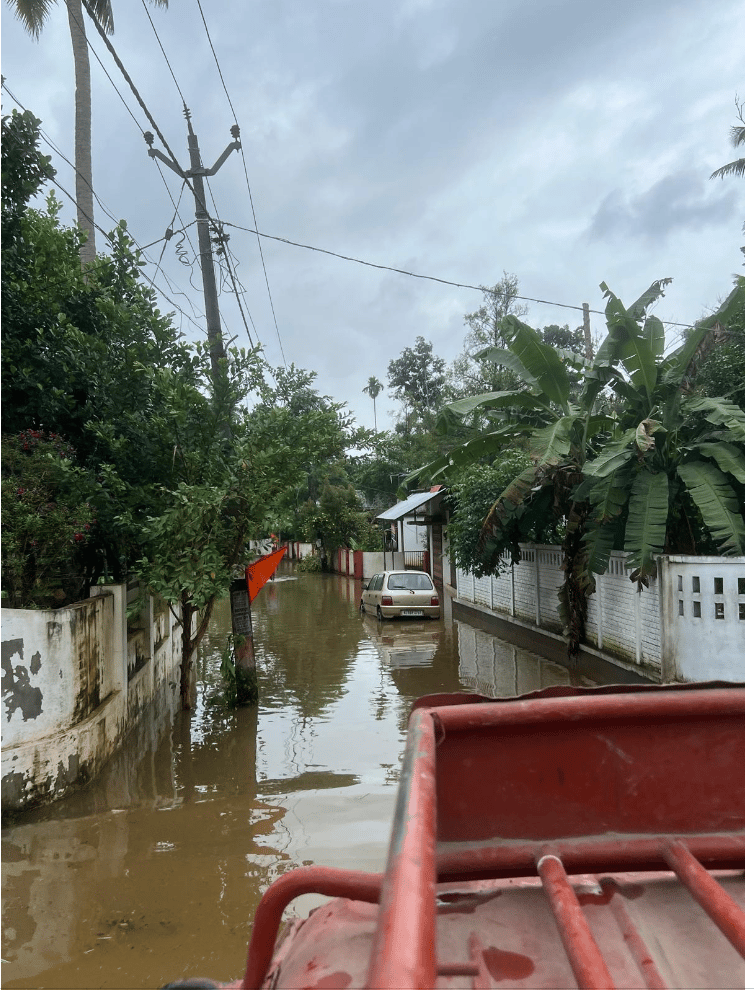
BANG BANG BANG. Erin and I awoke to Lorelai’s frantic rapping on our door at Akkara Homestay. My half-asleep self soon learnt that we were meant to evacuate all of our belongings in 45 minutes. Glancing out onto the patio, I immediately understood why. The river, a good 100m away from where we peacefully resided the night before, had crept up stealthily in the night, such that it was uneasily right outside our bedrooms.
As someone who grew up in Asia, Monsoon season wasn’t new to me. However gathering through the urgency of our usually calm supervisor, Asha, I understood the cliché that time wasn’t on our side.
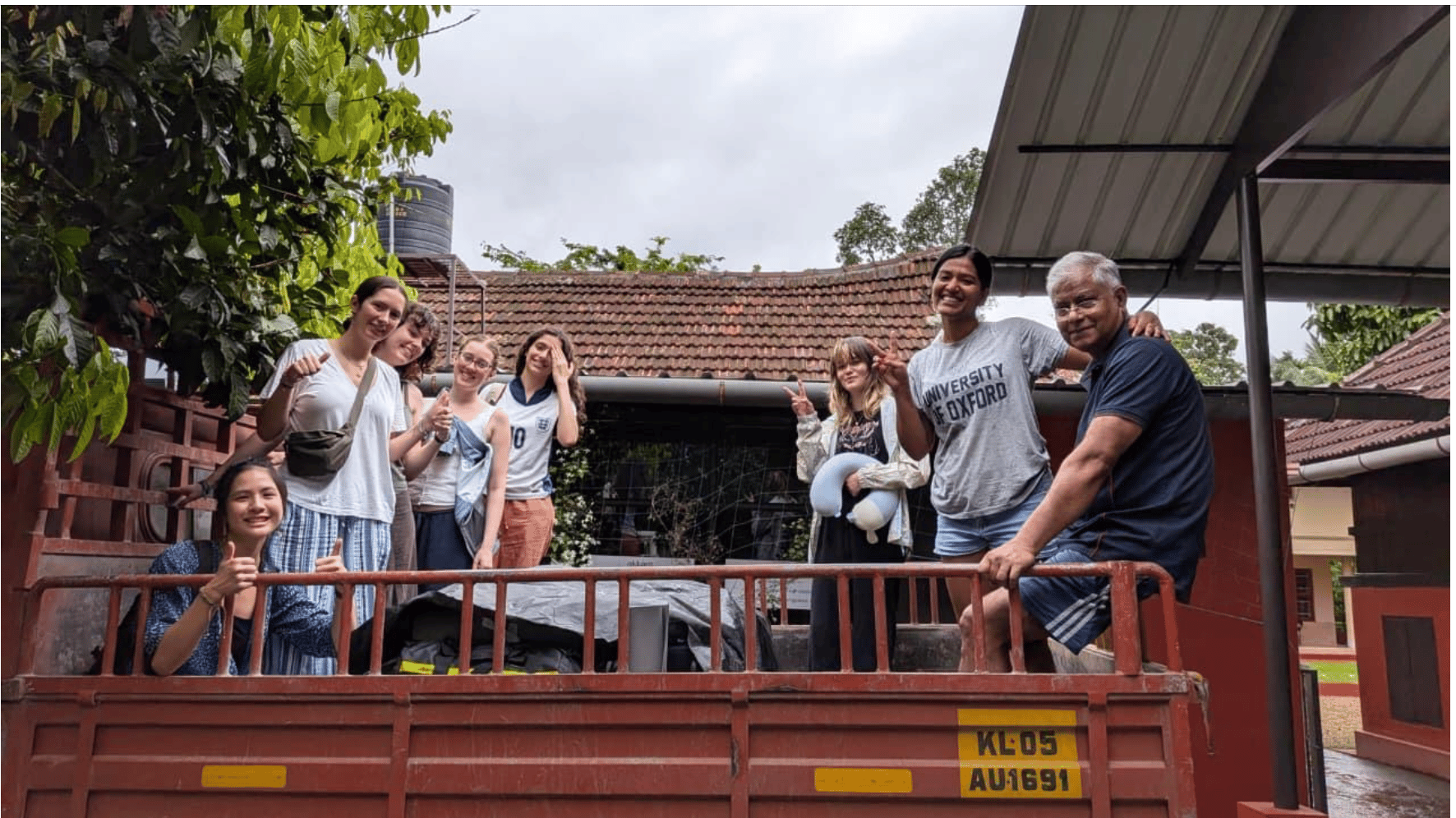
Yet, as we rushed out on our sturdy, rusty-looking red truck, battling the rough waters of Kerala, I wasn’t prepared for what met my eyes. Or rather, the atmosphere I was engulfed in. Stillness. Quiet. Not in the eerie sense, but an incredible placidity. Suddenly, the urgency that had pushed our truck out of the gates of Akkara a few minutes ago mysteriously dissolved into a sense of calm.
Coming to the end of the programme, this strange and unsettling experience somehow conveniently allows me to tie up the fleeting thoughts, deeper reflections and comprehensive journal entries, altogether.
Two main themes stood out to me, which maybe contradict each other, or maybe don’t. Either way, I don’t think settling inconclusivity is the point, or even useful.
- Building for loss as a form of resilience
- Livelihoods built on homes
Again, back to my week’s reflection from Forest Post, I’ve learnt to accept that things don’t need to be packaged into neat boxes (while Minecraft is awesome, real life holds more beauty).
Building for Loss
Two instances where this theme of building for loss came from my interaction with Forest Post and Save the Loom. Firstly at Forest Post, Manju (founder) explained that houses were built from bamboo and mud, and must be replaced about every two years. This creates a form of resilience: people prepare for and accept loss, including events outside their control. Secondly at Save the Loom, all of us girls were shocked by the description of the aftermath of the 2018 Kerala floods. One can’t even begin to imagine the loss of everything being taken away, in an instant. Yet when Ramesh (founder) describes his first interactions with the households, again, the same theme arises as when I sailed down the road-made-river: unruffled resilience.
I am hesitant to call it as such, and I fear I lack the vocabulary to adequately describe this ‘undisturbedness’. This is because I sense that calling a community resilient can sometimes make suffering sound more acceptable than it is. Yet whilst it ruined all their looms, the source of their income and livelihood, they weren’t weighed down with despair.
So perhaps, in some cases, it isn’t just building for loss, but acknowledging the limitations of their control and the non-permanence of nature, that can shape a mentality that accepts hardships - a different form of sustainability.
Livelihoods built on homes
Yet with the other three organisations that we worked with, this non-discriminatory event seemed to tell a different narrative. All of their core missions were to provide work that was flexible, not just in terms of time, but to work from home. Take one good look at our itinerary and you’d find ‘home’ as the most frequent word. Home-based tailoring, home-based weaving, home-based food production. So gazing again at the water-blocked homes gave me discomfort in thinking all their tools and materials, foundational to their livelihood, were washed away.
So what now? Should the people of Kerala build an expectation that things follow the course of nature, or should they build to resist nature?
Clearly these questions are so broad, and have to be contextual, but it is worth one dwelling on. In my reflection on ‘Our innate human desire to relentlessly control for happiness’, I discussed the need for us to flow with life and nature. But what if our livelihoods depends on it? Alas again, I am always challenged by new outlooks. I guess the only thing I can say for certain is the Socratic saying “the only thing I know is that I know nothing”. An unsatisfactory ending, but wholly captures my internal thoughts.