What We Bring to the Table
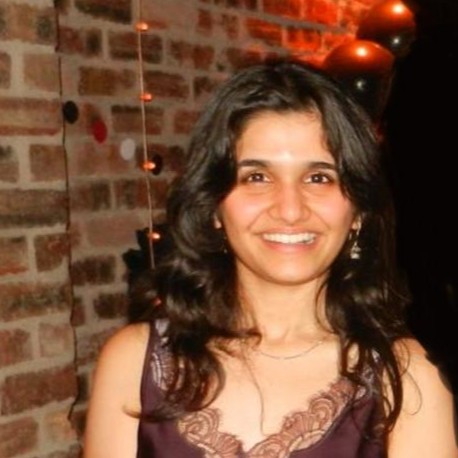

If I had to choose one image to sum up my Laidlaw experience, strangely, it probably would not be a lab bench, a leadership workshop, or even a hospital ward in Tanzania. It would be a kitchen.
My reflection from last summer- Food for Thought was about how cooking, eating, and occasionally failing to do either shaped my research.
A year later, I have somehow ended up back in the kitchen.
Only this time, when I think about food, I am less interested in the breakfasts I skipped or the cookies that sustained me through long days in the lab. I think about the people sitting around the table.
In Summer 1, there were five of us living together, returning from completely different research projects every evening and somehow ending up in the kitchen at the same time. We cooked elaborate dinners, made pancakes and French toast on rainy Sundays, drank mint tea during late-night “tea-briefs”, and talked through whatever had happened that day.
In Summer 2, I found myself in a very different, much less familiar kitchen in Mbeya, Tanzania, cooking with two of those same friends. We worked together, travelled together, ate together, debriefed together and, for six weeks, I became almost embarrassingly dependent on them.
Across two summers, two very different countries, and a lot of shared meals, those kitchens became somewhere we processed what we were learning, laughed at ourselves, looked after each other and slowly grew into the people we had spent so much time discussing in leadership sessions.
I started Laidlaw expecting to become a better researcher, a better leader, and a better cook.
I’d like to think I did.
What I did not expect was how much of myself would change along the way.
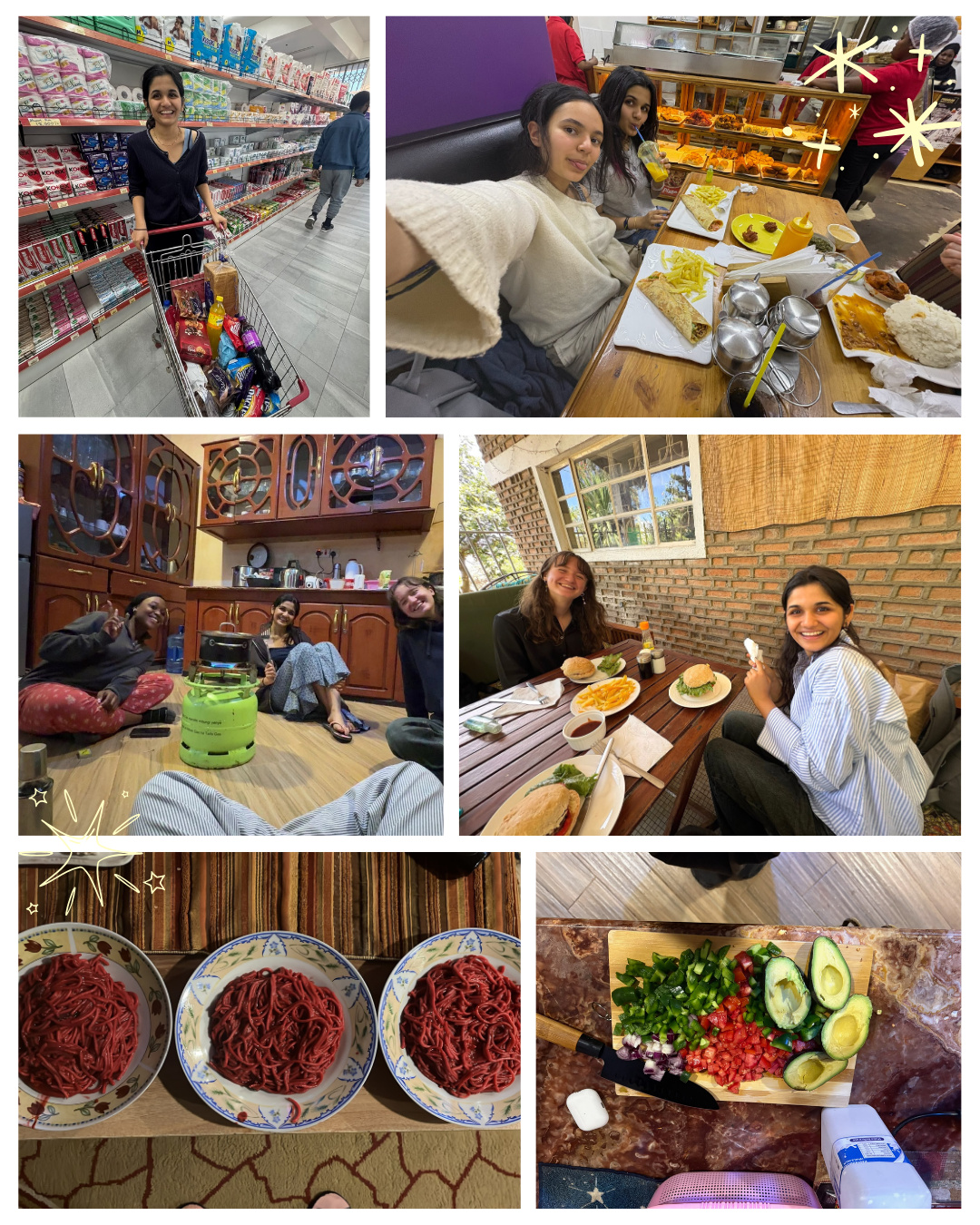 A little snacking, a lot of growing!
Learning that leadership starts with character
Before Laidlaw, I think I understood leadership mainly through action: taking initiative, communicating well, solving problems and being someone capable of getting things done.
Those things still matter. But through our work with the Oxford Character Project, I started thinking much more deeply about the person behind those actions.
It is easy to describe yourself using words like curious, empathetic, courageous or determined. It is much harder to ask whether those qualities actually appear when you are exhausted, uncomfortable, uncertain, or surrounded by people who approach the world completely differently from you.
That distinction stayed with me.
The Oxford Character Project encouraged us to think about character as something we develop through practice rather than something we simply possess. Leadership therefore became less about having the “right” personality and more about the habits I was forming.
Do I properly listen before deciding what I think?
Can I admit when I do not know something?
Do I make space for other people?
Do my values still influence my behaviour when following them is inconvenient?
These questions became much more meaningful once Laidlaw gave me situations in which I actually had to answer them.
Starting with a question, not an answer
My first summer was spent in the lab.
There were bacterial cultures, PCRs, protocols, pipettes, failed experiments and quite a lot of staring at results wondering what on earth had happened.
Research taught me a form of leadership that was much quieter than I had previously imagined.
Experiments do not particularly care how confident you sound. Research requires patience, attention to detail, intellectual honesty and a willingness to accept that sometimes your hypothesis is wrong, your PCR has failed, or the thing you spent hours working on has produced absolutely nothing useful.
There is something inherently humbling about beginning with a question rather than an answer.
That mentality has stayed with me far beyond the lab.
Curiosity is not simply wanting to know more; it is being willing to let what you learn change your mind. Integrity means being honest about uncertainty instead of pretending you understand more than you do. Determination is not repeating the same thing indefinitely and hoping for a different result, but having the patience to reassess, adapt and try again.
Looking back, this was one of the first ways I began to understand Laidlaw's 3Cs: Change Maker Values, Character and Capacities.
The lab developed my capacities- research, critical thinking, problem-solving and communication, but it was just as important in developing the character and values with which I want to use those skills.
It also taught me that failure is much less catastrophic than it feels in the moment.
Sometimes an experiment does not work. You complain about it, perhaps cry over a PCR, eat something, ask for help and come back the next day.
A surprisingly useful life lesson.
The Unexpected Lesson
Some of my biggest lessons, however, happened nowhere near a lab bench.
Five of us lived together during Summer 1, and those friendships became one of the most important parts of my Laidlaw experience.
We came home every evening from completely different projects and created this tiny community around them. We celebrated successful experiments, complained about unsuccessful ones, discussed things we had learned and occasionally had to remind one another that research was not, in fact, a valid reason to survive exclusively on white chocolate chip cookies.
There was something special about being surrounded by people who were all trying, in completely different ways, to figure out what meaningful work and good leadership looked like.
And it taught me that leadership is profoundly relational.
Leadership development can sometimes sound very individual: my strengths, my values, my goals, my impact.
But some of my greatest growth over the past two years has happened because of other people.
My friends have challenged me, reassured me, made me laugh when I was taking something far too seriously and known when I needed encouragement before I would ever have asked for it. They made me more confident, but they also made me better at recognising when I needed to step back, listen or trust somebody else's judgement.
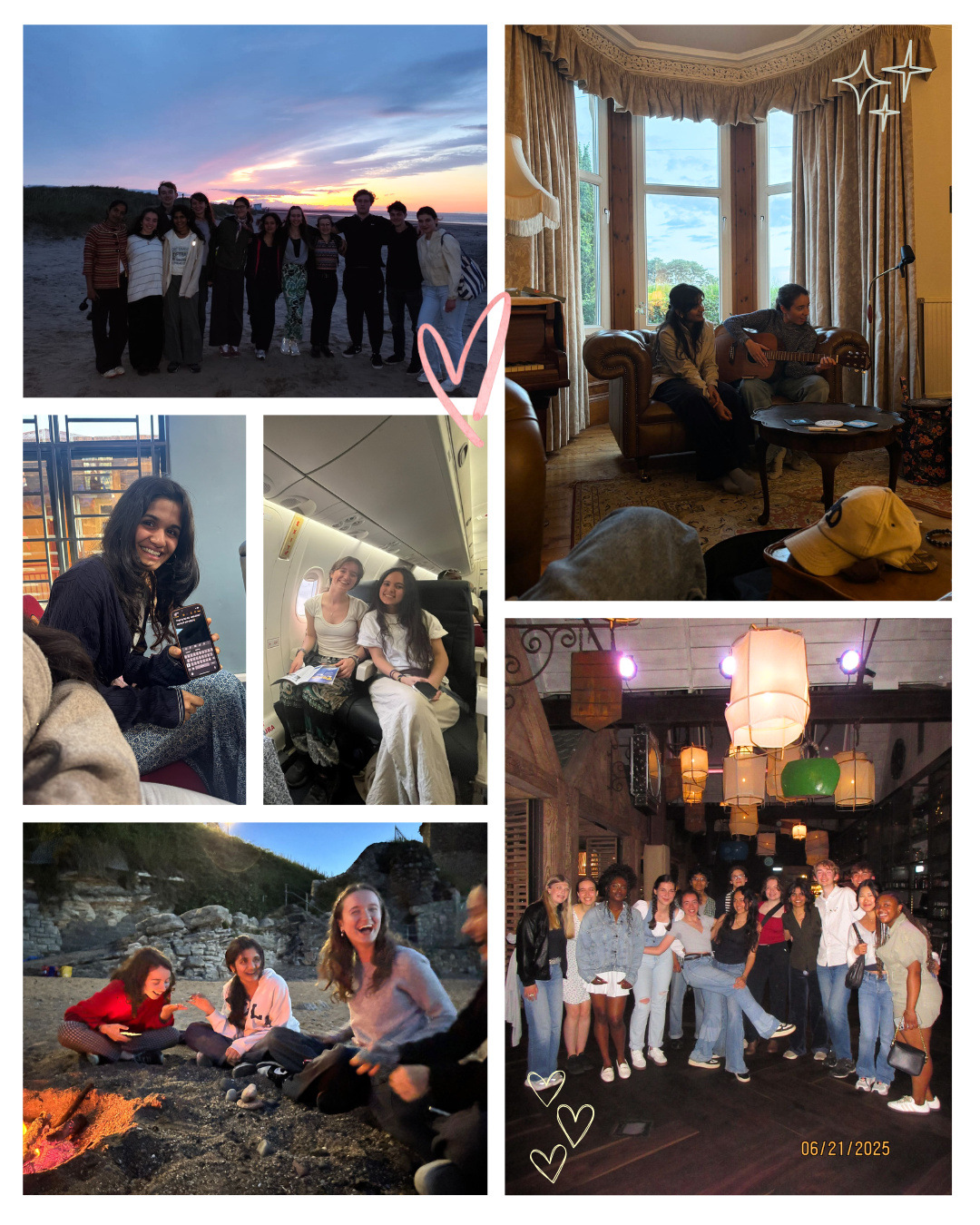 Some really good memories from summer 1!
By the following summer, I travelled to Tanzania with two of them.
At that point, saying we were close would be a considerable understatement.
Six weeks in Mbeya probably pushed us slightly past friendship and into co-dependency. We worked together, lived together, travelled together, cooked together and returned home every day to process an experience that was exciting, unfamiliar and sometimes overwhelming.
We saw each other at our most capable and our most exhausted.
And I would not change it for anything.
There is a version of independence that treats needing other people as weakness. Laidlaw has made me question that.
I am undoubtedly more independent now than I was when I began the programme. I travelled somewhere completely unfamiliar, adapted to a new healthcare environment and navigated situations I could never have predicted beforehand.
But I have also become much better at interdependence: recognising when to take responsibility myself, when to ask for help, when to trust somebody else and when the best thing a team can do is simply support one another.
Entering a community well
My Leadership in Action experience in Mbeya took everything I had begun learning during Summer 1 and placed it in a completely different context.
I arrived in Tanzania without speaking Swahili, entering both a healthcare system and a community that were unfamiliar to me.
It would have been easy to arrive thinking primarily about what I wanted to achieve.
Instead, one of my biggest lessons was learning how important it is to understand where you are before deciding what you can contribute.
Developing a global mindset has therefore become much less about how many countries I have visited and much more about how I enter unfamiliar spaces.
Do I assume the way I have been taught is automatically the best way?
Do I interpret difference as deficiency?
Can I tolerate feeling uncertain?
Am I willing to ask questions whose answers may challenge what I already believe?
Working in Tanzania repeatedly reminded me that good intentions do not automatically result in good outcomes.
Ethical leadership requires context, humility and partnership.
This feels particularly important within healthcare and global development, where there can be a temptation to arrive somewhere and immediately think about what you can do for people.
Some of my most important learning happened when I stopped focusing on that question and concentrated instead on what I could learn from the people around me, and what we could do with one another.
That distinction has fundamentally shaped what global citizenship now means to me.
Being a global citizen is not seeing the world as somewhere I can travel to and “help”. It is recognising that I belong to an interconnected world in which my responsibilities extend beyond the communities most familiar to me.
It means respecting local knowledge.
It means noticing inequality without reducing people to their circumstances.
It means understanding that sustainable change needs to preserve people's dignity, autonomy and agency rather than simply satisfying my own desire to feel useful.
Some of the moments I remember most from Tanzania were therefore not dramatic ones.
They were gradually recognising more Swahili words. Becoming familiar with the journey to work. Understanding routines that had initially confused me. Being welcomed into conversations. Laughing with people whose lives, at first glance, felt completely different from mine. It was the slow movement from unfamiliarity towards familiarity that changed me most.
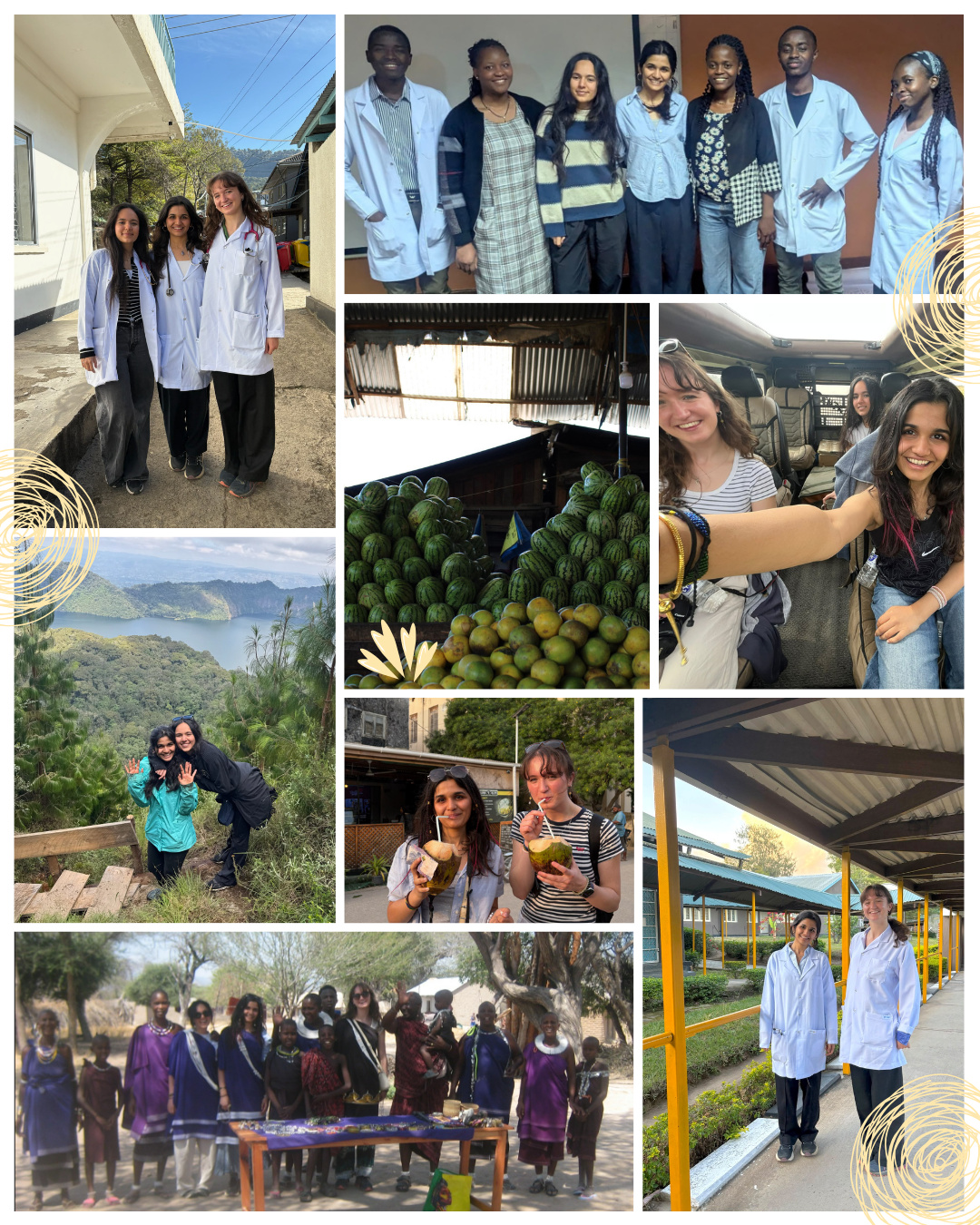 Summer 2: learning, adapting, and finding familiarity in Mbeya
What the 3Cs mean to me now
At the beginning of the programme, the 3Cs could easily have remained a framework I knew how to discuss during a leadership session.
Two years later, I associate them with very specific people and moments.
'Change Maker Values' look like curiosity when an experiment produces an unexpected result, determination when something fails for the fifth time, and bravery when entering a completely unfamiliar environment.
'Character' appears in much smaller decisions: listening when I would rather speak, admitting uncertainty, being dependable to the people around me, treating others with respect regardless of what I can gain from them, and trying to behave consistently with my values even when I am tired or uncomfortable.
And 'Capacities' are what allow those values to become useful: research skills, critical thinking, communication, collaboration, adaptability and the ability to work with people whose experiences and perspectives are different from my own.
Perhaps the most important thing I have learned is that none of these is enough alone.
Skills without character can be used irresponsibly.
Good intentions without capacity may achieve very little.
Values without the courage to act on them remain abstract.
Ethical leadership requires all three.
What I am taking with me
Finishing the formal Laidlaw programme does not feel like finishing any of these lessons.
I want to take the mindset I developed through research into whatever work I do next: asking better questions, remaining comfortable with uncertainty and being willing to change my mind when the evidence demands it.
As I continue in healthcare, I especially want to remember that expertise should never remove the need for humility.
I also want to continue developing a global mindset without believing that being “global” always requires travelling somewhere far away.
There are opportunities every day to engage meaningfully with people whose cultures, beliefs and experiences differ from my own. I want to keep approaching those differences with curiosity rather than retreating towards what feels familiar.
And I want to remain conscious of what ethical leadership looks like in the ordinary decisions nobody celebrates.
It is tempting to imagine leadership beginning once you have a title, authority or enough influence to make enormous decisions.
Laidlaw has convinced me otherwise.
Leadership is already happening in how we treat the people we work with, whose ideas we take seriously, whether we speak up when something feels wrong, whether we are willing to change our minds, and whether the communities we enter are treated as partners rather than projects.
Most importantly, I want to keep people at the centre of it.
When I look back over the last two years, I am incredibly proud of the research I completed and of everything we experienced during Leadership in Action.
But many of the memories I treasure most would look completely insignificant on an application or a CV.
They are five girls squeezed into a kitchen in Summer 1.
They are pancakes on rainy mornings and cups of tea that turned into two-hour conversations.
They are dinners in Mbeya after long days, with two people who had somehow gone from Laidlaw Scholars to family.
They are walking into our kitchen exhausted and leaving it feeling considerably more human.
Last summer, I wrote that research might rely on data and diligence, but that it was held together by flatmates who encouraged you through failed experiments and knew when to put the kettle on.
A year later, I think I understand that sentence differently.
It was never really just about research.
The people around the table have shaped the kind of researcher, friend, global citizen and future leader I want to be.
Laidlaw has changed what I bring to that table. I leave with stronger capacities, a clearer understanding of my values, greater curiosity about the world and a much deeper appreciation of how much we depend on one another.
But I also leave knowing that leadership is not about arriving with all the answers.
It is about having the character to keep asking questions, the courage to act when it matters, the humility to learn from the people around you, and hopefully, at the end of it all, some very good friends to cook dinner with.