The Silence After “Send” | My Laidlaw Journey in Reverse

I am beginning this series at the end.
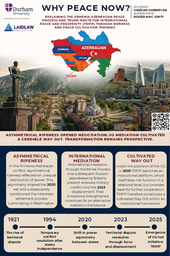
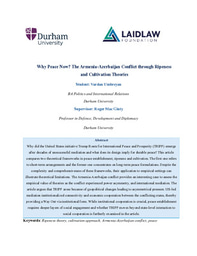
After months of reading, questioning, restructuring and revising, I sent my research paper and academic poster to my supervisor, Professor Roger Mac Ginty.
Then, for the first time in what felt like a very long time, there was silence.
My project examined the Armenia–Azerbaijan peace process through one deceptively simple question:
Why did peace become possible now?
The answer was considerably less simple. I argued that asymmetrical ripeness opened negotiating space, while United States mediation helped cultivate a more credible institutional Way Out through TRIPP. Yet connectivity, economic cooperation and institutional design cannot by themselves demonstrate conflict transformation. Peace must eventually reach relationships, societies, memories and people.
When I pressed “Send,” I did not suddenly believe that every sentence was perfect. I could still see arguments I wanted to develop, evidence I wanted to strengthen and language I wanted to refine.
But perhaps becoming a researcher means learning that completion and perfection are not the same thing.
I had taken an emerging, politically contested and personally meaningful subject and transformed it into a structured theoretical argument. I had produced a Laidlaw research paper, created a conference poster and begun developing a longer manuscript for potential future publication.
Most importantly, I had learned to remain with a difficult question even when the evidence resisted simple answers.
That is what Laidlaw gave me. It did not merely provide an opportunity to complete an undergraduate project. It trusted me to investigate something consequential, encouraged me to communicate my findings beyond the classroom and treated intellectual independence as a form of leadership.
Am I completely satisfied with everything I produced? No.
Am I proud that I continued until the work possessed an argument, identity and purpose of its own? Absolutely.
When I finally stopped working, my first feelings were gratitude—to God, my father and family; to Professor Mac Ginty; and to the Laidlaw community that made this journey possible.
The paper was finished, but the person who finished it was not the same person who had begun it.
Across the next six reflections, I will travel backwards through that transformation: from the final submission to the poster, the publication ambition, the theoretical breakthrough, the methodological uncertainty, the leadership journey—and finally, the acceptance letter that began everything.
Sometimes, the best way to understand where we have arrived is to retrace the steps that brought us there.
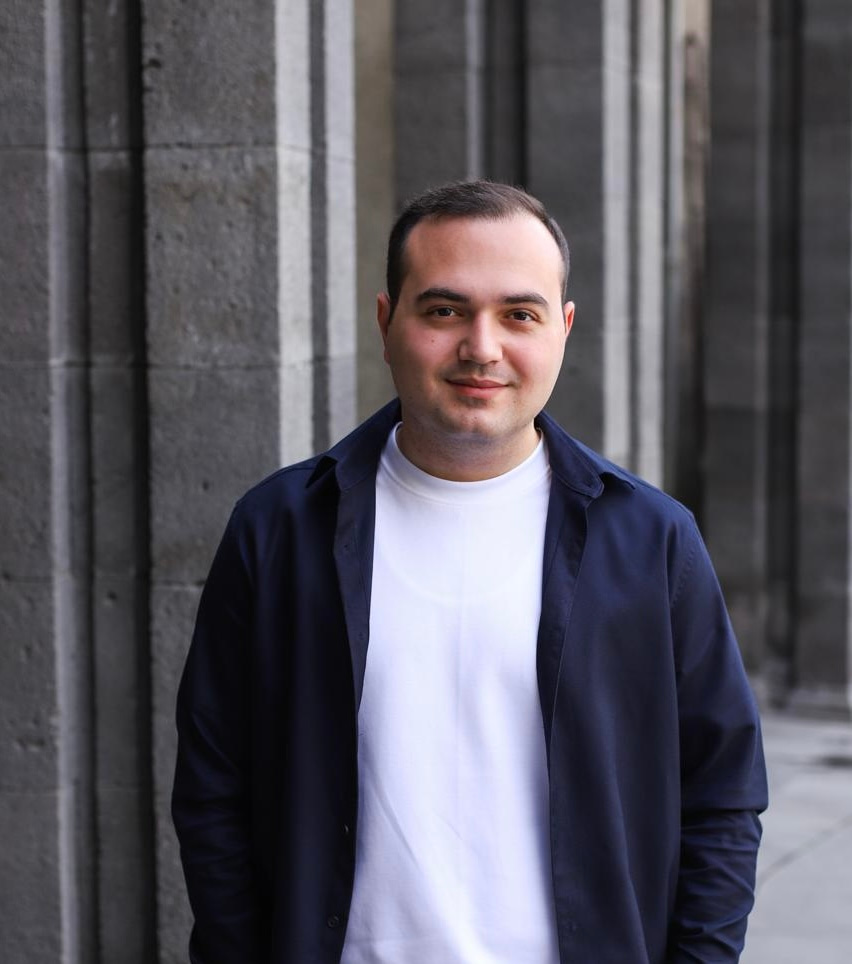
Hello! I’m Vardan Umbreyan, a Politics and International Relations student at Durham University and a Laidlaw Scholar. My academic interests lie at the intersection of peace and conflict studies, diplomacy, European governance, humanitarian action and international institutions. Through my Laidlaw research, I examine how ripeness theory and a Lederach-inspired cultivation approach can help explain the emergence and prospective transformative significance of TRIPP within the Armenia–Azerbaijan peace process.
Alongside my academic work, my involvement with the Armenian and British Red Cross has strengthened my commitment to humanitarian values, ethical leadership and service to others. I am particularly interested in how rigorous research can move beyond the university environment and contribute to meaningful policy conversations and social impact. I am always delighted to connect with other scholars, exchange ideas and learn from people working across different disciplines, countries and communities.