Project Outline: Refugee Youth's Adjustment to American Schools
Abstract
Refugees who resettle in the United States as adolescents often act as cultural, linguistic, and institutional intermediaries for their families. Refugees translate, negotiate, and advocate for their needs with teachers, counselors, and administrators. Though education is normally beneficial for refugee integration, young refugees' intermediary role may pose an understudied burden for them. The research explores how this role shapes the process of refugee integration through interviews and group discussions.
Research Objectives & Questions
The study will collect refugee narratives through interviews with those familiar with them to explore two questions: "how do children in refugee-like situations adjust to American schools" and "how do these children experience and negotiate their role as cultural intermediaries in schools?" The study also hopes to document the experience of these children in online class settings, which have become more common since the pandemic. The study hopes to give youth in refugee-like situations the chance to have their voices heard.
Background
The existing scholarship has illustrated the socio-emotional suffering and cultural misunderstanding experienced by young refugees. Given their young age, children often learn English quicker than their parents, especially those who have little or no formal education from their country of origin or are illiterate in their native languages. This situation creates an inverse relationship. For example, scholars have documented how refugee children may miss classes to be translators for their parents at visits with service providers, such as doctors or insurance companies. While young refugees face new forms of education, culture, racism, and microagressions when they attended school, well-integrated children experienced the lowest self-esteem, since their integration required a rejection of the culture and homeland their parents longed for. Scholars also punctuated the cultural misunderstandings between families and educators. When refugee parents came from cultures where the parents are less involved in their child's schooling, teachers viewed them as uninvolved and uninterested. This misunderstanding was worsened when parents were unable to understand their children's teachers during parent-teacher conferences. Multicultural education for native students, counselors, and teachers, according to the literature, could be enriched by the narratives of young refugees and those familiar with their lives.
Methodology
The study looks for interviewees who are children or adolescents in refugee-like situations or college students and adults service providers who have worked with or used migrant students as interpreters or cultural brokers. The researcher will conduct open-ended interviews or group discussions with the interviewees either in-person or on Zoom. The interview will include grand tour questions, which allow the interviewee to guide the conversation with his/her/their answers. The interview questions, which have been borrowed or adapted from other successful studies, will be focused on the educational experiences of the interviewees, or of the refugee youth they are familiar with. The researcher will use a qualitative data analysis software to code the interviews.
Potential Impact
The narratives collected from interviews may allow subjects to share their knowledge and inform how service providers and educators work with children and adolescents in refugee-like situations. Teachers, counselors, adminstrators, and other service providors may be better prepared to provide culturally sensitive education to youth in refugee-like situations.
Resources & Support Needed
If you know an individual(s) who might be interested in being interviewed for this study, please reach out to me at nsg44@georgetown.edu. Your feedback or questions about this project outline are welcome.
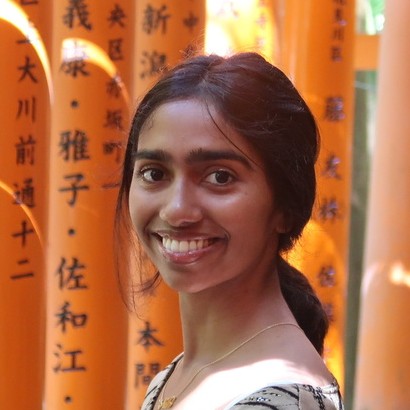
Hi! My name is Nuthi Ganesh. I am a junior studying Culture and Politics in the School of Foreign Service at Georgetown University. My research explores how children in refugee or refugee-like situations adjust to American schools and how these children experience and negotiate their role as cultural intermediaries in schools. I am curious about how this role shapes refugee children into advocates for human rights, especially for their right to education.
My hobbies are journaling, playing violin, watching baking shows, and spending time with my friends/family in nature, swimming, paddling, hiking, or backpacking. I am originally from Maine. I'd love to chat -- so don't hesitate to reach out.