LiA Week 5: Las Sabinas
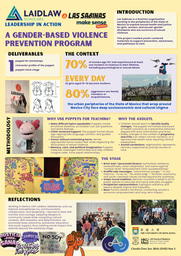
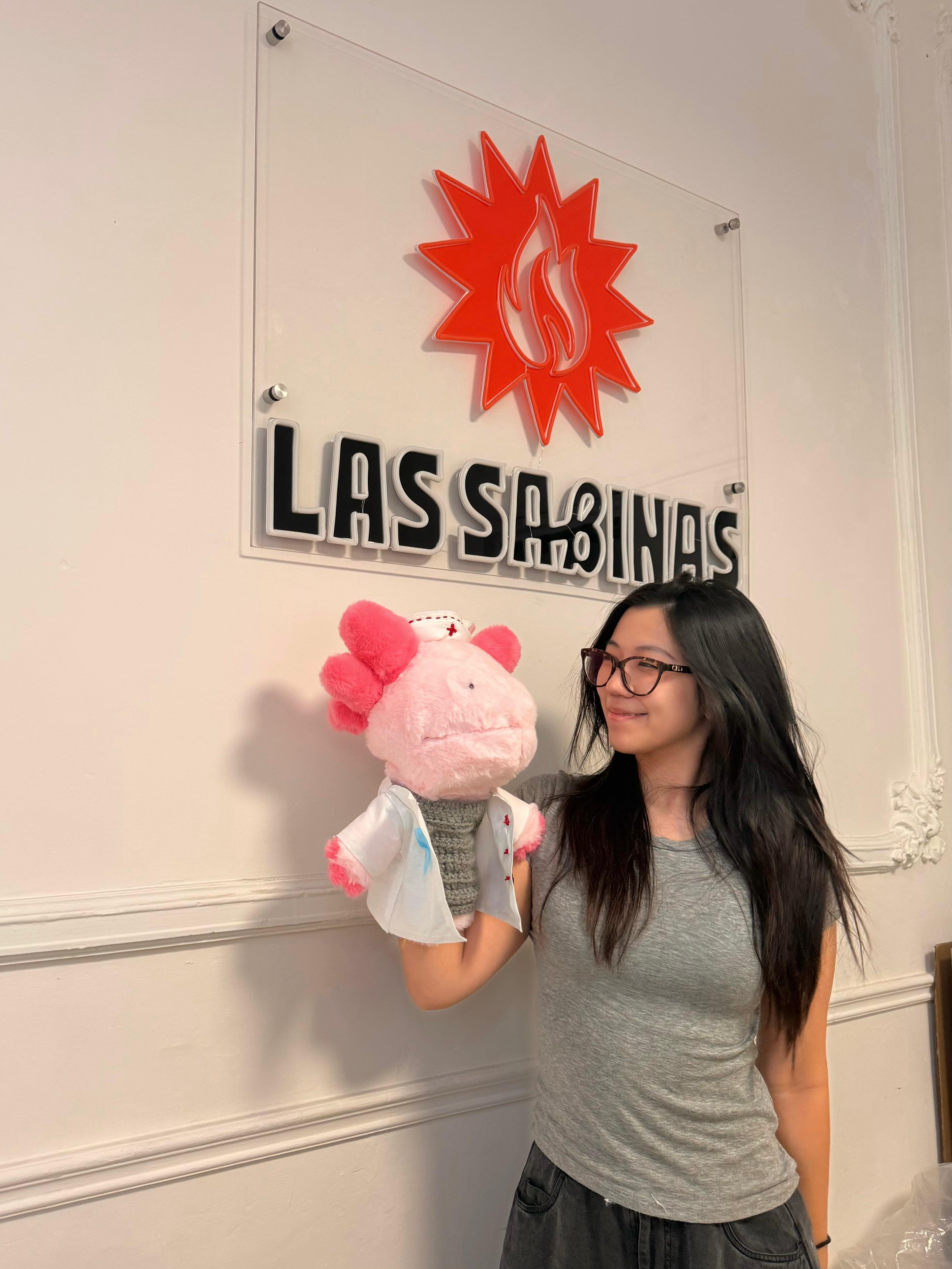
As we come to the end of our last week in Mexico City, we’ve finally completed the deliverables for our project with Las Sabinas: five puppets, their respective character profiles, five games, and the puppet show stage. This week has been especially intense. Our work was mostly hands-on crafting, and we had to finalize the puppets while also shaping the entire stage design. It was a process full of ups and downs, but also full of meaning.
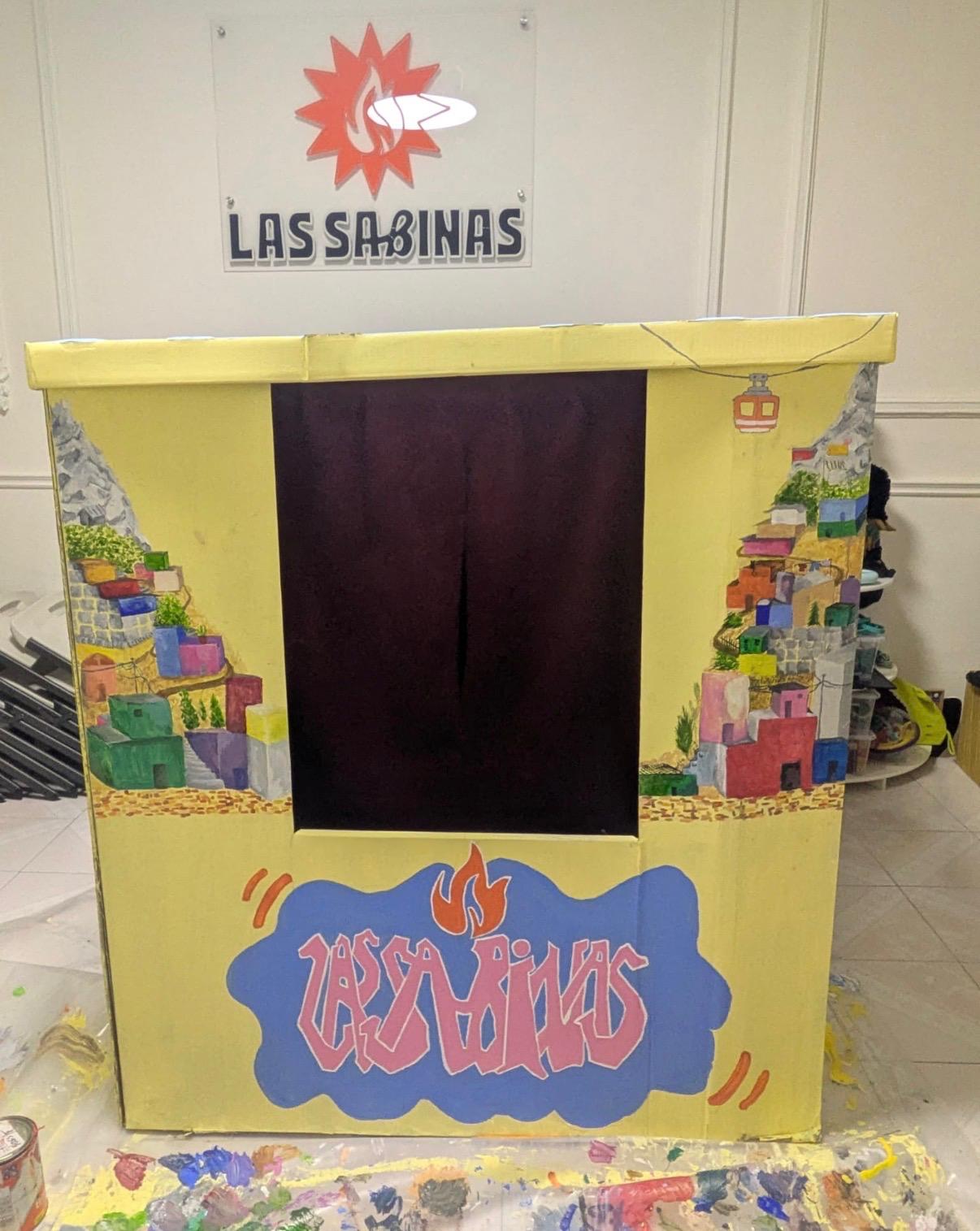
That’s why I want to dedicate this week’s post to the stage design. For us, it isn’t only something visual. It’s a message. A space where the stories the puppets carry can feel real, grounded, and alive.
On both sides of the stage, we designed a brick wall covered in jacaranda flowers. The jacarandas symbolize resilience and the ability to bloom even in harsh conditions. In Mexico, jacarandas are widely seen throughout the country, and their vibrant lilac-and-purple blossoms are a symbol of la primavera, renewal, and hope. But in this context, the jacarandas also bring a deeper layer of meaning. Jacarandas are a symbold of urban resilience, describing how a non-native species can fully adopt a high-altitude valley like Mexico City as its own. At the same time, purplewashing is the use of feminist or LGBTQ+ issues to disguise discriminatory or harmful practices. So the jacarandas here hold a double reflection: celebration of what grows, and a reminder that empowerment should never be surface-level.
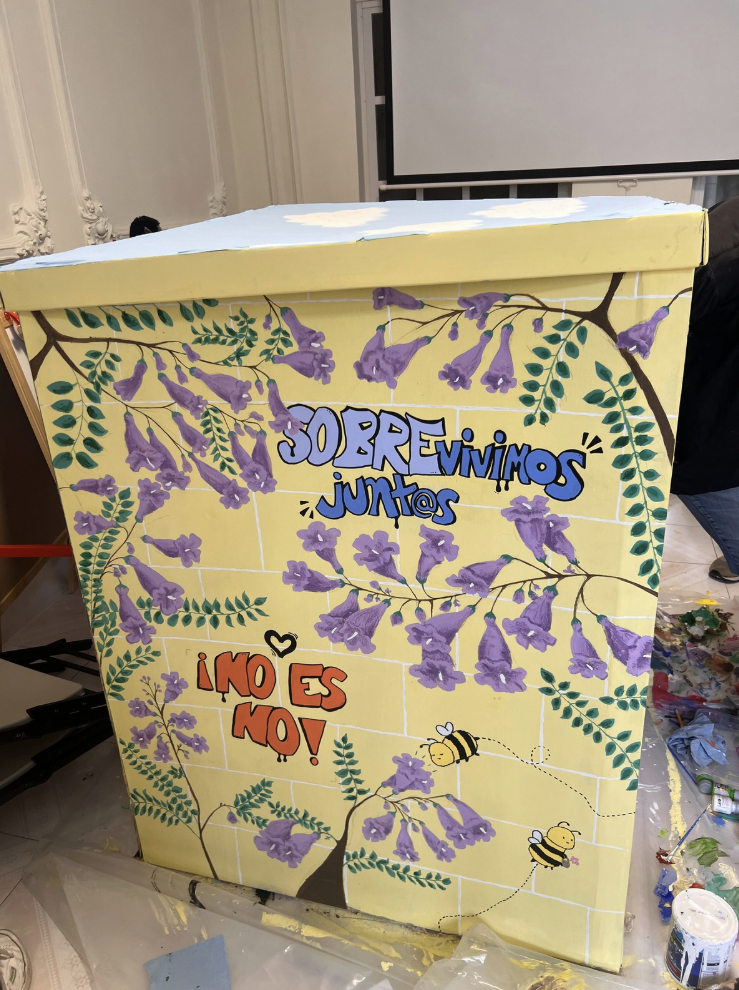
The side of the stage also includes graffiti messages: “sobrevivimos junt@s” (we survive together), “Tu voz importa” (your voice matters), “no es no” (no is no), and “No estas sol@” (you’re not alone). These phrases matter to the team at Las Sabinas, and they come directly from a feminist perspective that advocates for autonomy and a youth-centered approach. We wanted these messages to be part of the stage because we believe they should continue beyond the workshop. They are important values for the children we work with, and for the world we hope they grow into. There is graffiti and mural art all around Mexico, and we see it as part of the muralist legacy: the 1920s Mexican muralism movement that established that art belongs in public spaces, educating and reflecting the struggles of everyday life. Today, street artists and muralists continue using walls to speak about inequality, indigenous rights, and collective memory. For us, it’s a powerful form of expression to carry feminist ideas into the public space and to uplift the peripheries of the State of Mexico.
We also learned more about the peripheries themselves, and about the stigma that can come from them. People sometimes carry a lack of confidence, even a sense of shame about where they come from. But what we witnessed challenged that completely. The peripheries are full of beauty: colorful buildings, nature, and cable carts that represent how much movement and transit happens every day. Inequality exists there, but so does resilience. So does strength. The communities we met deserve respect for their perseverance, their courage, and their determination to fight for better lives. My teammate Ruby did an incredible job portraying the peripheries, and I’m grateful for the care and dignity she brought to that part of the stage.
One more touch we added was bees around the jacaranda flowers. This is an ode to another partner organization Genera Territorios, which supports economic empowerment for women in the peripheries, especially within beekeeping communities. Learning about their work was deeply meaningful, because it connects empowerment, sustainability, and long-term impact. It is feminist empowerment rooted in real opportunities, and it also empowers the children we are working with, indirectly but powerfully.
We will be leaving Mexico City soon, and while we carry all the memories with us, I also want to believe the impact we created here will last. This experience has been tremendous. It taught us how much craft matters when it becomes communication, and how much meaning grows when a team listens to the people it serves.
As I move forward into my future jobs, I hope I can keep that learning with me and continue trying to transcend the social causes and importance I discovered here in Mexico. This stage is almost finished, and the puppets will soon speak from it. But what we learned will keep speaking in me long after we leave.
Hii, I'm Claudia, a student at HKU.