During my final week, I continued supporting the Free Shop while concentrating on the development and refinement of the country and destination guides. These guides were designed to help refugees and asylum seekers navigate the next stage of their lives after leaving Chios, with information about legal, financial, clothing, food and social-service support.
My SMART goal was to complete and refine the guides so that they provided a useful and sustainable resource for Offene Arme and the people it supports after my placement ended. I aimed to ensure that the information was organised clearly, relevant to the needs identified during my placement and checked against reliable sources before producing the final versions.
Developing these resources made me reflect on what constitutes a meaningful contribution during a short-term volunteering placement. Six weeks is a relatively short period of time, and I recognised that I could not fundamentally change the circumstances facing the people Offene Arme supports. However, I could contribute something that might continue to be useful after I had left.
This shifted my understanding of sustainability. A successful volunteering project should not simply depend upon the volunteer being present. The most valuable contribution I could make was therefore something that could be used by the organisation and its beneficiaries beyond my placement.
The guides also represented a move from providing direct assistance towards empowerment. Rather than simply giving someone something, the guides aimed to give people information that could help them identify and access support themselves. This aligned closely with my personal value of treating people with dignity and recognising their agency.
I also developed my understanding of leadership as service. Throughout the placement, I learnt that effective leadership is not always about taking control. Sometimes it means listening carefully, identifying a genuine need, adapting to circumstances and creating something that enables others to do their work more effectively.
The guides brought together many of the capacities I had developed during the placement. They required initiative and research, but also integrity because inaccurate information could be harmful. They required practical wisdom to decide what information was genuinely useful, and humility to recognise that the guides should complement rather than replace the knowledge of organisations already working in these countries.
My six-week LiA with Offene Arme was one of the most significant experiences of my undergraduate degree because it challenged me to translate ideas about leadership, character and service into a complex real-world environment. I arrived with a strong desire to contribute, but I quickly learnt that effective service begins not with acting, but with listening and understanding.
My SMART goals provided structure throughout the placement, but one of the most important things I learnt was that goals need to remain responsive to changing circumstances. My initial objectives focused heavily on understanding the organisation and improving its internal systems, particularly through the warehouse reorganisation and development of a stock list. However, the arrival of several boats during my placement significantly increased demand for the Free Shop. I therefore had to balance my planned project work with the immediate needs of the organisation.
I now see this not as a failure to follow my original plan, but as an important part of my development. The purpose of a SMART goal is to provide a clear direction against which progress can be assessed, not to encourage the pursuit of a predetermined outcome regardless of circumstances. My goals therefore evolved from understanding and improving Offene Arme's internal processes, to responding to immediate needs, and finally towards developing a resource that could support people beyond their time on Chios.
This progression reflected my development in practical wisdom. There was rarely a perfect answer to what I should do. When demand increased, I had to decide whether to continue with my planned project work or contribute to the Free Shop. When developing the guides, I had to decide which information would genuinely be useful rather than simply trying to make the resource as comprehensive as possible. I learnt that good leadership involves making thoughtful decisions within real-world constraints.
My first week particularly developed my understanding of humility. I arrived with ideas about how I could help, but recognised that the Offene Arme team understood the organisation and its beneficiaries better than I did. Listening before acting allowed my project to emerge from genuine organisational needs. This has changed how I think about leadership more broadly. I previously associated leadership primarily with taking responsibility and initiating action. I now recognise that sometimes the most important leadership behaviour is knowing when to listen.
The warehouse project subsequently developed my capacity for initiative, problem-solving and stewardship. The absence of a stock list represented a relatively small organisational challenge, but addressing it showed me that leadership does not have to involve a dramatic intervention. A simple system can have lasting value if it enables an organisation to use its resources more effectively. It also made me reflect on responsibility: donated resources represent the generosity of others, and managing them well is part of respecting that generosity.
My time in the Free Shop developed a different set of capacities. The increased number of arrivals meant that the organisation needed to respond quickly, and I learnt the importance of adaptability and teamwork. I also developed a deeper understanding of compassion. Through the Oxford Character Project, I had thought about compassion as a character virtue, but Offene Arme showed me what compassion looks like in practice. It means being willing to undertake ordinary tasks because they matter to someone else. It means treating people with patience and dignity. It means recognising individual needs rather than viewing people simply as members of a category.
Helping prepare packs for unaccompanied minors and newborn babies particularly reinforced this understanding. It made the human consequences of the wider migration situation much more tangible. I became increasingly aware that humanitarian assistance should not simply be about distributing resources; it should seek to preserve dignity and recognise the agency of the people receiving support.
This thinking ultimately led to the destination guides. I increasingly questioned whether the most valuable contribution I could make was simply to meet immediate needs. Although clothing and essential supplies are important, people leaving Chios will encounter a new set of challenges as they attempt to establish themselves elsewhere. Helping someone access reliable information about legal assistance, financial support, food, clothing and social services could potentially help them navigate these challenges independently.
The guides therefore represented a shift from assistance towards empowerment. This has become one of the most important lessons of my LiA. I believe meaningful service should not only ask, "How can I help someone?" but also, "How can I help someone have greater control over their own future?"
Developing the guides also tested my integrity. Because the information was intended for people who could be unfamiliar with the systems of another country, accuracy mattered. Incorrect information could potentially cause harm. I therefore had to take responsibility for checking information and considering whether the resources I included were genuinely reliable and useful. This reinforced the idea that good intentions are not sufficient for good leadership. They need to be accompanied by competence and responsibility.
The placement also changed my understanding of sustainable impact. Six weeks is not long enough to solve the structural problems faced by refugees and asylum seekers. I therefore became less focused on whether I could create a large immediate impact and more interested in whether I could leave something useful behind. The warehouse system and destination guides both had the potential to continue being used after my departure, making them more sustainable contributions than simply completing tasks during my own six weeks.
Looking back across the SMART goals, I can see a clear progression:
Week 1 — Understand: listen to the organisation and identify genuine needs.
Weeks 2–3 — Improve: strengthen the warehouse and stock-management system.
Weeks 3–4 — Respond: adapt to increased demand and provide immediate support.
Week 5 — Empower: develop resources to help people navigate their future.
Week 6 — Sustain: leave behind resources that could continue to provide value.
This progression also reflects my development across the Laidlaw capacities. I developed communication through working with the Offene Arme team and beneficiaries; collaboration through working alongside volunteers; initiative through identifying and addressing organisational needs; problem-solving through the warehouse and information resources; adaptability through responding to changing demand; and reflection through continually reassessing my contribution.
More importantly, however, the placement helped me understand the character behind these capacities. Initiative without humility can become intrusive. Compassion without practical wisdom can become ineffective. Ambition without integrity can become self-serving. Leadership therefore requires not simply developing skills, but developing the judgement to use those skills appropriately.
My experience with Offene Arme has consequently changed how I understand leadership. I no longer see leadership primarily as being the person in charge or having the most responsibility. I increasingly see it as service, stewardship and enabling others. It can involve taking initiative, but it can equally involve stepping back and listening. It can involve solving immediate problems, but it should also consider longer-term consequences. Most importantly, it should be grounded in respect for the people whom leadership is intended to serve.
Ultimately, I did not leave Chios feeling that I had solved the problems I encountered. Instead, I left with a more realistic and mature understanding of what it means to contribute to them. My SMART goals helped me structure that contribution, but the experience taught me that successful leadership cannot be reduced to achieving predetermined objectives. It requires the humility to understand context, the compassion to recognise people's needs, the courage to respond, the integrity to take responsibility for one's actions, and the practical wisdom to know what kind of response is appropriate.
For me, this is the most important lesson of my LiA: effective leadership starts with understanding people and ends with enabling them. The experience has strengthened my commitment to service and to using my skills in ways that have a practical benefit to others. It has also given me a clearer set of values that I want to carry into my future academic, professional and personal life.
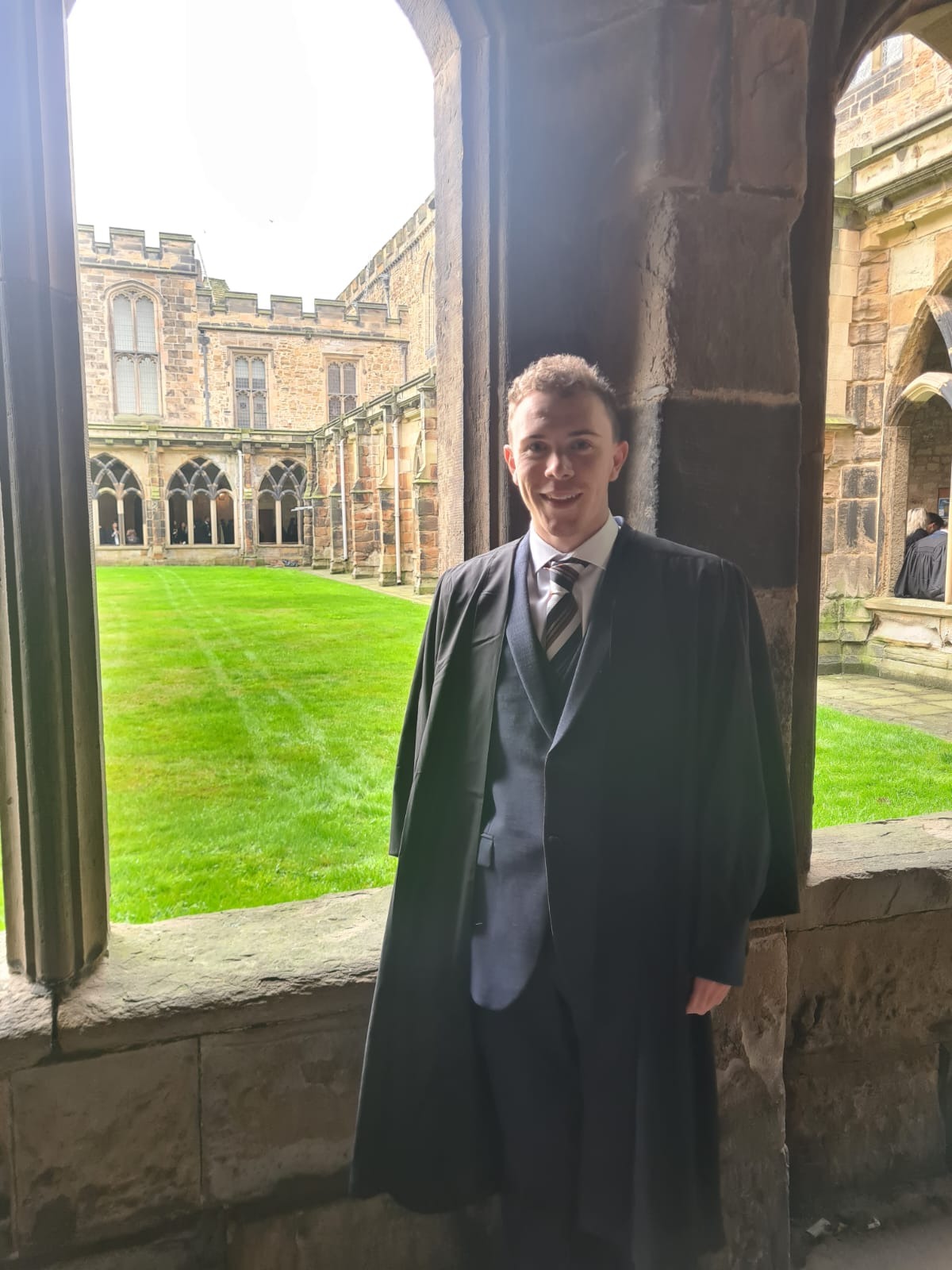
I'm Devon, a first year bioscience undergraduate at Durham University. My main interests are in global health and immunology. When not studying I can be found hiking, climbing, white water kayaking, and mountain biking.