LiA Reflections 1: "Earthquake Education Across Borders"
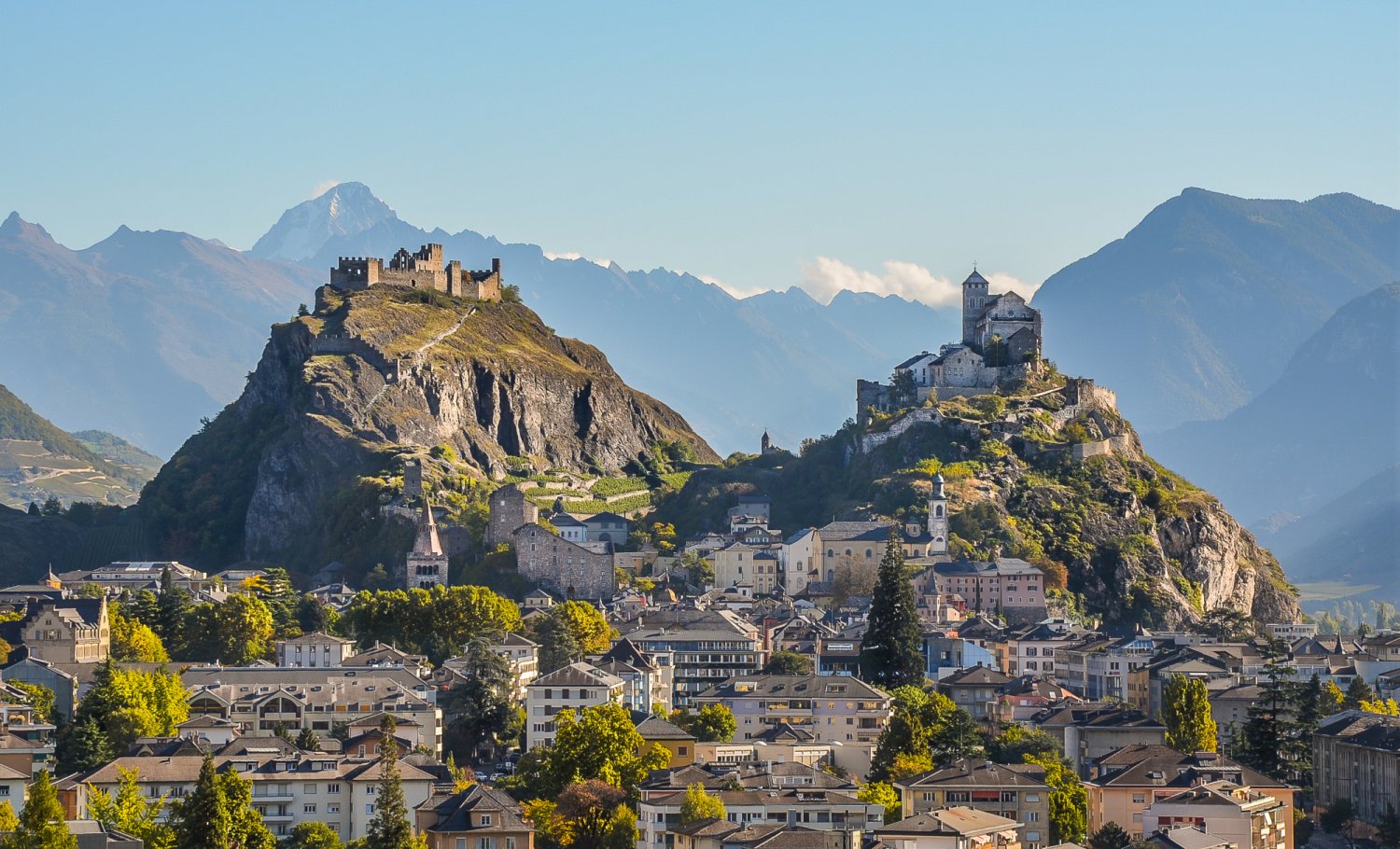

My first week was all about learning, observing, and quite literally shaking!
Recap of the project
I am currently interning at the CPPS in Sion, Switzerland, as part of my LiA. The aim of this first stage is to learn how earthquake prevention can be taught to children in a fun, interactive, and engaging way. In the second part of my LiA, I will adapt what I learn here to develop earthquake preparedness activities for schools in Türkiye.
The CPPS is an earthquake education centre with Europe’s largest earthquake simulator and many interactive activities that teach visitors what earthquakes are and how to prepare for them. It was established in the canton of Valais, one of Switzerland’s most seismically active regions. Although a major earthquake happens there roughly once every century, this also means that preparedness can fade between generations. As someone from Türkiye, I noticed this difference right away during the tours. In Switzerland, many people seem less exposed to earthquake awareness, even though the region is expecting a major earthquake in the coming decades. In Türkiye, the population may not always be fully prepared either, but earthquakes are much more present in public discussion and the media. In Switzerland, this constant exposure does not seem to exist in the same way.
This is why the centre runs an obligatory earthquake training programme for secondary school students in the canton. During the visit, students follow different modules, experience the earthquake simulator, and then bring a certificate home for their parents to sign before receiving their certificate of participation. In this way, the programme reaches not only the children, but also their teachers and families. During the week, CPPS also welcomes companies, firefighters, and police officers for training sessions. What I found reassuring was seeing familiar faces again on the weekend, when the centre is open to the public. Some children even bring, or force, their parents to visit the centre with them!
First week!
On my first day, after I was done with the admin stuff, I took a tour of the centre. I thought I already knew a lot about earthquakes but it was impressive how much I learned in the span of a three-hour tour. Then, I went into the earthquake simulator, where I experienced an earthquake of magnitude 6.3, the same as the 2009 earthquake in L’Aquila, Italy. Even though I knew the earthquake was coming, and there was no risk of me being trapped under buildings, it was still an awful feeling. It showed me how vulnerable we are. After experiencing it myself, I was curious to see the reactions of others.
On my second day, I observed tours with police officers in training and middle school children. It was very interesting to see the difference in their reactions.
The police officers seemed quite nonchalant when they first came to the centre. This made sense, because they deal with emergencies, first aid, and difficult situations regularly, so they seemed confident and prepared at first. However, as the tour continued, this impression started to change. Earthquakes were not something they seemed to have been exposed to in the same way, and they realised that their general emergency training did not necessarily mean they knew how to respond to this specific type of disaster. Since they are first responders, this made them take the whole experience more seriously. They asked many questions and were very engaged during the simulation. Once the tour was over, it was obvious that there was a bit of introspection going on. What I found interesting was that even people who are trained to deal with emergencies still had things to learn. It showed me that preparedness is not something you complete once; it is a continuous process, especially for people who have responsibility for others.
As for the children, what took me by surprise was how much they already knew. In some ways, they seemed to know more than some of the adults I had observed. They could relate things they had seen before at school to what they saw at the centre. What was also interesting was how engaged they were, even though this was a compulsory school programme. They listened very carefully, asked thoughtful questions, and were often less distracted than some adult visitors, who sometimes treated the activities more casually. They were not scared by the earthquake simulation, unlike me, and they seemed to have a lot of fun overall. I could also see that they were learning from the way their questions became more detailed as the tour progressed. It was reassuring to see them enjoying the experience, because when I did the simulation myself, I was afraid it would be too heavy for children.
What was also interesting was that the delivery style was the same for adults and children, which is something I should keep in mind when I develop my workshop for Türkiye.
Over the next few days, I accompanied more tours and continued observing. Next week, I will start delivering them myself.
What was also great was that I had the chance to meet lots of people. Some were geologists, and some were students at HES-SO university, where the centre is based. I also believe I am preventing Alzheimer’s by speaking at least three languages during the day and being exposed to even more (as a tour guide and translator).
Here are a few pictures of me in my “uniform” and of the centre.
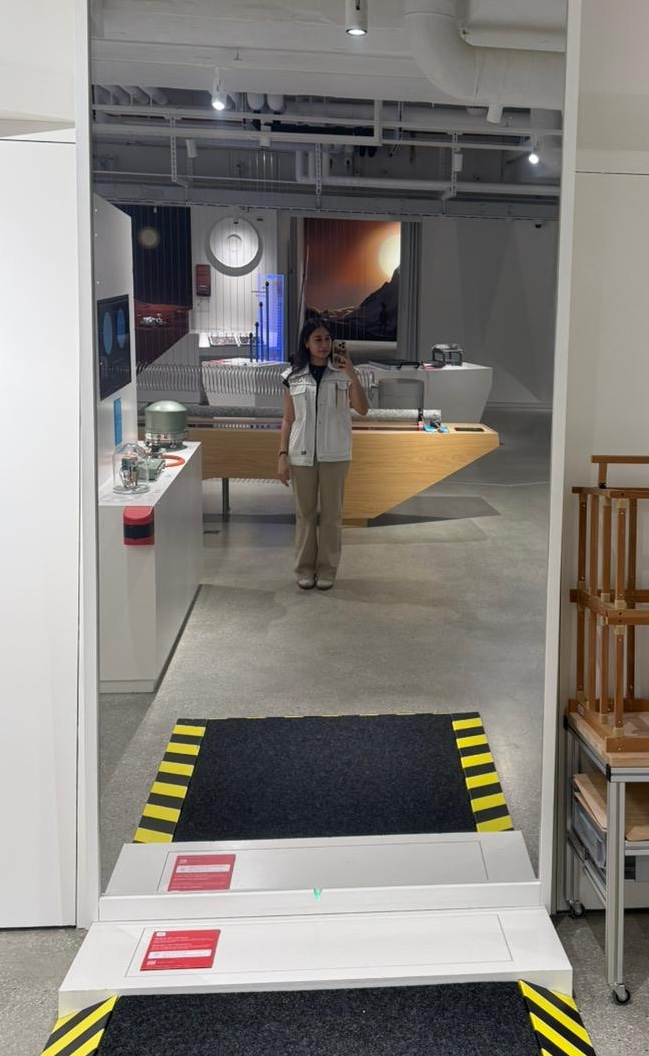
What you see here is an activity that demonstrates how earthquakes can happen. It shows the idea of a sudden rupture along a fault: instead of a crack forming slowly, the energy is released suddenly. When someone jumps on the board with one sharp movement, this sudden impact triggers a light on the mirror, representing the sudden release of energy during an earthquake. If the movement is too slow or not strong enough, the light does not appear in the same way. Children especially love this activity because they can physically take part in the demonstration and immediately see the result.
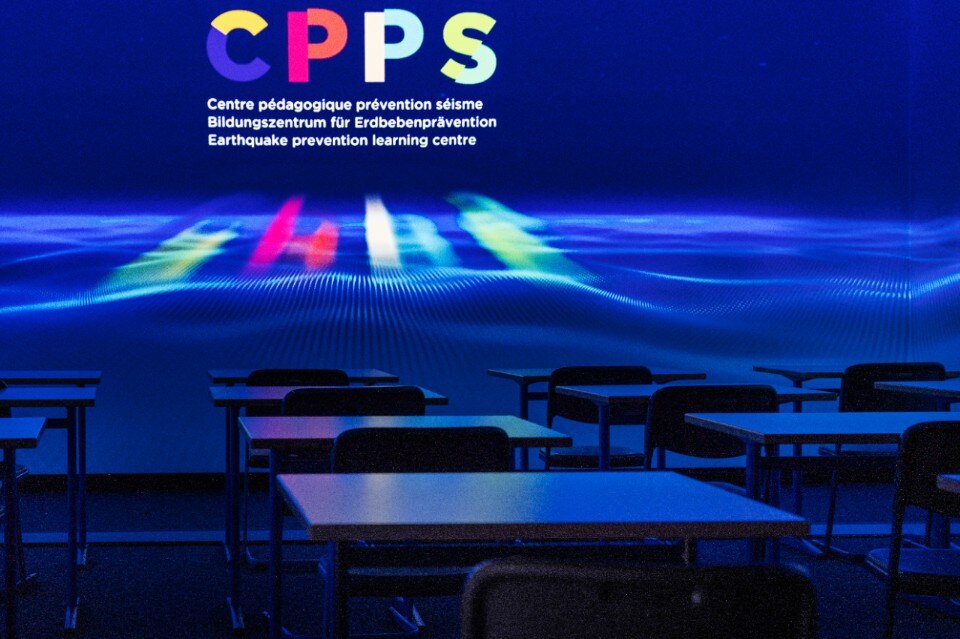
This is the earthquake simulator. The tables are placed on a platform that shakes, while a screen in front of you helps immerse you in the experience and makes it feel more realistic.
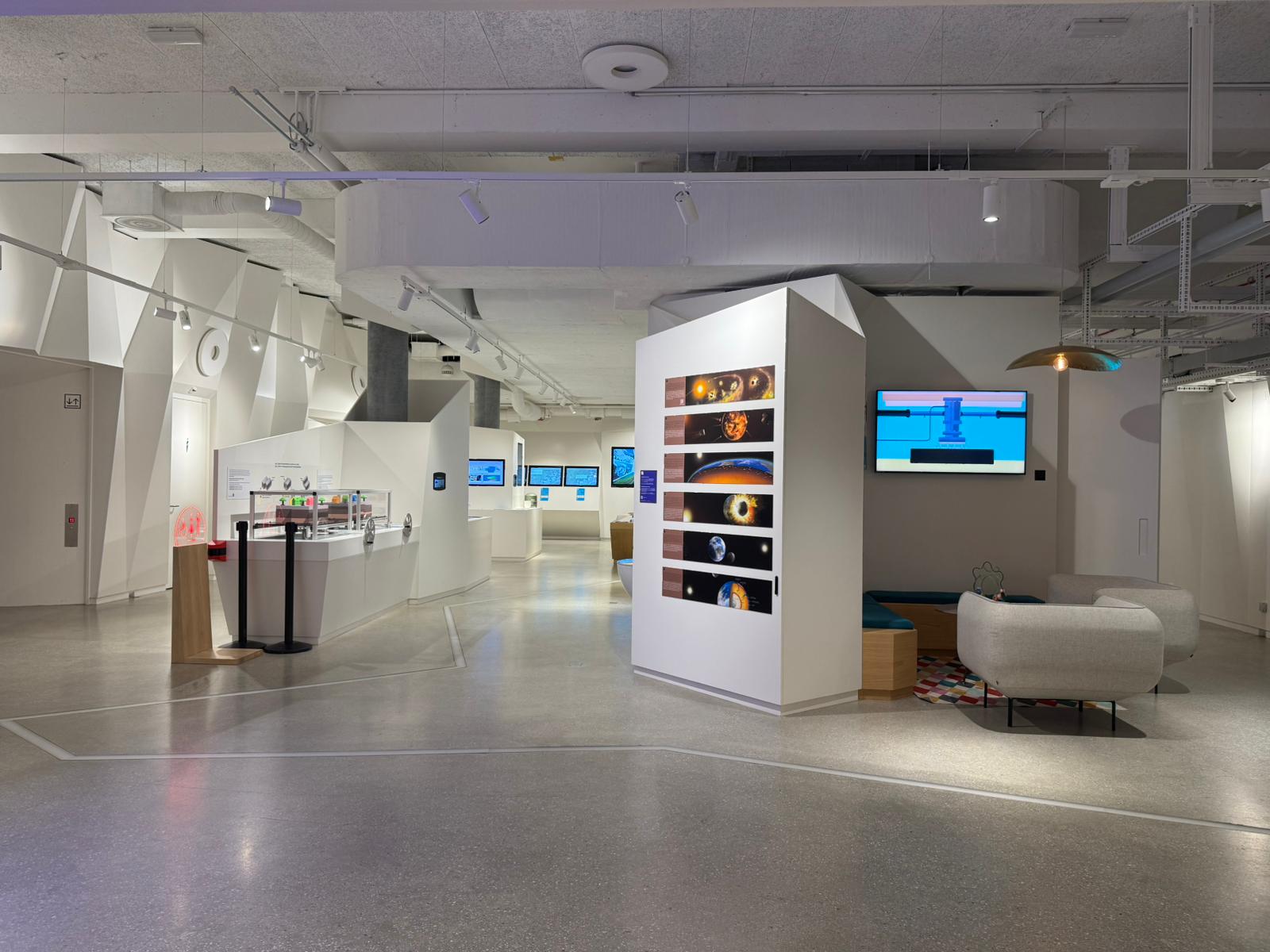
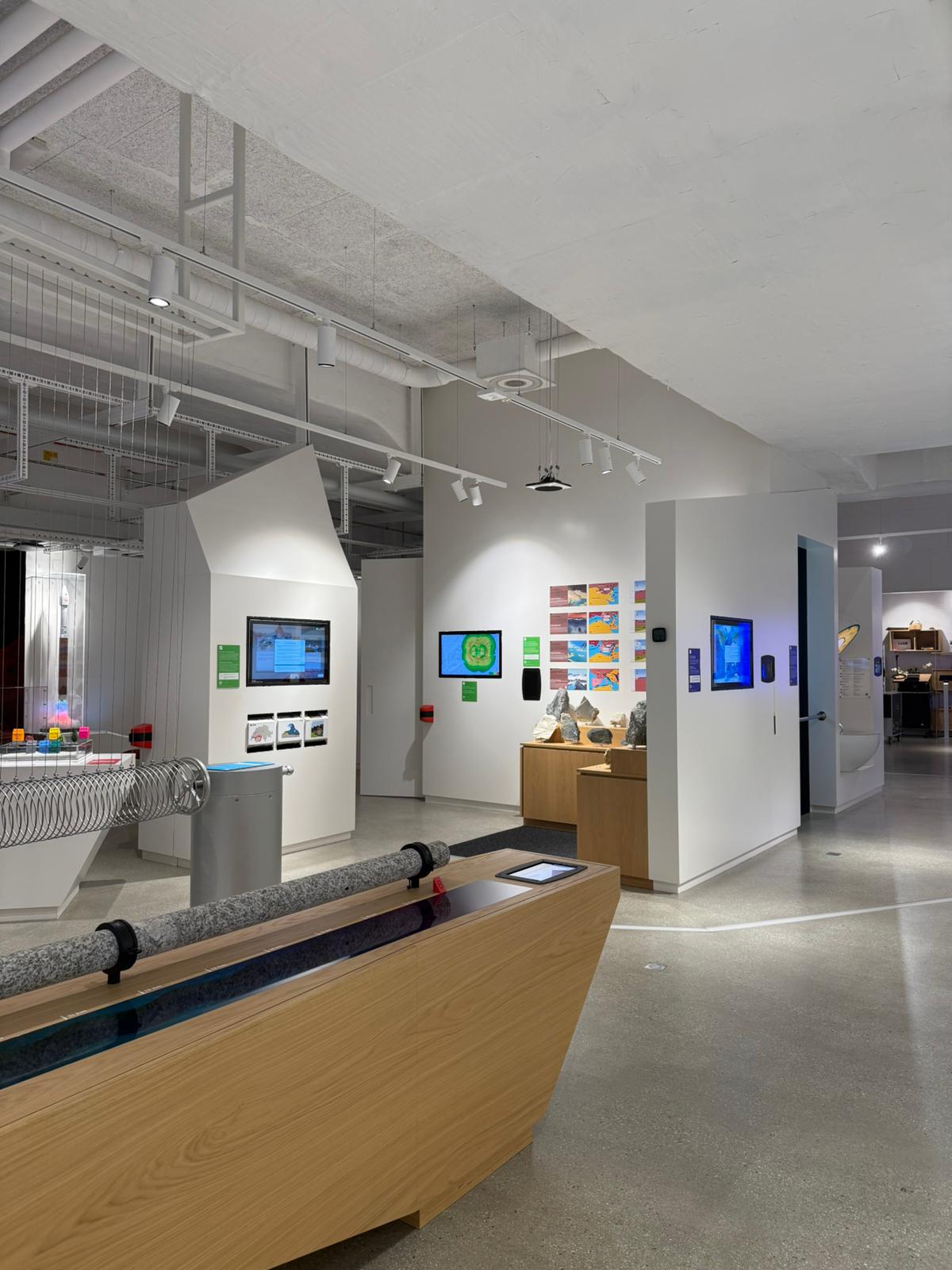
This is the museum area (very futuristic), where there are many interactive activities explaining different aspects of earthquakes. These include how soil type can affect shaking, why earthquake-resistant buildings are important, how earthquakes happen, and what the magnitude of an earthquake means. What I found especially interesting is that many of these activities were created as final projects by students at the university.
Final Reflections
This first week showed me that earthquake prevention is not only about teaching facts. It is about making people experience, question, and remember what they should do. Since most people in the groups I observed had never experienced an earthquake, the simulator was especially useful. It gave them an idea of what shaking can feel like, so it was not just something they understood intellectually, but something they experienced physically.
This is important because, during an actual earthquake, people do not have time to think about tectonic plates or the scientific explanation behind what is happening. They need to recognise the situation quickly and react immediately. Some visitors who had experienced earthquakes told me that, at first, they thought it was a truck entering the building, and they did not realise straight away that it was an earthquake. This made me understand why practising the correct response is so important. In the moment, the priority is not to explain the earthquake, but to react fast and do “Drop, Cover, Hold On.”
This reinforced the purpose of my own project. Even if I cannot build an earthquake simulator, I want to create a platform that helps people practise these reflexes and prepare in a practical way. The aim should not only be to give information, but also to help people turn that information into actions they can remember under stress.
Another thing that became clear this week was that different audiences react very differently to the same training. Children, police officers, company teams, and other adult visitors did not ask the same questions or engage with the material in the same way. This made me realise that my workshop for Türkiye will need to be interactive, practical, and adapted to its audience. A child, a parent, a teacher, and a first responder may all need the same basic message, but not necessarily in the same format.
Being at CPPS also made me want to learn more about the next expected major earthquake in Istanbul, especially because my family lives there. However, I quickly realised that I could not find the same type of clear and accessible resources that I found for Sion and the Valais region. This reinforced one of the main reasons why I wanted to do this project in the first place. In Türkiye, earthquakes are constantly discussed in the media, so people are familiar with the risk, but this does not always translate into concrete prevention or accessible education.
Many of the official resources I found online seemed outdated or difficult to use. When I searched in English, I could find more structured information, but when I searched in Turkish, many of the results were clickbait news articles rather than practical prevention resources. I found this quite worrying, because the information exists, but it is not always easy to access.
This made me think that my project should not only focus on workshops for children, but also on creating a small resource hub with clear, reliable, and age-appropriate information. I want to make sure that the resources I use are accurate, so I will ask people at CPPS for guidance and use what I learn here to build something more useful for Turkish schools and families.
Next Steps
This first week helped me move from the aims I had written about before to a more practical understanding of what earthquake education actually looks like when different audiences experience it. Going into next week, I will move from observing the training sessions to delivering parts of them myself. This feels like an important step because I will not only be learning from CPPS’s approach, but also practising how to communicate earthquake prevention in a clear, engaging, and audience-specific way. I will also start thinking about how the CPPS approach can be adapted into practical activities for Turkish schools, and begin collecting reliable resources for a small earthquake preparedness hub.

Hello! I am Defne, a physics student at UCL interested in pursuing graduate studies in biophysics.