CraftHER Week 4: What the Rope Taught Me
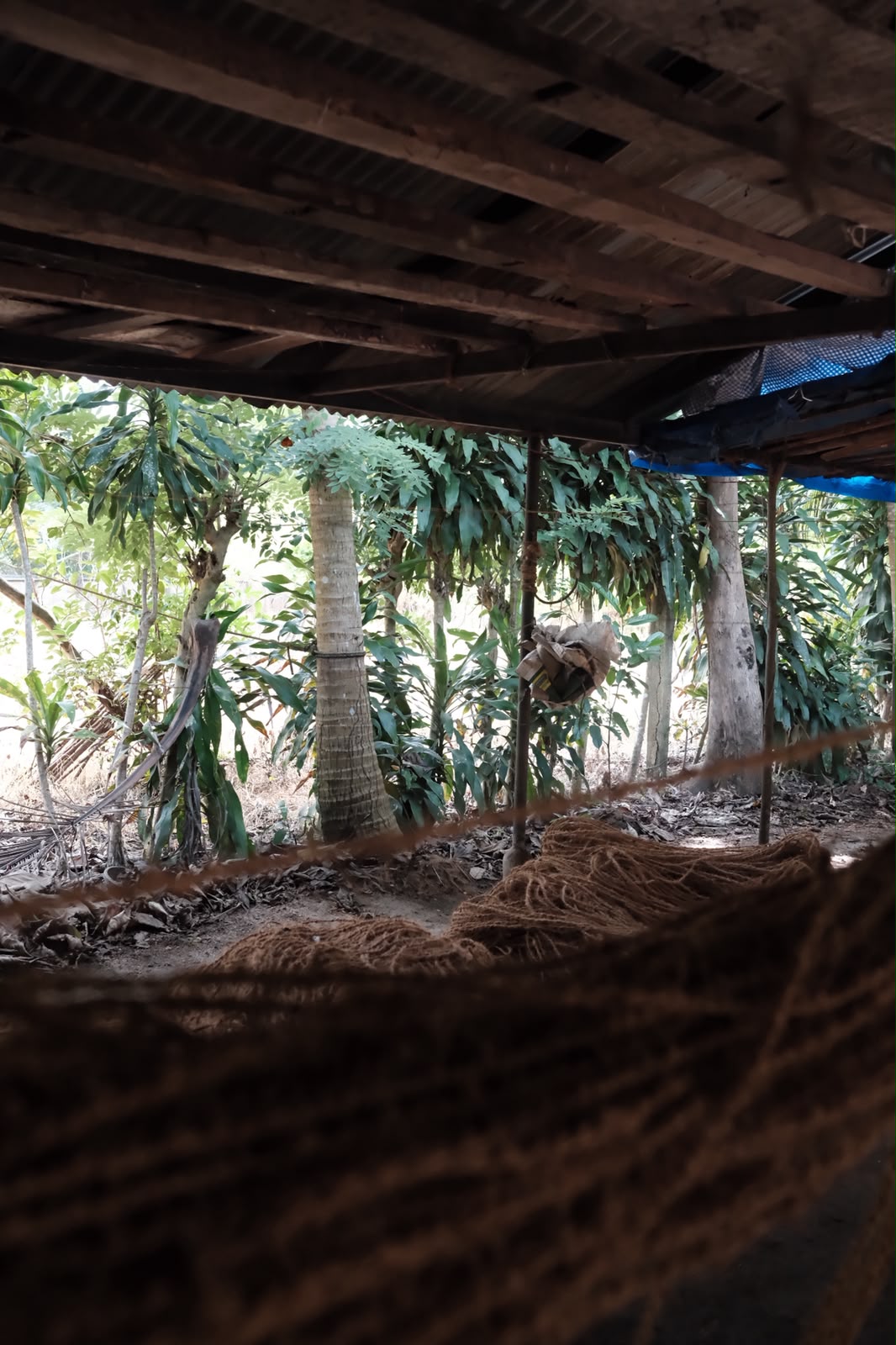



Reaching into her bag of coir, she pulled out a perfect coil of rope. It looked easy, so I gave it a try.
I couldn't understand how she'd managed to spin rope from seemingly nothing, like a magician pulling a rabbit out of a hat. In her hands, it spun naturally. In mine, I only ever managed to pull loose tufts; a rope never materialised. Its elusiveness made her seem magical.
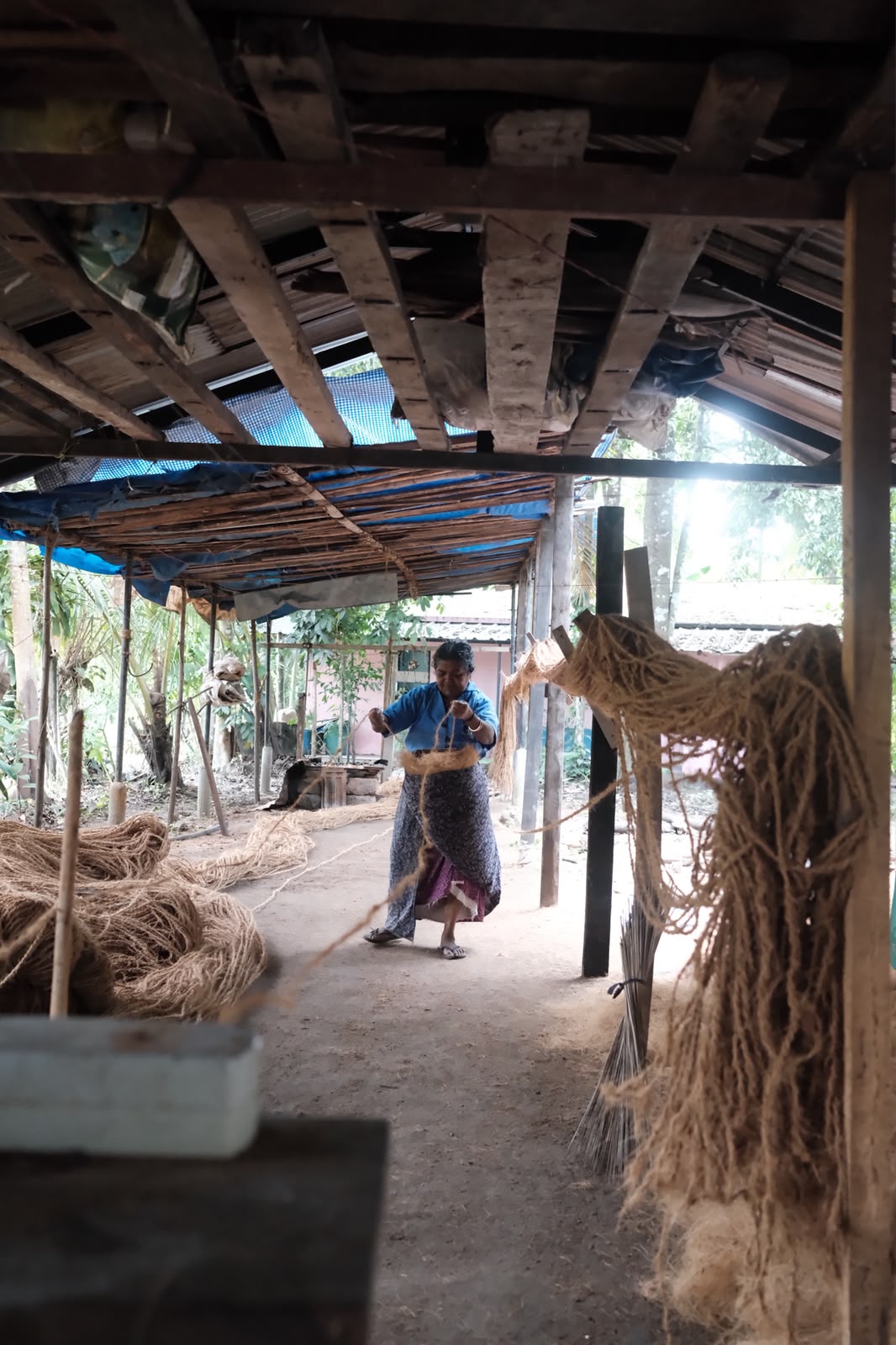
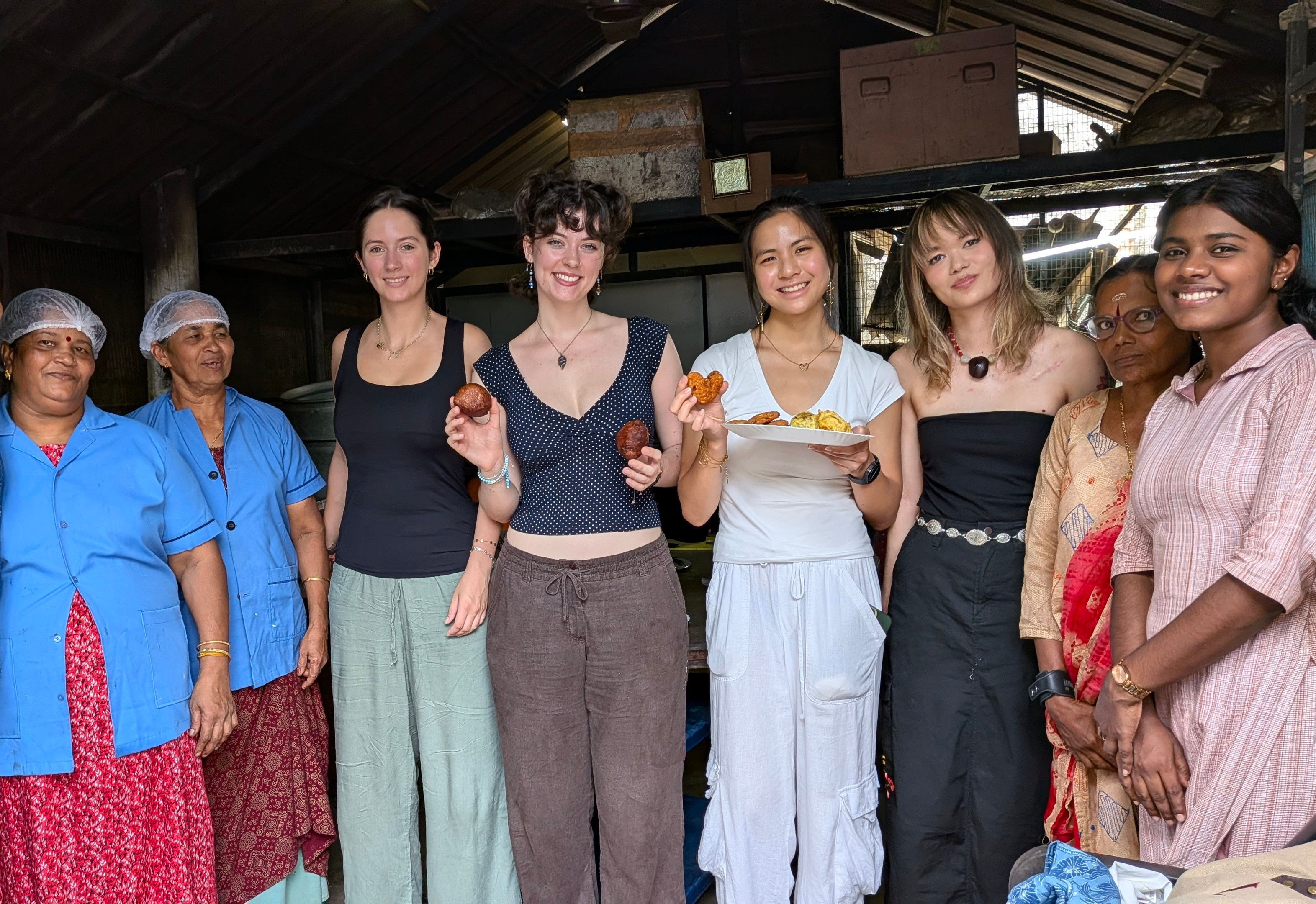
This week, my placement took me to Archana Women's Centre (AWC), the third partner organisation I've worked with so far. When I started, I thought AWC was a non-profit aimed at training women into male-dominated fields, including masonry, carpentry, plumbing, and electrical work. Stepping into these units and spending a week working alongside women supported by AWC, I realised that Archana stands for so much more - and that it had something to teach me about a leadership value I've been circling all summer: resilience.
Just what can women do?
This is the question AWC exists to answer. Through recent Keralan history, women have had to fight: for the right to work, for the right to hold bank accounts, to be recognised as skilled labour at all. Women have always worked. They just haven't always been fairly recognised for it.
Historically, women have worked in industries like masonry and carpentry in Kerala, but they were rarely recognised as professional masons, only as assistants. Their pay was capped accordingly, and even among assistants, women were paid less than their male counterparts.
This was the founding story Thresiamma Mathew shared with us on our first day at AWC. Frustrated by this inequality, she decided to act. AWC was born from that decision: a mission to fight for female empowerment and break down the gender stereotypes that limit women's potential.
What stayed with me wasn't just that she acted, but that founding AWC was only the first of many acts of resilience. Institutions like this don't survive on the strength of one good decision; they survive because someone keeps making the decision again, year after year, as the ground shifts beneath them. Thresiamma's resilience wasn't a single dramatic stand; it was a habit, sustained decades past the moment it would have been easiest to give up.
A story of a carpenter
We visited Omana Chechi, who trained with AWC to become a carpenter. Stepping into her workshop, I was struck by the sheer number of tools around her. She showed us, with quiet pride, a wooden cot she'd built, along with a few smaller pieces.
She told us how training as a carpenter had changed her life. Her two sons are grown now - one with an MBA, the other with a degree in computer engineering - and neither would have been possible without her work in carpentry.
But she was honest with us too: fewer women want to enter these trades today, and demand for wood products has declined as cement and steel have taken over. Listening to her, I understood that the industries AWC set out to change have themselves changed; the vision the organisation started with now has to take a different shape, partly because so few women have stayed in fields like carpentry and masonry.
I asked myself, sitting in her workshop, what resilience actually looks like once the original fight has been won and a new one has quietly taken its place. Omana Chechi's resilience isn't about proving she belongs in carpentry anymore - that battle is behind her. It's about staying skilled and self-sufficient in a trade that the market has started to leave behind, and doing it without bitterness. That felt like a harder, less visible kind of resilience than the one AWC was founded on: not resisting exclusion, but adapting to irrelevance without losing what the skill gave her. I don't think I'd fully understood, before this week, that resilience has to keep changing shape to stay resilience at all.
So what now?
Today, AWC funds women across industries to start their own businesses. Operating on a revolving fund model, Archana's aim is simple: help women reach financial independence through seed funding.
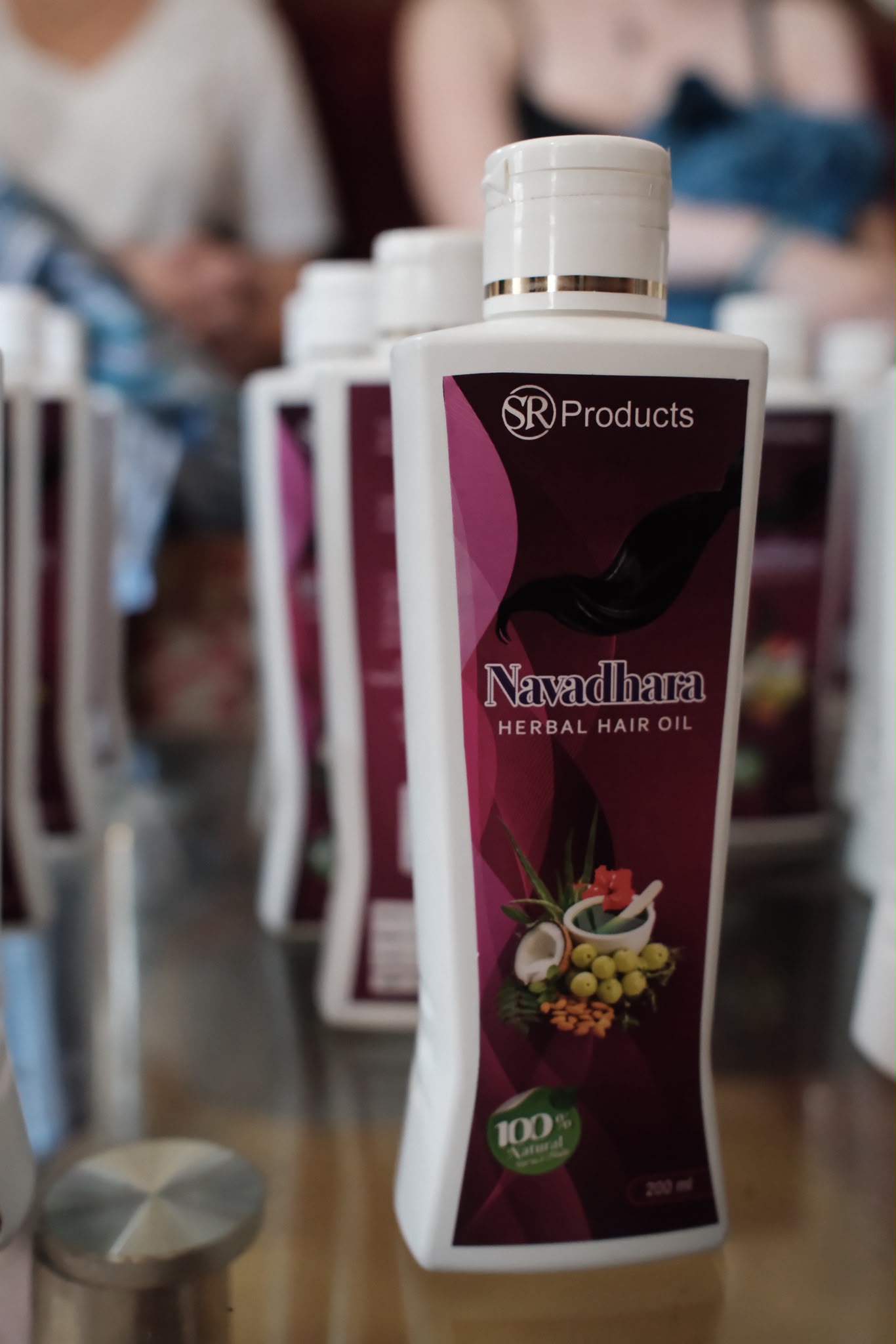
One such business is Navadhara Herbal Hair Oil. We were fortunate enough to meet its founder, who told us how Archana had made the venture possible. Built on centuries of family tradition, Navadhara nourishes hair with recipes passed down through generations. This is proof that the skills women already hold can become the foundation of something entirely their own, if someone is willing to back them.
What I took from the rope
I never did manage to spin a length of coir rope that week. Every time I tried, my hands did something close to what hers had done, but the coir just slipped apart. I kept going anyway, mostly because it was embarrassing to stop in front of someone who made it look so easy.
It was only writing this that I realised that small, slightly humbling persistence was its own tiny rehearsal of the same value I'd been watching all week. Resilience, I think, isn't usually the big founding gesture - it's closer to the fifth failed attempt at a rope, or the two-hundredth commission taken on after the market has already moved elsewhere. It's unglamorous, repetitive, and mostly invisible from the outside, which is exactly why it's easy to miss unless you're the one doing it, or watching someone who's been doing it for forty years.
Archana's story isn't really about masonry, or carpentry, or hair oil. It's about what happens when women are given the tools, the funding, and the trust to keep going long after the first fight is over. Thresiamma Mathew asked what women can do. A week at AWC gave me an answer I hadn't expected: they keep going, in whatever form "going" needs to take next. That quiet, adaptive persistence is a form of leadership I want to carry a lot more deliberately into my own.

Hello! I’m a Philosophy student at Durham University, with academic interests in applied ethics, decision-making and sustainability. My broader aim is to use interdisciplinary research to drive measurable, socially meaningful change.
My summer research explored barriers to public transport adoption, with a view toward long-term policy implementation. This project combined behavioural science, psychology, urban planning, and design to contribute to more sustainable and inclusive transport policies.
For my LiA, I will be travelling to Kerala for the central CraftHER project, where I will undertake four consulting projects with local female-led businesses and a research project.