Into the Jungle We Go - Week 1

The mighty lungs of the Amazon rainforest breathe with life. I can feel every inhale and exhale day and night through the thin mosquito nets enveloping my bunk bed that drift with the occasional soft gusts of wind. Upon exiting the wooden dormitory, my awakening begins with the vibrant orchestral chorus of crickets, cicadas, howler monkeys, and screaming pihas. The dense air resonates with sound from every direction and I am willingly swallowed into the break of day. The only times I cannot hear the songs of the jungle are the short times when I put in my earphones to listen to songs that remind me of home.
Getting to the station
Having kissed my mother goodbye in the Amerigo Vespucci airport in Florence, I tightly clutched my boarding pass with my left hand and eighteen kilograms of luggage with my right. Having packed everything I thought I would need during my long stay, I commenced my long journey to Peru. My heart paced with at the thrill of going so far from home into a land so unknown. A hundred thoughts raced through my mind as I gazed out of the plane window: how the window glass makes countries look like as if they are inside a waterglobe, what awaits me on the other side of the world, will I come back a changed person. All this and more floated inside my head in the liminal space arising from the state of the flying plane; my being, my self, my body betwixt and between what has passed and what has yet to come.
Two flights ( Florence → Amsterdam → Lima), three movies, one nap, and over fifteen hours later, I landed in the New Jorge Chavez International Airport where my LiA partner, Murray Purkis, was already waiting for me. The stark difference between the amount of belongings each of us brought was amusing: me with a suitcase, a duffel bag, and a backpack and Murray with one light rucksack. In spite of nearly not making it to our hotel in the Miraflores district because of an occasional perpendicular flow of traffic, the day ended with a good dinner and restful sleep. The subsequent day we travelled to the second before last destination: Puerto Maldonado. Our travel itinerary allowed us to spend the day exploring the city streets brimming with mototaxis, bright colors, lively music, and lots of fresh fruit. Afterwards, our muscles relaxed whilst our brains strained over a few rounds of card games, and our stomachs were filled with a last delicious dinner amongst civilization whilst we were bracing ourselves for what was to come. At the break of dawn the following morning we boarded a small boat headed upstream the Madre de Dios river to reach the Los Amigos Biological Research Station, the place where we will be spending the entirety of our LiA project.
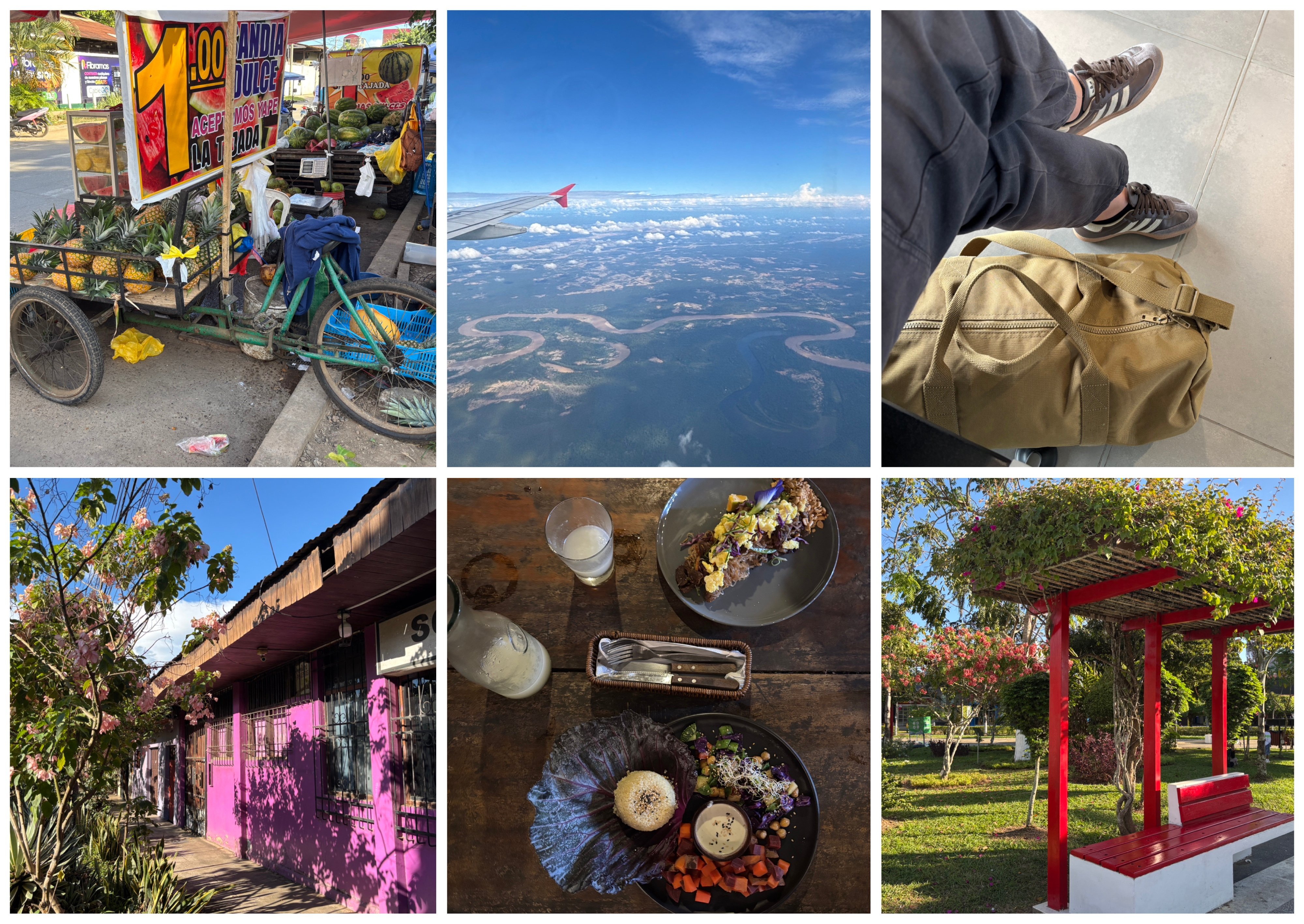 Image 1: Photos from Puerto Maldonado. Top center: view from the plane of the Madre de Dios river. Bottom center: last dinner in Puerto Maldonado before leaving civilization. Top right: waiting at the airport with some of my baggage. Top left, bottom left, bottom right: different parts of Puerto Maldonado.
The arrival
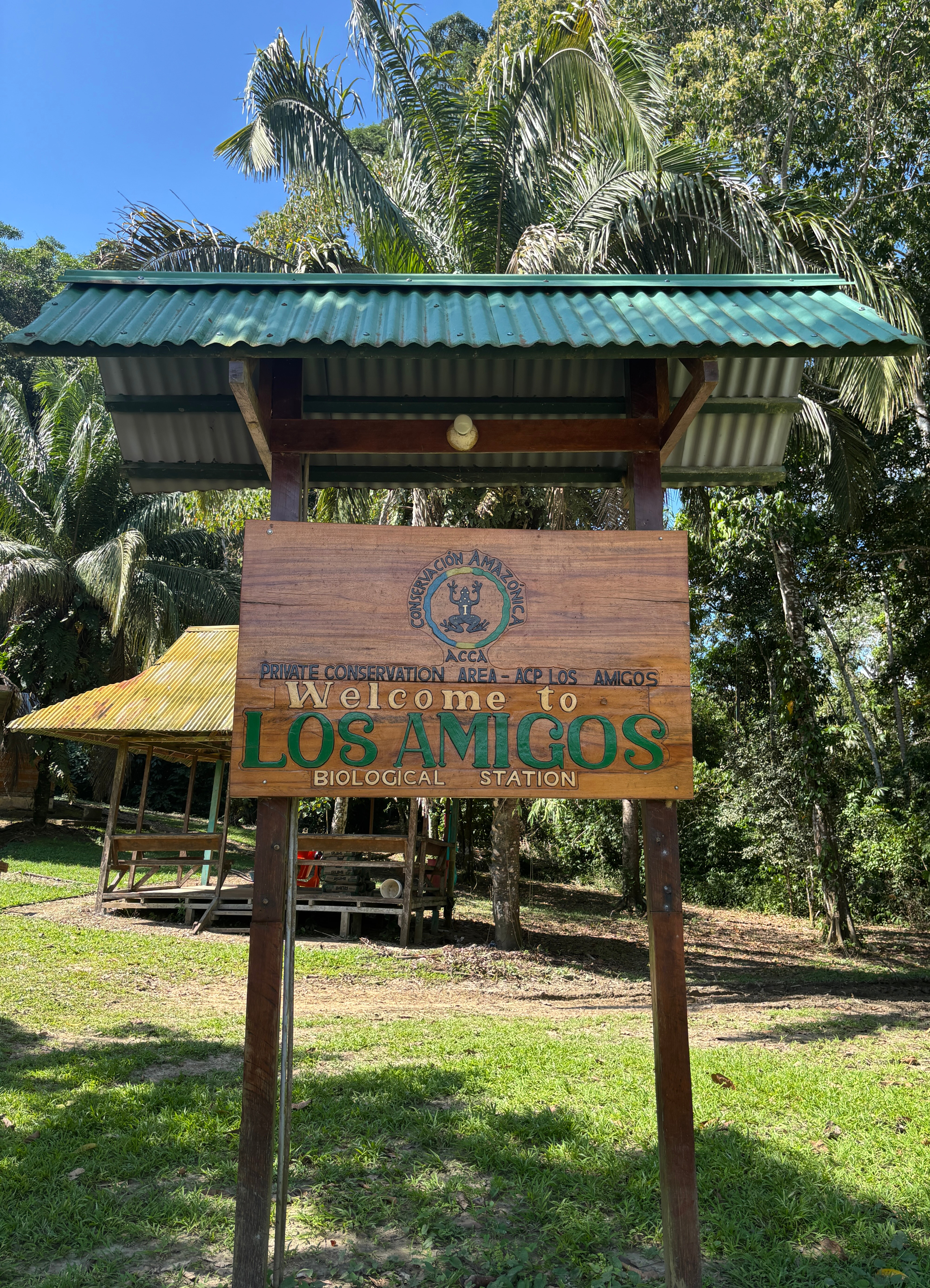
Scrambling out of the boat, we were warmly greeted by our supervisor with a "Welcome to Los Amigos" sign in the background. Despite needing to ascend more than a couple flights of stairs, with me desperately trying to catch my breath at the end and the matter of my athleticism added to the list of priority tasks, we finally made it to the station. The warm winter sun, its rays reflecting off of the surrounding lush grass and trees, illuminated the numerous buildings of the research complex in a clear golden light. Our tour of the property showcased the hubs of the station: the cafeteria, research offices, an auditorium, staff residences, and visitor dormitories. As our supervisor did the introductions to the different scientists working in their own microhabitats, we began to comprehend little by little the expansiveness of the important work being done at the station, spanning from the measurement of mercury levels in termites to primate behavioural studies. After seeing most of what there was to see around the station and settling in, the bell announcing lunch time heralded every station's inhabitant to the cafeteria. The summons of an empty stomach allowed us to meet the remaining residents, including a group of students our age doing a field course, the kitchen and maintenance staff, and the researchers that were out in the field. From then onwards, meal times became a favorite past time to share stories from the forest and our lives with one another.
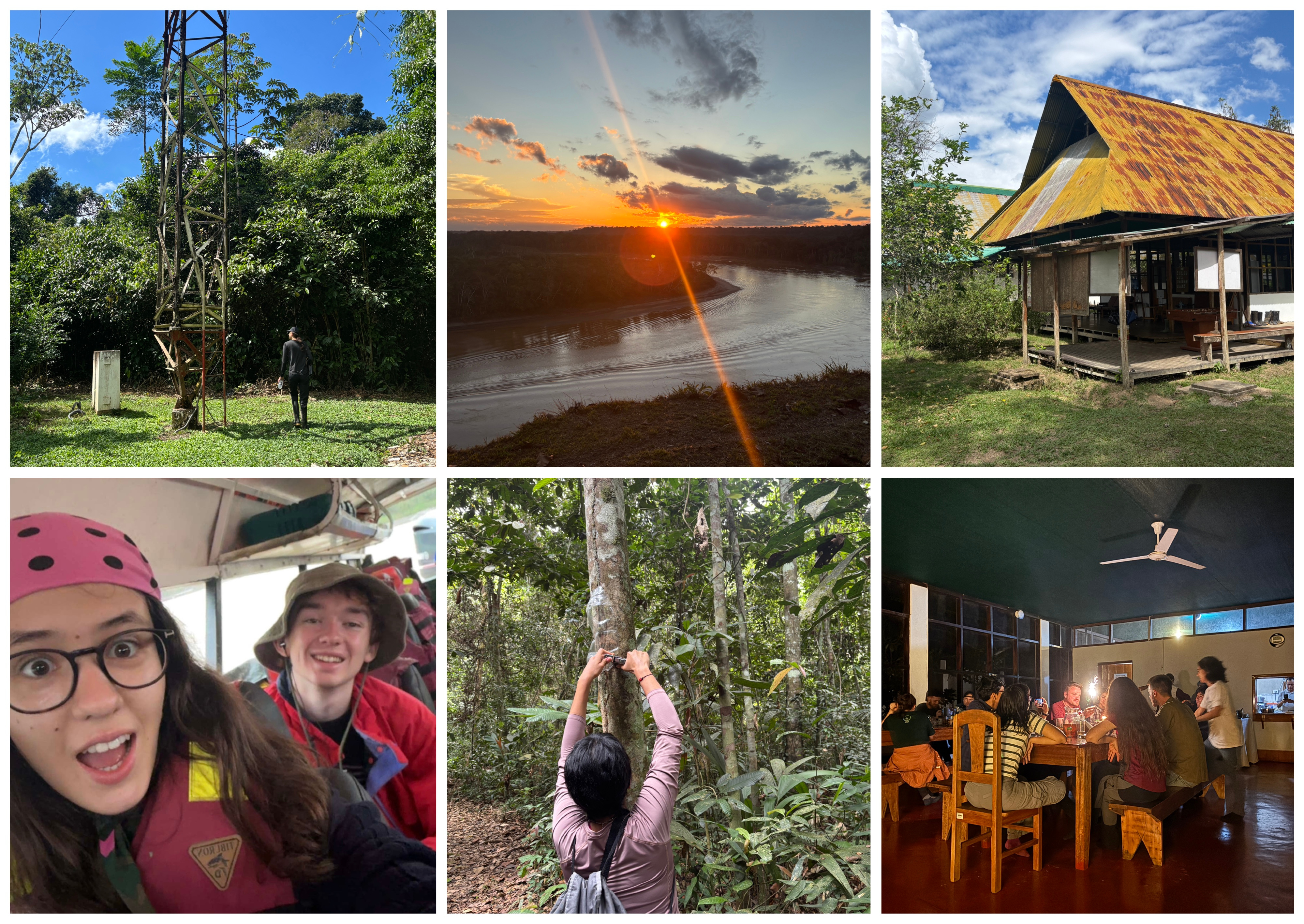
Image 2: First impressions of the Los Amigos Biological Research Station (LABRS). Top left: a visiting research student standing next to a tower used for observation. Top center: a sunset from the station's mirador. Top right: the view of the cafeteria's veranda, a location frequently used to meet-up with others. Bottom left: my LiA partner and me on the boat to reach the LABRS. Bottom center: a visting research student assisting in a moth study. Bottom right: a celebration of my supervisor's birthday in the cafeteria.
Life at the station
Adjusting to the daily routine mandated by the jungle's rhythm has been challenging. Apart from needing to shift my sleep schedule backwards by nine hours, it was also necessary to adapt to the high humidity levels, the demanding terrain on the trails, and the omnipresence of insects. However, the jungle rewards as much as it punishes. Over the span of seven days, I have been able to witness riveting wildlife including but not limited to the crested eagle, the (extremely venomous) eyed silkmoth caterpillar, white-lipped peccaries, spider monkeys, and tayras. There is much to see, and every corner harbors something worthy of attention. Frequently, capucin monkeys scurry up trees to gather fruit and hoatzins sit on branches over the water observing us observing them. Moreover, after a hot day out on the trails, nothing could be as beautiful as seeing the sun sink in bright flashes below the horizon and watching the Madre de Dios river twist and turn its way out of view to meet the disappearing sun.
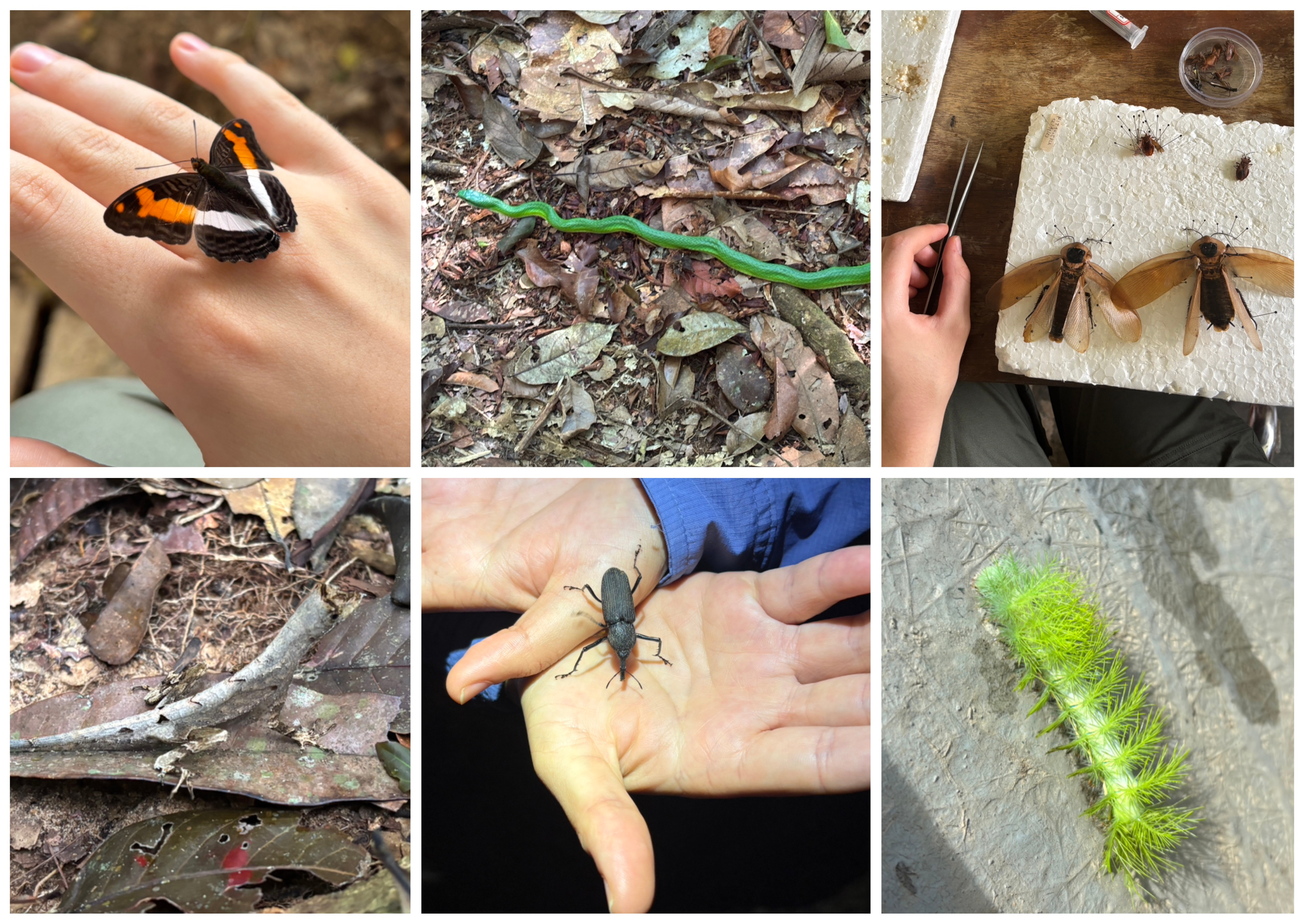 Image 3: Some of the fauna found on the trails in the forest. Top left: A butterfly referred to as sisters (genus: Adelpha) because of the white marks. Top center: a slender, green snake (family: Colubridae). Top right: me preparing dead cockroaches for the station's entomology collection. Bottom left: lizard (genus: Anolis). Bottom center: bearded weevil. Bottom right: eyed silkmoth caterpillar (genus: Automeris).
A lifetime has been lived in the one week we have been at the station. Coming from all parts of the globe and from an unexpected range of professional backgrounds, including astrophysics and journalism, the people attracted by this secluded and remote location have made the first week unforgettable. Each moment, the present more valuable than the past, compounded into long days that I did not want to end, and yet, looking back at the week, I feel as if time has trickled through the cracks between my fingers faster than sand. Writing this short reflection feels like a confession of a secret I promised to hold close to my heart, a disservice to the fascinating conversations never to hold the same course, the spontaneous laughter at the well-delivered stories, the victory and losses of the many card games, and the collective gathering at the end of the day to observe the ever-changing sunsets. My strong sense of nostalgia takes root in the reality that most of these people who have made those moments so valuable departed on Sunday morning. Alas, our schedules did not align.
Since the departure of the large group of our newly acquired friends, the station has quietened, but not enough to feel lonely. Thankfully, we have another week with a smaller fraction of the students for which we have many planned activities to fill the time. I look forward for what is to come.
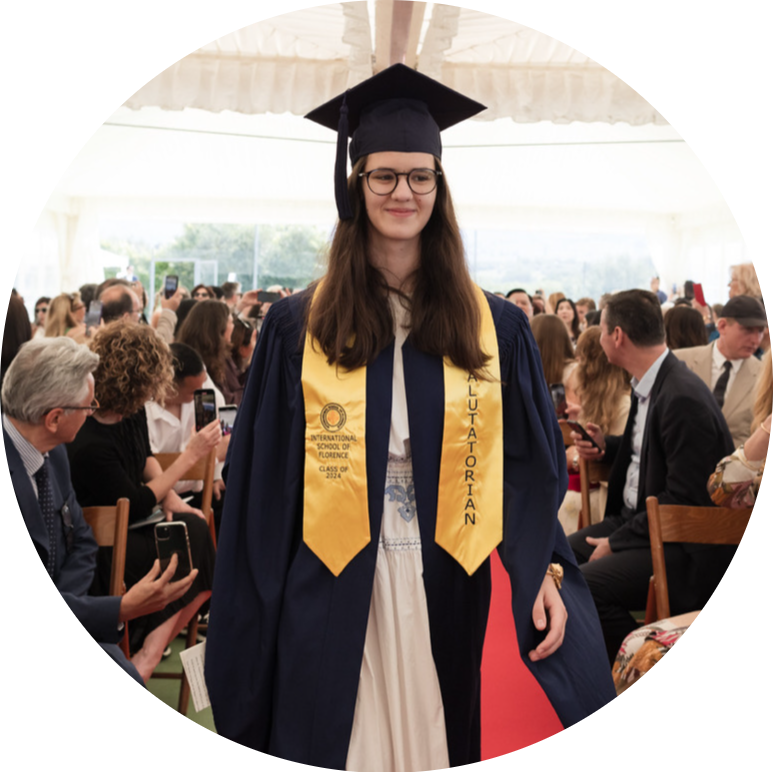
Hello hello! I am an incoming fourth-year student at the University of St Andrews pursuing a degree in biology. Originally from Kyiv, Ukraine, I moved to Italy in 2013 and have been living there ever since.
Over the course of my academic journey I have had the chance to explore numerous areas in biology, ranging from evolution to bacteriophage discovery to cell systems, out of which epigenetics and gene regulation during development have piqued my interest.
My primary research interest is developmental biology, which arose from my fascination with how multicellular organisms originate from a single cell. Therefore, my research focus for the first summer of the Laidlaw Scholars programme was the investigation of abdominal metamorphosis in Dipteran insects. To do so, I used fixation and Hoechst staining in addition to microscopy to study cell movement during several developmental stages in 2 species of flies.
As for my leadership in action (LiA) project, I decided to assist biodiversity monitoring and conservation efforts in the heart of the Amazon rainforest jungle in Peru.
If I am not in lectures or studying in the library, I can be found working on a short story, watching films (and logging them on Letterboxd), reading old science fiction, or on a hike capturing the nature around me through photography. Having grown up in a multicultural setting, I enjoy learning more about the different cultures that exist on our planet, whether it is through cuisine, music, travelling, or linguistics. The latter partially explains my grasp of nearly five languages, though I have to warn you that my fluency differs dramatically. Otherwise, I also love spending time with animals, playing board games, or just talking.
More than anything, I am always happy to meet like-minded individuals who are curious about the world. Thus, please feel free to reach out or connect with me on LinkedIn!


Please sign in
If you are a registered user on Laidlaw Scholars Network, please sign in