LiA Confessions
I have just completed my Leadership in Action (LiA) project, and while I take the time to buffer and process, soaking in the experience, I decided I want to make a long blog post about my thoughts and feelings on this definitely unique experience, giving it all a bit more of a personal perspective. Because of course, that is no less important, as it helps me develop as a leader. But for my official LiA outputs I will be focusing more on the project itself and its logistical outcomes. So yeh, this is more of a personal-to-me reflection, on what I felt, and what that taught me. A bit less formal, a bit more chaotic and laid back. An insight into my head. Almost like a diary with a bunch of confessions.
To do that, I have broken it all down into a couple of sections on the topics I think are most fit. They are in no particular order, just thoughts... so maybe even treat them like a collection of short stories in a book. And if you aren't very familiar with my project, here is a brief synopsis to help you understand what I'm even on about:
I taught P6-7 kids about gravitational waves through ceilidh dancing, collaborating with Science Ceilidh and Wild Skies. Science Ceilidh are an Edinburgh-based social enterprise that do exactly what the name says... ceilidhs about science (actually, they do way more than that now, but those were their roots: increasing access to Scottish culture, STEM education and the creative arts). Then we took the materials from Science Ceilidh and adapted them further, to run single-session workshops across public halls and schools in Shetland. That leg was run mainly with Wild Skies, building on the work with Science Ceilidh and facilitating the dissemination of Science Ceilidh's resources.
Okay. Now that we are all on the same page - let's get confessing.
6 weeks or 8 months? Or longer?
A key difference that I discovered with this summer is that it all felt very... spread out. Let me start from afar. In Summer 1, during the research 'internship', it all felt rather straightforward and concentrated. You applied to Laidlaw around November/December time. Found your supervisors, wrote a proposal. In early spring you heard if you got in or not. And then you kind of just forgot about it until the summer. During the summer, you spent 6 weeks really intensely researching whatever topic it was that you had applied for. During that time, you honestly and earnestly put in your 35-40 hours a week (and let's be honest, sometimes more), and went home absolutely knackered but satisfied, because 'work hard, play hard'... or well, 'rest hard'.
But the LiA was a completely different beast. Let's do another very odd time jump, in a sense; let's jump to week 3 of my LiA, when I was in Glasgow. The halfway point. The halfway?! Wait, what..... It felt like anything but the halfway. It felt like I had barely done anything, but at the same time, like I had been working on this for a good 8 months. When the LiA finally arrived, and it was time to start my placement, I started it... but amid working remotely from home a lot of the time, and being in a completely new and very exciting place... sometimes it felt like very little work was getting done.
And don't get me wrong, I was completing all the set tasks and so on, but it just didn't feel like those same extremely consistent 35-40 hours a week, coming home knackered. Plus, a lot of the work was very different: working in a school facilitating workshops, editing designs and graphics... it all felt, in a way, like anything but work. But then on other days, an hour of work would feel like 20 hours (especially on those very hot summer days, trying to manage a class of like 25 loud 10 year olds ahaha).
But moreover, the way NGOs/charities/social enterprises work is, in its own way, somewhat chaotic; usually slightly understaffed and underfunded, and in general there may be many competing priorities and projects, more than what we'd see in most other cases, like with research internships, or even corporate internships. So some days we'd be at the office till 6-7pm, but on others, I'd be home and done with all my work by 11am, and go out cycling around Glasgow and so on.
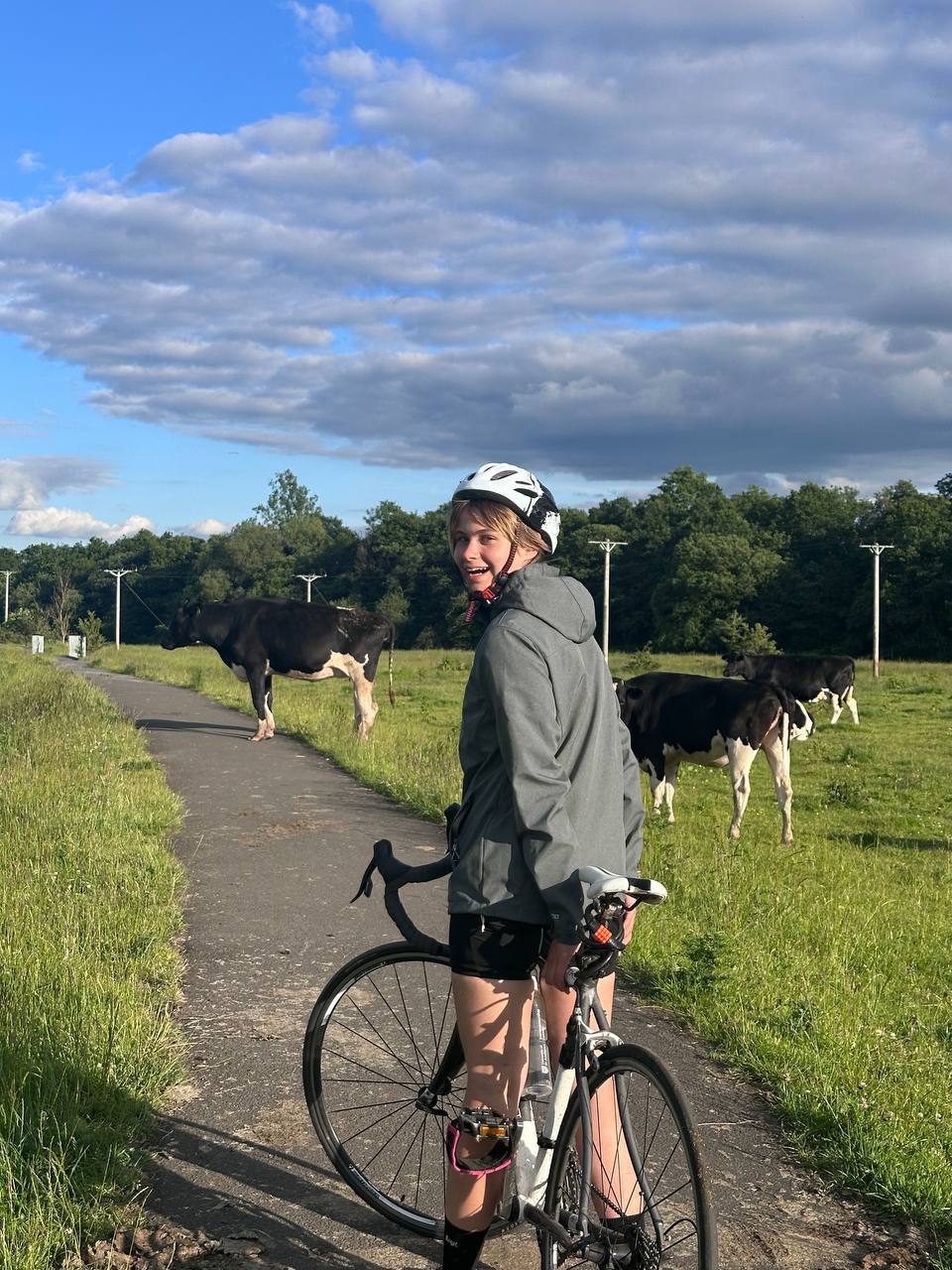
field of cows just outside Glasgow.
Furthermore, this 'issue' only got harder as we moved up to Shetland; a completely different world, so much to explore, and the Shetlandic people are just too ridiculously welcoming. Every day we'd be invited on another trip out with the Wild Skies trustees and their friends and family, all screaming over each other, trying to show us how incredible Shetland is! And ah, we just couldn't decline. But at the same time - work? The normal 9-5 work day? What about that...? Well, that simply didn't exist with my LiA. And I really wish I had given it permission to simply not exist earlier.
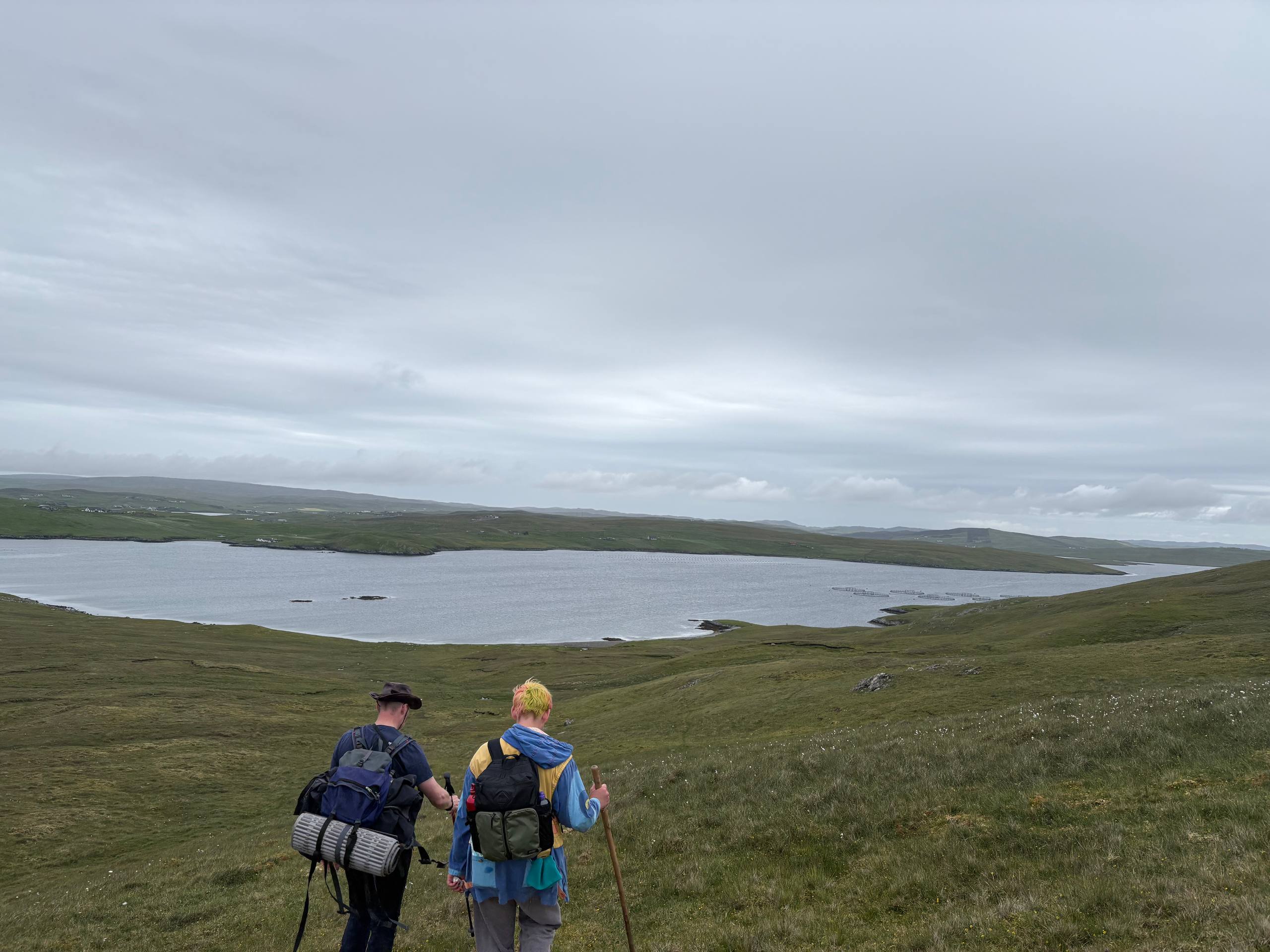
led by Chris (a Wild Skies trustee).
Let me explain what I mean. First and foremost, it's not really about the number of hours you work that week, but the number of tasks you complete, and let's take that a step further: the number of tasks that actually even mattered in the first place.! God, I very quickly realised just how much 'busy work' I was genuinely inventing for myself while trying to do the 35-40 hours a week, in the first week or two of my LiA. Same thing in Shetland... I literally had nothing to do besides run the workshops, which were on the evenings and weekends for the most part... but still, if it was a weekday, and it was between 9am and 5pm, I'd be experiencing so, so much guilt that I was not sitting in front of my laptop. Even if I had absolutely nothing to do on my laptop, or at home... I'd feel guilty.
And I don't want to sh** on the 9-5 mindset all too much. It's good. But sometimes it is just simply not that useful or functional, and you just need to know when to drop it. Especially when working 20 vs 40 hours a week makes no difference, and when working in specifically designated times and days, versus whenever feels right, also makes zero difference.
And actually, not to forget to mention, I think the only reason I was able to work 20ish-30ish hours a week versus a rigorous 40 in the first place, is because this project was absolutely not 6 weeks long! It was, at minimum, 6 months. Because ever since it got approved back in January, I have been working on it... planning ahead, attending some preliminary workshops and trainings... I simply 'put in the hours' ahead of time. And moreover, even now, I don't think it's per se done... because Science Ceilidh and Wild Skies simply don't operate based on Laidlaw deadlines and St Andrews semester dates (I know, shocking, right?! Isn't that how the whole world operates and functions?!).
So yeh, even though 'officially' my project started at the end of May and finished at the start of July... really, it started in August of 2025, when I started sending out emails to social enterprises and writing my LiA proposal. And finished? I don't think it really did finish... because the relationship you build with such a project is, once again, quite a bit different to any other work experience. For that matter, I call it a 'project', and never a 'placement' or an 'internship'... because, for example, Luka and I are invited to run an awards ceremony with the kids at the school we worked at in Glasgow. And Science Ceilidh are only finalising their resources at the end of September, so we agreed to stay in touch, in case small bits and bobs require touch-ups on our side before the resources go live. Plus, getting to know the communities we were a part of was equally as important!!!
So, all in all... despite saying all of this, I still feel incredibly guilty for 'not having done enough'... even though I literally did a lot. I feel it simply because I didn't work the goshdarn 9-5, 5 days a week, for 6 weeks... and because the start and the end of the project felt so, so blurred. But that doesn't mean I didn't achieve things! And really, it's a bit unsatisfying to close off on, but I don't have a solution for this yet. I suppose I will just keep reminding myself that (1) working a lot isn't the same as getting a lot done, and (2) the start and end feel blurry because this isn't a placement, it's a project... and that's just the nature of it.
Leading vs managing... it all comes down to shutting up (PS: I am still bad at teamwork)
Initially, I was planning to do my LiA alone. But that all changed pretty quickly when, at the Laidlaw Conference '25, Luka (fellow St Andrews Scholar) came up to me and shared how he was at a loss for what LiA project to do, and so on. I already, at that point, knew a range of organisations I wanted to contact in Scotland/the UK and honestly, in that moment, for a second, I felt like I shouldn't share... because what if they 'steal' my idea... what if we 'fall out over it'... what if... what if.... what if......
But what if a part of success in life is engaging with peers and helping one another? I see it day in and day out... people 'gatekeeping' things from one another out of fear of competition. And that's fair... at the end of the day, we are competing against our fears on the job market these days. But also, with isolation and without collaboration, there are even more risks.
So, in that moment, I decided to share with Luka which organisations I was contacting, and in two weeks' time, actually, I heard back from Science Ceilidh, the organisation which Luka had said he was most interested in. I immediately decided to loop him into the conversation, because Science Ceilidh said they had a project on the move currently which was about physics and astrophysics (Luka's degree), and working with kids (Luka wants to become a teacher)... so at that point, it felt as if it was written in the stars for him to be a part of the project. So I took that, and ran with it.
Over my first summer in the Laidlaw programme, I took part in a research project which involved working in a team, a group of 8 other scholars, all of us working together, in proper 'collaboration lab style', on the same research topic. And previously, in my blog posts last year, I had already shared how much I genuinely hated working in a group initially, but felt like I had mastered it by the end.
Haha. Very funny. Mastered it. Absolutely not. It was sooooo hard to be working in a group again. And yes, this time my group was only one more person... but god, did I 'regret' my choice initially, so much. And I regretted it not because Luka wasn't a valuable asset or etc etc... but simply because if I were alone... so many things would be so much easier. Decision making, planning time to work on things, writing the proposal... HELL! EVERYTHING would be easier!
Everything?
Are you sure about that?
My head kept telling me the same thing, day in and day out: 'if only you didn't let Luka be a part of this, you would be getting so much more done, and it would all be perfect, like what you imagined in your head... all absolutely ideal'.
Except for the fact that that was an absolute lie.
Without Luka, I couldn't have achieved what I achieved. And that's the truth. I hate to accept it, actually, because of how bad I am at teamwork... but it is true. Luka was truly an incredible asset. Our brains seem to work in completely opposite ways, but in incredibly complementary ones. Luka is okay with the chaos that comes with working with kids... I absolutely hate it. Luka struggles with writing emails... I am a pro, and I love it (yes, crazy statement, but I am putting it out there: I love a good email). Luka is amazing at physics! But I am amazing at being a good gauge for what a general audience, or even a kid, would be able to understand in a single workshop, as I've never studied the subject myself. I am amazing at organising things, writing big reports, and using various softwares. Luka is great at art and drawing and being creative (PS: I'd rather die than ever have to draw something).
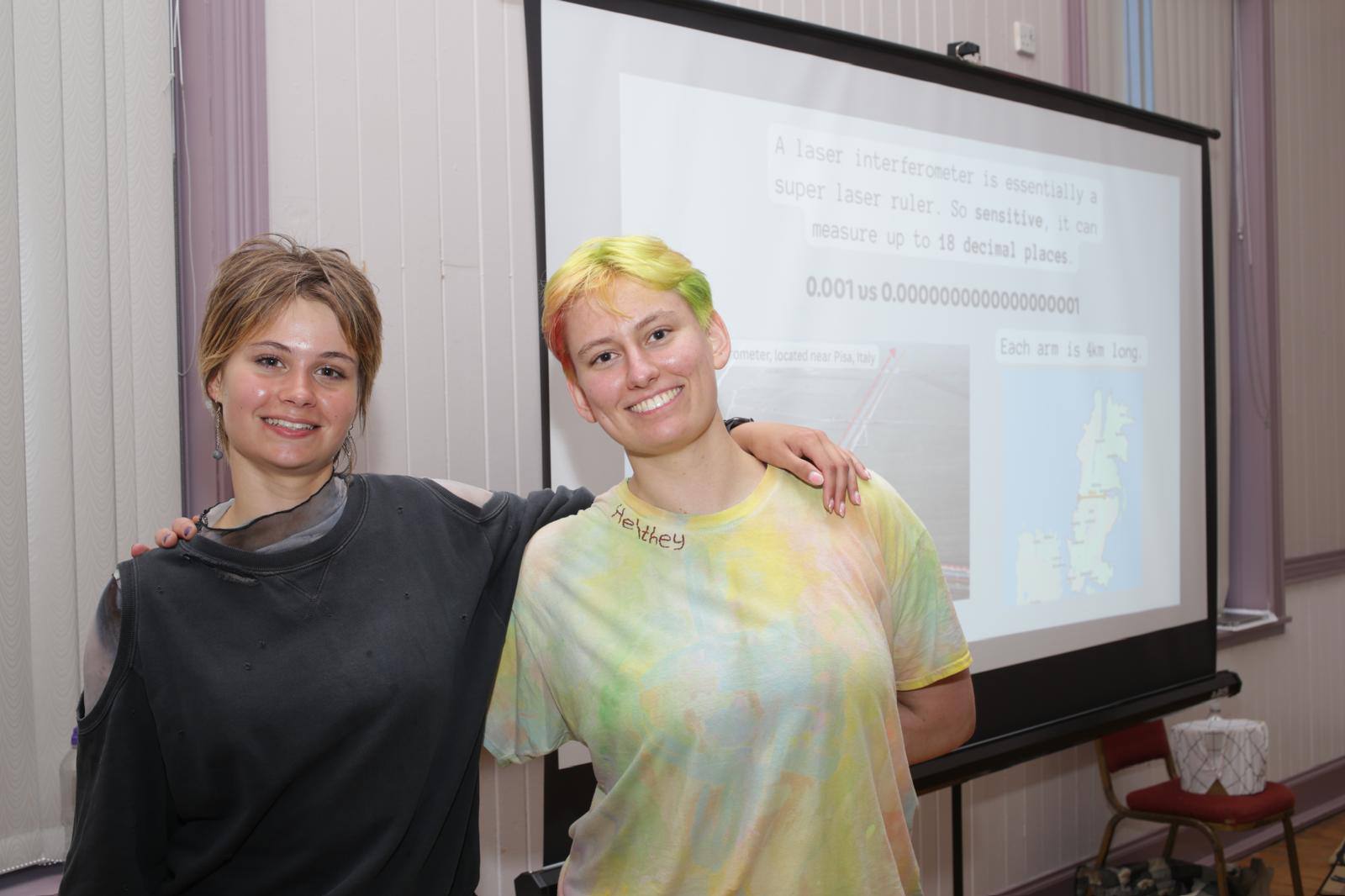
Opposites in every way, apparently including hair and clothes colour!
Okay, I think we get the point by now. We are a great team. Except for the fact that I am horrible at TEAM work. Funny situation to be in, isn't it? I wholeheartedly wanted to do this project with Luka, and reap the benefits of doing a group LiA... except I couldn't.
You may ask why. Well, because I am a (recovering) perfectionist. I want things to be done 'perfectly', aka exactly like I first visualised them in my head. The issue? Luka doesn't live inside my head (damn him for that, arghhhh!!!). So it gets a bit challenging when he says, or produces, a piece of work that is by all objective standards impeccable and outstanding... except for the fact that it's simply not my 'vision'. Ah, did I also mention that me and Luka are basically opposites??? Ahaha. Yeh. So 50% of the time it felt like we were talking different languages to each other... when he would try to give me feedback, I'd simply not understand him, and vice versa. And eventually, all of that got overshadowed by one thing. The fact that, in perfect 'opposites attract' nature, I am a very loud and somewhat obnoxious person... and he is very quiet and 'obedient'. So the following began to happen, over and over again: I would shut down Luka's genius, and pressure him to make work that fit my understanding of the world. Pressure him to play this game by my rules, and my rules only. Oh, and moreover, I'd shut Luka down any time he'd try to give me feedback.
And as unsurprising as it is... such a skewed power dynamic is simply not useful, and not appropriate, for anyone. So the work would suffer. Our friendship would suffer.
At this point, as in any heroic story, you'd expect me to go on and say 'but here is how I fixed this'... but actually, I think the one thing this summer showed me, compared to the previous one, is that there is no fixing something like this. It is simply a constant work in progress. I simply have to constantly monitor that I am letting Luka, or for that matter anyone else in a group, speak; that I take their feedback seriously; that I remember there is more than one way to do something, and that they are all equally valid; and that it's okay to sometimes shatter my perception of the world, and my perception of what 'perfect' is, and whether that 'perfect' even needs to be achieved.
And I say those things as if they are dead easy. Don't get me wrong, they are absolutely not. Those are not, in any way, easy. And that's why, however much I'd want to say 'I came out of this experience a transformed person,. I did not. I came out of this as a person that now knows way more about myself, my strengths and weaknesses, the places I need to watch myself, and the places where I occasionally simply need to shut up and stop controlling others. A person that knows one small thing more about how to be a leader, not a manager.
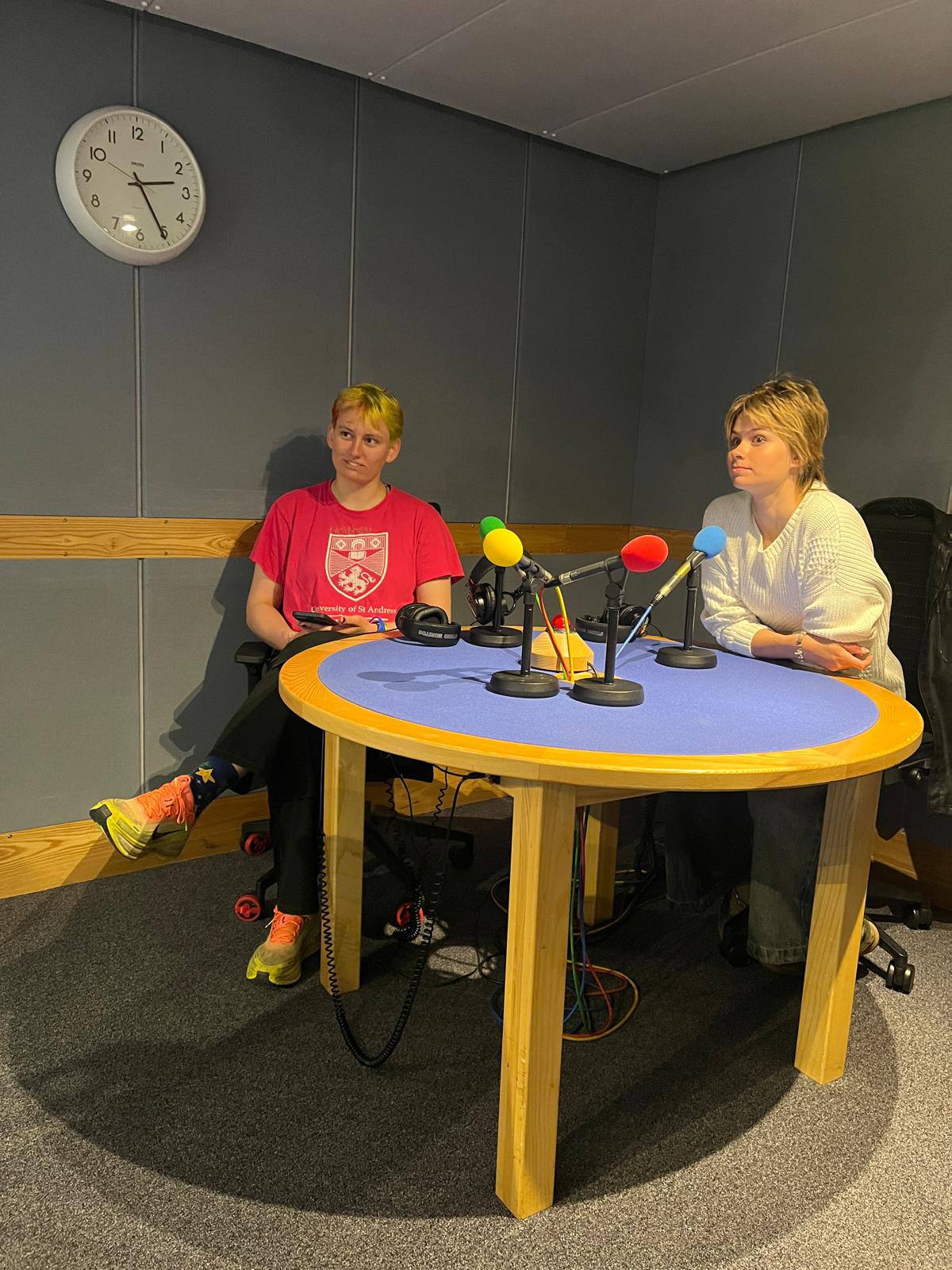
and putting the 'shutting up' lesson into practice.
All in all though, all of this effort over yourself really does pay off! I felt so proud watching Luka present in many of the workshops; and crucially, present the things that he himself had suggested and created. And I felt proud... of him, of course... but a lot of me too. Because the things he was getting up to were absolutely not in my plans, or my pictures of what the 'ideal outcome' was... but they were so brilliant, and so genius, that I was simply glad I shut up at the right time and let them flourish... and that I had such self control.
Staying in Scotland rather than going to a different country
Most Laidlaw scholars travel abroad for their LiA, and I felt like that was something 'I needed to do' as well, even though, as it turns out, within one country you can have a very vast and very different range of experiences. I spent my LiA across Glasgow, and then various places in Shetland, going from the biggest city in Scotland, to the most remote place in Scotland. And honestly, both of those were proof enough that you don't need to go to a whole new country to feel like you have entered a different reality.
I grew up in St Andrews, living in a boarding school, so I never really had the chance to travel and see anything in Scotland... besides, like, Edinburgh and Dundee. I hadn't even been to Glasgow much: once, to go to the airport, and that's it. Recently, I moved to Dundee, which of course, after St Andrews, feels like a hugeee city (and St Andrews now feels like a tinyyy village)... but oh lord, were my perceptions of huge vs tiny challenged this summer.
My LiA started out in Glasgow, and immediately I was in a big city. Hustling and bustling streets, so much going on. I was in awe after being there for just 2 days. I repeat: I thought Dundee was huge. Oh, was I wrong. And the first thing I found out about a big city, and about 'work-travelling', is how hard it is to stay on task. There were just so many things to do, to see, to experience... and to eat! If I could be a food blogger, I'd be one... because I think 90% of my Laidlaw stipend went on trying the best eats in Glasgow (as a personal recommendation: try out the Dockyard Social food market!). Plus, I really experienced the thing everyone says about the west coast and rain. It was always, always, always raining, which was just ridiculous. It was so damp, all the time... it was insane.
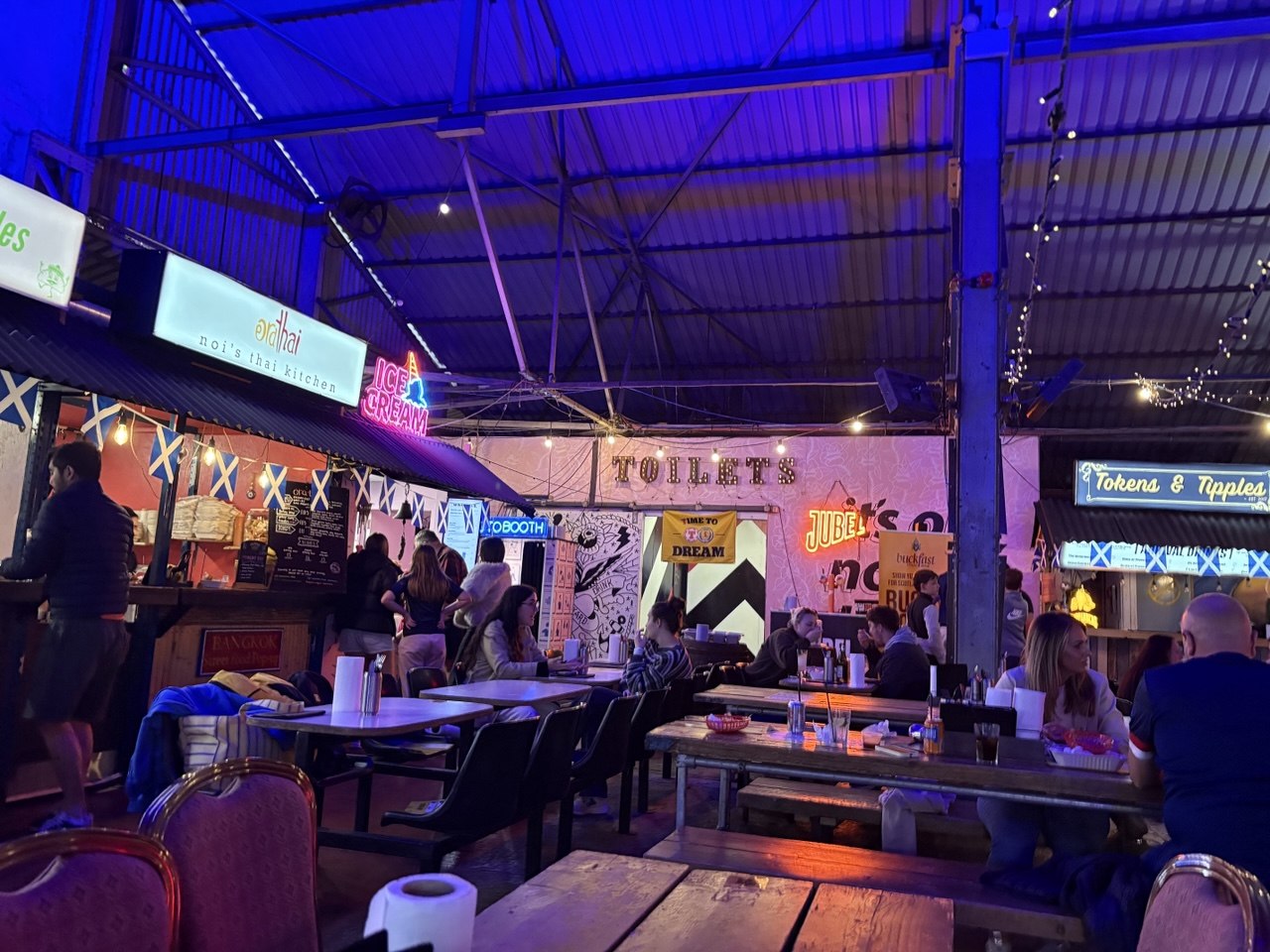
and the reason my stipend took a hit.
But that aside, another interesting thing I found is how hard it is to move out somewhere for such a short period of time. On one side, you want to make yourself at home if you are going away somewhere for a month... but on the other side, having to drag all that stuff around is a lot. But either way, on the topic of home... another thing I found was just how homesick I was being in Glasgow. It's surprising, because I feel like if I went across the world, to, say, South Korea... I'd actually feel less homesick, because it's just so, so far away that your brain understands that. Whereas here? A 2 hour train, and I could be home. The culture, the people, and so on... everything is so similar. But at the same time, you just aren't home.
Also to note: it was so special to be in Scotland during Scotland's first World Cup in something like 28 years. Glasgow was mental on those days! I was so happy I stayed.
Okay, moving on to Shetland. I think when I was first planning the LiA, I didn't quite realise where Shetland was, and just how far away that is... including the fact that our first destination was Unst (the most northern isle in Shetland, and thus the most northern place in the UK). I simply didn't quite compute that before arriving... and when I did, it really hit me.
We first met the Wild Skies trustees in Lerwick, the 'capital' of Shetland, and my first thought there was 'god, I imagined this to be anything but what it is'. There were basically no cars on the streets. There were no shops. There was nothing. I was in awe that this was still Scotland/the UK, and not Iceland or something. We had decided to all meet at the 'Toll Clock Shopping Centre'... and when we arrived... I had imagined it to be anything but what it actually was. I was shocked. It was just so, so different to Glasgow shopping centers ahah.
Then we made our way up to Unst... a 2 hour car journey, with 2 ferries. How crazy is that... to get home, instead of a road, you use a ferry! So there we make it to Uyeasound, and that was just absolutely crazy. A 'village' with houses at least a km apart, and honestly, only about 10 houses in total anyway. It felt surreal. I remember going for a run the next day, and I just ran along the road, and for over an hour, all I saw was sheep. It was silent. Not a single human, or car. Kind of terrifying.
But I don't want to make Shetland out to be all that lonely, because it's really not - because of the people. Everyone understands how isolating it can be, so they make a point of working their hardest to all stay in touch. Every evening was filled with different dinner parties at people's houses, a Shetland/Scottish folk music jam session (you will likely hear more of that in one of my other upcoming output... but here is just that little spoiler). So yeh, it was interesting. One thing that definitely was nice: I finally got to sleep in silence. No car or people noise, a break after Glasgow.
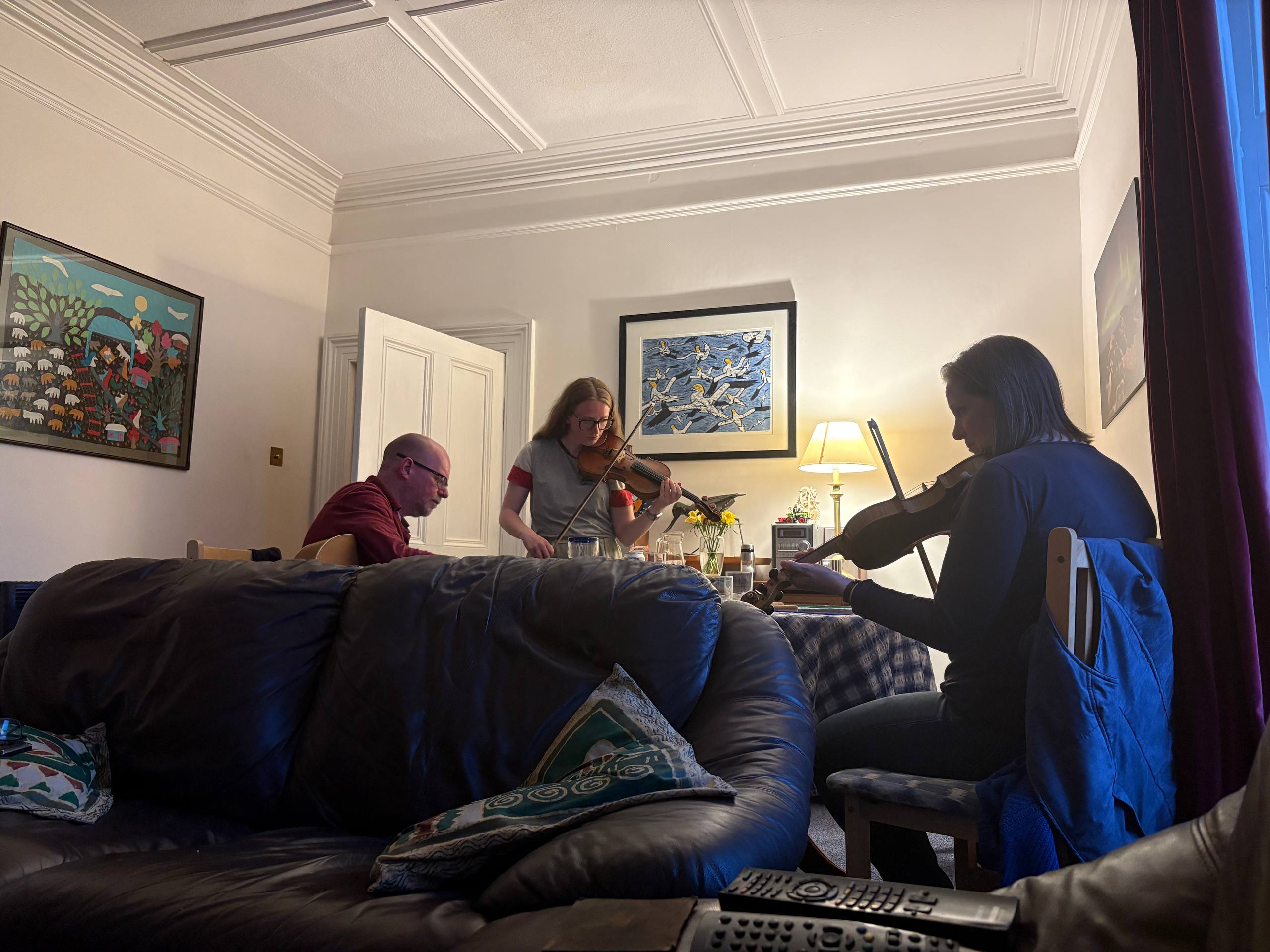
surrounded by the accidental friends Shetland kept giving us.
A couple of days later, we went back down to Lerwick. When I had first arrived, I remember one of the trustees saying 'oh god, the traffic is so busy in Lerwick', to which I thought 'what are they on about'... but this time round, when I came back down and looked around... oh my. It felt like a metropolis! And remember the Toll Clock Shopping Centre? That became my favourite mall ever! So many shops, so fun! (And all of a sudden, this threw me back to moving from St Andrews to Dundee, and feeling like I had moved to London.) That's when I realised... it's all a comparison game. No, of course, I always knew that... but this really emphasised it to me. There is no objective 'small' or 'big'. And this mindset, in all honesty, should be applied to a lot of other things... most things in life are only understood through comparison... but if the comparison is not adequate, you will get inadequate results. And at the end of the day, no opinion, per se, can ever, ever, ever be objective.
Fewwhh. Yeh... so that's the main learning there.
Other than that, my time in Shetland was filled with a lot of 'most northerly' experiences, i.e. the most northerly parkrun (parkrun Bressay, that is).
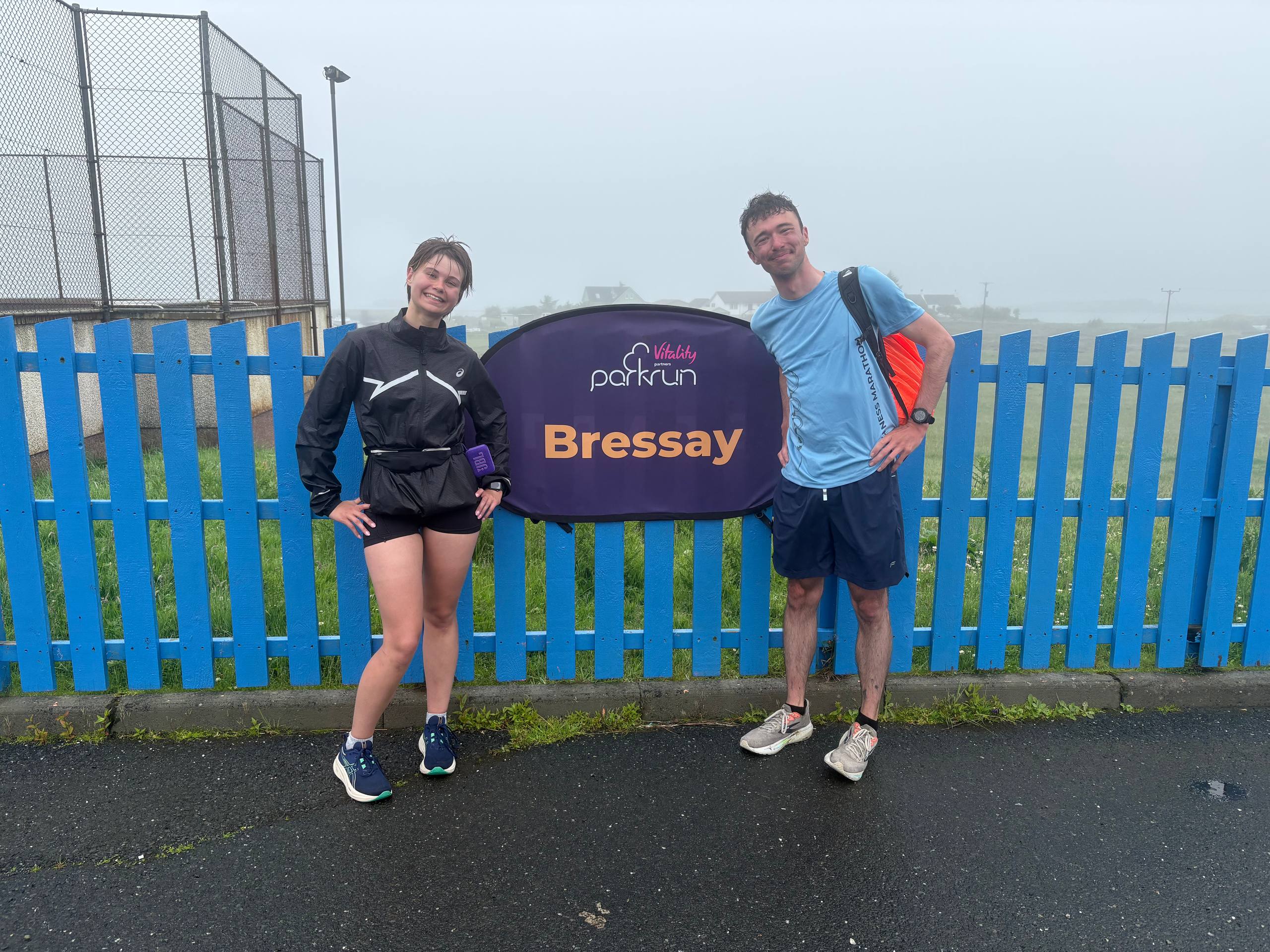
with another wonderful accidental Shetland friend, Ben.
Actually, let me circle round once more: remember how I said that in Glasgow I felt homesick? Well, Shetland gave me a completely new feeling: feeling trapped. I wonder if any scholars that went fully abroad resonate with that. Just knowing that even if I really, really wanted to be home, I am miles and miles away, separated by ferries, trains and so on. It was somewhat unsettling. And in a way, that even felt a bit silly, because I was in 'the same country', even though Shetland is a whole world of its own, because of the Scandinavian heritage and the Viking connections!
(On the topic of that... by complete accident, we saw the Up Helly Aa summer solstice festival, for which all the kids and locals dress up as Vikings and build Viking boats. I just kept imagining how cool it must be, to be a kid, and think of yourself as a 'Viking descendant'!)
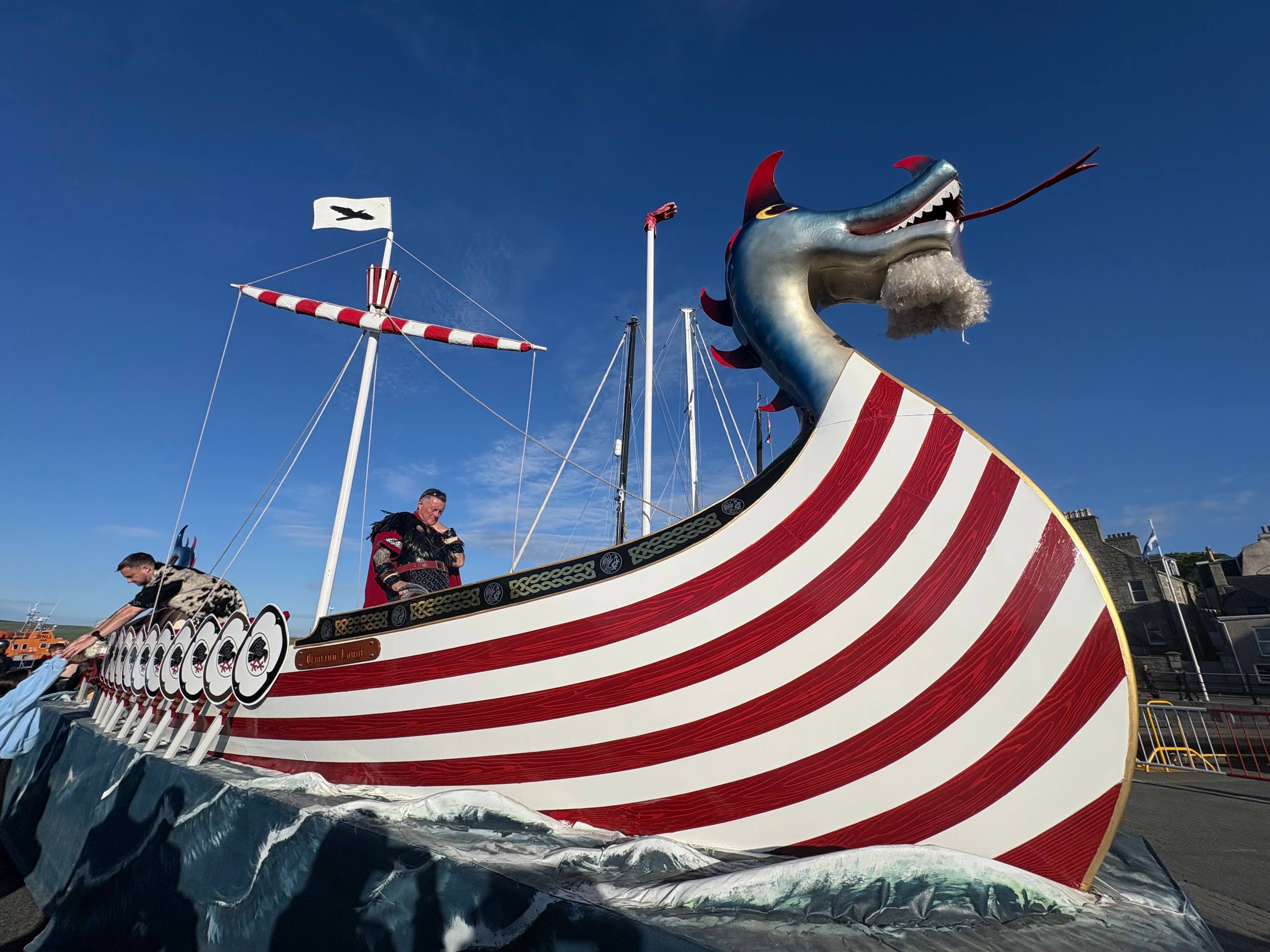
Lerwick for the summer solstice.
Okay, that's enough on this... I think we get the point. I absolutely don't regret staying, because I got to know a country I thought I knew. And now, I simply love it even more. And also, funnily enough, I feel like I know less about Scotland now (the age-old paradox: the more you learn, the more you understand just how much you do not know).
Playing to your strengths vs challenging yourself
One of the incredible highlights of this project has, of course, been the lovely organisations that I got to work with, and especially their approach to how our work was done. Which, in fact, I even in a way found quite fascinating, and somewhat challenging.
One very defining feature of the organisation of our work with Science Ceilidh was the fact that Science Ceilidh completely let us choose which aspects of the gravitational waves ceilidh programme we focused on, which meant that I could really play to my strengths. For example, I have had a lot of experience in graphic design and video/audio production. By no means am I saying I am good, I am simply saying that I have a good enough level of understanding of multiple softwares that I can actually use them quite well. I am also, by nature of being a science student, quite good at statistics, analysis, and making pretty diagrams. But, once again (very STEM student coded), I am not great at writing at all... yes, I know, you wouldn't say that judging by this lengthy post, but it did take me about 3 weeks to type it up and put it together, because of my lack of 'natural' talent.
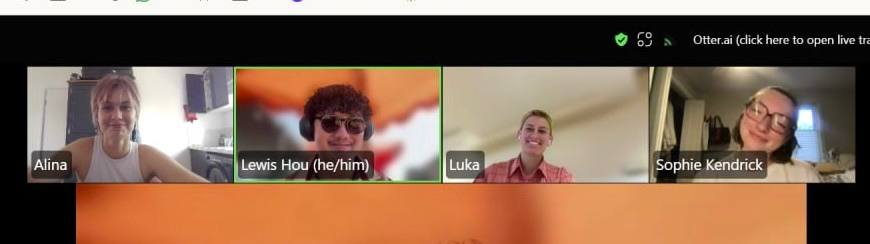
So, throughout our work with them, we'd always outline some priorities in the work at the current moment, and then me and Luka would split them out between one another, in a way where we could really play to our strengths. It was actually the same with Shetland, me and Luka had a bit more agency in planning that leg, but we'd also follow the same structure: outline the tasks needing done, and pick the ones we could do best.
So, naturally, I'd always choose the more organisational or software-heavy tasks, while Luka would take on the more artistic or science-grounded ones. And that worked for a while... until it didn't anymore. Because sometimes, complementary tasks simply cannot be split out evenly, and there came the challenge. Should a person that is maybe less good at a task still take it on, to not overload the other person? Or only stick to what they are good at?
A real dilemma, actually, that I spent a lot of time thinking about, so let's weigh it up together.
Sticking to what you are good at: definitely the highlight of working with Science Ceilidh was working mainly on the things that I was already good at, because, of course, all the outputs and work that I produced were incredibly good, and of a high standard. It made sure the outputs were extremely valuable to Science Ceilidh, and of course, I had a high level of satisfaction myself. Additionally, it meant time was really optimised, and I could get things done super quickly, and get more done overall, which is always helpful.
Trying other things: but of course, in sticking to only the things you already know how to do, you will never learn how to do new things. And in trying new things, you might just learn something cool. And that was exactly the case when me and Luka were composing our Shetland programme. One day, Luka was unavailable to work on it, but the deadlines were getting tight. And I'll be honest... before, a lot of the time, I'd offload all the science and the 'real thinking' to Luka, saying 'I'll just focus on making pretty slides'. Which is okay, until the person upon whom all the science depends is unavailable to work on that thing, and I had to take over. And I discovered a cool thing. That, actually, I am capable. Gravitational waves, while scary, if I put my mind to it, I can understand the necessary relevant concepts. (Isn't it ironic... we were teaching kids about gravitational waves to show them that science isn't intimidating, and then I myself was intimidated by that science, and had to overcome it. I really got to walk the walk, not just talk the talk.) And yeh, in the end, I was able to make the necessary amendments and so on. Of course, Luka checked it all after and…. he said it was all correct! And even more, he said that I explained it very well, in a way he'd never think to! So sometimes, trying something new, versus doing only what you are good at, gives rise to new ideas, and new ways of doing things!
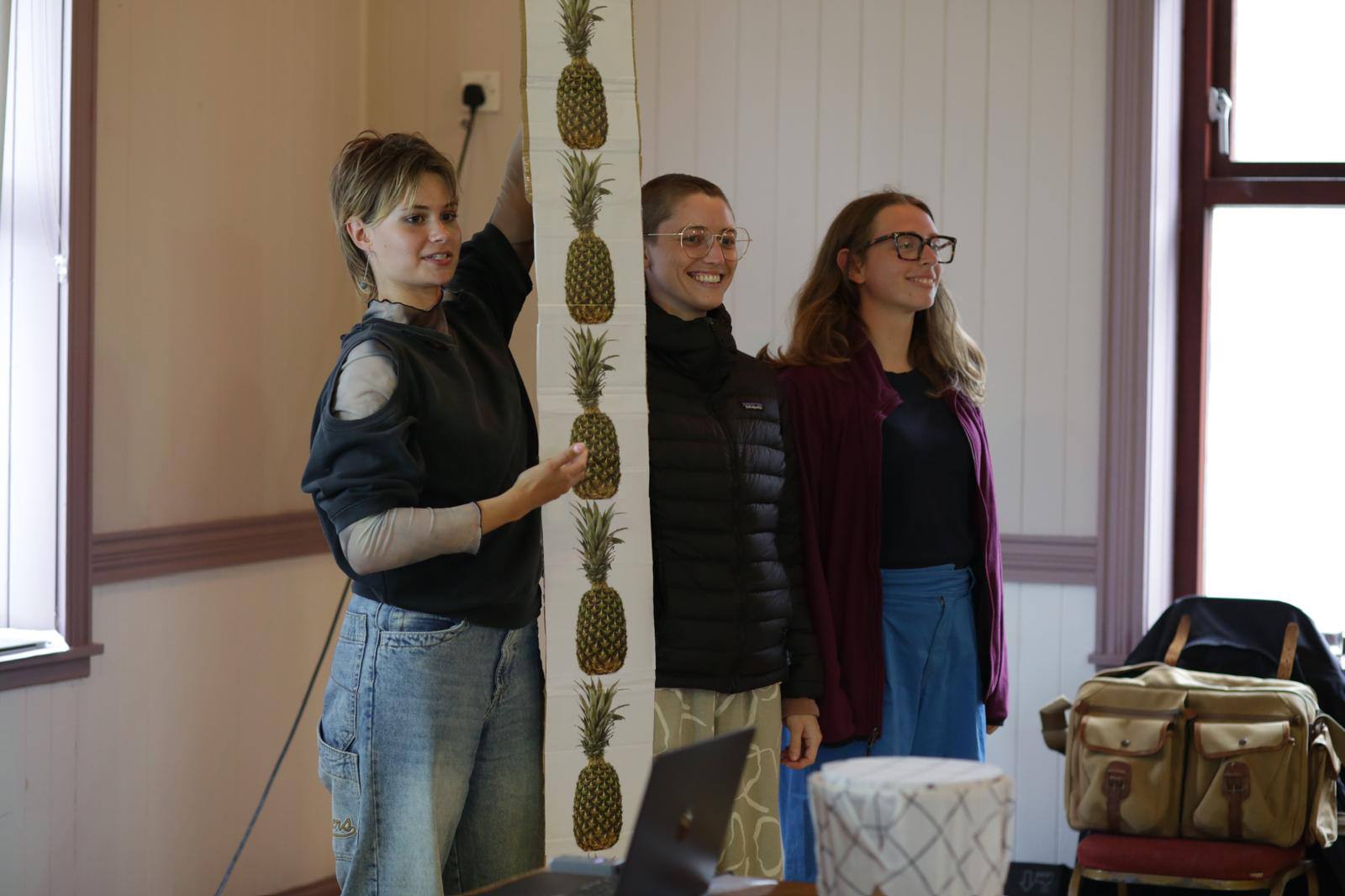
and was terrified about, and then got Luka's seal of approval on.
So, what's the answer? I think, as boring as it is, it's somewhere in the middle. You need a decent blend of both. Lock yourself out of trying new things, and you stagnate, and limit your perspective on problem solving. Only focus on novelty, and you spend more time learning than doing. So, all in all, a mix is good.
Rejection therapy, and growing your confidence
In choosing to do a self-defined LiA, you basically sign up for somewhat of a humiliation ritual... where you are knowingly signing up to be told 'no', over and over and over again..... until you finally hear that one, extremely well-earned, 'yes'.
Let me explain in a bit more detail. The whole humiliation ritual starts about a year in advance, in August or September, when you begin to make a 'wishlist' of the social enterprises, charities and grassroots movements you might want to partner with, and the countries you'd want to go to. Except, when making that wishlist, unless you are a citizen of Europe or the UK, it might be a bit more difficult. Your first 'no' happens when you look up the travel requirements for your passport, and discover that there are actually not that many places you could go to and work in for 6 weeks, on the visas available to you. But honestly, that's likely the easiest 'no' you get over the course of this whole process, because you don't have the time to really get attached to the ideas and dreams, and you have no illusions about how it might end up in reality.
But what comes from here onwards is pretty gruelling.
First and foremost, you muster up a lot of courage to cold email a lot of various organisations, and pitch why they would want to take exactly you, for this non-existent job, to do an LiA project which they've never even heard of. And I'll be honest, it gets pretty discouraging when such organisations come back to you and say no... because, in a way, you take it personally. You feel as if 'well, I am literally offering my free labour to this organisation... why do they not want it?! What is so wrong with me, that even a charity, which is understaffed and underfunded, doesn't want to hire me for free?'. And of course, those are just your thoughts, and reality is much more complex: because 6 weeks is really not that long, and it's more of a faff to train someone for a job for such a short period of time, and so on and so on. But it does feel quite discouraging, especially when it took you so long to muster up all that courage to send the cold email in the first place.
What feels even worse, though, is when you really get attached to a project. I had that happen to me with the Center for the Promotion of Science (CPN) in Belgrade, Serbia. I reached out to them in early August, and by mid-September I had a full plan going. We had pretty much agreed everything, I had even talked to my Laidlaw programme coordinators, and they said that the project seemed to be on the right track, and the proposal would likely be approved. Except... one random September day, I sent an email about scheduling a planning call with the CPN, to further continue planning the project, and... I heard nothing. I waited a bit. Sent a follow-up email. A week or so later, I got a bit of an ominous email back... which felt like bad news. CPN agreed to a call... but it all felt weird. Less cheery and upbeat than before.
The call day comes by... and one of the lovely women working there breaks the news to me: they couldn't secure a round of funding, so they are reducing staff hours... so there would be no one to supervise me. And even if things changed, they would only know closer to next summer... and that was too late for me, because of the LiA application deadlines in December.
I felt shattered. Because I had already envisioned the type of work I'd do and so on... hell, I had already formed about 60% of my LiA proposal. In that moment, I felt quite scared, actually. One thing about me: I am the most risk-averse person in the world, and this felt quite challenging to accept. That I could finish fully planning a project, and then, randomly, because of things no one could predict, it could just... not go ahead. And I had no control over that.
I started really worrying. Of course, it was still the early days... it was only the beginning of October... but I had this fear inside me that no matter who I reached out to now... what if the same thing just randomly happened again? What then? For a second, I thought about applying to a central LiA project instead (projects organised by the Laidlaw Foundation in partnership with NGOs around the world, that have a more streamlined application process, kind of like the application for a job). But deep down, I knew I didn't really want to do that, because, I mean, that was already how I approached my research period. I applied to a 'predefined' research project, meaning that most things were already outlined and so on. Which is not bad, but I thought it'd be a great experience to try something different.
In that moment, it took a lot of courage to accept that CPN and Serbia weren't going to work. In fact, it was so hard that I spent quite a bit of time beating a dead horse... going back and forth with the CPN, and another organisation that they referred me to in Belgrade, but to no avail. Eventually, I reoriented, and reached out to Science Ceilidh, and it all worked out beautifully, but that was quite challenging. To move on from such a 'failure'.
The next part of this is writing the LiA self-defined proposal and application, 25 rigorous questions and 6000 words about what the project is about, how it will work, and why I deserve to get the funding for it. When I reached out to Science Ceilidh, and settled on them and so on, I started rewriting the application, and we eventually submitted it to our Laidlaw coordinators, just to hear back a month later that 50% of it needed to be redone. Which is pretty tough in itself, too. It wasn't major things... but still... so much time spent... to essentially feel like you are being told 'your project isn't good enough, and the cause isn't valid'. It almost feels silly, because you yourself have spent so much time researching the topic your project will be about, and you get to know so well why this work truly does matter and so on... so to be told that it's not good enough feels like someone saying 'the community you want to work with, and do this good thing for, doesn't require yours or anyone's help'. And of course, that's absolutely not what is being said to you! But it simply feels like that.
And in reality, it all just comes down to communication. Writing a proposal is an art. You have to communicate the amount of care and passion you have for a topic, a cause, an organisation, to people that have never, ever heard of this topic/cause/organisation before.
Plus, my previous 'failure' with the CPN, and my risk-averse nature, were really keeping me on the edge of my seat too. I constantly felt like being told 'your project just isn't good enough and can't go ahead, and you'll have to leave the Laidlaw programme because you couldn't complete the requirements, you have not earned your place on the scholarship' was just around the corner. Once again... that's not how it works! But it still felt like that. Almost as if I had imposter syndrome.
But, once again, in the end it all worked out.
Another element of rejection therapy has been adding the Shetland 'leg' of the project on. Initially, when we reached out to Science Ceilidh, they had only suggested the project in Glasgow, and really, it was mine and Luka's initiative to extend the project to contain a phase in Shetland. So having to ask about that... first to Science Ceilidh, and then to our Laidlaw coordinators... felt pretty scary too.
Because what if they say no…
Wait, wait, wait. 'What if they say no'.... Hm... 'no'.... A scary, but also not that scary of a word.... And that's exactly what eventually helped me overcome my fears... the 'what if they say no' thought.
I challenged that thought.
One day, I simply asked myself a question about it. I said to myself: 'what if they say no... what then?' What's the worst that's going to happen? What if they say no? A no is a no... and that's it.
That's where it starts and ends, actually. No one dies, the world doesn't explode, all is fine. I have the strength in me to move on. And I'd already heard a no once, from the CPN... and actually, I'd heard another 2 'nos' from other organisations I reached out to initially. And what? I am still alive. My project was about to commence. It will be fine!
So, we did pitch the Shetland leg, and got the support of Science Ceilidh and the Laidlaw coordinators, and it became such a magical part of the project too!
So, all in all: amid all the cold emails, and meeting people for the first time in video conferences, and pitching your thoughts and ideas, and advocating for your ideas, and finding your voice in the project and so on... it all felt very intimidating... and eventually, it stopped.
Eventually, I got accustomed to feeling uncomfortable, and I could overcome my fears. And single-handedly, the thing that helped me overcome my fears has been the 'what if they say no... so what?!' thought. And funnily enough, this mindset now permeates all of my life. I have started taking way more 'risks' (of course, remember that I am the most risk-averse person in the world... so a 'risk' in my head is something like reaching out to an academic for a careers chat, or applying to speak at conferences... previously, I would never, ever do more than a poster presentation, and even then, I'd hide away from my own poster so that no one could speak to me about it). And it's truly incredible how far such a mindset can take you!!!
(PS: you'll notice no photos in this section, because this all happened too long ago for the most part, so that I've got absolutely nothing to show for it!)
Conclusions
That was a long post, and each part had some conclusions of its own anyway... but as a mini personal outro, I will leave you with two thoughts.
I used to (or still somewhat do) feel like I didn't reap enough from the Laidlaw programme and the LiA... but really... am I just a perfectionist. I think that there is always more to do, more experiences to be had.But, this project has really taught me to sit in my discomfort. The discomfort of feeling like 'I didn't work enough', the discomfort of being away from home, the discomfort of having to shut the f up, the discomfort of reaching out and being told 'no', and the discomfort of learning new skills versus just using old ones.
All in all... this 'project' didn't start in May, and it didn't end in July: it is a now part of me... and it changed me, fundamentally, as a person.
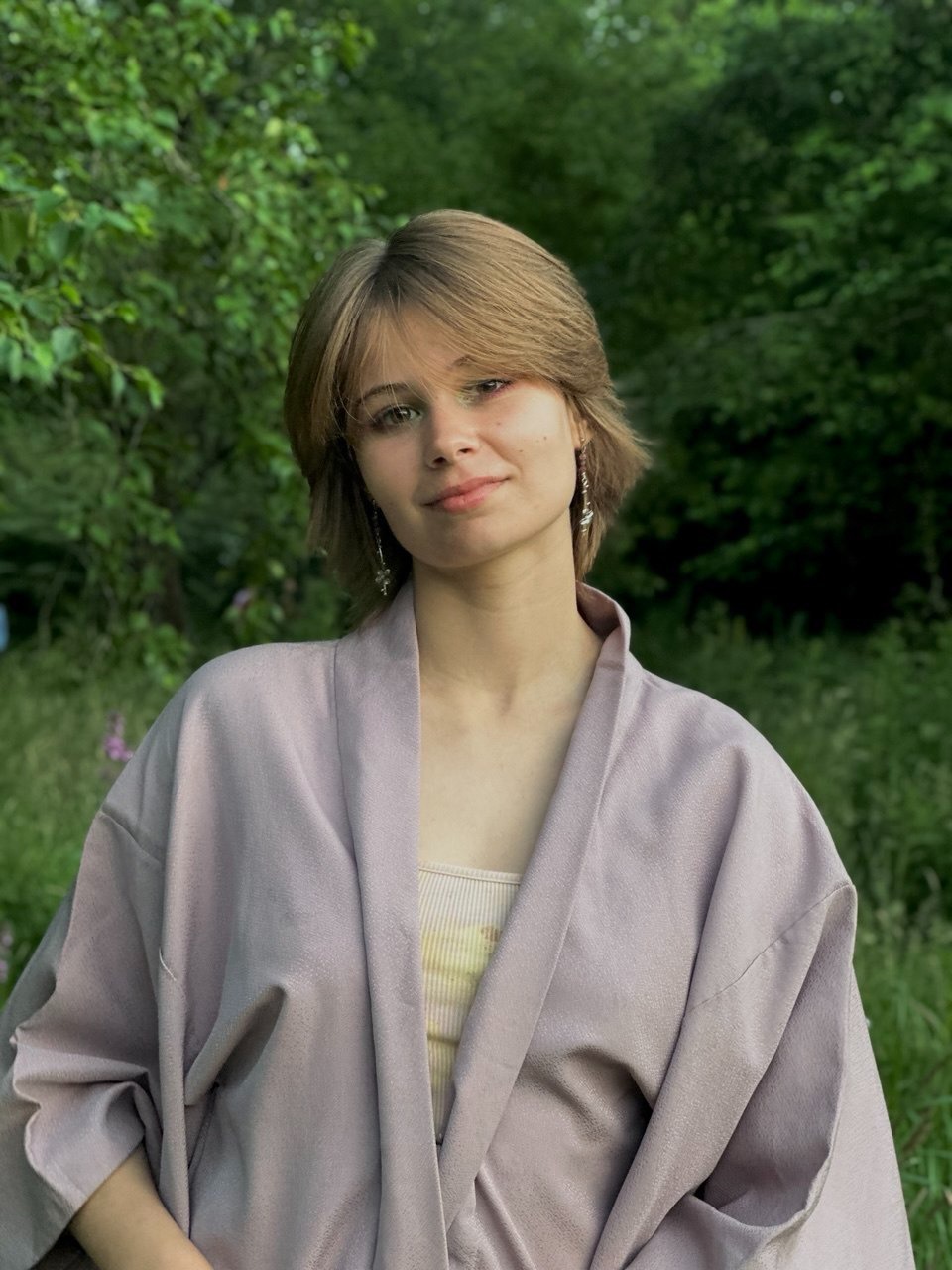
Hi! I'm Alina, a Biochemistry undergraduate fascinated by health sciences, my long-term goal is making healthcare more accessible, equitable, and effective. For my Laidlaw research, I stepped outside my home School of Biology into the School of Medicine to study direct-to-consumer health screening (think at-home genetic tests). These tests promise autonomy but risk misinformation, false positives, and overdiagnosis; so my work pushes for a shift from early diagnosis to optimal diagnosis, where a result is only useful if it's actually clinically actionable.
For my Leadership in Action project, I co-led When Science Dances; using Scottish ceilidh dance to teach gravitational-wave physics to children in underserved communities across Glasgow and Shetland, in partnership with Science Ceilidh, Wild Skies Shetland, and the University of Glasgow's Institute for Gravitational Research. It was a joy to take something as abstract as spacetime and turn it into something kids could dance out and giggle through, and to watch the project grow from a Glasgow workshop series into a Shetland outreach programme along the way.
Outside of "work hours", I'm always on the move. In uni I picked up judo, which has since become kind of my whole personality (big shout out to USTA Judo, I love you). I also absolutely love cycling; started as a way of coping with not having a car, ended as a full-blown addiction. Beyond sport, I've got a soft spot for anything creative: embroidery, crochet, photography, and losing hours to discovering electronic music. Basically: endlessly curious, always chasing whatever new thing has caught my eye.