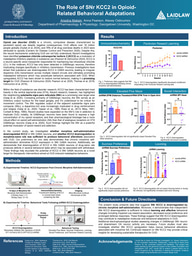
Research Poster - Investigating Activity-Dependent Transcription of Mitochondrial Genes in Parvalbumin-Positive Interneurons - Summer 2026
Preview
Parvalbumin-positive interneurons (PV-INs) play a crucial role in maintaining the balance between excitation and inhibition in the brain. These neurons depict fast-spiking properties that represent a metabolic burden, which likely render them more susceptible to disease. It has been shown that certain nuclear-encoded mitochondrial genes, such as Cox6a2 and Me3, are upregulated in PV-INs, both at the transcriptional and translational levels. Moreover, in preliminary results from the Polleux group, it was shown that PV-IN activity regulates the expression of some of these mitochondrial proteins. However, whether such regulation occurs at the transcriptional level remains unknown. Here, we employed fluorescence in-situ hybridization, using RNAscope technology, combined with intra-cortical delivery of the inward rectifying potassium channel Kir2.1 to assess whether the expression of nuclear-encoded mitochondrial mRNAs is dependent on neuronal activity. Our preliminary results suggest that Me3 mRNA levels are regulated by neuronal activity in cortical PV-INs from adult C57BL6/J mice. These findings suggest that activity plays an important role in regulating transcription of nuclear-encoded mitochondrial genes in PV-INs. Since altered transcription and dysfunction of PV-INs are early events in Alzheimer’s disease progression, the development of targeted interventions to rescue the expression of activity-dependent genes in PV-INs has the potential to improve outcomes earlier in this pathology.

Hey everyone! My name is Rinaz Jamal, and I'm a rising sophomore at Columbia University majoring in Neuroscience & Behavior. I am passionate about helping individuals with mental health and neurodegenerative disorders feel seen, heard, and supported. This summer, I will be doing research at the Zuckerman Mind Brain Behavior Institute under the supervision of Dr. Franck Polleux. My project aims to understand the activity-dependent regulation of mitochondrial protein expression in parvalbumin-positive interneurons, which are among the first neurons to fail in Alzheimer's disease (AD). I am excited to add to the scholarly conversation around Alzheimer's research by identifying the molecular pathways that would be most valuable to target for drug development in the future. Because PV-INs are among the first neurons to fail in AD, understanding these metabolic pathways and restoring levels of mitochondrial proteins has the potential to improve clinical outcomes much earlier in AD progression than current methods.
At Columbia, I am involved as a Scientific Review Editor for Grey Matters, our undergraduate neuroscience journal; Blog Editor for the Journal of Global Health; Conference Committee member and Peer Buddy for Columbia Synapse, which advocates for patients with acquired brain injury; and volunteer with Brain Exercise Initiative, where I visit patients with Alzheimer's disease and dementia at a local assisted living home. I also play flute and piccolo in the Columbia University Orchestra. In my free time, I love to read and explore New York City. Please feel free to reach out; I would love to get to know you all!